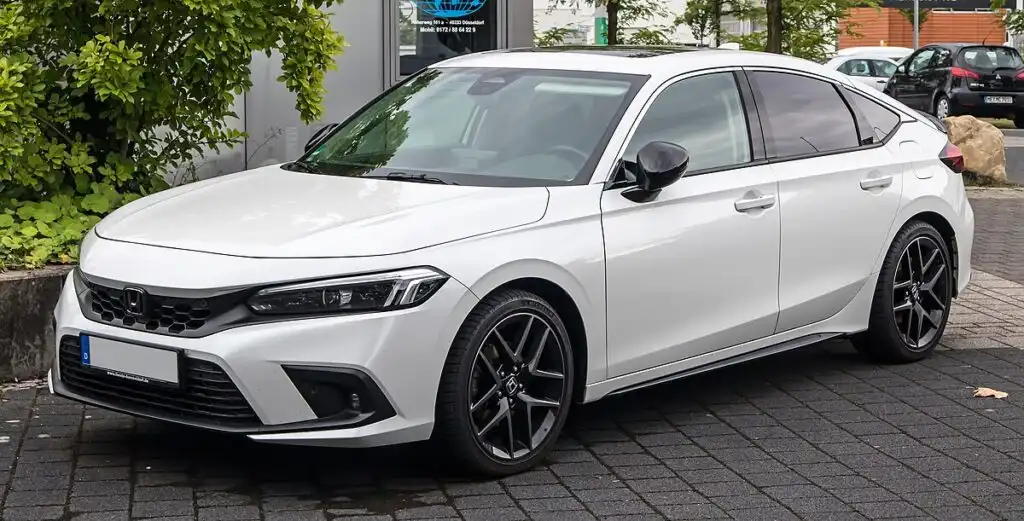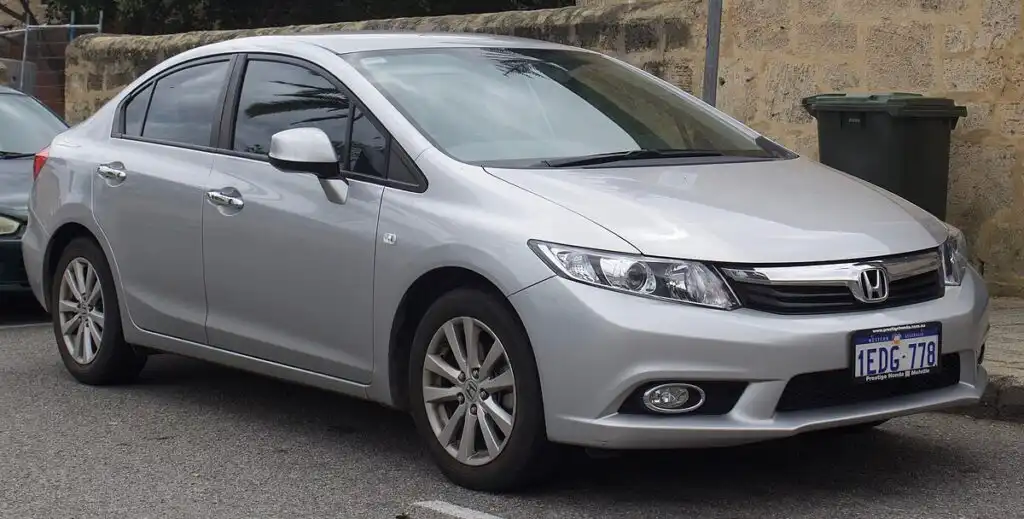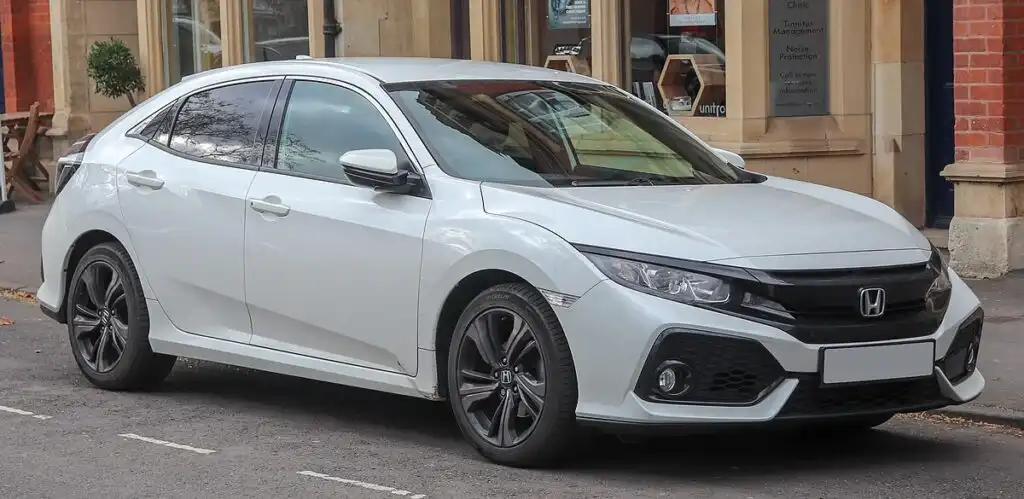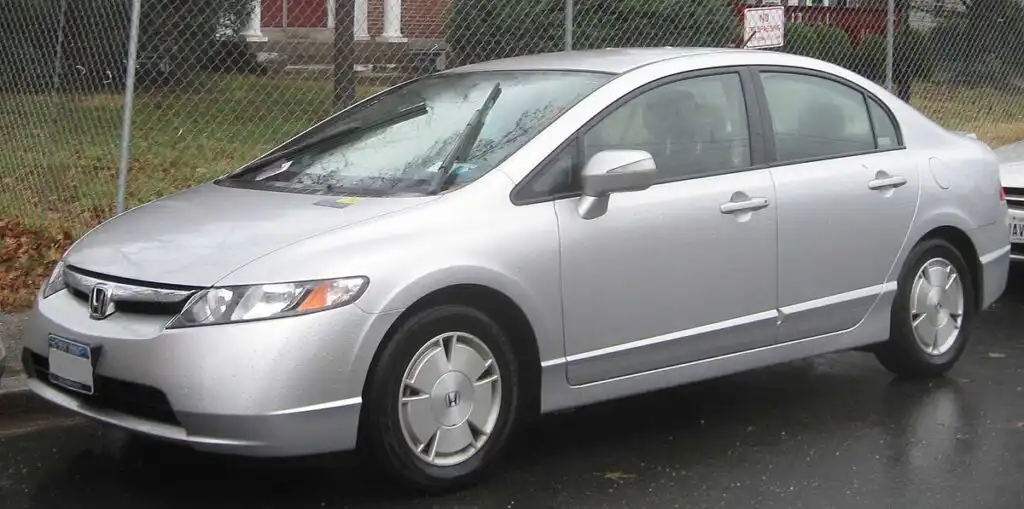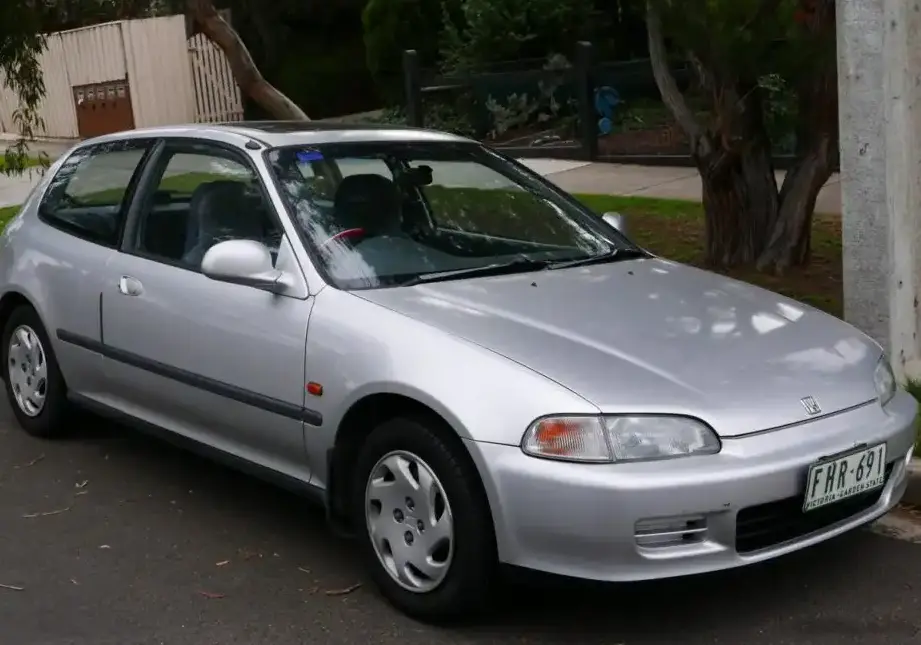
The Honda Civic V Hatchback 1.5i 16V (90 hp) was a popular entry-level variant produced between 1991 and 1995, forming a key part of the fifth-generation (EG/EH) Civic lineup. Positioned as an affordable and fuel-efficient option, it catered to buyers seeking reliable transportation within the compact hatchback segment. This model, often simply referred to as the 1.5i 16V, was primarily sold in European and Asian markets, offering a balance between practicality and Honda’s reputation for engineering. It utilized the D15B2 engine paired with a 5-speed manual transmission, offering a different driving experience than the more powerful or technologically advanced trims.
Technical Specifications
| Brand | Honda |
| Model | Civic |
| Generation | Civic V Hatchback |
| Type (Engine) | 1.5i 16V (90 Hp) |
| Start of production | 1991 |
| End of production | 1995 |
| Powertrain Architecture | Internal Combustion engine |
| Body type | Hatchback |
| Seats | 5 |
| Doors | 3 |
| Fuel consumption (combined) | 7.2 l/100 km |
| Fuel consumption (US mpg) | 32.7 US mpg |
| Fuel consumption (UK mpg) | 39.2 UK mpg |
| Fuel consumption (km/l) | 13.9 km/l |
| Fuel Type | Petrol (Gasoline) |
| Acceleration 0 – 100 km/h | 9.7 sec |
| Acceleration 0 – 62 mph | 9.7 sec |
| Acceleration 0 – 60 mph | 9.2 sec |
| Maximum speed | 177 km/h (109.98 mph) |
| Weight-to-power ratio | 10.6 kg/Hp |
| Power per tonne | 94.7 Hp/tonne |
| Weight-to-torque ratio | 8 kg/Nm |
| Torque per tonne | 125.3 Nm/tonne |
| Power | 90 Hp @ 6000 rpm |
| Power per litre | 60.3 Hp/l |
| Torque | 119 Nm @ 4700 rpm (87.77 lb.-ft. @ 4700 rpm) |
| Engine layout | Front, Transverse |
| Engine Model/Code | D15B2 |
| Engine displacement | 1493 cm3 (91.11 cu. in.) |
| Number of cylinders | 4 |
| Engine configuration | Inline |
| Cylinder Bore | 75 mm (2.95 in.) |
| Piston Stroke | 84.5 mm (3.33 in.) |
| Compression ratio | 9.2:1 |
| Number of valves per cylinder | 4 |
| Fuel injection system | Single-point injection |
| Engine aspiration | Naturally aspirated |
| Valvetrain | OHC |
| Engine oil capacity | 3.3 l (3.49 US qt | 2.9 UK qt) |
| Coolant capacity | 3.6 l (3.8 US qt | 3.17 UK qt) |
| Kerb Weight | 950 kg (2094.39 lbs.) |
| Max. weight | 1460 kg (3218.75 lbs.) |
| Max load | 510 kg (1124.36 lbs.) |
| Trunk (boot) space – minimum | 190 l (6.71 cu. ft.) |
| Trunk (boot) space – maximum | 510 l (18.01 cu. ft.) |
| Fuel tank capacity | 45 l (11.89 US gal | 9.9 UK gal) |
| Length | 4080 mm (160.63 in.) |
| Width | 1695 mm (66.73 in.) |
| Height | 1345 mm (52.95 in.) |
| Wheelbase | 2570 mm (101.18 in.) |
| Front track | 1475 mm (58.07 in.) |
| Rear track | 1465 mm (57.68 in.) |
| Drivetrain Architecture | Front wheel drive |
| Number of gears | 5 |
| Gearbox type | Manual transmission |
| Front suspension | Double wishbone |
| Rear suspension | Double wishbone |
| Front brakes | Disc |
| Rear brakes | Drum |
| Assisting systems | ABS (Anti-lock braking system) |
| Steering type | Steering rack and pinion |
| Tires size | 175/70 R13 |
Powertrain & Engine Architecture
The heart of the Civic V 1.5i 16V was the D15B2 engine, a 1.5-liter inline-four cylinder powerplant. This engine featured a single overhead camshaft (SOHC) valvetrain operating 16 valves (four per cylinder). The D15B2 utilized a single-point fuel injection system, a relatively simple setup compared to the multi-point injection found in some higher-spec Civic models. This system delivered fuel into the intake manifold rather than directly into each cylinder. The engine’s 90 horsepower output at 6000 rpm and 119 Nm (87.77 lb-ft) of torque at 4700 rpm were modest, but sufficient for everyday driving. The 5-speed manual transmission provided a reasonable spread of gears, allowing drivers to keep the engine in its optimal power band. The engine was known for its durability and relatively straightforward maintenance requirements.
Driving Characteristics
The 1.5i 16V offered a practical and economical driving experience. Acceleration was not its strong suit, with a 0-60 mph time of around 9.2 seconds. However, the engine was willing to rev and provided adequate power for city driving and highway cruising. The manual transmission allowed for a more engaging driving experience compared to the automatic options available on other Civic trims. Gear ratios were tuned for fuel efficiency, meaning the engine could feel strained when pushed hard. Compared to the more powerful 1.6L engines or the later VTEC variants, the 1.5i 16V felt noticeably less responsive. However, its lighter weight contributed to nimble handling and predictable cornering.
Equipment & Trim Levels
The 1.5i 16V typically came with a fairly basic level of equipment. Standard features generally included cloth upholstery, a simple dashboard layout, and manual windows and door locks. Power steering was often included, but air conditioning and central locking were frequently optional extras. The interior was functional and durable, prioritizing practicality over luxury. Trim levels varied slightly depending on the market, but generally focused on adding convenience features like upgraded audio systems or alloy wheels. The overall aesthetic was clean and minimalist, reflecting the Civic’s focus on affordability.
Chassis & Braking
The Civic V Hatchback utilized a front-engine, front-wheel-drive layout. Suspension consisted of independent double wishbones at both the front and rear, providing a comfortable ride and decent handling characteristics. The front brakes were discs, offering better stopping power than the drum brakes found on the rear wheels. ABS (Anti-lock Braking System) was often included as standard equipment, enhancing safety. The chassis was relatively lightweight, contributing to the car’s agility. Stabilizer bars were present, but were typically smaller in diameter compared to those found on higher-performance Civic models.
Market Reception & Comparison
The Civic V 1.5i 16V was well-received as an affordable and reliable hatchback. Critics praised its fuel efficiency and practicality, but noted its lack of outright performance. Compared to the more expensive Civic models with larger engines or advanced features, the 1.5i 16V represented a value-oriented option. It competed with other compact hatchbacks like the Volkswagen Golf, Ford Escort, and Nissan Sunny. In terms of fuel economy, the 1.5i 16V generally performed well, offering competitive figures for its class. Reliability was a strong point, with the D15B2 engine proving to be durable and long-lasting.
Legacy
The Honda Civic V 1.5i 16V has maintained a reputation for reliability and affordability in the used car market. The D15B2 engine is known for its longevity, and parts availability remains relatively good. While not a particularly sought-after model by enthusiasts, it represents a solid and dependable choice for those seeking a classic Honda hatchback. Its simple design and robust construction have contributed to its enduring appeal. Today, well-maintained examples can still be found providing economical transportation, and are often appreciated for their simplicity and Honda’s renowned build quality.