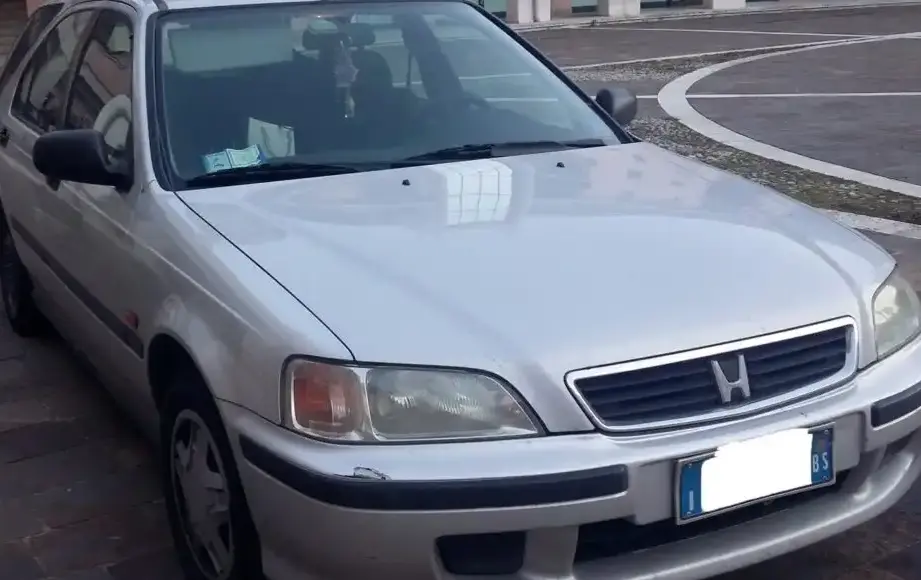
The Honda Civic VI Wagon 1.4 16V, produced between 1998 and 2000, represented a practical and economical offering within the sixth-generation (EG/EH) Civic lineup. Specifically designed for the European market, this station wagon (estate) variant aimed to provide family-friendly versatility combined with Honda’s reputation for reliability. Positioned as an entry-level trim, the 1.4 16V offered a balance between affordability and reasonable performance, though it was often overshadowed by the more powerful and sporty variants available in the Civic VI range. It was built on the EH platform, a dedicated wagon chassis derived from the Civic’s core structure.
Technical Specifications
| Brand | Honda |
| Model | Civic |
| Generation | Civic VI Wagon |
| Type (Engine) | 1.4 16V (75 Hp) |
| Start of production | 1998 |
| End of production | 2000 |
| Powertrain Architecture | Internal Combustion engine |
| Body type | Station wagon (estate) |
| Seats | 5 |
| Doors | 5 |
| Fuel consumption (urban) | 9.5 l/100 km (24.8 US mpg) |
| Fuel consumption (extra urban) | 6.7 l/100 km (35.1 US mpg) |
| Fuel Type | Petrol (Gasoline) |
| Acceleration 0 – 100 km/h | 16.3 sec |
| Acceleration 0 – 62 mph | 16.3 sec |
| Acceleration 0 – 60 mph | 15.5 sec |
| Maximum speed | 162 km/h (100.66 mph) |
| Weight-to-power ratio | 15.3 kg/Hp |
| Weight-to-torque ratio | 10.2 kg/Nm |
| Power | 75 Hp @ 5700 rpm |
| Torque | 112 Nm @ 3000 rpm (82.61 lb.-ft. @ 3000 rpm) |
| Engine layout | Front, Transverse |
| Engine Model/Code | D14A3 |
| Engine displacement | 1396 cm3 (85.19 cu. in.) |
| Number of cylinders | 4 |
| Engine configuration | Inline |
| Cylinder Bore | 75 mm (2.95 in.) |
| Piston Stroke | 79 mm (3.11 in.) |
| Compression ratio | 9.3:1 |
| Number of valves per cylinder | 4 |
| Fuel injection system | Multi-port manifold injection |
| Engine aspiration | Naturally aspirated engine |
| Valvetrain | OHC |
| Engine oil capacity | 3.3 l (3.49 US qt | 2.9 UK qt) |
| Kerb Weight | 1145 kg (2524.29 lbs.) |
| Max. weight | 1620 kg (3571.49 lbs.) |
| Max load | 475 kg (1047.2 lbs.) |
| Trunk (boot) space – minimum | 415 l (14.66 cu. ft.) |
| Trunk (boot) space – maximum | 1312 l (46.33 cu. ft.) |
| Fuel tank capacity | 55 l (14.53 US gal | 12.1 UK gal) |
| Length | 4425 mm (174.21 in.) |
| Width | 1695 mm (66.73 in.) |
| Height | 1410 mm (55.51 in.) |
| Wheelbase | 2620 mm (103.15 in.) |
| Front track | 1475 mm (58.07 in.) |
| Rear (Back) track | 1470 mm (57.87 in.) |
| Drivetrain Architecture | The Internal combustion engine (ICE) drives the front wheels of the vehicle. |
| Drive wheel | Front wheel drive |
| Number of gears and type of gearbox | 5 gears, manual transmission |
| Front suspension | Double wishbone |
| Rear suspension | Trailing arm |
| Front brakes | Ventilated discs |
| Rear brakes | Drum |
| Assisting systems | ABS (Anti-lock braking system) |
| Steering type | Steering rack and pinion |
| Power steering | Hydraulic Steering |
| Tires size | 185/60 R14 |
Powertrain & Engine Architecture
The heart of the Civic VI Wagon 1.4 16V was the D14A3 engine, a 1.4-liter (1396 cc) inline-four cylinder gasoline engine. This engine featured a single overhead camshaft (SOHC) valvetrain operating 16 valves – four per cylinder. The D14A3 utilized multi-point fuel injection, a common feature for the time, contributing to improved fuel efficiency and smoother operation compared to earlier carburetor-equipped engines. The engine produced 75 horsepower at 5700 rpm and 82.6 lb-ft of torque at 3000 rpm. The engine’s relatively modest output was typical for entry-level cars in Europe during the late 1990s, where fuel economy and affordability were often prioritized over outright performance. The engine was paired with a 5-speed manual transmission, which was the standard offering. An automatic transmission was available as an option, but it further reduced the car’s already modest acceleration.
Driving Characteristics
The 1.4 16V Civic Wagon, particularly with the manual transmission, offered adequate, though not exhilarating, performance. Acceleration from 0-60 mph took around 15.5 seconds, and top speed was approximately 100 mph. The engine felt somewhat strained when pushed hard, especially when fully loaded with passengers and cargo. The 5-speed manual transmission provided a reasonable level of control, but the gear ratios were spaced to prioritize fuel economy rather than spirited driving. Compared to the more powerful 1.6-liter versions of the Civic, or the diesel options, the 1.4 felt noticeably slower. The automatic transmission option further diminished performance, resulting in sluggish acceleration and a less engaging driving experience. However, the wagon’s suspension provided a comfortable ride, absorbing bumps and imperfections in the road reasonably well.
Equipment & Trim Levels
The 1.4 16V trim level was generally considered the base model for the Civic Wagon. Standard equipment typically included power steering, central locking, electric front windows, and an AM/FM radio. Interior upholstery was typically a basic cloth material. Optional extras included air conditioning, alloy wheels, and a sunroof. The dashboard layout was functional and straightforward, prioritizing usability over aesthetic flair. Safety features were relatively basic for the era, typically including a driver’s airbag and ABS (Anti-lock Braking System) as standard equipment.
Chassis & Braking
The Civic Wagon utilized a front-engine, front-wheel-drive layout. The front suspension employed a double wishbone design, while the rear suspension featured a trailing arm setup. This suspension configuration provided a good balance between ride comfort and handling. Braking duties were handled by ventilated discs at the front and drum brakes at the rear. The ABS system helped to improve braking performance and stability, particularly on slippery surfaces. The relatively lightweight construction of the Civic Wagon helped to offset the modest engine output, contributing to reasonable handling characteristics.
Market Reception & Comparison
The Civic VI Wagon 1.4 16V was generally well-received as a practical and reliable family car. Critics praised its spacious interior, fuel efficiency, and Honda’s reputation for build quality. However, the engine’s lack of power was a common criticism. Compared to the 1.6-liter Civic models, the 1.4 offered significantly less performance. The diesel variants, while slower in acceleration, provided superior fuel economy and torque. The 1.4 16V appealed to buyers who prioritized affordability and practicality over sporty performance. It was a popular choice for families and individuals who needed a versatile and reliable vehicle for everyday use.
Legacy
The D14A3 engine, while not known for its high performance, proved to be a durable and reliable powerplant. Civic VI Wagons equipped with this engine have generally aged well, and many examples are still on the road today. The 1.4 16V remains a relatively affordable option in the used car market, appealing to buyers seeking a simple, reliable, and economical vehicle. Maintenance costs are generally low, and parts availability is good. However, potential buyers should be aware of the engine’s limited power output and the possibility of age-related wear and tear. The Civic VI Wagon 1.4 16V represents a practical and dependable choice for those seeking a classic Honda with a focus on functionality and longevity.