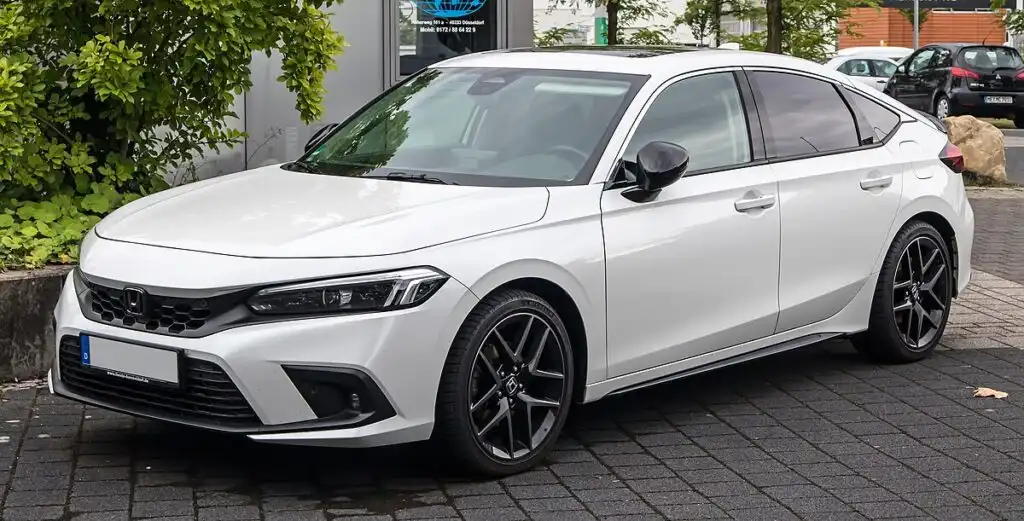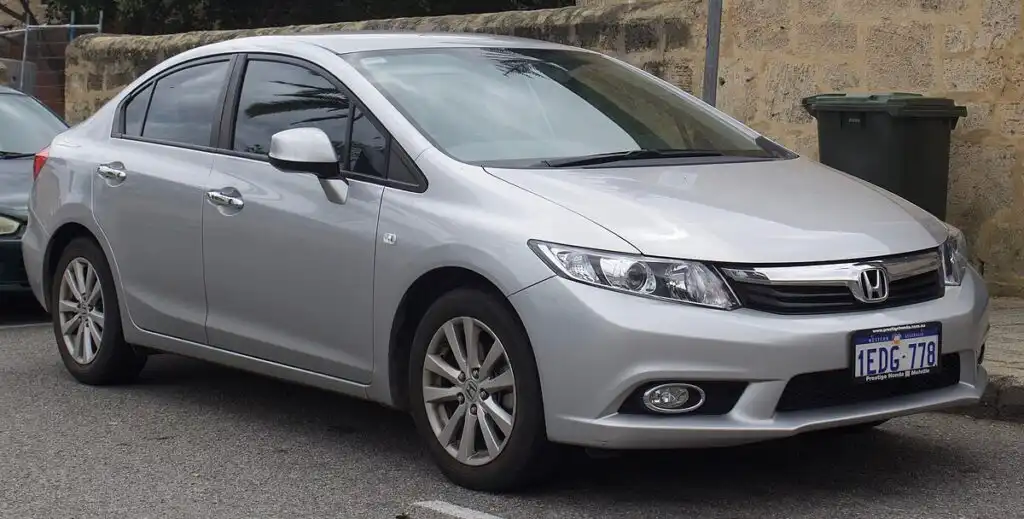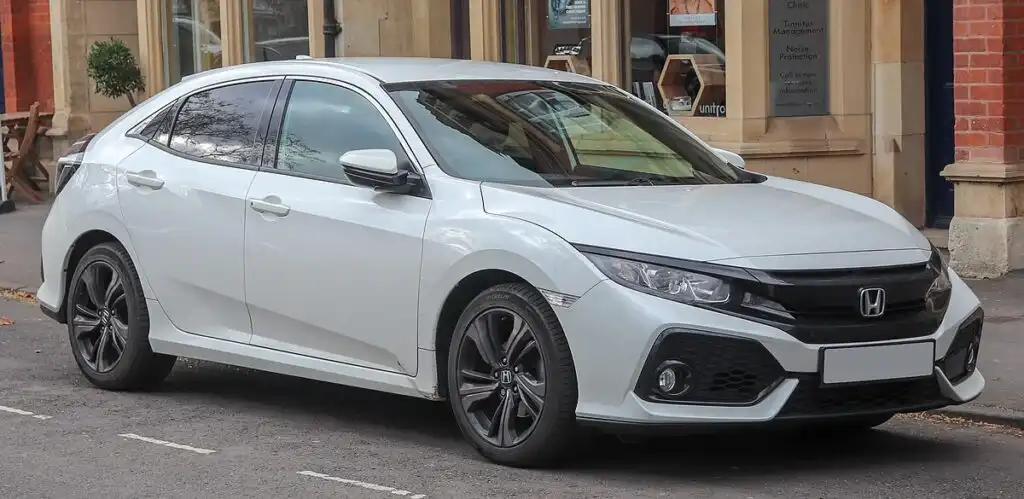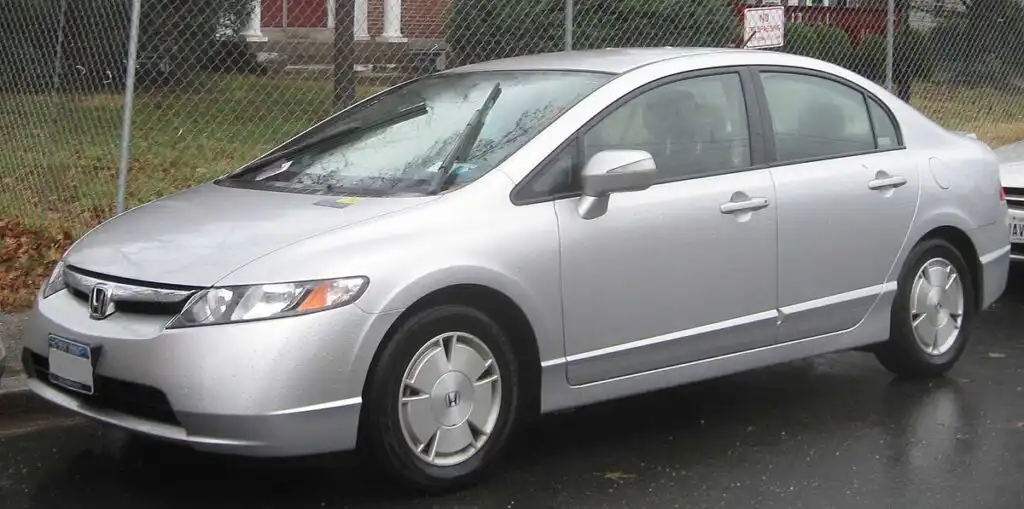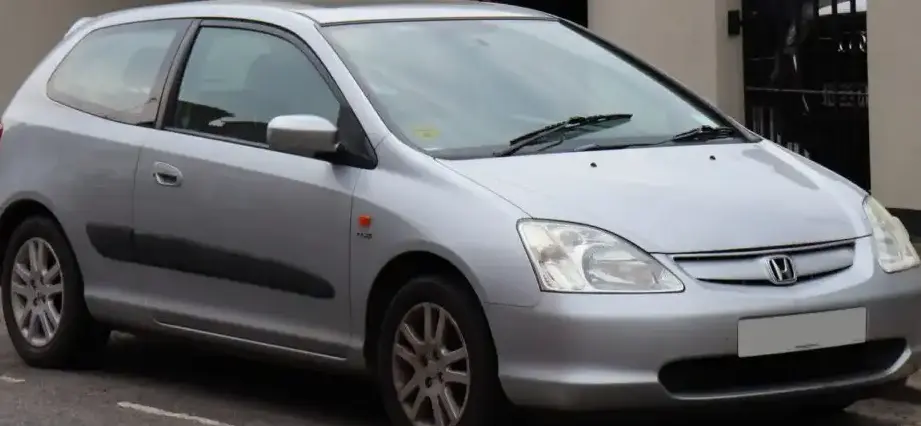
The Honda Civic VII Hatchback 1.4 16V Automatic, produced between 2001 and 2005, represented an entry-level offering within the broader seventh-generation (1995-2005) Civic lineup. This three-door hatchback was primarily aimed at the European market, where smaller, fuel-efficient vehicles were highly sought after. It served as an accessible and practical option for young drivers or those seeking economical transportation. The Civic VII, overall, was a significant evolution of the Civic line, known for its improved refinement, safety features, and a more modern design compared to its predecessors. This particular variant, with its smaller engine and automatic transmission, occupied the lower end of the performance spectrum, prioritizing affordability and ease of use.
Technical Specifications
| Brand | Honda |
| Model | Civic |
| Generation | Civic VII Hatchback |
| Type (Engine) | 1.4 16V (90 Hp) Automatic |
| Start of production | 2001 |
| End of production | 2005 |
| Powertrain Architecture | Internal Combustion engine |
| Body type | Hatchback |
| Seats | 5 |
| Doors | 3 |
| Fuel consumption (urban) | 9.7 l/100 km (24.2 US mpg) |
| Fuel consumption (extra urban) | 5.8 l/100 km (40.6 US mpg) |
| Fuel consumption (combined) | 7.2 l/100 km (32.7 US mpg) |
| Fuel Type | Petrol (Gasoline) |
| Acceleration 0 – 100 km/h | 14.2 sec |
| Acceleration 0 – 62 mph | 14.2 sec |
| Acceleration 0 – 60 mph | 13.5 sec |
| Maximum speed | 167 km/h (103.77 mph) |
| Weight-to-power ratio | 13 kg/Hp |
| Weight-to-torque ratio | 9.7 kg/Nm |
| Power | 90 Hp @ 6400 rpm |
| Torque | 120 Nm @ 4800 rpm (88.51 lb.-ft. @ 4800 rpm) |
| Engine layout | Front, Transverse |
| Engine Model/Code | D14Z6 |
| Engine displacement | 1396 cm3 (85.19 cu. in.) |
| Number of cylinders | 4 |
| Engine configuration | Inline |
| Cylinder Bore | 75 mm (2.95 in.) |
| Piston Stroke | 79 mm (3.11 in.) |
| Compression ratio | 9:1 |
| Number of valves per cylinder | 4 |
| Fuel injection system | Multi-port manifold injection |
| Engine aspiration | Naturally aspirated |
| Valvetrain | OHC |
| Engine oil capacity | 3.2 l (3.38 US qt | 2.82 UK qt) |
| Coolant capacity | 3.9 l (4.12 US qt | 3.43 UK qt) |
| Kerb Weight | 1167 kg (2572.79 lbs.) |
| Max. weight | 1575 kg (3472.28 lbs.) |
| Max load | 408 kg (899.49 lbs.) |
| Trunk (boot) space – minimum | 315 l (11.12 cu. ft.) |
| Trunk (boot) space – maximum | 610 l (21.54 cu. ft.) |
| Fuel tank capacity | 50 l (13.21 US gal | 11 UK gal) |
| Length | 4135 mm (162.8 in.) |
| Width | 1695 mm (66.73 in.) |
| Height | 1440 mm (56.69 in.) |
| Wheelbase | 2575 mm (101.38 in.) |
| Front track | 1470 mm (57.87 in.) |
| Rear track | 1470 mm (57.87 in.) |
| Drivetrain | Front wheel drive |
| Number of gears | 4 |
| Gearbox type | Automatic transmission |
| Front suspension | Spring Strut |
| Rear suspension | Independent multi-link spring suspension with stabilizer |
| Front brakes | Ventilated discs |
| Rear brakes | Drum |
| Assisting systems | ABS (Anti-lock braking system) |
| Steering type | Steering rack and pinion |
| Power steering | Electric |
| Tires size | 185/70 R14 |
| Wheel rims size | 14 |
Powertrain & Engine Architecture
The heart of this Civic variant was the D14Z6 engine, a 1.4-liter inline-four cylinder powerplant. This engine featured a single overhead camshaft (SOHC) valvetrain with 16 valves, and utilized multi-point fuel injection for efficient fuel delivery. The D14Z6 was known for its reliability, though it wasn’t a powerhouse. Its 90 horsepower output at 6400 rpm and 120 Nm (88.5 lb-ft) of torque at 4800 rpm were modest, but sufficient for everyday driving. The engine’s 9:1 compression ratio was typical for the era, balancing performance and fuel economy. Paired with this engine was a four-speed automatic transmission. This transmission was chosen to provide ease of use, particularly in urban environments, but at the expense of outright performance and fuel efficiency compared to the available five-speed manual gearbox.
Driving Characteristics
The 1.4L Automatic Civic VII Hatchback offered a comfortable, if uninspiring, driving experience. Acceleration was leisurely, with a 0-60 mph time of around 13.5 seconds. The automatic transmission, while convenient, contributed to a noticeable lack of responsiveness. Gear changes were not particularly quick or smooth, and the transmission tended to hold onto gears for longer periods to maximize fuel economy. Compared to the manual transmission version, or the more powerful 1.6L variants, this model felt significantly slower. However, the light steering and relatively soft suspension made it easy to maneuver in city traffic. The focus was clearly on practicality and ease of driving rather than sporty handling.
Equipment & Trim Levels
The 1.4 16V Automatic trim typically included basic amenities such as power steering, central locking, and an AM/FM radio. Air conditioning was often an optional extra. Interior upholstery was typically cloth, and the dashboard featured a simple, functional design. Higher trim levels within the Civic VII range offered features like alloy wheels, electric windows, and upgraded audio systems, but these were generally not standard on the base 1.4 Automatic model. Safety features included a driver’s airbag and ABS (Anti-lock Braking System) as standard equipment, which was becoming increasingly common during this period.
Chassis & Braking
The Civic VII Hatchback utilized a front-wheel-drive layout with a MacPherson strut suspension in the front and an independent multi-link suspension in the rear. This suspension setup provided a reasonable balance between ride comfort and handling. The front brakes were ventilated discs, offering adequate stopping power, while the rear brakes were drums, a cost-saving measure common in entry-level vehicles. A stabilizer bar was included on both axles to reduce body roll during cornering. The curb weight of approximately 1167 kg (2573 lbs) contributed to the car’s relatively nimble feel, despite its modest power output.
Market Reception & Comparison
The 1.4 16V Automatic Civic VII Hatchback was generally well-received as an affordable and reliable city car. Critics acknowledged its practicality and fuel efficiency, but often noted its lack of performance. Compared to the more powerful 1.6L and 1.7L variants, it was seen as a compromise, sacrificing performance for lower running costs. The manual transmission versions of the 1.4L engine offered slightly better fuel economy and acceleration. However, the automatic transmission appealed to drivers who prioritized convenience and ease of use. Its fuel economy figures of around 32.7 US mpg combined were competitive for its class.
Legacy
The D14Z6 engine, while not known for its high performance, proved to be remarkably durable and reliable. Civic VII Hatchbacks with this powertrain continue to be found on the used car market today, often with high mileage and still running well. The automatic transmission, while not as sought after as the manual, has also proven to be relatively trouble-free. The 1.4 16V Automatic represents a practical and economical choice for those seeking a reliable and affordable hatchback, and its simplicity makes it relatively easy and inexpensive to maintain. It remains a testament to Honda’s reputation for building durable and dependable vehicles.