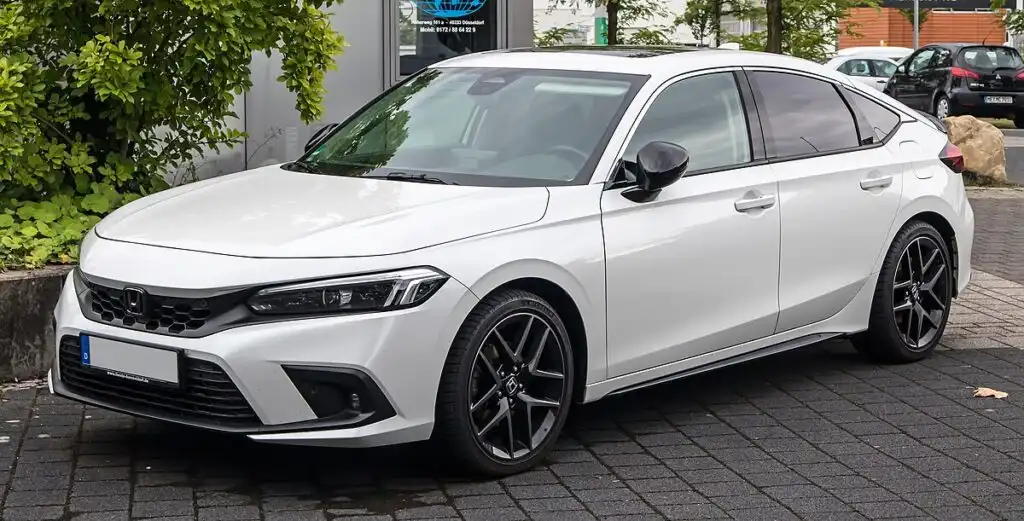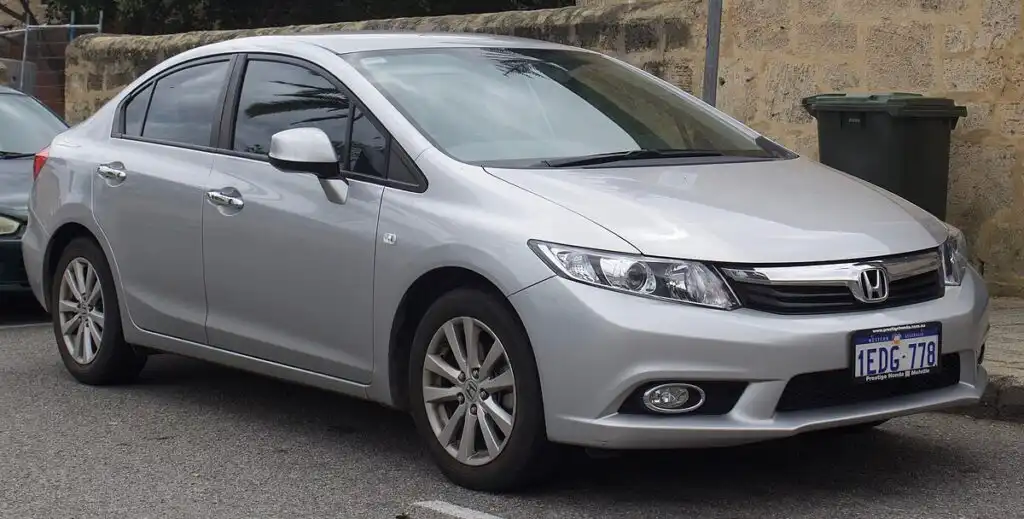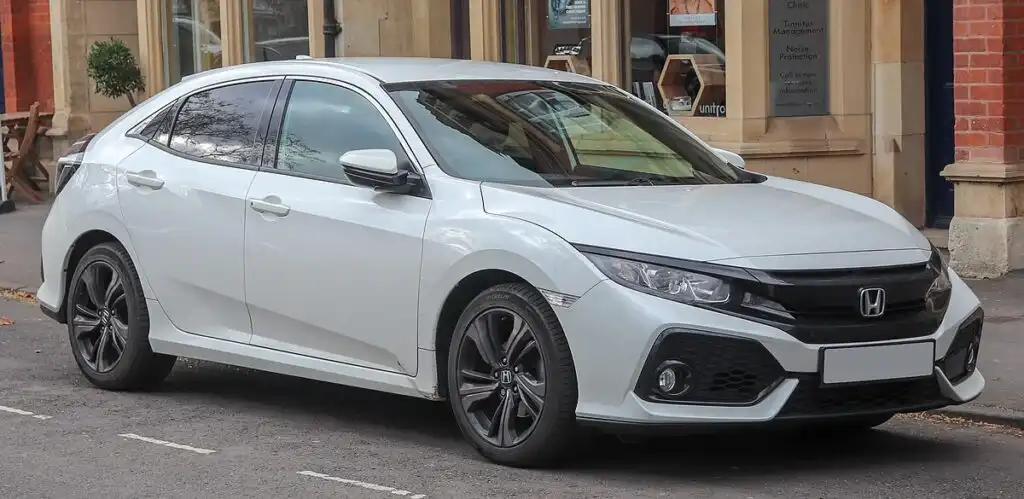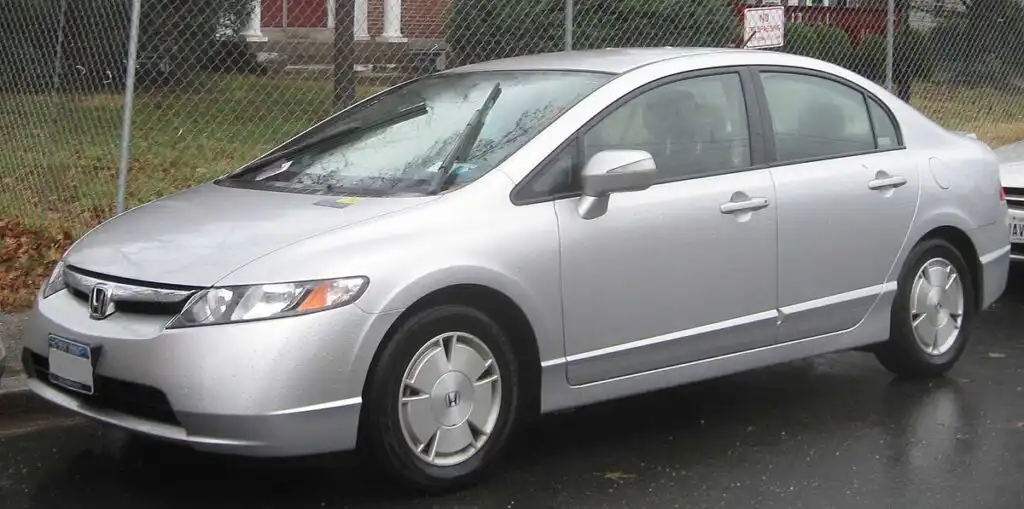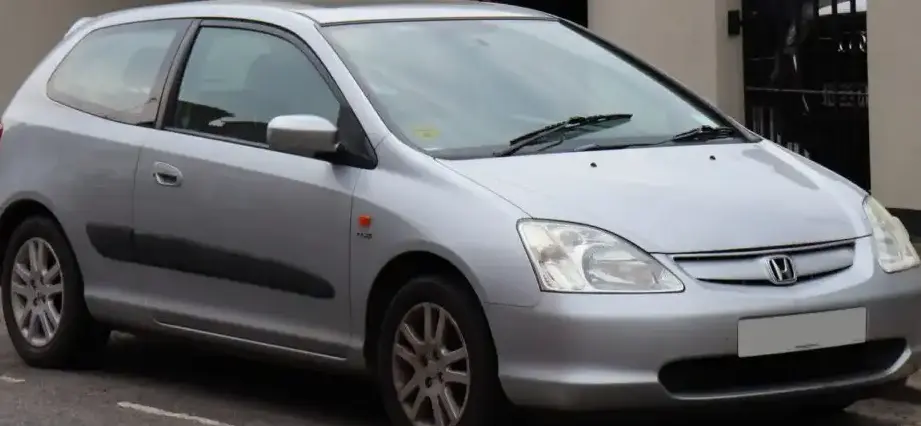
The Honda Civic VII Hatchback 1.6 16V Automatic, produced between 2001 and 2005, represented a practical and fuel-efficient entry point into the seventh-generation Civic lineup. Part of the broader Civic VII series (internally designated as the ES platform in Europe), this variant was primarily aimed at buyers seeking a comfortable, reliable, and economical hatchback. It occupied the lower-mid range of the available trims, positioned below the more performance-oriented models like the Civic Type S and above the base 1.4-liter versions. This particular configuration – the 1.6-liter engine paired with a four-speed automatic transmission – was a popular choice for drivers prioritizing ease of use over outright performance.
Technical Specifications
| Brand | Honda |
| Model | Civic |
| Generation | Civic VII Hatchback |
| Type (Engine) | 1.6 16V (110 Hp) Automatic |
| Start of production | 2001 |
| End of production | 2005 |
| Powertrain Architecture | Internal Combustion engine |
| Body type | Hatchback |
| Seats | 5 |
| Doors | 3 |
| Fuel consumption (urban) | 9.8 l/100 km (24 US mpg, 28.8 UK mpg, 10.2 km/l) |
| Fuel consumption (extra urban) | 5.8 l/100 km (40.6 US mpg, 48.7 UK mpg, 17.2 km/l) |
| Fuel consumption (combined) | 7.2 l/100 km (32.7 US mpg, 39.2 UK mpg, 13.9 km/l) |
| Fuel Type | Petrol (Gasoline) |
| Acceleration 0 – 100 km/h | 11.7 sec |
| Acceleration 0 – 62 mph | 11.7 sec |
| Acceleration 0 – 60 mph | 11.1 sec |
| Maximum speed | 182 km/h (113.09 mph) |
| Weight-to-power ratio | 10.8 kg/Hp, 92.3 Hp/tonne |
| Weight-to-torque ratio | 7.8 kg/Nm, 127.5 Nm/tonne |
| Power | 110 Hp @ 5600 rpm |
| Power per litre | 69.2 Hp/l |
| Torque | 152 Nm @ 4300 rpm (112.11 lb.-ft. @ 4300 rpm) |
| Engine layout | Front, Transverse |
| Engine Model/Code | D16V1 |
| Engine displacement | 1590 cm3 (97.03 cu. in.) |
| Number of cylinders | 4 |
| Engine configuration | Inline |
| Cylinder Bore | 75 mm (2.95 in.) |
| Piston Stroke | 90 mm (3.54 in.) |
| Compression ratio | 10.4:1 |
| Number of valves per cylinder | 4 |
| Fuel injection system | Multi-port manifold injection |
| Engine aspiration | Naturally aspirated engine |
| Engine oil capacity | 3.5 l (3.7 US qt | 3.08 UK qt) |
| Coolant capacity | 4 l (4.23 US qt | 3.52 UK qt) |
| Kerb Weight | 1192 kg (2627.91 lbs.) |
| Max. weight | 1605 kg (3538.42 lbs.) |
| Max load | 413 kg (910.51 lbs.) |
| Trunk (boot) space – minimum | 315 l (11.12 cu. ft.) |
| Trunk (boot) space – maximum | 610 l (21.54 cu. ft.) |
| Fuel tank capacity | 50 l (13.21 US gal | 11 UK gal) |
| Length | 4135 mm (162.8 in.) |
| Width | 1695 mm (66.73 in.) |
| Height | 1440 mm (56.69 in.) |
| Wheelbase | 2570 mm (101.18 in.) |
| Front track | 1470 mm (57.87 in.) |
| Rear track | 1470 mm (57.87 in.) |
| Drivetrain Architecture | Front wheel drive |
| Number of gears | 4 |
| Gearbox type | Automatic transmission |
| Front suspension | Spring Strut |
| Rear suspension | Transverse stabilizer |
| Front brakes | Ventilated discs |
| Rear brakes | Disc |
| Assisting systems | ABS (Anti-lock braking system) |
| Steering type | Steering rack and pinion |
| Tires size | 195/60 R15 |
| Wheel rims size | 15 |
Powertrain & Engine Architecture
The heart of this Civic variant is the D16V1 engine, a 1.6-liter inline-four cylinder gasoline engine. This engine utilizes a single overhead camshaft (SOHC) design with four valves per cylinder, contributing to its relatively efficient operation. Fuel delivery is managed by a multi-point fuel injection system, ensuring precise fuel metering for optimal combustion. The D16V1 produces 110 horsepower at 5600 rpm and 152 Nm (112 lb-ft) of torque at 4300 rpm. The engine’s design prioritized fuel economy and smooth operation over outright power. The four-speed automatic transmission was a conventional torque converter type, offering smooth shifts but lacking the responsiveness of a manual gearbox or more modern automatic transmissions.
Driving Characteristics
The 1.6-liter automatic Civic offered a comfortable and predictable driving experience. Acceleration was adequate for everyday driving, with a 0-60 mph time of around 11.1 seconds. However, it was noticeably slower than the manual transmission versions or those equipped with the more powerful 1.7-liter engine. The automatic transmission’s gear ratios were tuned for fuel efficiency, resulting in a somewhat leisurely pace. While the transmission provided smooth shifts, it lacked the sporty feel of a manual gearbox. The power delivery was linear, making it easy to modulate the throttle, but the engine lacked the punch needed for quick overtaking maneuvers.
Equipment & Trim Levels
The 1.6 16V Automatic trim typically included features such as power steering, central locking, electric front windows, and an AM/FM radio. Air conditioning was often standard, but could be optional depending on the specific market. Interior upholstery was typically cloth, with a relatively simple dashboard layout. Optional extras included alloy wheels, a sunroof, and upgraded audio systems. The overall interior ambiance was functional and durable, reflecting the Civic’s reputation for reliability.
Chassis & Braking
The Civic VII Hatchback utilized a MacPherson strut front suspension and a torsion beam rear suspension. This setup provided a comfortable ride quality, although it wasn’t particularly sporty. The front brakes were ventilated discs, offering adequate stopping power, while the rear brakes were solid discs. Anti-lock Braking System (ABS) was standard, enhancing safety. The chassis was relatively lightweight, contributing to the car’s fuel efficiency and nimble handling.
Market Reception & Comparison
The 1.6 16V Automatic Civic was generally well-received as a practical and reliable everyday car. Critics praised its fuel economy and comfortable ride, but noted its lack of performance compared to other trims. Compared to the manual transmission version, the automatic offered less driver engagement and slightly lower fuel economy. Against competitors like the Volkswagen Golf and Ford Focus, the Civic offered a compelling combination of reliability, fuel efficiency, and affordability.
Legacy
The D16V1 engine, when properly maintained, proved to be a durable and reliable unit. The four-speed automatic transmission, while not the most advanced, also demonstrated good longevity. Today, these Civics are often found as affordable and dependable used cars. While not highly sought after by enthusiasts, they remain a popular choice for drivers seeking a practical and economical hatchback. Parts availability is generally good, and maintenance costs are relatively low, making them a sensible option for budget-conscious buyers. The Civic VII Hatchback 1.6 16V Automatic continues to be a testament to Honda’s commitment to building reliable and long-lasting vehicles.