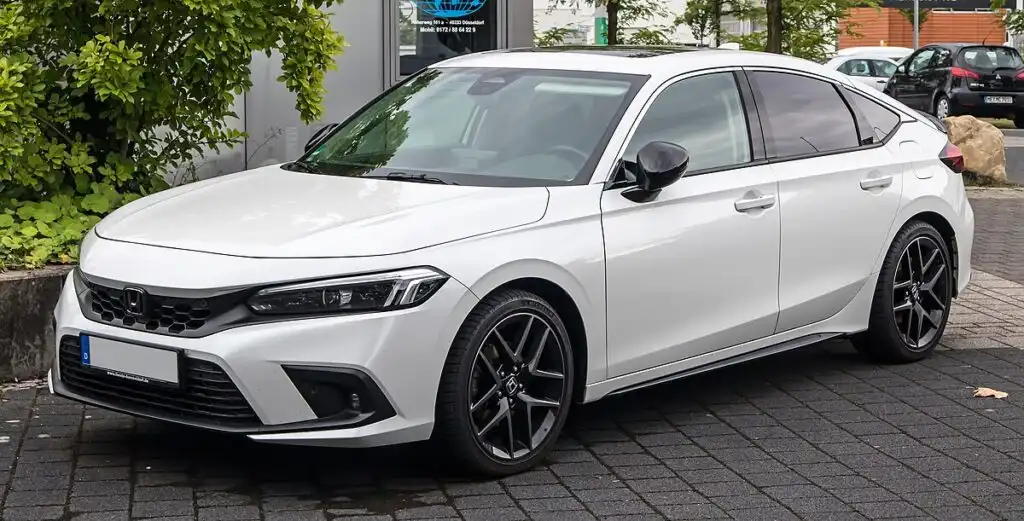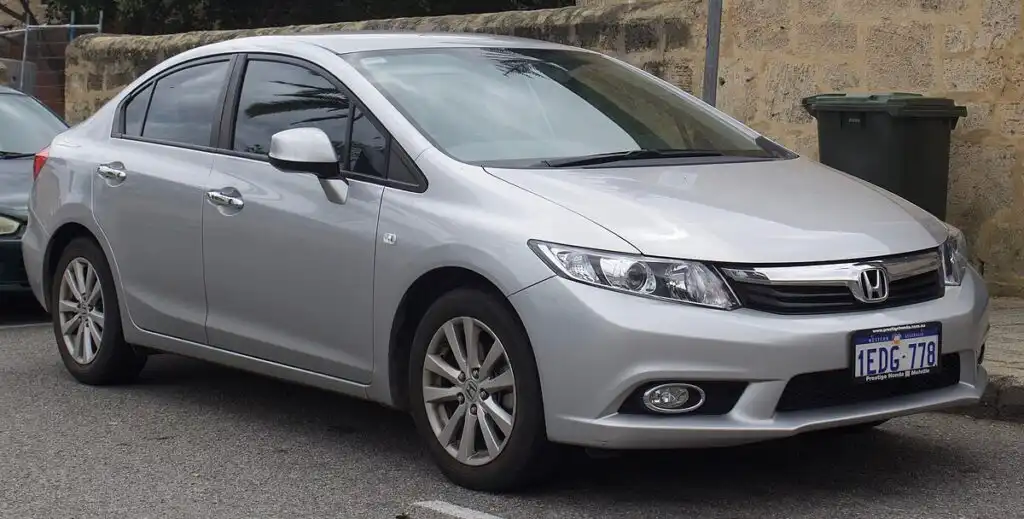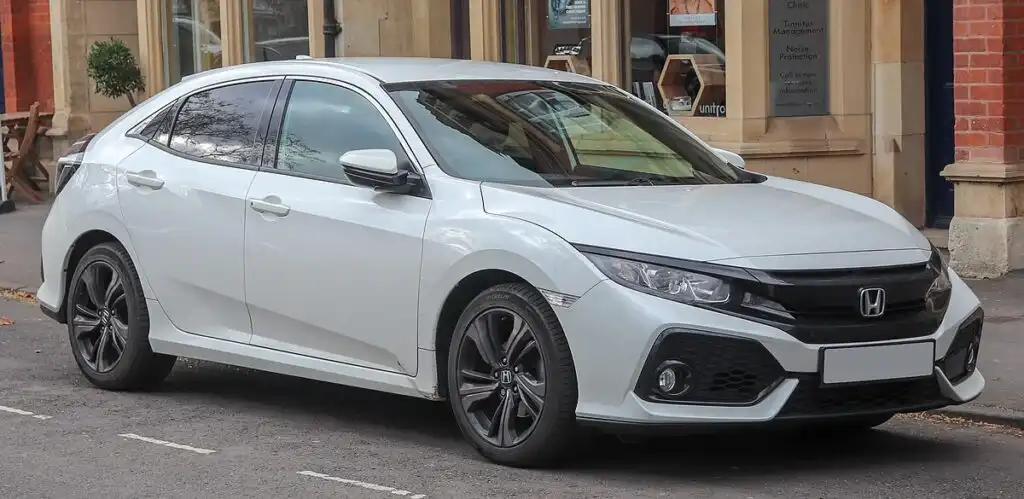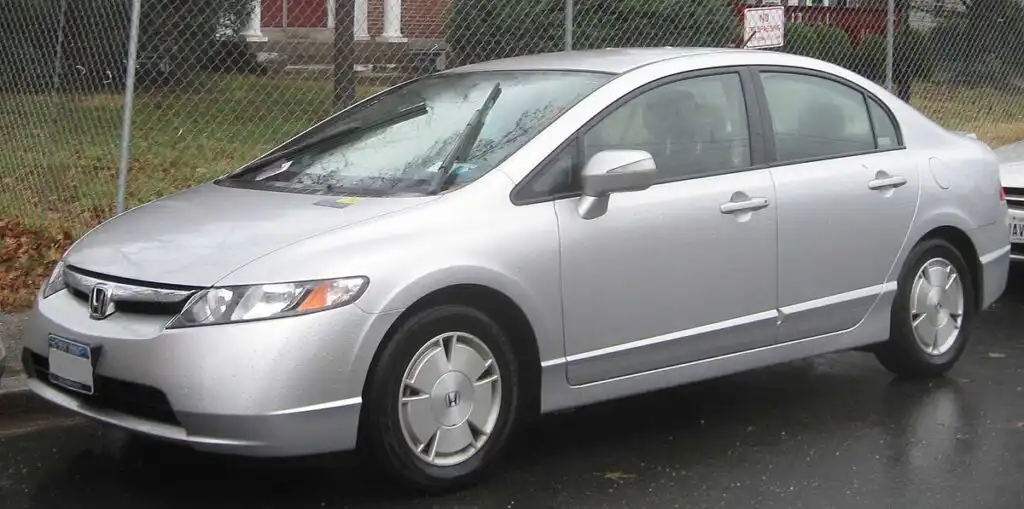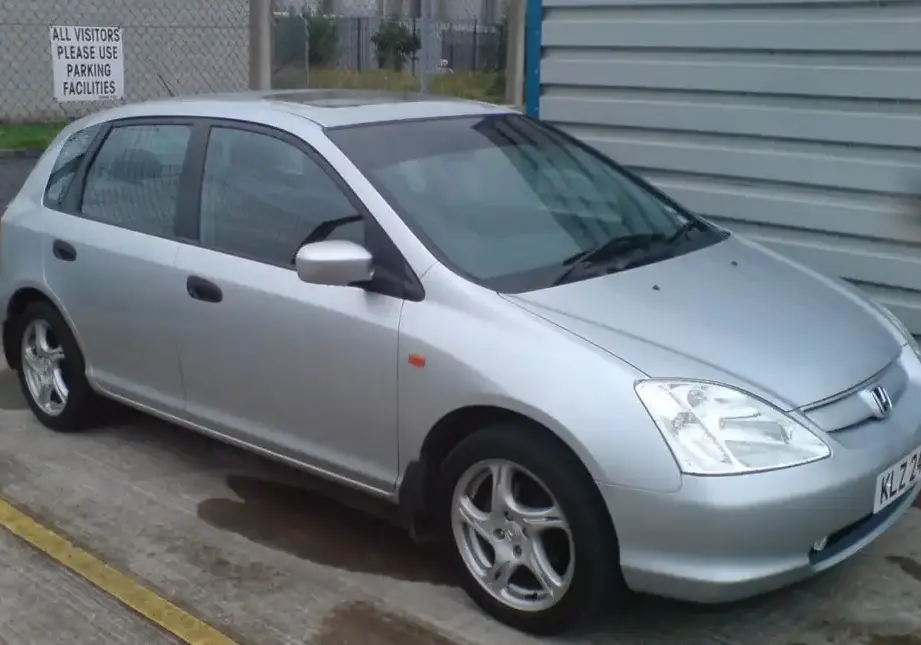
The Honda Civic VII Hatchback 5D 1.4 16V, produced between 2001 and 2006, represented a key entry point into the seventh generation (2001-2005) of Honda’s globally successful Civic line. This particular variant, powered by the 1.4-liter D14Z6 engine producing 90 horsepower, was primarily aimed at the European market where smaller displacement engines were favored due to tax regulations and fuel economy considerations. It served as a practical and affordable option within the Civic VII range, positioned below the more powerful 1.6 and 1.7-liter models. The Civic VII, built on the Honda’s New Mechanical Structure (NMSS) platform, offered improved rigidity and safety compared to its predecessor.
Technical Specifications
| Brand | Honda |
| Model | Civic |
| Generation | Civic VII Hatchback 5D |
| Type (Engine) | 1.4 16V (90 Hp) |
| Start of production | 2001 |
| End of production | 2006 |
| Powertrain Architecture | Internal Combustion engine |
| Body type | Hatchback |
| Seats | 5 |
| Doors | 5 |
| Fuel consumption (urban) | 8.3 l/100 km (28.3 US mpg) |
| Fuel consumption (extra urban) | 5.4 l/100 km (43.6 US mpg) |
| Fuel consumption (combined) | 6.4 l/100 km (36.8 US mpg) |
| Fuel Type | Petrol (Gasoline) |
| Acceleration 0 – 100 km/h | 11.8 sec |
| Acceleration 0 – 62 mph | 11.8 sec |
| Acceleration 0 – 60 mph | 11.2 sec |
| Maximum speed | 176 km/h (109.36 mph) |
| Weight-to-power ratio | 12.6 kg/Hp |
| Weight-to-torque ratio | 9.4 kg/Nm |
| Power | 90 Hp @ 6400 rpm |
| Torque | 120 Nm @ 4800 rpm (88.51 lb.-ft. @ 4800 rpm) |
| Engine layout | Front, Transverse |
| Engine Model/Code | D14Z6 |
| Engine displacement | 1396 cm3 (85.19 cu. in.) |
| Number of cylinders | 4 |
| Engine configuration | Inline |
| Cylinder Bore | 75 mm (2.95 in.) |
| Piston Stroke | 79 mm (3.11 in.) |
| Compression ratio | 9:1 |
| Number of valves per cylinder | 4 |
| Fuel injection system | Multi-port manifold injection |
| Engine aspiration | Naturally aspirated |
| Valvetrain | OHC |
| Engine oil capacity | 3.2 l (3.38 US qt | 2.82 UK qt) |
| Coolant capacity | 4 l (4.23 US qt | 3.52 UK qt) |
| Kerb Weight | 1130 kg (2491.22 lbs.) |
| Max. weight | 1620 kg (3571.49 lbs.) |
| Max load | 490 kg (1080.27 lbs.) |
| Trunk (boot) space – minimum | 370 l (13.07 cu. ft.) |
| Trunk (boot) space – maximum | 1050 l (37.08 cu. ft.) |
| Fuel tank capacity | 50 l (13.21 US gal | 11 UK gal) |
| Length | 4285 mm (168.7 in.) |
| Width | 1695 mm (66.73 in.) |
| Height | 1495 mm (58.86 in.) |
| Wheelbase | 2680 mm (105.51 in.) |
| Front track | 1468 mm (57.8 in.) |
| Rear track | 1469 mm (57.83 in.) |
| Drivetrain Architecture | Front wheel drive |
| Number of gears | 5 |
| Gearbox type | Manual transmission |
| Front suspension | Spring Strut |
| Rear suspension | Transverse stabilizer |
| Front brakes | Ventilated discs |
| Rear brakes | Disc |
| Assisting systems | ABS (Anti-lock braking system) |
| Steering type | Steering rack and pinion |
| Tires size | 185/70 R14 |
Powertrain & Engine Architecture
The heart of this Civic variant is the D14Z6 engine, a 1.4-liter inline-four cylinder powerplant. This engine is a naturally aspirated unit featuring a single overhead camshaft (SOHC) valvetrain with four valves per cylinder (16V). It utilizes a multi-point fuel injection system for precise fuel delivery. The D14Z6 is known for its relative simplicity and durability, though it doesn’t offer the performance of larger Civic engines. The engine’s 90 horsepower output at 6400 rpm and 120 Nm (88.51 lb-ft) of torque at 4800 rpm were considered adequate for everyday driving, but not particularly sporty. The engine was typically paired with a five-speed manual transmission, but a four-speed automatic transmission was also available, impacting acceleration and fuel economy. The automatic transmission, while offering convenience, added to the 0-60 mph time of around 11.8 seconds.
Driving Characteristics
The 1.4 16V Civic with the automatic transmission provided a comfortable, if not exhilarating, driving experience. The automatic gearbox, while smooth in operation, was not particularly quick to shift, and the engine often felt strained when accelerating hard. The gear ratios were optimized for fuel efficiency rather than performance. Compared to the five-speed manual version, the automatic suffered a slight performance penalty. The manual transmission allowed for better control and a more engaging driving experience, while the automatic prioritized ease of use, particularly in urban environments. The Civic’s suspension provided a good balance between comfort and handling, making it suitable for both city driving and longer journeys.
Equipment & Trim Levels
The 1.4 16V trim level typically represented the entry-level offering in the Civic VII Hatchback range. Standard equipment generally included power steering, central locking, electric front windows, and an AM/FM radio. Air conditioning was often an optional extra. Interior upholstery was typically cloth, and the dashboard featured a functional, if somewhat basic, design. Higher trim levels, such as the 1.6 and 1.7 models, offered additional features like alloy wheels, upgraded audio systems, and more luxurious interior appointments. Safety features included dual airbags and ABS (Anti-lock Braking System) as standard equipment.
Chassis & Braking
The Civic VII Hatchback utilized a MacPherson strut front suspension and a torsion beam rear suspension. This setup provided a good compromise between ride comfort and handling. The front brakes were ventilated discs, offering good stopping power, while the rear brakes were typically solid discs. The ABS system helped to maintain steering control during emergency braking situations. The chassis was designed to be lightweight, contributing to the car’s overall fuel efficiency. The relatively modest power output of the 1.4 engine meant that the braking system was generally adequate for the car’s performance capabilities.
Market Reception & Comparison
The 1.4 16V Civic Hatchback was generally well-received as a practical and economical choice. Critics praised its fuel efficiency, reliability, and spacious interior. However, the engine’s lack of power was often noted, particularly when compared to the more potent 1.6 and 1.7-liter variants. The automatic transmission, while convenient, was seen as detracting from the driving experience. In terms of fuel economy, the 1.4 model consistently outperformed the larger-engined versions, making it an attractive option for budget-conscious buyers. Reliability was a strong point, with the D14Z6 engine proving to be durable and relatively maintenance-free.
Legacy
The Honda Civic VII 1.4 16V remains a popular choice in the used car market, particularly for first-time drivers or those seeking an affordable and reliable vehicle. The D14Z6 engine is known for its longevity, and parts availability is generally good. While not a performance icon, this variant represents a solid and dependable option within the Civic VII lineup. Its fuel efficiency and low running costs continue to make it an appealing choice for those seeking a practical and economical hatchback. The Civic VII, as a whole, cemented Honda’s reputation for building high-quality, reliable vehicles, and the 1.4 16V played a significant role in making the Civic accessible to a wider range of buyers.