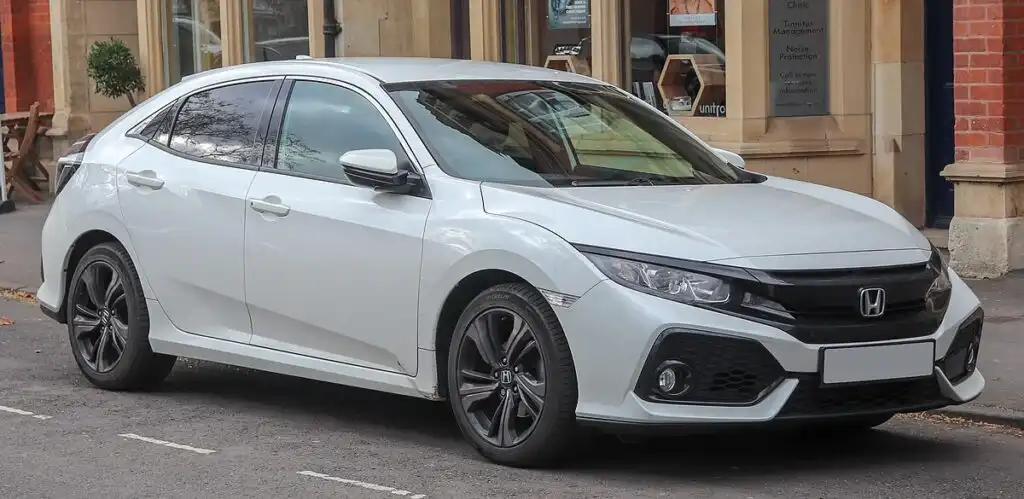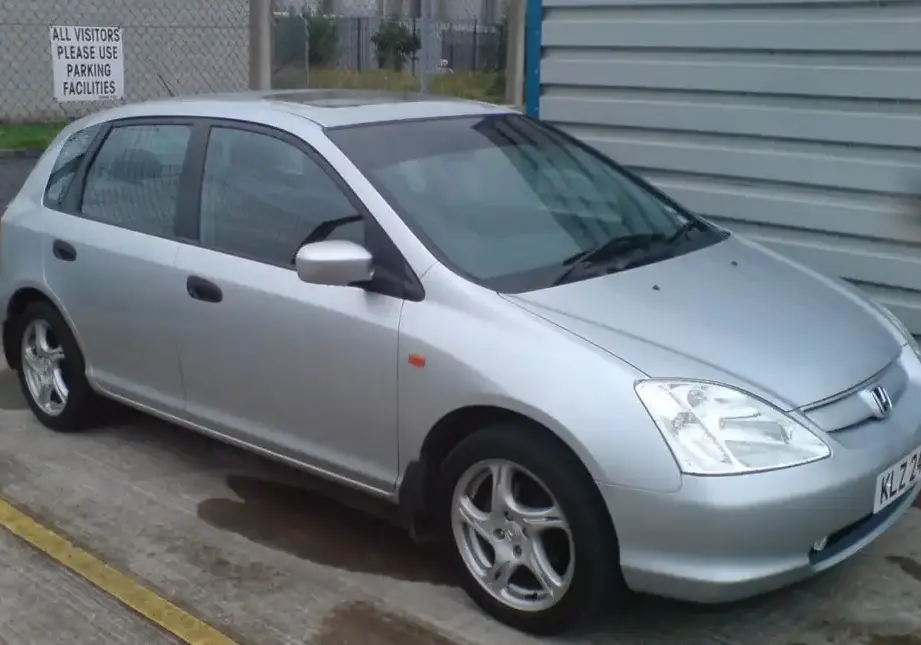
The Honda Civic VII Hatchback 5D 1.7 CTDI, produced between 2001 and 2006, represented Honda’s entry into the increasingly popular European diesel hatchback market. Part of the seventh generation Civic (1995-2006), this variant offered a fuel-efficient and practical option for buyers seeking a compact family car. It was positioned as a more economical alternative to the petrol-powered Civic models, appealing to those prioritizing low running costs and torque for everyday driving. The 1.7 CTDI utilized Honda’s common-rail direct injection technology, a relatively new advancement at the time, to deliver improved performance and reduced emissions compared to older diesel engines.
Technical Specifications
| Brand | Honda |
| Model | Civic |
| Generation | Civic VII Hatchback 5D |
| Type (Engine) | 1.7 CTDI (100 Hp) |
| Start of production | 2001 |
| End of production | 2006 |
| Powertrain Architecture | Internal Combustion engine |
| Body type | Hatchback |
| Seats | 5 |
| Doors | 5 |
| Fuel consumption (urban) | 6.2 l/100 km (37.9 US mpg, 45.6 UK mpg, 16.1 km/l) |
| Fuel consumption (extra urban) | 4.3 l/100 km (54.7 US mpg, 65.7 UK mpg, 23.3 km/l) |
| Fuel consumption (combined) | 5 l/100 km (47 US mpg, 56.5 UK mpg, 20 km/l) |
| Fuel Type | Diesel |
| Acceleration 0 – 100 km/h | 11.5 sec |
| Acceleration 0 – 62 mph | 11.5 sec |
| Acceleration 0 – 60 mph | 10.9 sec |
| Maximum speed | 182 km/h (113.09 mph) |
| Weight-to-power ratio | 13 kg/Hp, 77.2 Hp/tonne |
| Weight-to-torque ratio | 5.9 kg/Nm, 169.9 Nm/tonne |
| Power | 100 Hp @ 4400 rpm |
| Power per litre | 59.3 Hp/l |
| Torque | 220 Nm @ 1800 rpm (162.26 lb.-ft. @ 1800 rpm) |
| Engine layout | Front, Transverse |
| Engine Model/Code | 4EE-2 |
| Engine displacement | 1687 cm3 (102.95 cu. in.) |
| Number of cylinders | 4 |
| Engine configuration | Inline |
| Cylinder Bore | 79 mm (3.11 in.) |
| Piston Stroke | 86 mm (3.39 in.) |
| Compression ratio | 18.5:1 |
| Number of valves per cylinder | 4 |
| Fuel injection system | Diesel Commonrail |
| Engine aspiration | Turbocharger, Intercooler |
| Valvetrain | DOHC |
| Engine oil capacity | 5 l (5.28 US qt | 4.4 UK qt) |
| Coolant capacity | 5.33 l (5.63 US qt | 4.69 UK qt) |
| Kerb Weight | 1295 kg (2854.99 lbs.) |
| Max. weight | 1710 kg (3769.9 lbs.) |
| Max load | 415 kg (914.92 lbs.) |
| Trunk (boot) space – minimum | 370 l (13.07 cu. ft.) |
| Trunk (boot) space – maximum | 1050 l (37.08 cu. ft.) |
| Fuel tank capacity | 50 l (13.21 US gal | 11 UK gal) |
| Length | 4285 mm (168.7 in.) |
| Width | 1695 mm (66.73 in.) |
| Height | 1495 mm (58.86 in.) |
| Wheelbase | 2680 mm (105.51 in.) |
| Front track | 1468 mm (57.8 in.) |
| Rear track | 1469 mm (57.83 in.) |
| Drivetrain Architecture | Front wheel drive |
| Number of gears | 5 |
| Gearbox type | Manual transmission |
| Front suspension | Spring Strut |
| Rear suspension | Transverse stabilizer |
| Front brakes | Ventilated discs |
| Rear brakes | Disc |
| Assisting systems | ABS (Anti-lock braking system) |
| Steering type | Steering rack and pinion |
| Tires size | 195/60 R15 |
Powertrain & Engine Architecture
The heart of the Civic 1.7 CTDI was the 4EE-2 engine, a 1.7-liter inline-four cylinder diesel. This engine utilized a second-generation Honda common-rail direct injection system, delivering fuel directly into the cylinders at extremely high pressure. This technology, combined with a turbocharger and intercooler, allowed for a good balance of power and fuel efficiency. The engine featured a double overhead camshaft (DOHC) valvetrain with four valves per cylinder, optimizing airflow for improved combustion. The 4EE-2 engine produced 100 horsepower at 4400 rpm and 220 Nm (162 lb-ft) of torque at 1800 rpm. The five-speed manual transmission was the standard offering, providing a relatively direct connection between the engine and the front wheels. The engine’s design prioritized low-end torque, making it well-suited for everyday driving and providing ample pulling power.
Driving Characteristics
The 1.7 CTDI offered a distinctly different driving experience compared to the petrol-powered Civic models. While lacking the outright acceleration of higher-powered variants, the diesel engine’s strong low-end torque made it feel responsive in urban and highway environments. The five-speed manual transmission was well-matched to the engine’s characteristics, allowing drivers to keep the engine in its optimal torque band. Acceleration from 0-60 mph took around 10.9 seconds, and the top speed was approximately 113 mph. The gear ratios were tuned for fuel economy, meaning the engine could feel slightly strained at higher speeds. Compared to a potential future 1.8L petrol variant, the CTDI offered significantly better fuel economy but less overall performance. The diesel’s heavier engine also slightly impacted handling, making it feel less nimble than its petrol counterparts.
Equipment & Trim Levels
The 1.7 CTDI typically came with a reasonable level of standard equipment, though it generally sat towards the lower end of the Civic range. Standard features often included power steering, central locking, electric front windows, and an ABS anti-lock braking system. Interior upholstery was typically cloth, and the dashboard featured a functional, if somewhat basic, design. Optional extras could include air conditioning, alloy wheels, and a CD player. Trim levels varied slightly depending on the specific European market, but the 1.7 CTDI was generally positioned as the entry-level diesel option, appealing to budget-conscious buyers.
Chassis & Braking
The Civic VII Hatchback utilized a MacPherson strut front suspension and a torsion beam rear suspension. This setup provided a comfortable ride quality, although it wasn’t particularly sporty. The front brakes were ventilated discs, offering good stopping power, while the rear brakes were solid discs. The ABS system helped to maintain stability during hard braking. The chassis was designed to accommodate the heavier diesel engine without compromising handling too significantly. Stabilizer bars were fitted to both the front and rear axles to reduce body roll during cornering.
Market Reception & Comparison
The Civic 1.7 CTDI was generally well-received by European automotive critics. It was praised for its fuel efficiency, strong torque, and practicality. However, some reviewers noted that the engine could be somewhat noisy and that the performance wasn’t as exciting as some of its competitors. Compared to other diesel hatchbacks of the time, such as the Volkswagen Golf TDI, the Civic offered a competitive package in terms of fuel economy and reliability. The Golf TDI often had a more refined engine and a slightly more premium interior, but the Civic was typically more affordable. The 1.7 CTDI offered a compelling alternative to the petrol-powered Civic models, particularly for drivers who covered high mileage.
Legacy
The 4EE-2 engine proved to be a relatively reliable unit, and well-maintained examples of the Civic 1.7 CTDI continue to be found on the used car market today. While not known for being particularly high-performance, the engine’s durability and fuel efficiency have made it a popular choice for those seeking a practical and economical hatchback. Common issues include wear and tear on the turbocharger and potential problems with the fuel injectors, but these are generally manageable with regular maintenance. The Civic 1.7 CTDI represents a significant step in Honda’s diesel engine development and helped to establish the brand as a viable option in the European diesel market.