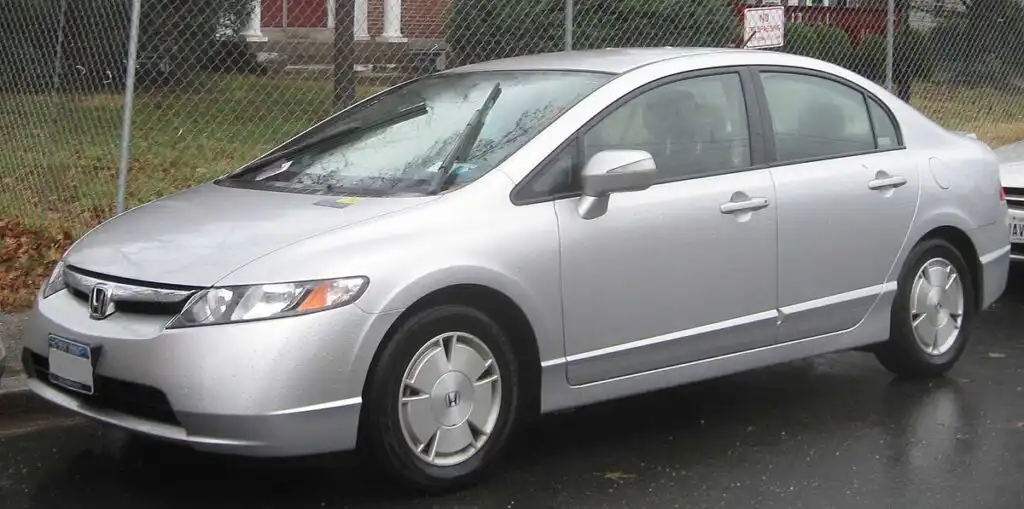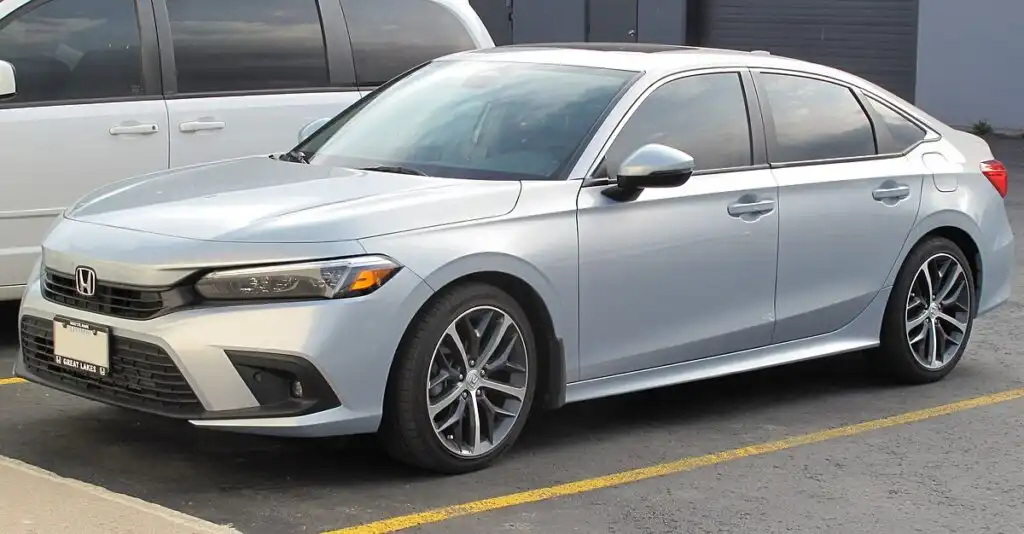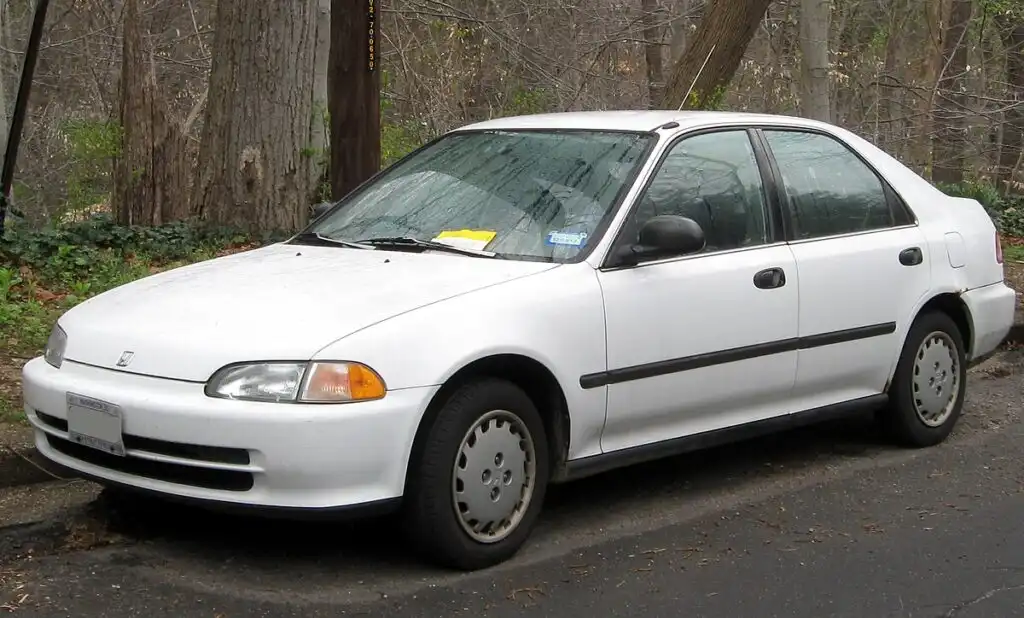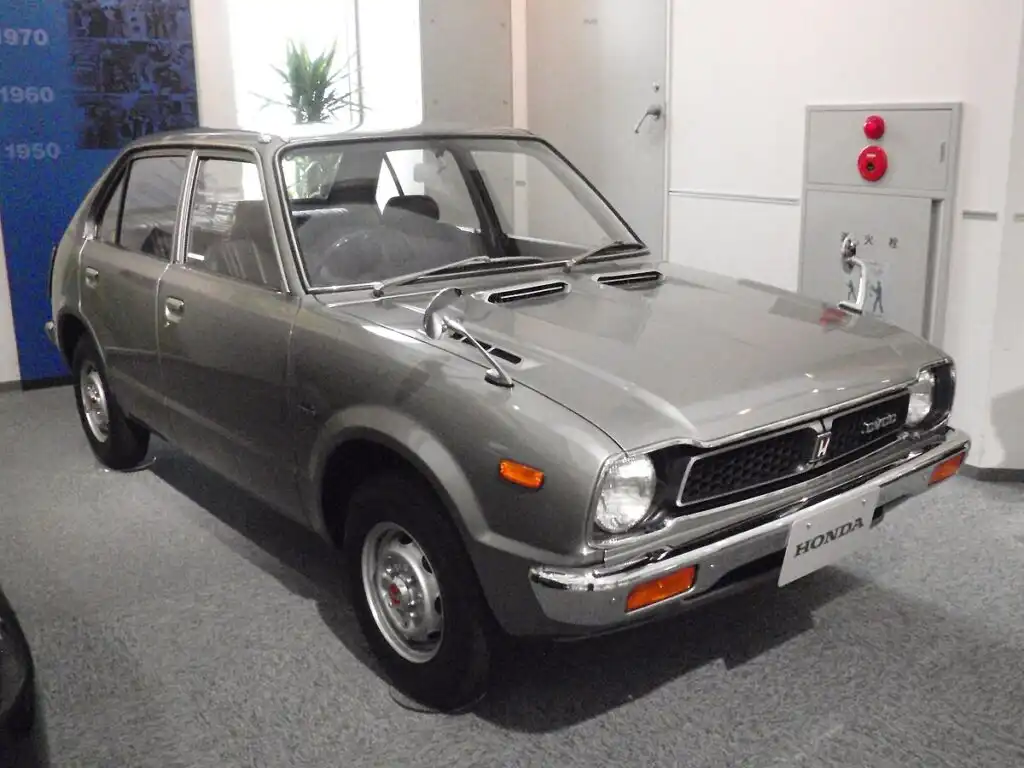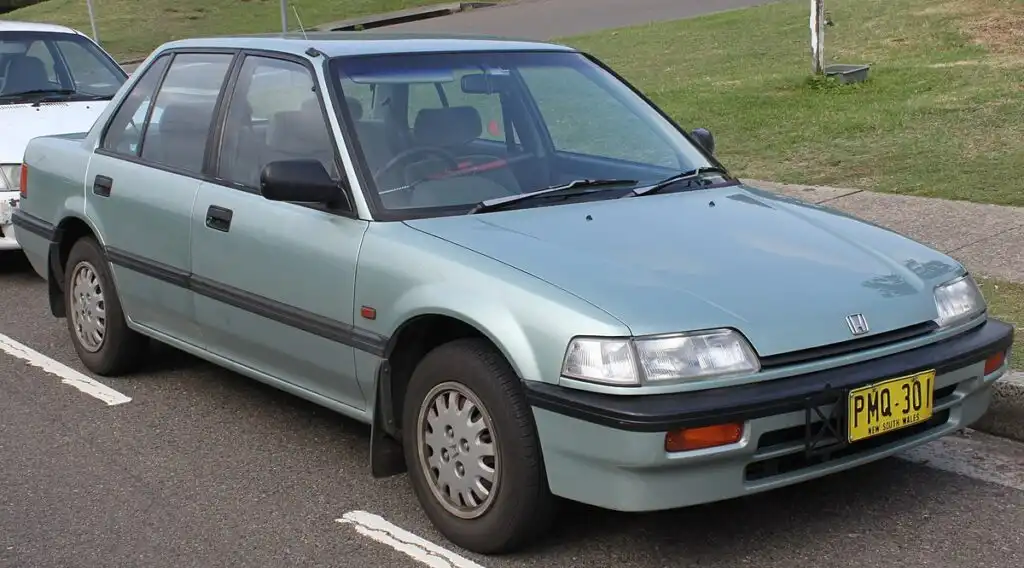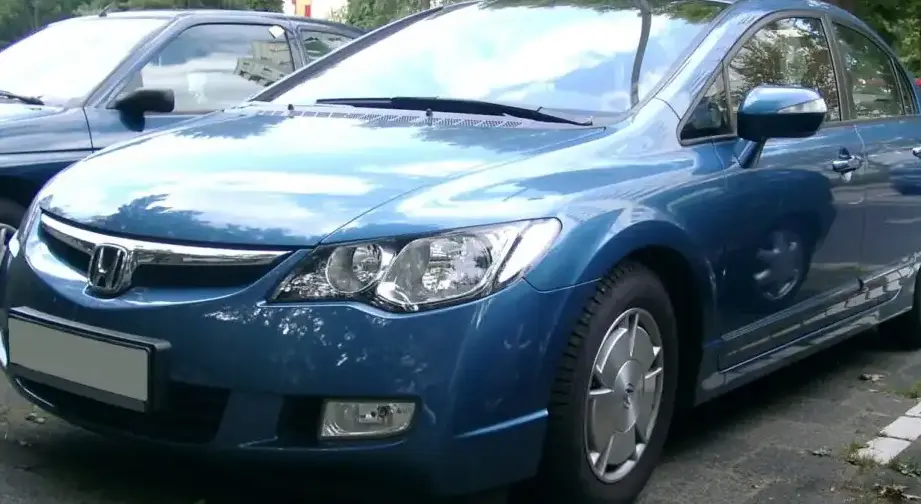
The Honda Civic VIII Sedan 1.3 i-DSi IMA, produced from 2006 to 2011, represents Honda’s foray into mainstream hybrid technology within the popular Civic lineup. This variant, powered by a 1.3-liter gasoline engine coupled with Honda’s Integrated Motor Assist (IMA) hybrid system, was primarily aimed at the fuel-conscious consumer. It occupied a unique position within the eighth-generation Civic (2005-2011) range, offering a more economical alternative to the traditionally powered models. The 1.3 i-DSi IMA was sold primarily in Europe and Japan, where fuel efficiency and emissions regulations were particularly stringent. It was not officially offered in the North American market.
Technical Specifications
| Brand | Honda |
| Model | Civic |
| Generation | Civic VIII Sedan |
| Type (Engine) | 1.3 i-DSi IMA (110 Hp) Hybrid e-CVT |
| Start of production | 2006 |
| End of production | 2011 |
| Powertrain Architecture | FHEV (Full Hybrid Electric Vehicle) |
| Body type | Sedan |
| Seats | 5 |
| Doors | 4 |
| Fuel consumption (urban) | 4.8 l/100 km (49 US mpg, 58.9 UK mpg, 20.8 km/l) |
| Fuel consumption (extra urban) | 4.6 l/100 km (51.1 US mpg, 61.4 UK mpg, 21.7 km/l) |
| Fuel Type | Petrol (Gasoline) |
| Emission standard | AT-PZEV |
| Weight-to-power ratio | 11.9 kg/Hp, 84.4 Hp/tonne |
| Weight-to-torque ratio | 10.6 kg/Nm, 94.3 Nm/tonne |
| Gross battery capacity | 0.86 kWh |
| Battery voltage | 158 V |
| Battery technology | Nickel-metal hydride (NiMH) |
| Battery location | Behind the back wall of the passenger cabin |
| Electric motor power | 20 Hp @ 2000 rpm |
| Electric motor Torque | 103 Nm @ 0-1160 rpm (75.97 lb.-ft. @ 0-1160 rpm) |
| Power | 110 Hp @ 6000 rpm |
| Torque | 123 Nm @ 1000-2500 rpm (90.72 lb.-ft. @ 1000-2500 rpm) |
| Maximum engine speed | 6300 rpm |
| Engine layout | Front, Transverse |
| Engine displacement | 1339 cm3 (81.71 cu. in.) |
| Number of cylinders | 4 |
| Engine configuration | Inline |
| Cylinder Bore | 73 mm (2.87 in.) |
| Piston Stroke | 80 mm (3.15 in.) |
| Compression ratio | 10.8:1 |
| Number of valves per cylinder | 2 |
| Fuel injection system | Multi-port manifold injection |
| Engine aspiration | Naturally aspirated engine |
| Valvetrain | SOHC, i-VTEC |
| Engine oil capacity | 3.8 l (4.02 US qt | 3.34 UK qt) |
| Coolant | 5.8 l (6.13 US qt | 5.1 UK qt) |
| Kerb Weight | 1304 kg (2874.83 lbs.) |
| Trunk (boot) space – minimum | 294 l (10.38 cu. ft.) |
| Fuel tank capacity | 47 l (12.42 US gal | 10.34 UK gal) |
| Length | 4488 mm (176.69 in.) |
| Width | 1753 mm (69.02 in.) |
| Height | 1430 mm (56.3 in.) |
| Wheelbase | 2700 mm (106.3 in.) |
| Front track | 1499 mm (59.02 in.) |
| Rear (Back) track | 1529 mm (60.2 in.) |
| Minimum turning circle | 10.6 m (34.78 ft.) |
| Drivetrain Architecture | The Internal combustion engine (ICE) and electric motor drive the front wheels of the car with the ability to work in full electric or mixed mode. |
| Drive wheel | Front wheel drive |
| Number of gears and type of gearbox | automatic transmission e-CVT |
| Front suspension | Independent type McPherson |
| Rear suspension | Double wishbone |
| Front brakes | Ventilated discs, 261.62 mm |
| Rear brakes | Drum, 220.98 mm |
| Assisting systems | ABS (Anti-lock braking system) |
| Steering type | Steering rack and pinion |
| Power steering | Electric Steering |
| Tires size | 195/65 R15 |
| Wheel rims size | 6J x 15 |
Introduction
The Honda Civic VIII Sedan 1.3 i-DSi IMA, launched in 2006, was a key component of Honda’s strategy to offer a more environmentally friendly option within its popular Civic range. Built on the global Honda Civic platform (often referred to as the 1HX0/A3 platform), this hybrid variant aimed to appeal to buyers seeking lower running costs and reduced emissions. It represented Honda’s second-generation IMA system, building upon the experience gained with the earlier Insight and Civic Hybrid models. The 1.3 i-DSi IMA was positioned as an entry-level hybrid, offering a balance between affordability and fuel efficiency.
Powertrain & Engine Architecture
At the heart of the 1.3 i-DSi IMA lies a 1339cc inline-four cylinder engine, designated as the D13A. This engine utilizes Honda’s i-DSi (Intelligent Dual Sequential Injection) technology, a multi-point fuel injection system designed to optimize combustion efficiency. The engine features a single overhead camshaft (SOHC) and Honda’s VTEC (Variable Valve Timing and Lift Electronic Control) system, though in a simplified form compared to higher-performance VTEC engines. The engine produces 110 horsepower at 6000 rpm and 90.72 lb-ft of torque between 1000 and 2500 rpm.
The engine is paired with Honda’s Integrated Motor Assist (IMA) system. This system incorporates a 20 horsepower electric motor that assists the gasoline engine, particularly during acceleration and low-speed driving. The electric motor is powered by a 158V nickel-metal hydride (NiMH) battery pack located behind the rear seats. The e-CVT (electronically controlled continuously variable transmission) seamlessly blends the power from both the engine and the electric motor, providing smooth and efficient acceleration. Unlike traditional CVTs with belts, the e-CVT uses a planetary gearset to achieve variable ratios, enhancing efficiency and responsiveness.
Driving Characteristics
The 1.3 i-DSi IMA offers a distinctly different driving experience compared to its gasoline-only counterparts. While not a performance-oriented vehicle, the combined output of the engine and electric motor provides adequate power for everyday driving. The e-CVT contributes to a smooth, linear acceleration feel, although it can sometimes feel less responsive than a traditional automatic transmission. The electric motor provides instant torque, which helps to improve responsiveness at lower speeds. The car excels in urban environments, where the electric motor can frequently operate, resulting in significant fuel savings. Compared to the 1.8-liter gasoline Civic models, the 1.3 IMA offers considerably better fuel economy but sacrifices some outright performance. The lack of manual transmission option further limits driver engagement for those seeking a more sporty experience.
Equipment & Trim Levels
The 1.3 i-DSi IMA typically came equipped with a reasonable level of standard features, reflecting its position as a mid-range trim. Standard equipment often included air conditioning, power windows, central locking, and an audio system. Safety features such as ABS (Anti-lock Braking System) and airbags were also standard. Higher trim levels offered options such as alloy wheels, a sunroof, and upgraded interior upholstery. The interior design was typical of the Civic VIII, with a functional and modern dashboard layout. The instrument cluster featured displays for fuel economy, battery charge level, and hybrid system status.
Chassis & Braking
The Civic VIII Sedan 1.3 i-DSi IMA utilizes a McPherson strut front suspension and a double wishbone rear suspension. This suspension setup provides a comfortable ride quality, although it is not particularly sporty. The car’s relatively low weight, thanks to the hybrid system components, helps to improve handling. The braking system consists of ventilated discs at the front and drum brakes at the rear. The ABS system provides enhanced braking performance and stability. The steering is electrically assisted, providing light and precise steering feel.
Market Reception & Comparison
The 1.3 i-DSi IMA was generally well-received by critics for its fuel efficiency and low emissions. However, some reviewers noted its lack of outright performance and the somewhat uninspiring driving experience. Compared to the 1.8-liter gasoline Civic models, the IMA offered significantly better fuel economy – around 4.8 l/100km compared to 6.5-7.5 l/100km for the 1.8L – but at the cost of acceleration. The hybrid system added complexity and potential maintenance costs, although Honda’s reputation for reliability helped to mitigate these concerns. Against competitors like the Toyota Prius, the Civic IMA offered a more conventional appearance and driving experience, appealing to buyers who were hesitant to embrace the more radical styling of the Prius.
Legacy
The Honda Civic VIII Sedan 1.3 i-DSi IMA represents an important step in Honda’s hybrid technology development. While the IMA system has since been superseded by Honda’s newer hybrid systems, the 1.3 i-DSi IMA remains a relatively reliable and fuel-efficient vehicle. On the used car market, these models are often sought after by buyers looking for an economical and environmentally friendly vehicle. The longevity of the NiMH battery pack is a key concern for potential buyers, but many examples have proven to be durable with proper maintenance. The 1.3 i-DSi IMA’s contribution to popularizing hybrid technology and demonstrating Honda’s commitment to fuel efficiency has cemented its place in automotive history.