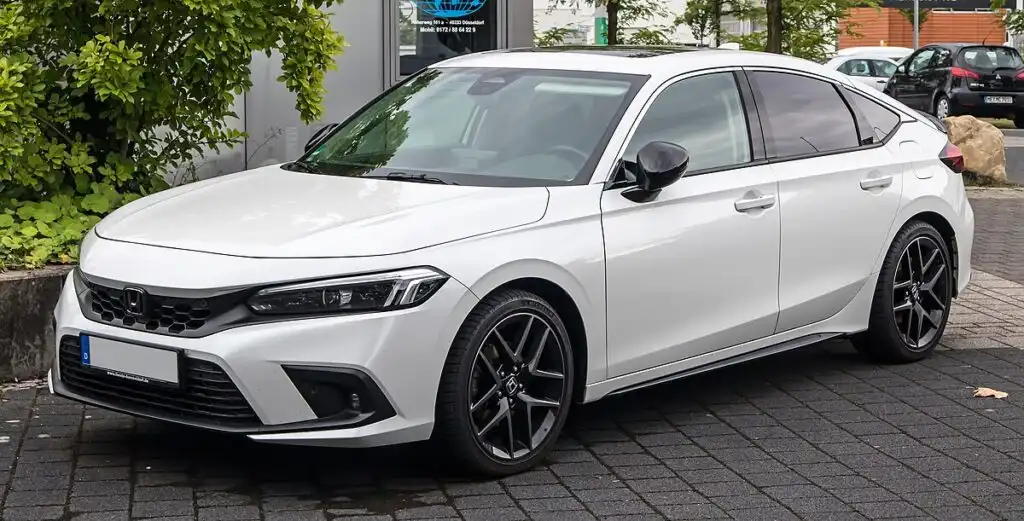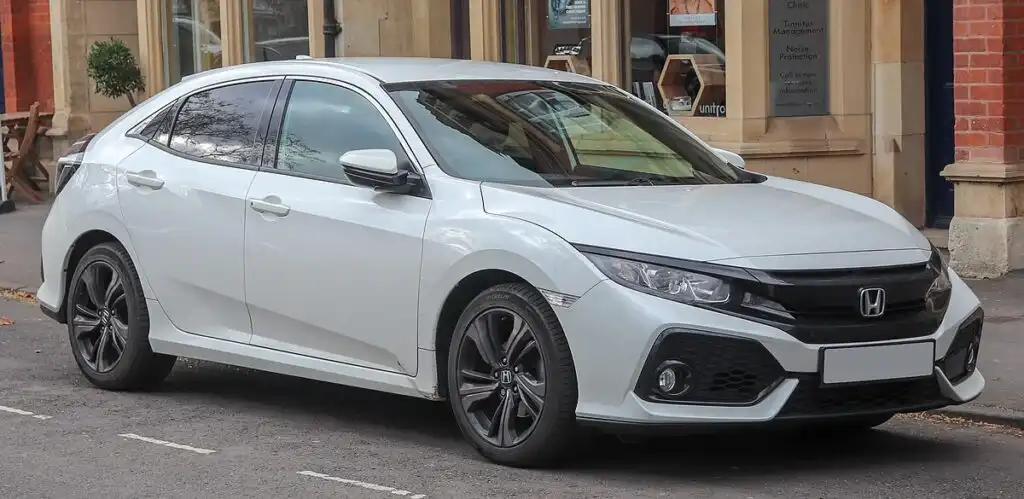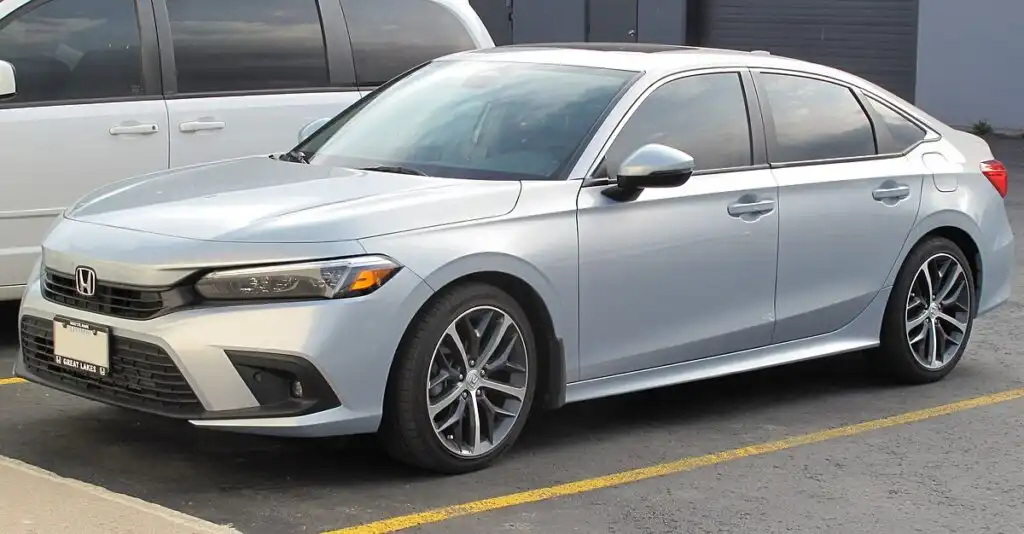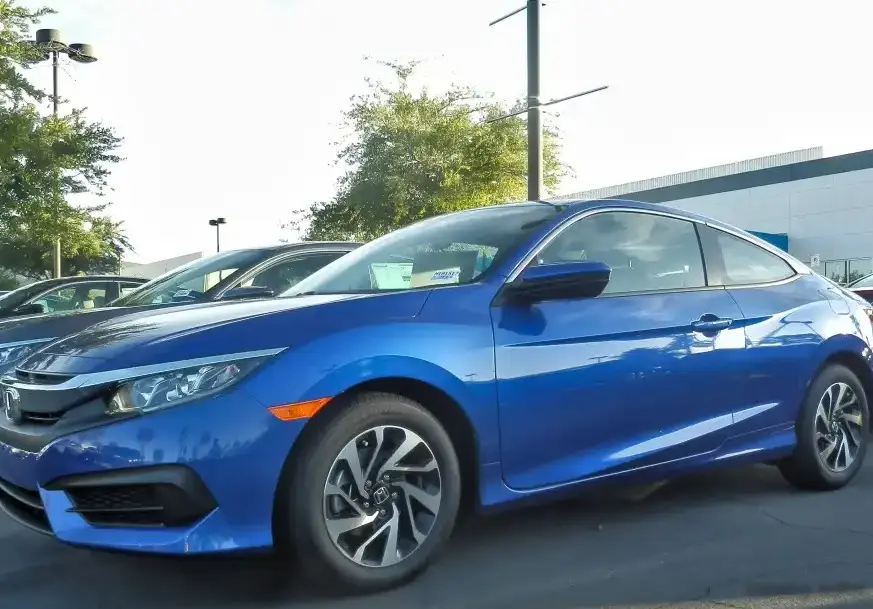
The Honda Civic X Coupe 2.0, produced from 2016 to 2019, represented a significant iteration in Honda’s long-running Civic lineage. Positioned as a sporty, two-door variant within the tenth-generation (FC/FK) Civic family, it aimed to attract a younger demographic with its more aggressive styling compared to the sedan and hatchback models. This particular 2.0-liter configuration, delivering 158 horsepower, served as a mid-range offering, bridging the gap between the base 1.5-liter turbocharged engine and the higher-performance trims. It was primarily marketed in North America, where the coupe body style held greater appeal.
Technical Specifications
| Brand | Honda |
| Model | Civic |
| Generation | Civic X Coupe |
| Type (Engine) | 2.0 (158 Hp) |
| Start of production | 2016 |
| End of production | 2019 |
| Powertrain Architecture | Internal Combustion engine |
| Body type | Coupe |
| Seats | 5 |
| Doors | 2 |
| Fuel consumption (urban) | 9 l/100 km (26.1 US mpg) |
| Fuel consumption (extra urban) | 6.2 l/100 km (37.9 US mpg) |
| Fuel consumption (combined) | 7.6 l/100 km (30.9 US mpg) |
| Fuel Type | Petrol (Gasoline) |
| Emission standard | Euro 6 |
| Weight-to-power ratio | 7.9 kg/Hp |
| Weight-to-torque ratio | 6.7 kg/Nm |
| Power | 158 Hp @ 6500 rpm |
| Power per litre | 79.2 Hp/l |
| Torque | 187 Nm @ 4200 rpm (137.92 lb.-ft. @ 4200 rpm) |
| Engine layout | Front, Transverse |
| Engine Model/Code | K20C |
| Engine displacement | 1996 cm3 (121.8 cu. in.) |
| Number of cylinders | 4 |
| Engine configuration | Inline |
| Cylinder Bore | 86 mm (3.39 in.) |
| Piston Stroke | 85.9 mm (3.38 in.) |
| Compression ratio | 10.8:1 |
| Number of valves per cylinder | 4 |
| Fuel injection system | Multi-port manifold injection |
| Engine aspiration | Naturally aspirated engine |
| Engine oil capacity | 4.2 l (4.44 US qt | 3.7 UK qt) |
| Coolant | 4.6 l (4.86 US qt | 4.05 UK qt) |
| Kerb Weight | 1246 kg (2746.96 lbs.) |
| Trunk (boot) space – minimum | 343 l (12.11 cu. ft.) |
| Fuel tank capacity | 46 l (12.15 US gal | 10.12 UK gal) |
| Length | 4493 mm (176.89 in.) |
| Width | 1798 mm (70.79 in.) |
| Height | 1394 mm (54.88 in.) |
| Wheelbase | 2700 mm (106.3 in.) |
| Front track | 1545 mm (60.83 in.) |
| Rear (Back) track | 1562 mm (61.5 in.) |
| Ride height (ground clearance) | 130 mm (5.12 in.) |
| Drivetrain Architecture | Front wheel drive |
| Number of gears and type of gearbox | 6 gears, manual transmission |
| Front suspension | Independent, type McPherson with coil spring and anti-roll bar |
| Rear suspension | Semi-independent, coil spring |
| Front brakes | Ventilated discs |
| Rear brakes | Disc |
| Assisting systems | ABS (Anti-lock braking system) |
| Steering type | Steering rack and pinion |
| Tires size | 215/55 R16 |
| Wheel rims size | 16 |
Powertrain & Engine Architecture
The heart of the Civic X Coupe 2.0 is the K20C 2.0-liter inline-four cylinder engine. This engine is a naturally aspirated powerplant, eschewing the forced induction found in the 1.5-liter turbo variant. It utilizes a multi-point fuel injection system, delivering fuel directly into the intake ports. The K20C features a dual overhead camshaft (DOHC) valvetrain with four valves per cylinder, contributing to its respectable power output. The engine’s design prioritizes responsiveness and linear power delivery. The standard transmission for this trim was a six-speed manual, although a continuously variable transmission (CVT) was offered as an option. The CVT was tuned for efficiency, but often at the expense of the engaging driving experience offered by the manual. The K20C engine is known for its robust construction and relatively simple design, contributing to its long-term reliability.
Driving Characteristics
The 2.0-liter Civic Coupe, particularly with the manual transmission, provided a noticeably more engaging driving experience than its turbocharged counterpart. While the 1.5T offered more low-end torque, the K20C required the driver to rev the engine higher to access its peak power. This resulted in a more traditional, sporty feel. The six-speed manual transmission featured well-defined shift gates and a relatively light clutch, making it easy to operate. The gear ratios were spaced to keep the engine within its optimal power band during spirited driving. Compared to the CVT, the manual offered a more direct connection between the driver and the powertrain. Acceleration from 0 to 60 mph was typically in the 7.0-7.5 second range, making it competitive within its class. The steering was precise and well-weighted, providing good feedback to the driver. Overall, the driving experience was characterized by a balance of responsiveness and comfort.
Equipment & Trim Levels
The 2.0-liter Civic Coupe typically came standard with features like a 5-inch LCD screen for infotainment, Bluetooth connectivity, a rearview camera, and automatic climate control. Higher trim levels, such as the EX and Sport Touring, added features like a larger touchscreen display (7-inch), Apple CarPlay and Android Auto integration, Honda Sensing safety suite (including adaptive cruise control and lane keeping assist), and premium audio systems. Interior upholstery was typically cloth, with leather options available on higher trims. Exterior styling cues varied depending on the trim level, with the Sport trim featuring unique wheels and a rear spoiler. The Sport Touring trim, in particular, offered a comprehensive package of features, including heated front seats and a premium sound system.
Chassis & Braking
The Civic X Coupe utilized a McPherson strut front suspension and a semi-independent multi-link rear suspension. This setup provided a good balance between ride comfort and handling precision. The steering was electrically assisted, offering a light and responsive feel. Braking duties were handled by ventilated discs up front and solid discs in the rear. Anti-lock braking system (ABS) was standard. The suspension tuning was generally geared towards comfort, but the Sport trim featured stiffer springs and dampers for a more performance-oriented ride. The chassis was designed to be lightweight and rigid, contributing to the car’s overall handling characteristics.
Market Reception & Comparison
Critics generally praised the Civic X Coupe 2.0 for its engaging driving dynamics and refined interior. However, some noted that the 1.5-liter turbocharged engine offered a better combination of performance and fuel economy. The 2.0-liter version was often seen as a good choice for drivers who prioritized driving enjoyment over outright efficiency. Compared to competitors like the Mazda3 and Volkswagen GTI, the Civic Coupe offered a more spacious interior and a reputation for reliability. Fuel economy was rated at around 30-31 mpg combined, which was competitive for its class. The Civic Coupe also benefited from Honda’s strong brand reputation for quality and dependability.
Legacy
The K20C engine, while not as technologically advanced as some of its competitors, proved to be a durable and reliable powerplant. Civic X Coupes with the 2.0-liter engine generally hold their value well in the used car market, particularly those with manual transmissions. Common maintenance items include routine oil changes, spark plug replacements, and occasional sensor replacements. The Civic X generation, as a whole, has established a reputation for long-term dependability, making the 2.0-liter Coupe a solid choice for buyers seeking a sporty and reliable used car. The K20C’s simplicity also makes it relatively easy and affordable to maintain, further enhancing its appeal in the used car market. It remains a popular choice for enthusiasts seeking a naturally aspirated, engaging driving experience.