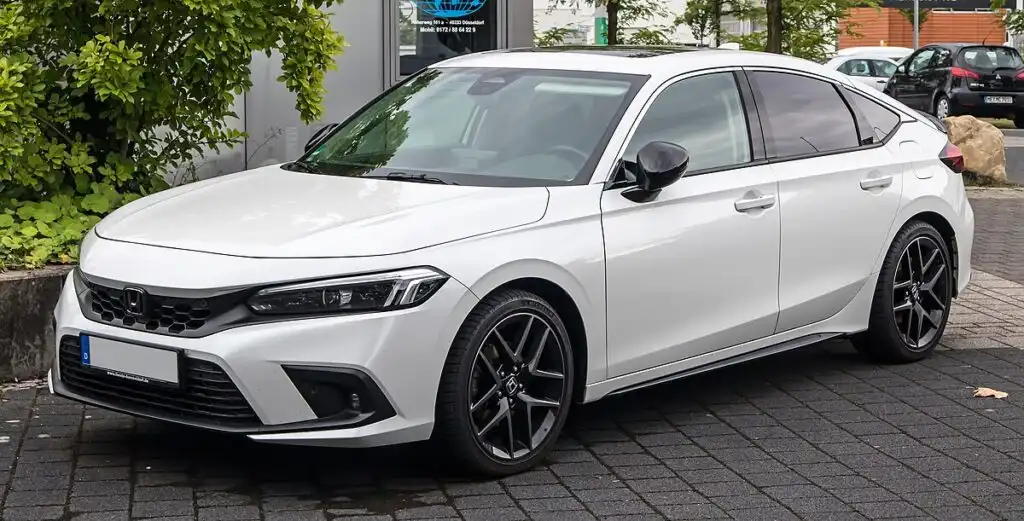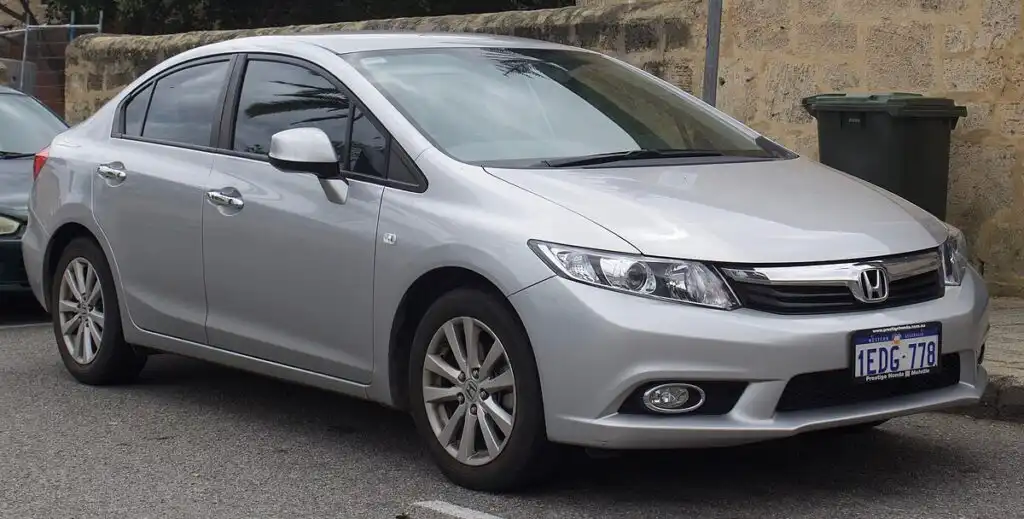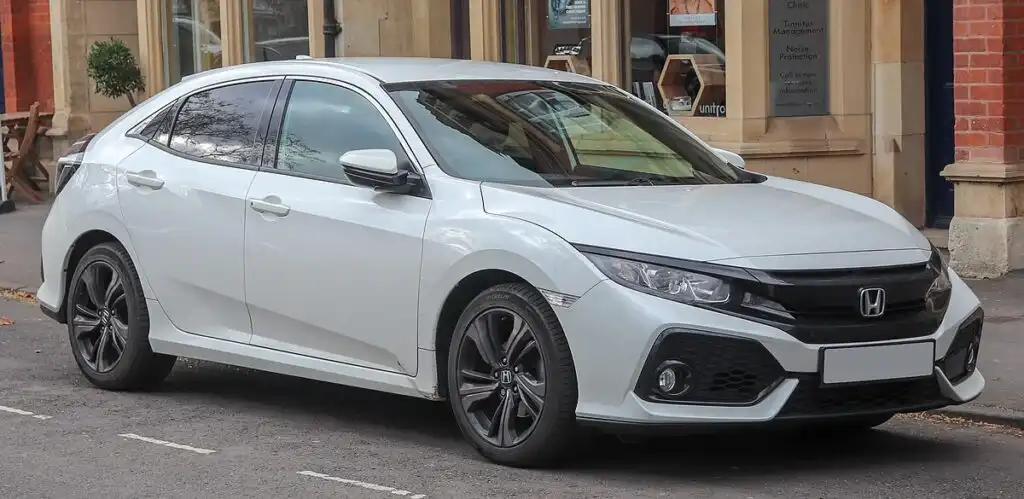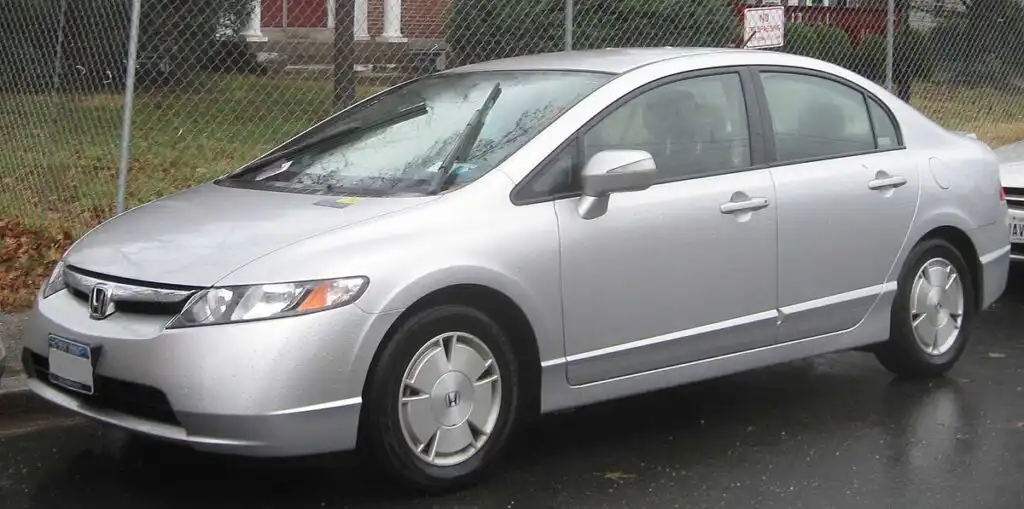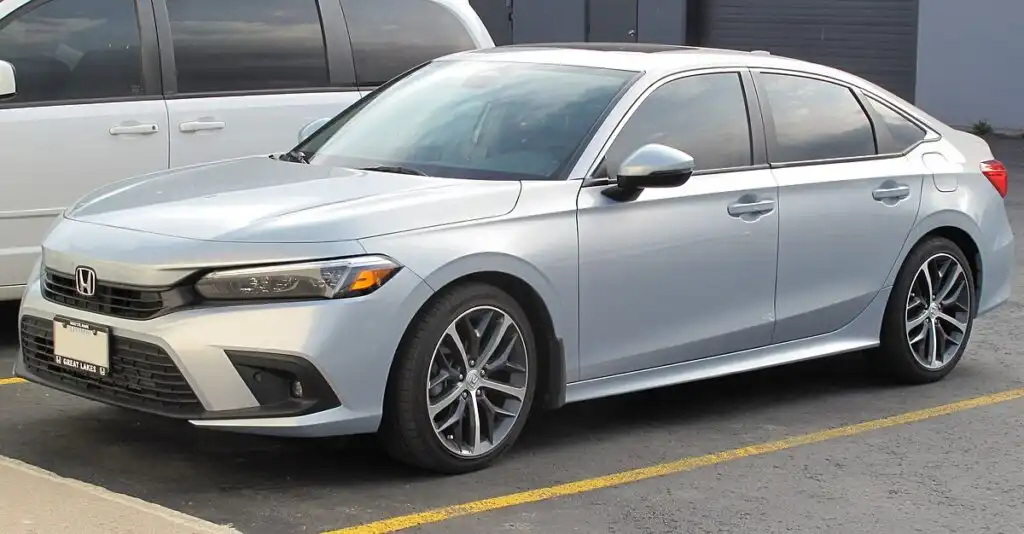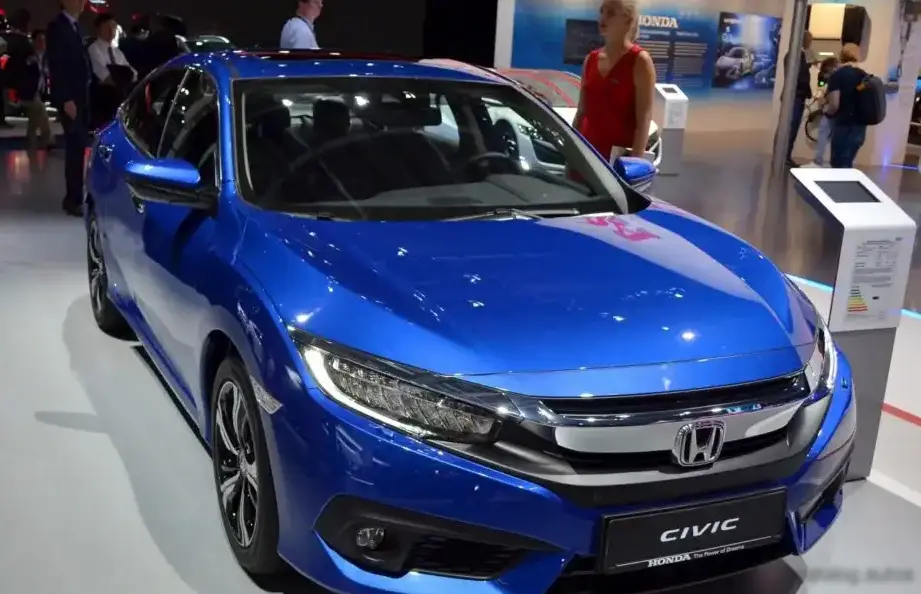
The Honda Civic X Sedan 1.6 i-DTEC Automatic, produced from 2018 to 2019, represented a fuel-efficient offering within the tenth-generation Civic lineup. Positioned as a mid-range trim, it aimed to balance practicality, economy, and reasonable performance for European and other international markets where diesel engines remained popular. This variant utilized a 1.6-liter turbocharged diesel engine paired with a nine-speed automatic transmission, offering a different driving experience compared to the gasoline-powered options and the manual diesel variants available. It was designed to appeal to drivers prioritizing fuel efficiency and comfortable, effortless commuting.
Technical Specifications
| Brand | Honda |
| Model | Civic |
| Generation | Civic X Sedan |
| Type (Engine) | 1.6 i-DTEC (120 Hp) Automatic |
| Start of production | 2018 |
| End of production | 2019 |
| Powertrain Architecture | Internal Combustion engine |
| Body type | Sedan |
| Seats | 5 |
| Doors | 4 |
| Fuel consumption at Low speed (WLTP) | 6.4-6.5 l/100 km (36.8 – 36.2 US mpg, 44.1 – 43.5 UK mpg, 15.6 – 15.4 km/l) |
| Fuel consumption at Medium speed (WLTP) | 5.0-5.2 l/100 km (47 – 45.2 US mpg, 56.5 – 54.3 UK mpg, 20 – 19.2 km/l) |
| Fuel consumption at high speed (WLTP) | 4.5-4.6 l/100 km (52.3 – 51.1 US mpg, 62.8 – 61.4 UK mpg, 22.2 – 21.7 km/l) |
| Fuel consumption at very high speed (WLTP) | 5.2-5.3 l/100 km (44.8 US mpg, 53.8 UK mpg, 19 km/l) |
| Combined fuel consumption (WLTP) | 5.1-5.2 l/100 km (46.1 – 45.2 US mpg, 55.4 – 54.3 UK mpg, 19.6 – 19.2 km/l) |
| CO2 emissions (WLTP) | 108 g/km |
| Fuel consumption (economy) – urban | 3.9 l/100 km (60.3 US mpg, 72.4 UK mpg, 25.6 km/l) |
| Fuel consumption (economy) – extra urban | 3.1 l/100 km (75.9 US mpg, 91.1 UK mpg, 32.3 km/l) |
| Fuel consumption (economy) – combined | 3.4 l/100 km (69.2 US mpg, 83.1 UK mpg, 29.4 km/l) |
| Fuel Type | Diesel |
| Acceleration 0 – 100 km/h | 10.7 sec |
| Acceleration 0 – 62 mph | 10.7 sec |
| Acceleration 0 – 60 mph | 10.2 sec |
| Maximum speed | 200 km/h (124.27 mph) |
| Emission standard | Euro 6 |
| Weight-to-power ratio | 11.1 kg/Hp, 89.8 Hp/tonne |
| Weight-to-torque ratio | 4.5 kg/Nm, 224.4 Nm/tonne |
| Power | 120 Hp @ 4000 rpm |
| Power per litre | 75.1 Hp/l |
| Torque | 300 Nm @ 2000 rpm (221.27 lb.-ft. @ 2000 rpm) |
| Engine layout | Front, Transverse |
| Engine Model/Code | N16A1 |
| Engine displacement | 1597 cm3 (97.45 cu. in.) |
| Number of cylinders | 4 |
| Engine configuration | Inline |
| Cylinder Bore | 76 mm (2.99 in.) |
| Piston Stroke | 88 mm (3.46 in.) |
| Compression ratio | 16:1 |
| Number of valves per cylinder | 4 |
| Fuel injection system | Diesel Commonrail |
| Engine aspiration | Turbocharger, Intercooler |
| Engine oil capacity | 4.5 l (4.76 US qt | 3.96 UK qt) |
| Coolant | 5.18 l (5.47 US qt | 4.56 UK qt) |
| Kerb Weight | 1337-1389 kg (2947.58 – 3062.22 lbs.) |
| Max. weight | 1820 kg (4012.41 lbs.) |
| Max load | 431-483 kg (950.19 – 1064.83 lbs.) |
| Trunk (boot) space – minimum | 519 l (18.33 cu. ft.) |
| Fuel tank capacity | 46 l (12.15 US gal | 10.12 UK gal) |
| Permitted trailer load with brakes (12%) | 1400 kg (3086.47 lbs.) |
| Permitted trailer load without brakes | 500 kg (1102.31 lbs.) |
| Length | 4648 mm (182.99 in.) |
| Width | 1799 mm (70.83 in.) |
| Width including mirrors | 2075 mm (81.69 in.) |
| Height | 1416 mm (55.75 in.) |
| Wheelbase | 2697 mm (106.18 in.) |
| Front track | 1543 mm (60.75 in.) |
| Rear (Back) track | 1575 mm (62.01 in.) |
| Ride height (ground clearance) | 124 mm (4.88 in.) |
| Minimum turning circle (turning diameter) | 11.3 m (37.07 ft.) |
| Drivetrain Architecture | The Internal combustion engine (ICE) drives the front wheels of the vehicle. |
| Drive wheel | Front wheel drive |
| Number of gears and type of gearbox | 9 gears, automatic transmission |
| Front suspension | Independent type McPherson |
| Rear suspension | Independent multi-link suspension |
| Front brakes | Ventilated discs |
| Rear brakes | Disc |
| Assisting systems | ABS (Anti-lock braking system) |
| Steering type | Steering rack and pinion |
| Power steering | Electric Steering |
| Tires size | 215/55 R16 |
| Wheel rims size | 16 |
INTRODUCTION
The Honda Civic X Sedan 1.6 i-DTEC Automatic, launched in 2018 and discontinued in 2019, was a key variant within the tenth-generation Civic (internally coded as the 1HX0/A3 platform) aimed at the European market and other regions with a preference for diesel engines. It offered a compelling blend of fuel efficiency and practicality, targeting buyers who prioritized low running costs and comfortable daily commuting. This model occupied a middle ground in the Civic X Sedan range, positioned above the base gasoline models but below the more powerful and often better-equipped 1.5L Turbo variants. The introduction of the 1.6 i-DTEC engine was Honda’s response to the demand for economical diesel options in a segment increasingly dominated by petrol and hybrid powertrains.
Powertrain & Engine Architecture
At the heart of the Civic 1.6 i-DTEC Automatic lies the N16A1 engine, a 1.6-liter inline-four cylinder diesel. This engine is a member of Honda’s Earth Dreams Technology series, designed for high efficiency and reduced emissions. It features a sophisticated turbocharger and intercooler system to boost power and torque. The engine utilizes a common-rail direct injection system, delivering fuel directly into the combustion chamber at extremely high pressure for optimized combustion. The valvetrain employs four valves per cylinder, enhancing breathing and contributing to the engine’s overall performance. The engine produces 120 horsepower at 4000 rpm and 300 Nm (221 lb-ft) of torque at 2000 rpm. Paired with this engine is a nine-speed automatic transmission, providing smooth and efficient gear changes. This transmission was chosen for its ability to keep the engine operating within its optimal torque band, maximizing fuel economy and drivability.
Driving Characteristics
The 1.6 i-DTEC Automatic offered a comfortable and refined driving experience, prioritizing fuel economy over outright performance. Acceleration from 0-100 km/h (0-62 mph) took approximately 10.7 seconds, which was noticeably slower than the gasoline-powered Civic variants. However, the engine’s strong low-end torque (300 Nm) provided adequate power for everyday driving situations, such as overtaking and merging onto highways. The nine-speed automatic transmission contributed to smooth gear changes, although some drivers noted a slight hesitation during downshifts. The gear ratios were optimized for fuel efficiency, keeping engine speeds relatively low during cruising. Compared to the manual transmission versions of the 1.6 i-DTEC, the automatic offered greater convenience, particularly in urban traffic. However, the manual versions generally provided slightly better fuel economy and a more engaging driving experience.
Equipment & Trim Levels
The Civic 1.6 i-DTEC Automatic typically came equipped with a respectable level of standard features. These included air conditioning, power windows, power mirrors, a basic audio system with Bluetooth connectivity, and a suite of safety features such as ABS, stability control, and multiple airbags. Interior upholstery was typically cloth, with a functional and durable design. Higher trim levels offered optional extras such as a touchscreen infotainment system with navigation, a rearview camera, automatic climate control, and alloy wheels. The dashboard layout was clean and modern, with a focus on ergonomics and ease of use. The specific trim level determined the availability of these optional features, with the 1.6 i-DTEC Automatic often serving as a base for adding various packages.
Chassis & Braking
The Civic X Sedan featured an independent suspension system, with McPherson struts at the front and a multi-link setup at the rear. This configuration provided a comfortable ride quality and good handling characteristics. The suspension was tuned to prioritize comfort over sporty handling, making it well-suited for everyday driving. Braking duties were handled by ventilated discs at the front and solid discs at the rear. ABS (Anti-lock Braking System) was standard, providing enhanced braking performance and stability. The steering system utilized an electric power steering setup, offering light and precise steering feel. The chassis was designed to be lightweight yet rigid, contributing to the car’s overall handling and safety.
Market Reception & Comparison
The Civic 1.6 i-DTEC Automatic received generally positive reviews from automotive critics, particularly for its fuel efficiency and comfortable ride. However, some reviewers noted its relatively modest performance compared to the gasoline-powered variants. Fuel economy figures were consistently impressive, with combined WLTP figures ranging from 5.1 to 5.2 l/100 km (46.1 – 45.2 US mpg). Compared to the 1.5L Turbo models, the 1.6 i-DTEC offered significantly better fuel economy but less power and acceleration. The 1.6 i-DTEC manual transmission version offered slightly better fuel economy and a more engaging driving experience, but the automatic provided greater convenience. Reliability was generally good, with the Honda Civic known for its durability and long-term dependability.
Legacy
The Honda Civic X Sedan 1.6 i-DTEC Automatic, while a relatively short-lived variant, remains a popular choice in the used car market, particularly for buyers seeking a fuel-efficient and reliable compact sedan. The 1.6-liter diesel engine has proven to be durable and relatively trouble-free, although regular maintenance is essential to ensure long-term reliability. The nine-speed automatic transmission has also demonstrated good reliability, although some owners have reported occasional software glitches. Overall, the Civic 1.6 i-DTEC Automatic represents a practical and economical option for those seeking a well-rounded and dependable compact car.