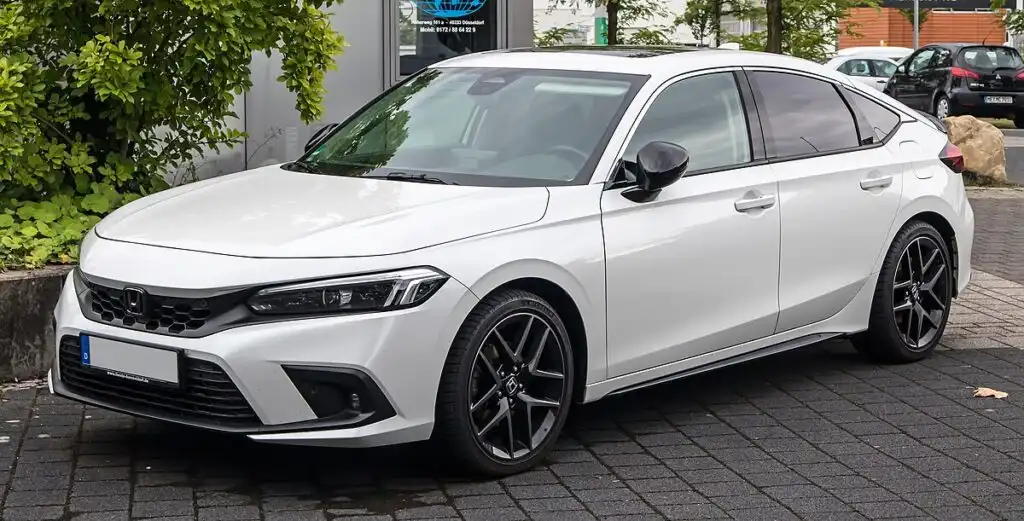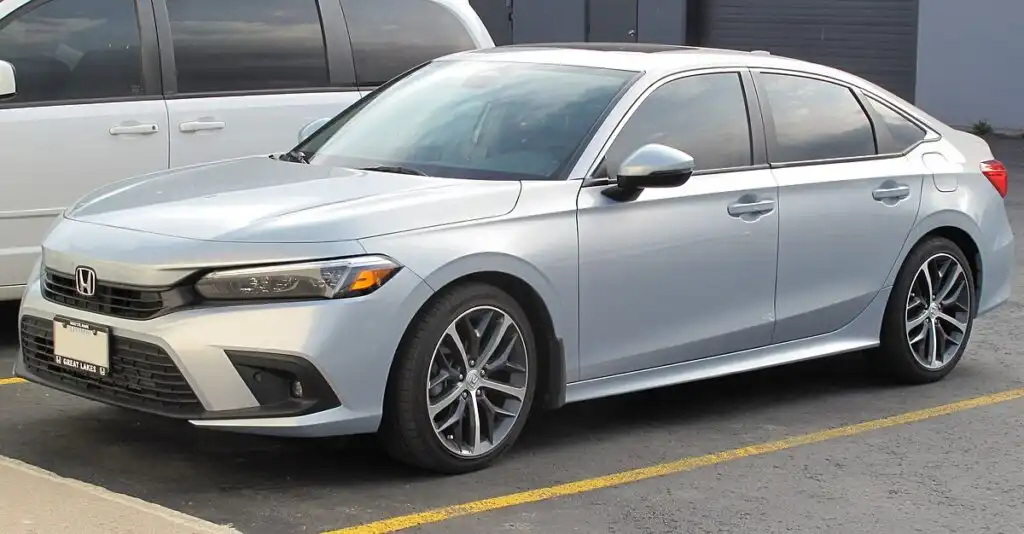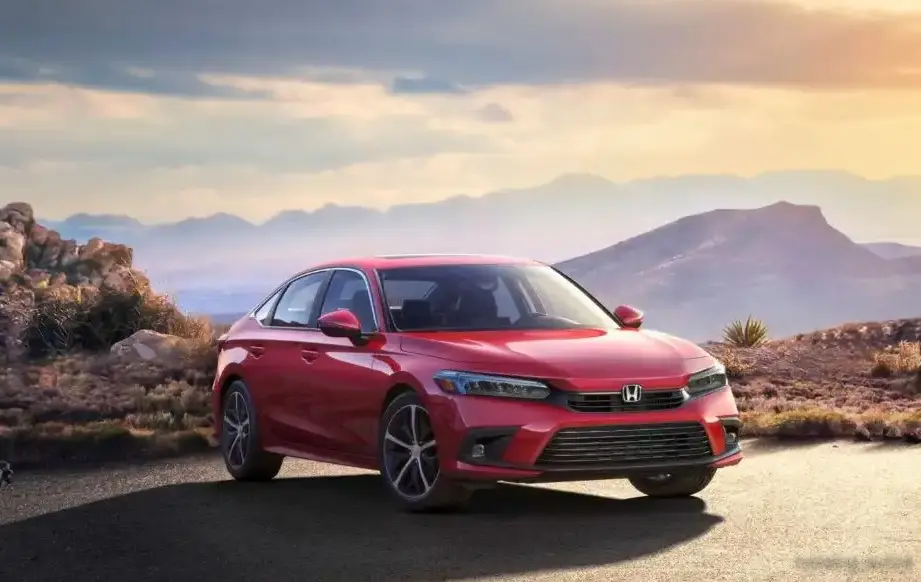
The Honda Civic XI Sedan 2.0 i-VTEC (158 Hp) CVT, produced from June 2021 through 2024, represents a key variant within the eleventh generation of Honda’s globally renowned Civic lineup. Positioned as a mainstream offering, this model aimed to balance fuel efficiency, everyday usability, and Honda’s reputation for reliability. It served as a stepping stone between the base 2.0L engine with a manual transmission and the more performance-oriented 1.5L turbocharged engine. The XI generation Civic, built on an evolved version of the previous platform, prioritized refinement and modern technology, and the 2.0L CVT model was central to its sales volume in the North American market.
Technical Specifications
| Brand | Honda |
| Model | Civic |
| Generation | Civic XI Sedan |
| Type (Engine) | 2.0 i-VTEC (158 Hp) CVT |
| Start of production | June, 2021 |
| End of production | 2024 |
| Powertrain Architecture | Internal Combustion engine |
| Body type | Sedan |
| Seats | 5 |
| Doors | 4 |
| Fuel consumption (urban) | 7.6-7.8 l/100 km (30.9 – 30.2 US mpg) |
| Fuel consumption (extra urban) | 5.9-6.4 l/100 km (39.9 – 36.8 US mpg) |
| Fuel consumption (combined) | 6.7-7.1 l/100 km (35.1 – 33.1 US mpg) |
| Fuel Type | Petrol (Gasoline) |
| Weight-to-power ratio | 8.3 kg/Hp, 121.1 Hp/tonne |
| Weight-to-torque ratio | 7 kg/Nm, 143.3 Nm/tonne |
| Power | 158 Hp @ 6500 rpm |
| Power per litre | 79.2 Hp/l |
| Torque | 187 Nm @ 4200 rpm (137.92 lb.-ft. @ 4200 rpm) |
| Maximum engine speed | 6800 rpm |
| Engine layout | Front, Transverse |
| Engine Model/Code | K20C2 |
| Engine displacement | 1996 cm3 (121.8 cu. in.) |
| Number of cylinders | 4 |
| Engine configuration | Inline |
| Number of valves per cylinder | 4 |
| Fuel injection system | Direct injection |
| Engine aspiration | Naturally aspirated engine |
| Valvetrain | DOHC, i-VTEC |
| Engine oil capacity | 4.2 l (4.44 US qt | 3.7 UK qt) |
| Coolant | 5.9 l (6.23 US qt | 5.19 UK qt) |
| Kerb Weight | 1305-1331 kg (2877.03 – 2934.35 lbs.) |
| Trunk (boot) space | 419 l (14.8 cu. ft.) |
| Length | 4674 mm (184.02 in.) |
| Width | 1801 mm (70.91 in.) |
| Height | 1415 mm (55.71 in.) |
| Wheelbase | 2736 mm (107.72 in.) |
| Front track | 1537-1547 mm (60.51 – 60.91 in.) |
| Rear (Back) track | 1565-1575 mm (61.61 – 62.01 in.) |
| Drivetrain Architecture | The Internal combustion engine (ICE) drives the front wheels of the vehicle. |
| Drive wheel | Front wheel drive |
| Number of gears and type of gearbox | automatic transmission CVT |
| Front suspension | Independent type McPherson |
| Rear suspension | Independent multi-link suspension |
| Front brakes | Ventilated discs |
| Rear brakes | Ventilated discs |
| Assisting systems | ABS (Anti-lock braking system) |
| Steering type | Steering rack and pinion |
| Power steering | Electric Steering |
| Tires size | 215/55 R16 93H; 235/40 R18 91W |
Powertrain & Engine Architecture
At the heart of the Civic XI 2.0 i-VTEC CVT lies the K20C2 engine, a 2.0-liter naturally aspirated inline-four cylinder. This engine is a member of Honda’s K-series family, known for its durability and efficiency. The K20C2 utilizes direct injection, a significant upgrade from previous generations, improving fuel economy and throttle response. The engine employs Honda’s intelligent Variable Valve Timing and Lift Electronic Control (i-VTEC) system, allowing for optimized valve timing across a broad range of engine speeds. This system enhances both low-end torque and high-end horsepower. Paired with the engine is a Continuously Variable Transmission (CVT). Honda’s G-Design CVT, used in this application, is designed to mimic the feel of traditional automatic gear changes while maximizing fuel efficiency. It features stepped shift programming to provide a more engaging driving experience than some earlier CVT implementations.
Driving Characteristics
The 2.0L i-VTEC CVT configuration delivers a comfortable and predictable driving experience. While not as quick as the 1.5L turbocharged variant, it provides adequate power for daily commuting and highway cruising. The CVT effectively keeps the engine in its optimal power band, resulting in smooth acceleration. However, the CVT can sometimes exhibit a “rubber band” feel under hard acceleration, where engine RPMs rise quickly without a corresponding increase in speed. The gear ratios are tuned for fuel efficiency, prioritizing economy over outright performance. Compared to the manual transmission version of the 2.0L, the CVT sacrifices some responsiveness but offers greater ease of use, particularly in stop-and-go traffic. The weight distribution is well-balanced, contributing to stable handling characteristics.
Equipment & Trim Levels
The 2.0L i-VTEC CVT Civic typically came standard with features such as a 7-inch touchscreen infotainment system with Apple CarPlay and Android Auto compatibility, Honda Sensing suite of safety features (including adaptive cruise control and lane keeping assist), automatic climate control, and LED headlights. Interior upholstery was typically cloth, with options for upgraded materials on higher trim levels. Available optional extras included a larger 9-inch touchscreen, premium audio system, sunroof, and leather upholstery. Trim levels varied by region, but generally included LX, Sport, and EX variants, with the 2.0L CVT being available across multiple trims.
Chassis & Braking
The Civic XI Sedan utilizes a MacPherson strut front suspension and a multi-link rear suspension, providing a comfortable ride and responsive handling. The suspension tuning is geared towards everyday usability, offering a good balance between comfort and control. Braking duties are handled by ventilated discs on all four wheels, providing ample stopping power. Anti-lock Braking System (ABS) is standard, along with Electronic Brake-force Distribution (EBD) and Brake Assist. Stabilizer bars are fitted to both the front and rear axles to reduce body roll during cornering.
Market Reception & Comparison
The 2.0L i-VTEC CVT Civic was generally well-received by automotive critics as a practical and efficient option. While some reviewers noted the lack of excitement compared to the turbocharged engine, they praised its fuel economy, comfortable ride, and standard safety features. Compared to the 1.5L turbo, the 2.0L CVT offered a lower price point, making it more accessible to budget-conscious buyers. In terms of reliability, the K20C2 engine has proven to be robust, with few reported issues. Fuel economy figures consistently met or exceeded EPA estimates, making it a competitive choice in its class.
Legacy
The Honda Civic XI 2.0 i-VTEC CVT has established itself as a reliable and fuel-efficient option in the used car market. Its simple engine design and well-engineered CVT contribute to its long-term durability. While not a performance standout, it remains a popular choice for buyers seeking a practical and dependable compact sedan. The K20C2 engine’s reputation for longevity ensures that these Civics continue to hold their value, making them a smart purchase for those prioritizing reliability and affordability.