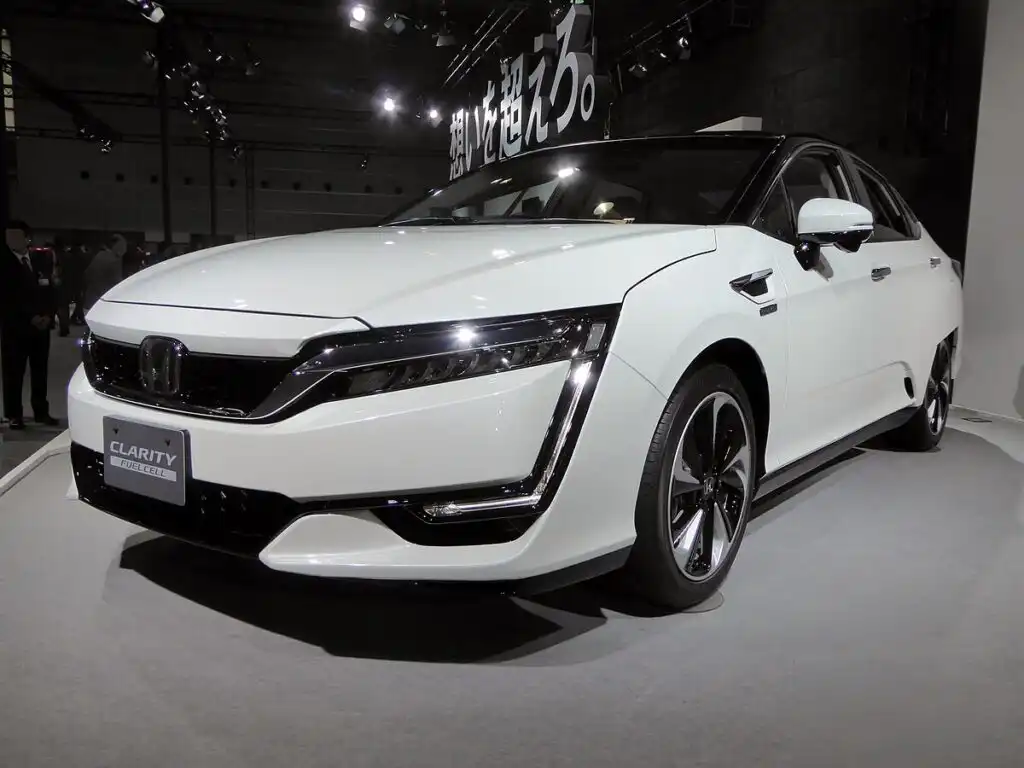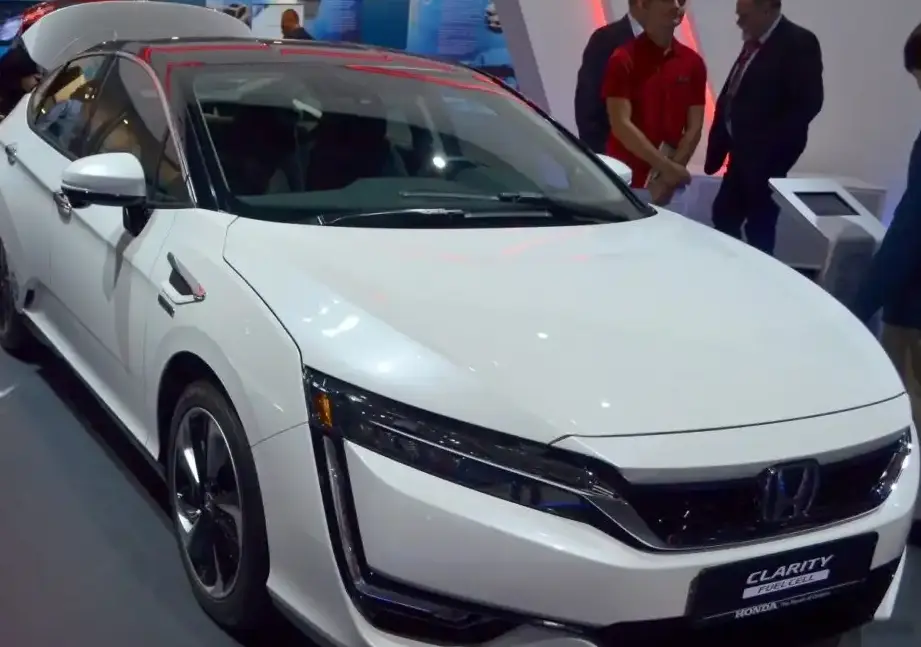
The Honda Clarity Plug-in Hybrid, produced from 2017 to 2021, represented Honda’s entry into the growing plug-in hybrid electric vehicle (PHEV) market. Positioned as a premium offering within the Clarity lineup – which also included fuel cell and hybrid variants – the 1.5-liter Plug-in Hybrid aimed to provide a balance of electric driving range and the flexibility of a gasoline engine. Built on Honda’s global platform, it was primarily marketed in North America and select international markets, offering a compelling alternative to traditional gasoline-powered sedans and early fully electric vehicles.
Technical Specifications
| Brand | Honda |
| Model | Clarity |
| Type (Engine) | 1.5 (212 Hp) Plug-in Hybrid e-CVT |
| Start of production | 2017 |
| End of production | 2021 |
| Powertrain Architecture | PHEV (Plug-in Hybrid Electric Vehicle) |
| Body type | Sedan |
| Seats | 5 |
| Doors | 4 |
| Fuel consumption (urban) | 5.3 l/100 km (44.4 US mpg) |
| Fuel consumption (extra urban) | 5.9 l/100 km (39.9 US mpg) |
| Fuel consumption (combined) | 5.6 l/100 km (42 US mpg) |
| Fuel Type | Petrol / electricity |
| Weight-to-power ratio | 8.7 kg/Hp |
| Weight-to-torque ratio | 13.7 kg/Nm |
| Gross battery capacity | 17 kWh |
| Battery technology | Lithium-ion (Li-Ion) |
| All-electric range | 76 km (47.22 mi) |
| Electric motor power | 181 Hp @ 5000-6000 rpm |
| Electric motor Torque | 315 Nm @ 0-2000 rpm (232.33 lb.-ft. @ 0-2000 rpm) |
| System power | 212 Hp |
| Internal combustion engine power | 103 Hp @ 5500 rpm |
| Internal combustion engine torque | 134 Nm @ 5000 rpm (98.83 lb.-ft. @ 5000 rpm) |
| Engine layout | Front, Transverse |
| Engine Model/Code | LEB3 |
| Engine displacement | 1498 cm3 (91.41 cu. in.) |
| Number of cylinders | 4 |
| Engine configuration | Inline |
| Cylinder Bore | 73 mm (2.87 in.) |
| Piston Stroke | 89.5 mm (3.52 in.) |
| Compression ratio | 13.5:1 |
| Number of valves per cylinder | 4 |
| Fuel injection system | Multi-port manifold injection |
| Engine aspiration | Naturally aspirated engine |
| Valvetrain | DOHC, i-VTEC |
| Engine oil capacity | 3.3 l (3.49 US qt | 2.9 UK qt) |
| Coolant capacity | 4.97 l (5.25 US qt | 4.37 UK qt) |
| Kerb Weight | 1838 kg (4052.1 lbs.) |
| Trunk (boot) space (minimum) | 439 l (15.5 cu. ft.) |
| Fuel tank capacity | 26 l (6.87 US gal | 5.72 UK gal) |
| Length | 4895 mm (192.72 in.) |
| Width | 1877 mm (73.9 in.) |
| Height | 1478 mm (58.19 in.) |
| Wheelbase | 2751 mm (108.31 in.) |
| Front track | 1580 mm (62.2 in.) |
| Rear track | 1587 mm (62.48 in.) |
| Drivetrain | Front wheel drive |
| Gearbox | automatic transmission e-CVT |
| Front suspension | Independent type McPherson |
| Rear suspension | Independent multi-link suspension |
| Front brakes | Ventilated discs, 312.42 mm |
| Rear brakes | Disc, 309.88 mm |
| Steering type | Steering rack and pinion |
| Power steering | Electric Steering |
| Tires size | 235/45 R18 |
| Wheel rims size | 8J x 18 |
Powertrain & Engine Architecture
The heart of the Clarity Plug-in Hybrid is a combination of a 1.5-liter inline-four cylinder gasoline engine (Honda LEB3 engine code) and a powerful electric motor. The gasoline engine, producing 103 horsepower and 98.83 lb-ft of torque, operates on the Atkinson cycle, prioritizing fuel efficiency over outright power. It’s paired with a 181 horsepower electric motor that generates a substantial 232.33 lb-ft of torque. The total system output is rated at 212 horsepower. The engine utilizes multi-point fuel injection and Honda’s i-VTEC variable valve timing system. The e-CVT (electronically controlled continuously variable transmission) doesn’t use traditional gears; instead, it employs a planetary gearset to seamlessly blend power from the engine and electric motor. This system allows for smooth acceleration and optimized efficiency. The 17 kWh lithium-ion battery pack provides an all-electric range of approximately 47 miles, allowing for daily commutes on electric power alone for many drivers.
Driving Characteristics
The Clarity Plug-in Hybrid delivers a refined and quiet driving experience. In EV mode, the vehicle operates silently, providing instant torque from the electric motor. The e-CVT contributes to smooth, gearless acceleration. When the gasoline engine engages, the transition is nearly imperceptible. Compared to the standard Clarity Hybrid, the Plug-in Hybrid offers significantly more electric range and a more responsive feel due to the larger battery and more powerful electric motor. While not a performance-oriented vehicle, the 212 horsepower combined output provides adequate acceleration for everyday driving situations. The weight of the battery pack (1838 kg / 4052.1 lbs) does impact handling somewhat, making it feel less agile than some competitors, but the independent suspension provides a comfortable ride.
Equipment & Trim Levels
The Clarity Plug-in Hybrid was generally well-equipped, even in its base trim. Standard features typically included Honda Sensing suite of safety technologies (including adaptive cruise control, lane keeping assist, and collision mitigation braking system), a touchscreen infotainment system with Apple CarPlay and Android Auto compatibility, automatic climate control, and LED headlights. Higher trim levels added features such as leather upholstery, a premium audio system, and a power moonroof. Interior materials were generally of good quality, and the cabin offered a spacious and comfortable environment for both front and rear passengers.
Chassis & Braking
The Clarity Plug-in Hybrid utilizes a front-wheel-drive layout. The front suspension consists of independent MacPherson struts, while the rear features an independent multi-link suspension. This setup provides a good balance of ride comfort and handling. The braking system consists of ventilated discs at the front and solid discs at the rear. ABS (Anti-lock Braking System) is standard. The steering is electric power-assisted, providing a light and responsive feel.
Market Reception & Comparison
The Honda Clarity Plug-in Hybrid was generally well-received by automotive critics. It was praised for its long electric range, comfortable ride, and spacious interior. However, some reviewers noted its relatively high price compared to other plug-in hybrids and its somewhat bland styling. Compared to the standard Clarity Hybrid, the Plug-in Hybrid offered a significant advantage in electric range but came at a higher cost. Against competitors like the Toyota Prius Prime and Hyundai Ioniq Plug-in Hybrid, the Clarity offered a competitive range and feature set, but often carried a price premium. Fuel economy was a strong point, with combined ratings of 42 US mpg and an all-electric range of 47 miles.
Legacy
The Honda Clarity Plug-in Hybrid, while discontinued in 2021, remains a noteworthy vehicle in the evolution of plug-in hybrid technology. The powertrain has proven to be relatively reliable, with few widespread issues reported. On the used car market, Clarity Plug-in Hybrids hold their value reasonably well, particularly those with low mileage and well-maintained service records. The vehicle’s combination of electric range, fuel efficiency, and practicality continues to appeal to buyers seeking a more sustainable and economical transportation option. It paved the way for Honda’s continued development of electrified vehicles, including the current Honda Accord Hybrid.