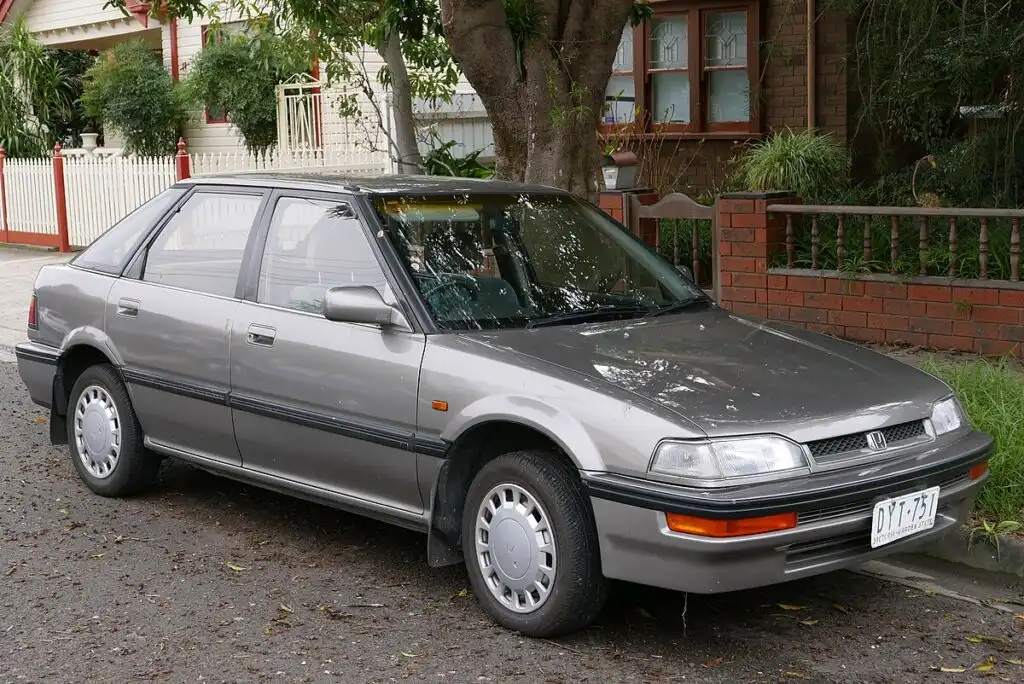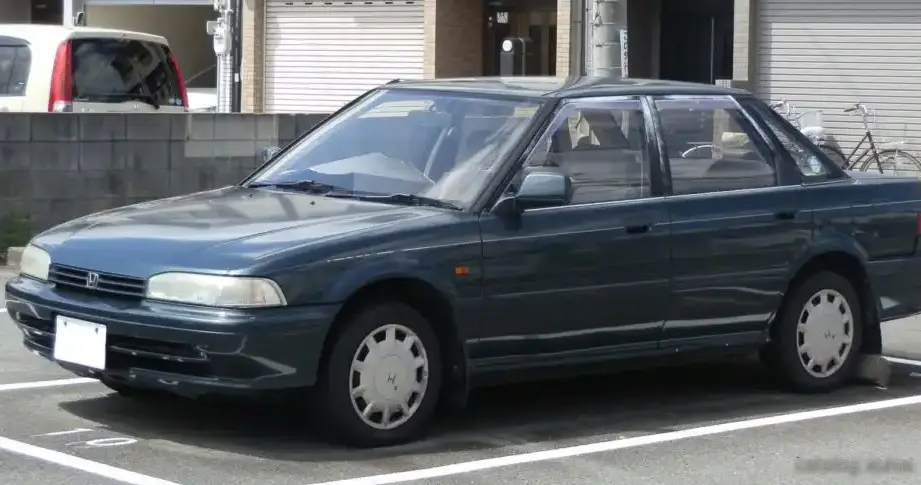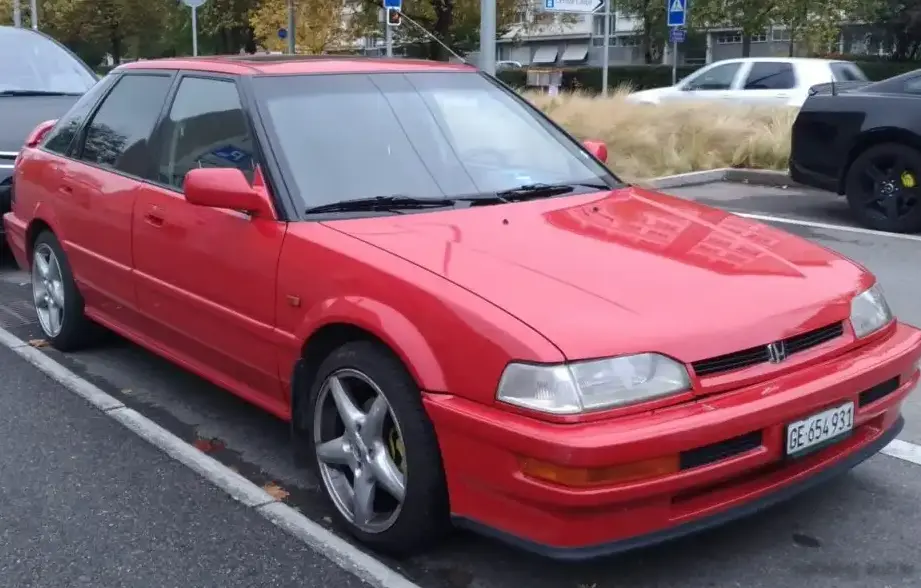
The Honda Concerto Hatch (HW) 1.6 16V, produced between 1989 and 1995, represented Honda’s entry into the competitive European small family car segment. Positioned as a more practical and affordable alternative to the more sporting Civic, the Concerto aimed to provide reliable transportation with a focus on comfort and fuel efficiency. The HW generation, specifically, was a hatchback body style offering five seats and five doors. This 1.6-liter, 16-valve variant, producing 112 horsepower, occupied a mid-range position within the Concerto lineup, offering a balance between performance and economy. It was a key model for Honda in Europe, leveraging the brand’s reputation for build quality and dependability.
Technical Specifications
| Brand | Honda |
| Model | Concerto |
| Generation | Concerto Hatch (HW) |
| Type (Engine) | 1.6 16V (112 Hp) |
| Start of production | 1989 |
| End of production | 1995 |
| Powertrain Architecture | Internal Combustion engine |
| Body type | Hatchback |
| Seats | 5 |
| Doors | 5 |
| Fuel consumption (urban) | 9.8 l/100 km (24 US mpg, 28.8 UK mpg, 10.2 km/l) |
| Fuel consumption (extra urban) | 7.1 l/100 km (33.1 US mpg, 39.8 UK mpg, 14.1 km/l) |
| Fuel consumption (combined) | 9.1 l/100 km (25.8 US mpg, 31 UK mpg, 11 km/l) |
| Fuel Type | Petrol (Gasoline) |
| Acceleration 0 – 100 km/h | 10.6 sec |
| Acceleration 0 – 62 mph | 10.6 sec |
| Acceleration 0 – 60 mph | 10.1 sec |
| Maximum speed | 185 km/h (114.95 mph) |
| Weight-to-power ratio | 9.6 kg/Hp, 103.7 Hp/tonne |
| Weight-to-torque ratio | 7.9 kg/Nm, 126.9 Nm/tonne |
| Power | 112 Hp @ 6300 rpm |
| Power per litre | 70.4 Hp/l |
| Torque | 137 Nm @ 5200 rpm (101.05 lb.-ft. @ 5200 rpm) |
| Engine layout | Front, Transverse |
| Engine Model/Code | D16Z2 |
| Engine displacement | 1590 cm3 (97.03 cu. in.) |
| Number of cylinders | 4 |
| Engine configuration | Inline |
| Cylinder Bore | 75 mm (2.95 in.) |
| Piston Stroke | 90 mm (3.54 in.) |
| Compression ratio | 9.1:1 |
| Number of valves per cylinder | 4 |
| Fuel injection system | Multi-port manifold injection |
| Engine aspiration | Naturally aspirated engine |
| Valvetrain | OHC |
| Engine oil capacity | 3.5 l (3.7 US qt | 3.08 UK qt) |
| Kerb Weight | 1080 kg (2380.99 lbs.) |
| Max. weight | 1580 kg (3483.3 lbs.) |
| Max load | 500 kg (1102.31 lbs.) |
| Trunk (boot) space – minimum | 370 l (13.07 cu. ft.) |
| Trunk (boot) space – maximum | 820 l (28.96 cu. ft.) |
| Fuel tank capacity | 55 l (14.53 US gal | 12.1 UK gal) |
| Length | 4265 mm (167.91 in.) |
| Width | 1690 mm (66.54 in.) |
| Height | 1395 mm (54.92 in.) |
| Wheelbase | 2550 mm (100.39 in.) |
| Front track | 1475 mm (58.07 in.) |
| Rear (Back) track | 1470 mm (57.87 in.) |
| Drivetrain Architecture | The Internal combustion engine (ICE) drives the front wheels of the vehicle. |
| Drive wheel | Front wheel drive |
| Number of gears and type of gearbox | 5 gears, manual transmission |
| Front suspension | Coil spring |
| Rear suspension | Coil spring |
| Front brakes | Ventilated discs |
| Rear brakes | Drum |
| Assisting systems | ABS (Anti-lock braking system) |
| Steering type | Steering rack and pinion |
| Power steering | Hydraulic Steering |
| Tires size | 175/70 R13 |
Powertrain & Engine Architecture
The heart of the Concerto 1.6 16V was the D16Z2 engine, a 1.6-liter inline-four cylinder powerplant. This engine featured a single overhead camshaft (SOHC) valvetrain operating four valves per cylinder, contributing to its relatively high output for its displacement. The D16Z2 utilized multi-point fuel injection, a significant advancement over earlier carburetor-equipped engines, improving fuel efficiency and throttle response. The engine’s 9.1:1 compression ratio was a compromise between performance and the fuel quality available in European markets. The five-speed manual transmission was the standard offering, providing a direct connection between the engine and the front wheels. The transmission was chosen for its durability and relatively simple design, aligning with Honda’s focus on reliability.
Driving Characteristics
The 112 horsepower and 101 lb-ft of torque produced by the D16Z2 engine provided adequate, though not exhilarating, performance. Acceleration from 0-60 mph took approximately 10.1 seconds, and the car had a top speed of around 115 mph. The five-speed manual transmission allowed drivers to keep the engine in its optimal power band, but the engine lacked the low-end torque of larger displacement engines. Compared to the more powerful Concerto variants, such as those equipped with larger engines, the 1.6 16V felt less responsive, particularly during overtaking maneuvers. However, it offered a more engaging driving experience than the automatic transmission options available on other Concerto models. The suspension provided a comfortable ride, prioritizing smoothness over sporty handling.
Equipment & Trim Levels
The 1.6 16V Concerto typically came with a reasonable level of standard equipment. This included power steering, central locking, and a basic stereo system. Interior upholstery was typically cloth, with a functional, if somewhat plain, dashboard layout. Optional extras included electric windows, a sunroof, and upgraded audio systems. Trim levels varied slightly depending on the market, but generally, the 1.6 16V was positioned as a mid-range offering, bridging the gap between the base models and the more luxurious trims.
Chassis & Braking
The Concerto’s chassis utilized a relatively simple suspension setup, with coil springs and dampers at all four corners. The front suspension employed MacPherson struts, while the rear utilized a torsion beam axle. Braking was accomplished via ventilated discs at the front and drum brakes at the rear. Anti-lock braking system (ABS) was available as an option, enhancing safety. The suspension was tuned for comfort, providing a compliant ride over uneven road surfaces. The relatively lightweight construction of the Concerto helped to offset the modest power output of the 1.6-liter engine.
Market Reception & Comparison
The Honda Concerto 1.6 16V was generally well-received by automotive critics. It was praised for its reliability, fuel efficiency, and comfortable ride. However, some reviewers noted that the engine lacked the refinement and performance of its competitors, such as the Volkswagen Golf or Ford Escort. Fuel economy was a strong point, with combined figures around 31 mpg. Compared to the higher-output Concerto variants, the 1.6 16V offered a more affordable entry point into the Honda lineup, appealing to buyers who prioritized practicality and economy over outright performance.
Legacy
The Honda Concerto, and specifically the 1.6 16V variant, has proven to be a remarkably durable vehicle. Many examples are still on the road today, a testament to Honda’s engineering and build quality. The D16Z2 engine is known for its longevity and relatively simple maintenance requirements. In the used car market, the Concerto 1.6 16V represents a cost-effective and reliable option for those seeking a classic 1990s hatchback. While not a performance icon, it remains a respected and fondly remembered vehicle within the Honda enthusiast community.