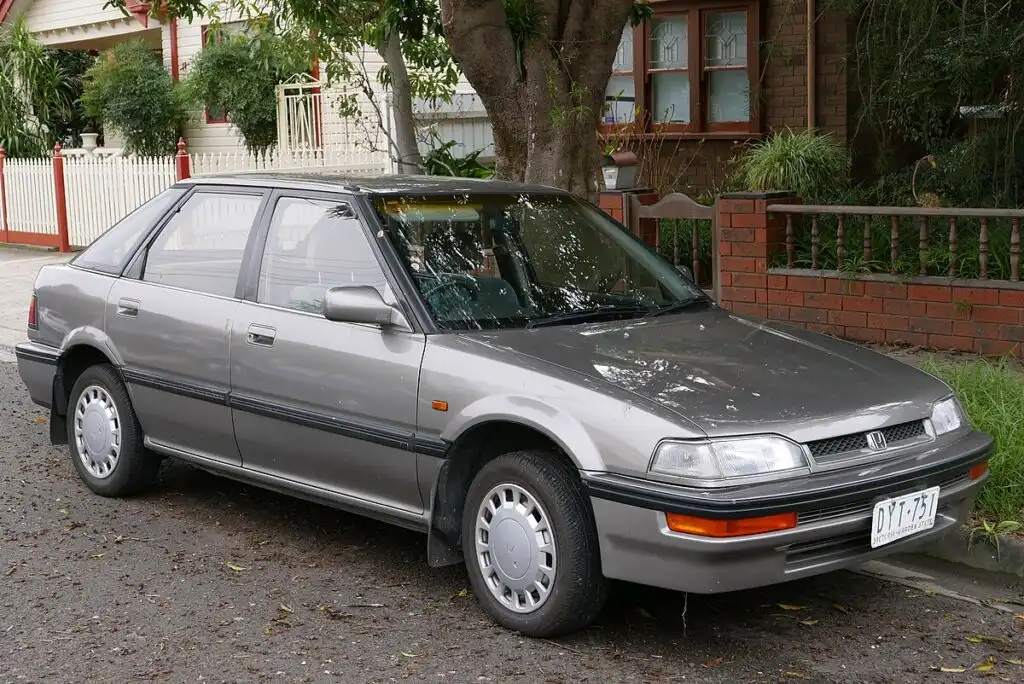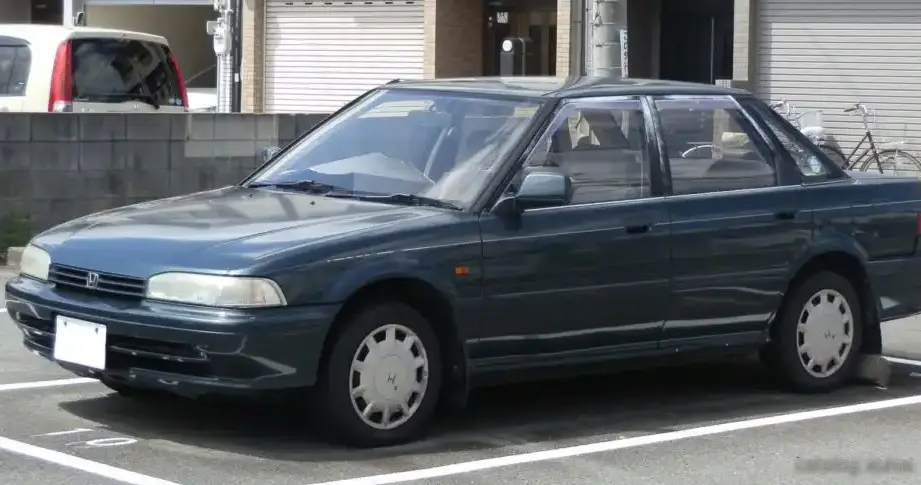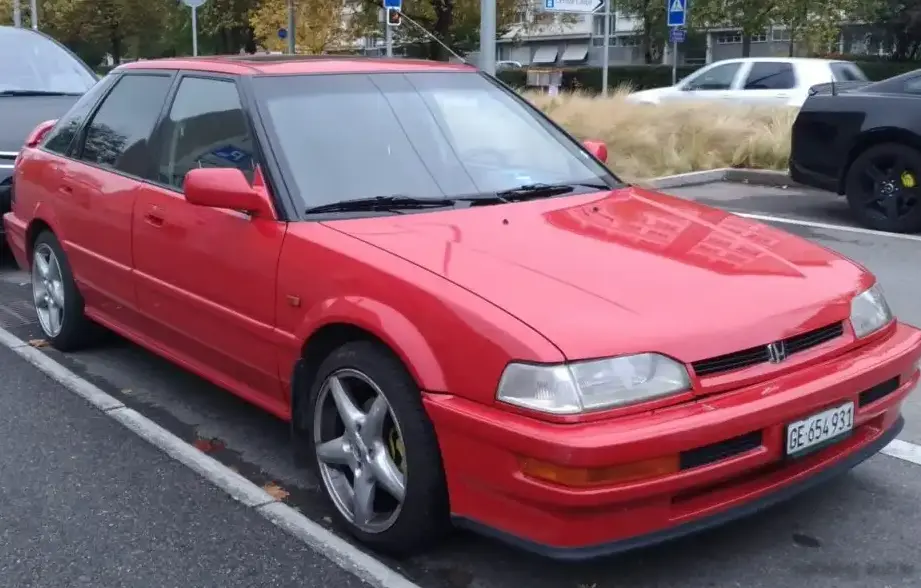
The Honda Concerto Hatch (HW) 1.6 16V Automatic, produced between 1989 and 1995, represented a key offering in Honda’s European lineup during that period. Positioned as a practical and relatively affordable compact hatchback, the Concerto aimed to bridge the gap between the smaller Civic and the larger Accord. This particular variant, equipped with the 1.6-liter 16-valve engine and a four-speed automatic transmission, was designed to appeal to buyers prioritizing ease of use and comfort over outright performance. It was a common sight on European roads, offering a blend of Honda reliability and reasonable fuel efficiency.
Technical Specifications
| Brand | Honda |
| Model | Concerto |
| Generation | Concerto Hatch (HW) |
| Type (Engine) | 1.6 16V (112 Hp) Automatic |
| Start of production | 1989 |
| End of production | 1995 |
| Powertrain Architecture | Internal Combustion engine |
| Body type | Hatchback |
| Seats | 5 |
| Doors | 5 |
| Fuel consumption (urban) | 10.6 l/100 km (22.2 US mpg, 26.6 UK mpg, 9.4 km/l) |
| Fuel consumption (extra urban) | 7.3 l/100 km (32.2 US mpg, 38.7 UK mpg, 13.7 km/l) |
| Fuel consumption (combined) | 9.2 l/100 km (25.6 US mpg, 30.7 UK mpg, 10.9 km/l) |
| Fuel Type | Petrol (Gasoline) |
| Acceleration 0 – 100 km/h | 12 sec |
| Acceleration 0 – 62 mph | 12 sec |
| Acceleration 0 – 60 mph | 11.4 sec |
| Maximum speed | 180 km/h (111.85 mph) |
| Weight-to-power ratio | 9.6 kg/Hp, 103.7 Hp/tonne |
| Weight-to-torque ratio | 7.9 kg/Nm, 126.9 Nm/tonne |
| Power | 112 Hp @ 6300 rpm |
| Power per litre | 70.4 Hp/l |
| Torque | 137 Nm @ 5200 rpm (101.05 lb.-ft. @ 5200 rpm) |
| Engine layout | Front, Transverse |
| Engine Model/Code | D16Z2 |
| Engine displacement | 1590 cm3 (97.03 cu. in.) |
| Number of cylinders | 4 |
| Engine configuration | Inline |
| Cylinder Bore | 75 mm (2.95 in.) |
| Piston Stroke | 90 mm (3.54 in.) |
| Compression ratio | 9.1:1 |
| Number of valves per cylinder | 4 |
| Fuel injection system | Multi-port manifold injection |
| Engine aspiration | Naturally aspirated engine |
| Valvetrain | OHC |
| Engine oil capacity | 3.5 l (3.7 US qt | 3.08 UK qt) |
| Kerb Weight | 1080 kg (2380.99 lbs.) |
| Max. weight | 1580 kg (3483.3 lbs.) |
| Max load | 500 kg (1102.31 lbs.) |
| Trunk (boot) space – minimum | 370 l (13.07 cu. ft.) |
| Trunk (boot) space – maximum | 820 l (28.96 cu. ft.) |
| Fuel tank capacity | 55 l (14.53 US gal | 12.1 UK gal) |
| Length | 4265 mm (167.91 in.) |
| Width | 1690 mm (66.54 in.) |
| Height | 1395 mm (54.92 in.) |
| Wheelbase | 2550 mm (100.39 in.) |
| Front track | 1475 mm (58.07 in.) |
| Rear (Back) track | 1470 mm (57.87 in.) |
| Drivetrain Architecture | The Internal combustion engine (ICE) drives the front wheels of the vehicle. |
| Drive wheel | Front wheel drive |
| Number of gears and type of gearbox | 4 gears, automatic transmission |
| Front suspension | Coil spring |
| Rear suspension | Coil spring |
| Front brakes | Ventilated discs |
| Rear brakes | Drum |
| Assisting systems | ABS (Anti-lock braking system) |
| Steering type | Steering rack and pinion |
| Power steering | Hydraulic Steering |
| Tires size | 175/70 R13 |
| Wheel rims size | 13 |
INTRODUCTION
The Honda Concerto, launched in 1989, was a product of Honda’s strategy to offer a diverse range of vehicles tailored to different markets. The HW series, specifically the hatchback, was primarily aimed at the European consumer. It shared its platform (the 1HX0/A3 platform) with the Rover 200 and 400, a result of Honda’s collaboration with British Leyland (later Rover Group). The 1.6 16V Automatic variant occupied a middle ground in the Concerto lineup, offering a step up in performance from the base 1.5-liter models while remaining more accessible than the more powerful 1.6i-E trim. It was designed to provide a comfortable and convenient driving experience, appealing to those who preferred an automatic transmission.
Powertrain & Engine Architecture
At the heart of the Concerto 1.6 16V Automatic lies the D16Z2 engine, a 1.6-liter (1590cc) inline-four cylinder powerplant. This engine featured a single overhead camshaft (SOHC) valvetrain with four valves per cylinder, contributing to its relatively high output for its displacement. The D16Z2 utilized multi-point fuel injection, enhancing fuel efficiency and throttle response. The engine produced 112 horsepower at 6300 rpm and 137 Nm (101.05 lb-ft) of torque at 5200 rpm. Paired with this engine was a four-speed automatic transmission, providing smooth and effortless gear changes. This transmission wasn’t known for being particularly sporty, prioritizing comfort and fuel economy over rapid acceleration. The automatic transmission’s gear ratios were geared towards relaxed cruising rather than aggressive driving.
Driving Characteristics
The driving experience in the Concerto 1.6 16V Automatic was characterized by its smoothness and ease of use. While not a performance car, the 112 hp engine provided adequate power for everyday driving. Acceleration from 0-60 mph took around 11.4 seconds, and top speed was approximately 112 mph. Compared to the five-speed manual version, the automatic suffered a slight performance penalty due to the transmission’s inherent inefficiencies. The automatic transmission’s shift points were programmed for fuel economy, meaning the engine sometimes felt strained during quick acceleration. However, for typical commuting and highway driving, the automatic provided a comfortable and relaxed experience. The suspension, tuned for comfort, absorbed bumps and imperfections in the road well, contributing to a pleasant ride.
Equipment & Trim Levels
The 1.6 16V Automatic trim level typically included features such as power steering, central locking, and electric front windows. Interior upholstery was usually cloth, with a relatively simple and functional dashboard layout. Optional extras available for this trim included a sunroof, alloy wheels, and a stereo system. The level of equipment was comparable to other mainstream compact hatchbacks of the era. The interior was designed with practicality in mind, offering ample space for passengers and luggage. The rear seats could be folded down to increase cargo capacity.
Chassis & Braking
The Concerto HW utilized a front-wheel-drive layout with coil spring suspension at both the front and rear. The front suspension featured independent struts, while the rear suspension employed a torsion beam setup. Braking duties were handled by ventilated discs at the front and drum brakes at the rear. An anti-lock braking system (ABS) was often included as standard equipment, enhancing safety. The chassis was designed to provide a balance between comfort and handling. The steering was hydraulic, making it easy to maneuver at low speeds. The 175/70 R13 tires provided adequate grip for most driving conditions.
Market Reception & Comparison
The Honda Concerto 1.6 16V Automatic was generally well-received by automotive critics. It was praised for its reliability, build quality, and comfortable ride. However, some critics noted that the automatic transmission detracted from the engine’s performance. Compared to other trims in the Concerto lineup, the 1.6 16V Automatic offered a good balance between performance and fuel economy. The manual transmission versions provided slightly better acceleration and fuel efficiency, while the base 1.5-liter models were more affordable but less powerful. In terms of fuel economy, the Concerto 1.6 16V Automatic achieved around 25.6 US mpg on the combined cycle, which was competitive for its class.
Legacy
The Honda Concerto, while not a groundbreaking vehicle, established Honda’s reputation for building reliable and well-engineered cars in the European market. The D16Z2 engine proved to be a durable and long-lasting unit, and many examples are still on the road today. The four-speed automatic transmission, while not the most advanced, was generally reliable. In the used car market, the Concerto 1.6 16V Automatic remains a relatively affordable and practical option for those seeking a classic Honda hatchback. Its simplicity and reliability make it a popular choice for enthusiasts and those looking for a dependable daily driver. Parts availability is generally good, and maintenance costs are relatively low.