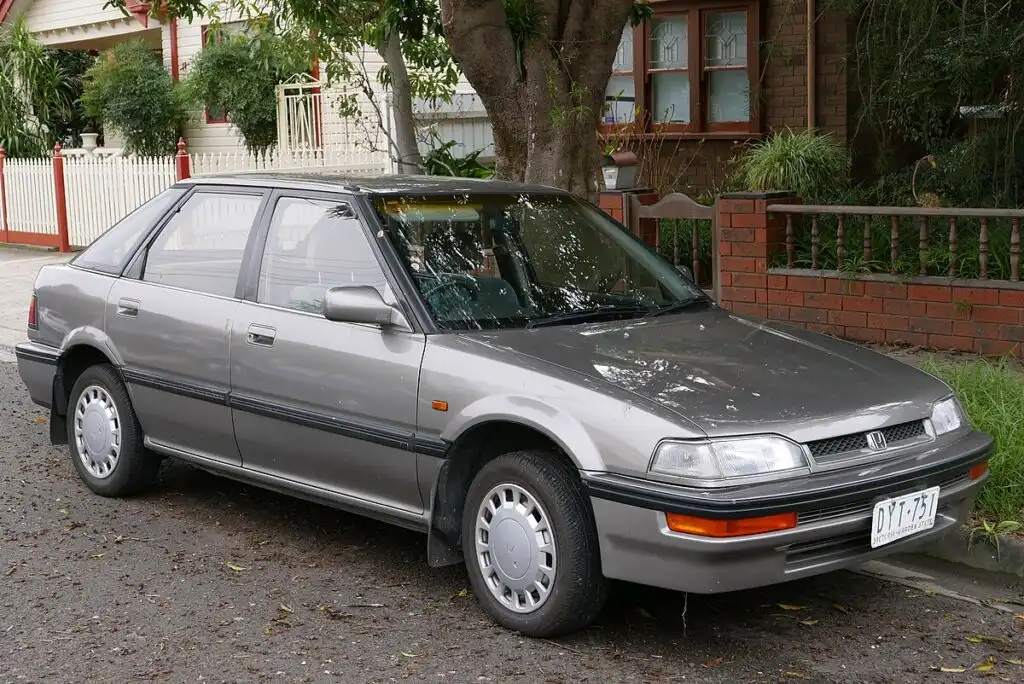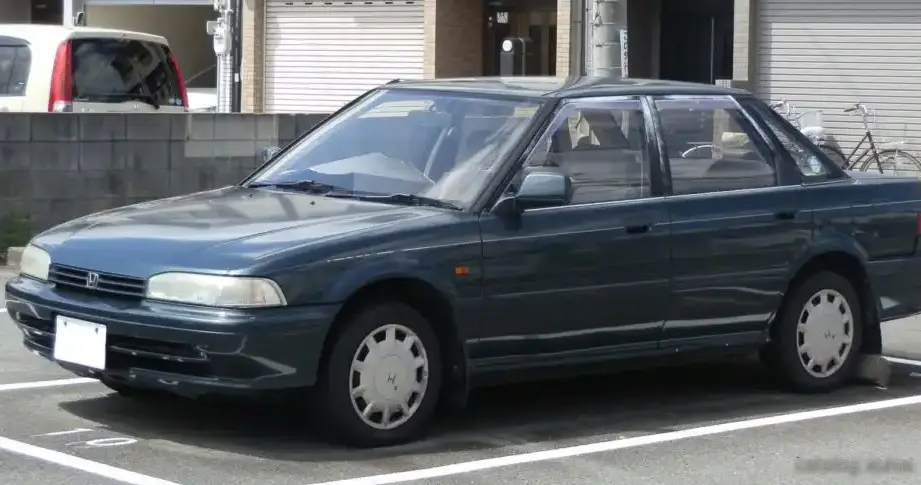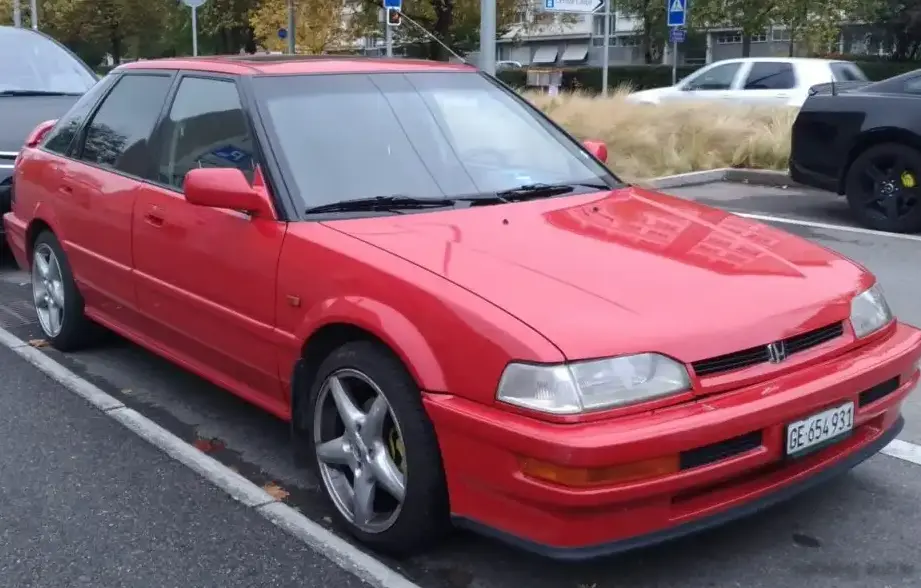
The Honda Concerto Hatch (HW) 1.6 16V, produced between 1989 and 1995, represented Honda’s entry into the increasingly competitive European compact hatchback market. Positioned as a more practical and affordable alternative to the Civic, the Concerto aimed to offer a blend of reliability, fuel efficiency, and reasonable performance. This particular 1.6-liter, 16-valve variant, producing 122 horsepower, occupied a mid-range position within the Concerto lineup, offering a step up in performance from the base 1.5L models while remaining more accessible than potential future performance trims. The Concerto, while not a massive sales success in all markets, established Honda’s commitment to building quality, dependable vehicles for the everyday driver.
Technical Specifications
| Brand | Honda |
| Model | Concerto |
| Generation | Concerto Hatch (HW) |
| Type (Engine) | 1.6 16V (122 Hp) |
| Start of production | 1989 |
| End of production | 1995 |
| Powertrain Architecture | Internal Combustion engine |
| Body type | Hatchback |
| Seats | 5 |
| Doors | 5 |
| Fuel consumption (urban) | 9.8 l/100 km (24 US mpg, 28.8 UK mpg, 10.2 km/l) |
| Fuel consumption (extra urban) | 7.1 l/100 km (33.1 US mpg, 39.8 UK mpg, 14.1 km/l) |
| Fuel consumption (combined) | 9.1 l/100 km (25.8 US mpg, 31 UK mpg, 11 km/l) |
| Fuel Type | Petrol (Gasoline) |
| Acceleration 0 – 100 km/h | 10 sec |
| Acceleration 0 – 62 mph | 10 sec |
| Acceleration 0 – 60 mph | 9.5 sec |
| Maximum speed | 190 km/h (118.06 mph) |
| Weight-to-power ratio | 8.9 kg/Hp, 113 Hp/tonne |
| Weight-to-torque ratio | 7.7 kg/Nm, 129.6 Nm/tonne |
| Power | 122 Hp @ 6800 rpm |
| Power per litre | 76.7 Hp/l |
| Torque | 140 Nm @ 5700 rpm (103.26 lb.-ft. @ 5700 rpm) |
| Engine layout | Front, Transverse |
| Engine displacement | 1590 cm3 (97.03 cu. in.) |
| Number of cylinders | 4 |
| Engine configuration | Inline |
| Cylinder Bore | 75 mm (2.95 in.) |
| Piston Stroke | 90 mm (3.54 in.) |
| Compression ratio | 9.5:1 |
| Number of valves per cylinder | 4 |
| Fuel injection system | Multi-port manifold injection |
| Engine aspiration | Naturally aspirated engine |
| Valvetrain | DOHC |
| Kerb Weight | 1080 kg (2380.99 lbs.) |
| Max. weight | 1580 kg (3483.3 lbs.) |
| Max load | 500 kg (1102.31 lbs.) |
| Trunk (boot) space – minimum | 370 l (13.07 cu. ft.) |
| Trunk (boot) space – maximum | 820 l (28.96 cu. ft.) |
| Fuel tank capacity | 55 l (14.53 US gal, 12.1 UK gal) |
| Length | 4265 mm (167.91 in.) |
| Width | 1690 mm (66.54 in.) |
| Height | 1395 mm (54.92 in.) |
| Wheelbase | 2550 mm (100.39 in.) |
| Front track | 1475 mm (58.07 in.) |
| Rear (Back) track | 1470 mm (57.87 in.) |
| Drivetrain Architecture | The Internal combustion engine (ICE) drives the front wheels of the vehicle. |
| Drive wheel | Front wheel drive |
| Number of gears and type of gearbox | 5 gears, manual transmission |
| Front suspension | Coil spring |
| Rear suspension | Coil spring |
| Front brakes | Ventilated discs |
| Rear brakes | Disc |
| Assisting systems | ABS (Anti-lock braking system) |
| Steering type | Steering rack and pinion |
| Power steering | Hydraulic Steering |
| Tires size | 175/70 R13; 185/60 R14 |
| Wheel rims size | 13; 14 |
INTRODUCTION
The Honda Concerto Hatch (HW) 1.6 16V, launched in 1989 and continuing through 1995, was a key model for Honda in the European market. Built as a collaborative effort with British Leyland (later Rover Group) – sharing many components with the Rover 200 – the Concerto aimed to provide a comfortable, reliable, and reasonably priced hatchback. The 1.6 16V variant represented a performance upgrade over the base models, offering a more engaging driving experience. It was positioned as a practical choice for buyers seeking a step up in power and refinement without the higher price tag of more sporting hatchbacks.
Powertrain & Engine Architecture
At the heart of the Concerto 1.6 16V lies the Honda S16A engine. This 1.6-liter (1590cc) inline-four cylinder engine utilizes a double overhead camshaft (DOHC) valvetrain with four valves per cylinder, contributing to its relatively high output for its displacement. The engine employs multi-point fuel injection, ensuring precise fuel delivery for optimal combustion and efficiency. The engine code, often identified as S16A, is crucial for parts identification and maintenance. The 16-valve configuration allowed for improved breathing and higher revs, resulting in the 122 horsepower output. This engine was paired exclusively with a five-speed manual transmission in most markets, offering drivers full control over the power delivery. The transmission was known for its smooth shifts and relatively short throw, enhancing the driving experience.
Driving Characteristics
The Concerto 1.6 16V offered a noticeable improvement in performance compared to the lower-powered variants. Acceleration to 60 mph took approximately 9.5 seconds, and it could achieve a top speed of around 118 mph. While not a sports car, the 1.6 16V provided sufficient power for comfortable highway cruising and overtaking maneuvers. The five-speed manual transmission allowed drivers to keep the engine in its optimal power band, maximizing performance. The gear ratios were well-chosen, providing a balance between acceleration and fuel economy. Compared to the base 1.5L models, the 1.6 16V felt significantly more responsive, particularly at higher engine speeds. The suspension, while tuned for comfort, provided adequate handling, making the Concerto a pleasant daily driver.
Equipment & Trim Levels
The 1.6 16V trim typically included features such as power steering, central locking, and electric windows. Interior upholstery was generally cloth, with a functional and durable design. Depending on the market and optional packages, features like alloy wheels, a sunroof, and upgraded audio systems were available. The dashboard layout was straightforward and easy to use, prioritizing practicality over flashy design. Higher trim levels might have included features like a trip computer and upgraded interior trim materials. The overall interior ambiance was comfortable and well-built, reflecting Honda’s reputation for quality.
Chassis & Braking
The Concerto utilized a front-wheel-drive layout with independent coil spring suspension at all four corners. The front suspension featured MacPherson struts, while the rear employed a trailing arm setup. This configuration provided a good balance between ride comfort and handling. Braking duties were handled by ventilated discs at the front and solid discs at the rear. An Anti-lock Braking System (ABS) was often included as standard equipment, enhancing safety and control during emergency braking situations. The steering was rack and pinion, providing precise and responsive steering feel. Tire sizes typically ranged from 175/70 R13 to 185/60 R14, depending on the trim level and market.
Market Reception & Comparison
The Honda Concerto 1.6 16V was generally well-received by automotive critics, who praised its reliability, fuel efficiency, and comfortable ride. However, it was often criticized for its somewhat bland styling and lack of a truly sporty character. Compared to rivals like the Volkswagen Golf and Ford Escort, the Concerto offered a competitive package, but it didn’t quite match their overall brand appeal. Fuel economy was respectable for the time, averaging around 31 mpg in combined driving. Reliability was a strong point, with the Honda engine proving to be durable and long-lasting. The 1.6 16V offered a good balance between performance and economy, making it a practical choice for everyday drivers.
Legacy
The Honda Concerto, while not a landmark model, played a significant role in establishing Honda’s presence in the European market. The 1.6 16V powertrain proved to be particularly durable, and many examples are still on the road today. In the used car market, the Concerto 1.6 16V is often sought after by enthusiasts looking for a reliable and affordable classic hatchback. Parts availability is generally good, thanks to the shared components with the Rover 200. The Concerto’s legacy lies in its reputation for dependability and its contribution to Honda’s growing reputation for building quality automobiles.