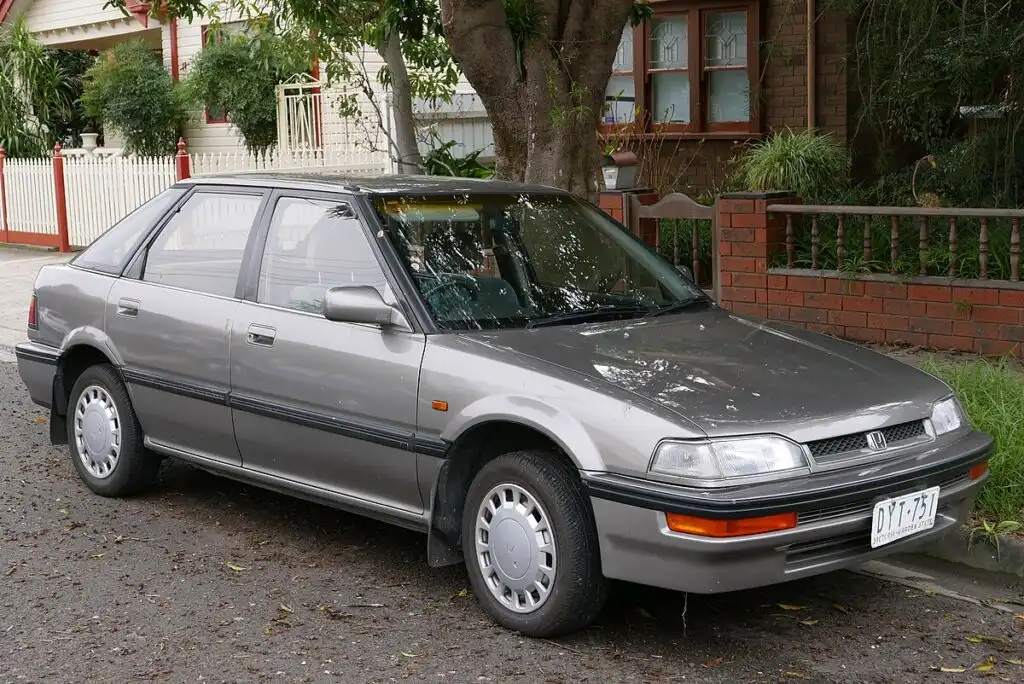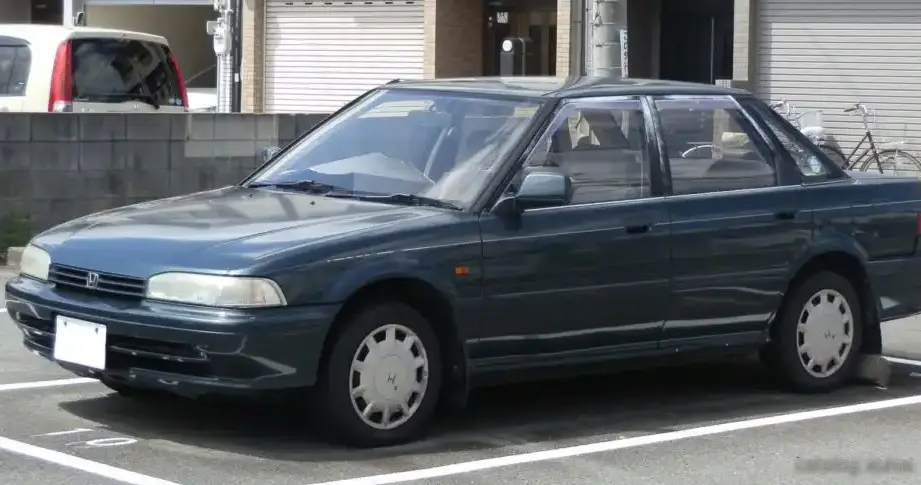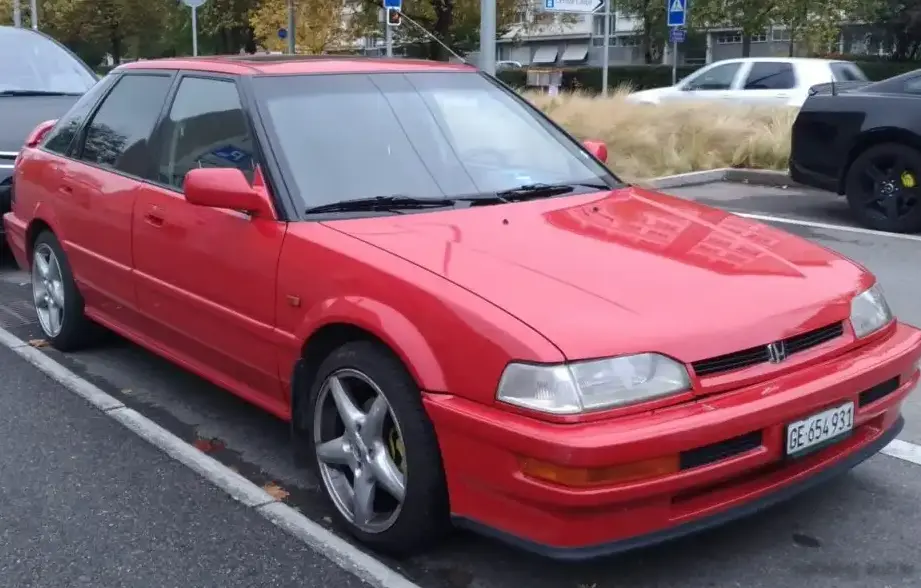
The Honda Concerto Hatch (HW) 1.6 16V Automatic, produced between 1989 and 1995, represented a significant offering in Honda’s European lineup. Positioned as a compact hatchback, the Concerto aimed to provide a blend of practicality, reliability, and a more refined driving experience than some of its contemporaries. It was built as a joint venture with British Leyland (later Rover Group) and shared many components with the Rover 200 series. This particular 1.6L 16V Automatic variant occupied a mid-range position within the Concerto family, offering a step up in performance from the base 1.5L models while remaining more accessible than the later, more performance-focused trims.
| Brand | Honda |
| Model | Concerto |
| Generation | Concerto Hatch (HW) |
| Type (Engine) | 1.6 16V (122 Hp) Automatic |
| Start of production | 1989 |
| End of production | 1995 |
| Powertrain Architecture | Internal Combustion engine |
| Body type | Hatchback |
| Seats | 5 |
| Doors | 5 |
| Fuel consumption (urban) | 10.6 l/100 km (22.2 US mpg) |
| Fuel consumption (extra urban) | 7.3 l/100 km (32.2 US mpg) |
| Fuel consumption (combined) | 9.2 l/100 km (25.6 US mpg) |
| Fuel Type | Petrol (Gasoline) |
| Acceleration 0 – 100 km/h | 11.5 sec |
| Acceleration 0 – 62 mph | 11.5 sec |
| Acceleration 0 – 60 mph | 10.9 sec |
| Maximum speed | 185 km/h (114.95 mph) |
| Weight-to-power ratio | 8.9 kg/Hp |
| Weight-to-torque ratio | 7.7 kg/Nm |
| Power | 122 Hp @ 6800 rpm |
| Torque | 140 Nm @ 5700 rpm (103.26 lb.-ft. @ 5700 rpm) |
| Engine layout | Front, Transverse |
| Engine displacement | 1590 cm3 (97.03 cu. in.) |
| Number of cylinders | 4 |
| Engine configuration | Inline |
| Cylinder Bore | 75 mm (2.95 in.) |
| Piston Stroke | 90 mm (3.54 in.) |
| Compression ratio | 9.5:1 |
| Number of valves per cylinder | 4 |
| Fuel injection system | Multi-port manifold injection |
| Engine aspiration | Naturally aspirated engine |
| Valvetrain | DOHC |
| Kerb Weight | 1080 kg (2380.99 lbs.) |
| Max. weight | 1580 kg (3483.3 lbs.) |
| Max load | 500 kg (1102.31 lbs.) |
| Trunk (boot) space – minimum | 370 l (13.07 cu. ft.) |
| Trunk (boot) space – maximum | 820 l (28.96 cu. ft.) |
| Fuel tank capacity | 55 l (14.53 US gal) |
| Length | 4265 mm (167.91 in.) |
| Width | 1690 mm (66.54 in.) |
| Height | 1395 mm (54.92 in.) |
| Wheelbase | 2550 mm (100.39 in.) |
| Front track | 1475 mm (58.07 in.) |
| Rear (Back) track | 1470 mm (57.87 in.) |
| Drivetrain Architecture | Front wheel drive |
| Number of gears | 4 |
| Gearbox type | Automatic transmission |
| Front suspension | Coil spring |
| Rear suspension | Coil spring |
| Front brakes | Ventilated discs |
| Rear brakes | Disc |
| Assisting systems | ABS (Anti-lock braking system) |
| Steering type | Steering rack and pinion |
| Power steering | Hydraulic Steering |
| Tires size | 175/70 R13; 185/60 R14 |
| Wheel rims size | 13; 14 |
Powertrain & Engine Architecture
The heart of the Concerto 1.6 16V Automatic is Honda’s S16A engine. This 1.6-liter, inline-four cylinder engine featured a double overhead camshaft (DOHC) valvetrain and multi-point fuel injection. The 16 valves (four per cylinder) contributed to improved breathing and higher-end power delivery. The engine produced 122 horsepower at 6800 rpm and 140 Nm (103 lb-ft) of torque at 5700 rpm. The automatic transmission was a conventional four-speed unit, designed for smooth operation rather than outright performance. It was a typical torque converter automatic of the era, prioritizing comfort and ease of use over aggressive shifting. The engine code is often associated with European market models.
Driving Characteristics
The 1.6L Automatic Concerto offered a comfortable, if not particularly sporty, driving experience. The automatic transmission, while smooth, did detract from the engine’s potential. Acceleration to 60 mph took around 10.9 seconds, and top speed was approximately 115 mph. Compared to the five-speed manual version, the automatic suffered a noticeable performance deficit. The manual transmission allowed the engine to rev more freely and provided more direct control, resulting in quicker acceleration and a more engaging driving experience. The automatic’s gear ratios were geared towards fuel efficiency and relaxed cruising, rather than maximizing performance. The power delivery was relatively linear, with a noticeable surge in power as the engine approached its peak horsepower at higher RPMs.
Equipment & Trim Levels
The 1.6 16V Automatic trim typically included features such as power steering, central locking, electric windows, and an upgraded stereo system. Interior upholstery was usually cloth, with options for different color schemes. Air conditioning was often available as an optional extra. The dashboard layout was functional and straightforward, typical of Japanese cars of the period. Higher trim levels might have included features like alloy wheels, a sunroof, and upgraded interior trim. The Concerto aimed for a balance between affordability and comfort, offering a reasonable level of equipment for its price point.
Chassis & Braking
The Concerto utilized a relatively simple chassis design, with coil springs and independent suspension at all four wheels. The front suspension featured MacPherson struts, while the rear employed a trailing arm setup. Braking was provided by ventilated discs at the front and solid discs at the rear. Anti-lock braking system (ABS) was available, and became increasingly common as standard equipment towards the end of the production run. The suspension was tuned for comfort, providing a relatively soft ride quality. Stabilizer bars were fitted to both the front and rear axles to reduce body roll during cornering.
Market Reception & Comparison
The Honda Concerto was generally well-received by automotive critics for its reliability, build quality, and comfortable ride. However, the automatic transmission was often criticized for its lack of responsiveness and its impact on fuel economy. Compared to other hatchbacks in its class, such as the Ford Escort and Vauxhall Astra, the Concerto offered a more refined driving experience and a reputation for superior reliability. The 1.8L models, while more powerful, were also more expensive. The 1.5L base models were more affordable but lacked the performance of the 1.6L variant. Fuel economy for the 1.6L Automatic was around 25.6 US mpg combined, which was respectable for the time but not class-leading.
Legacy
The Honda Concerto, particularly the 1.6 16V Automatic, has developed a reputation for long-term reliability. The S16A engine is known for its durability and relatively simple maintenance requirements. Today, well-maintained examples are becoming increasingly sought after by classic car enthusiasts. While not a particularly rare or valuable car, the Concerto represents a well-built and dependable vehicle from a respected manufacturer. The automatic transmission, while not the most desirable configuration for performance enthusiasts, remains relatively reliable if properly maintained. Finding parts can sometimes be a challenge, but many components are interchangeable with other Honda models of the era.