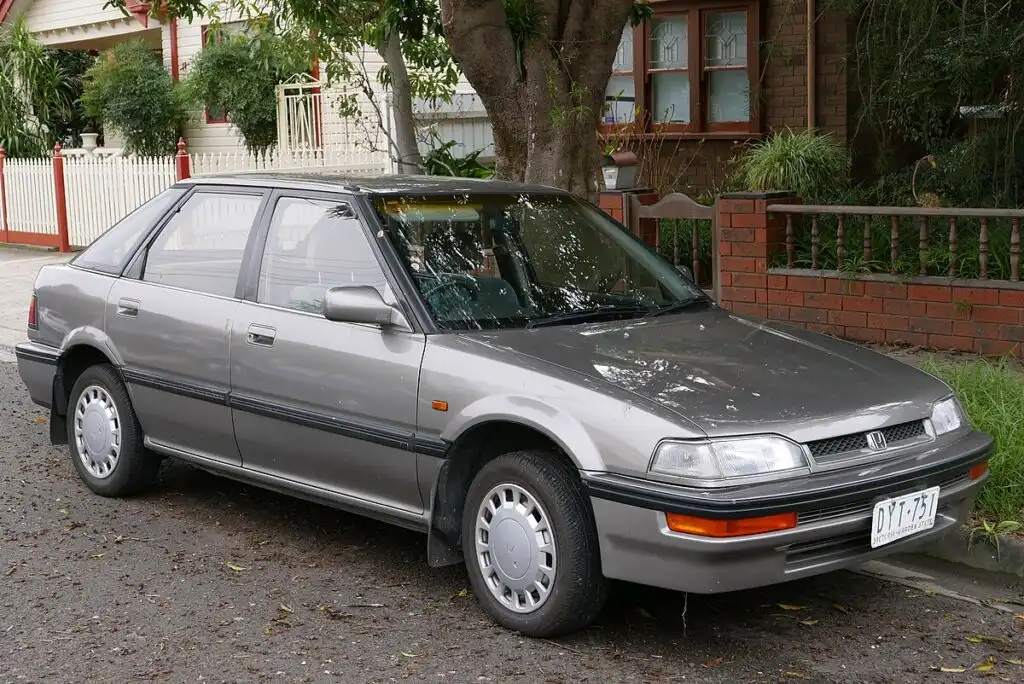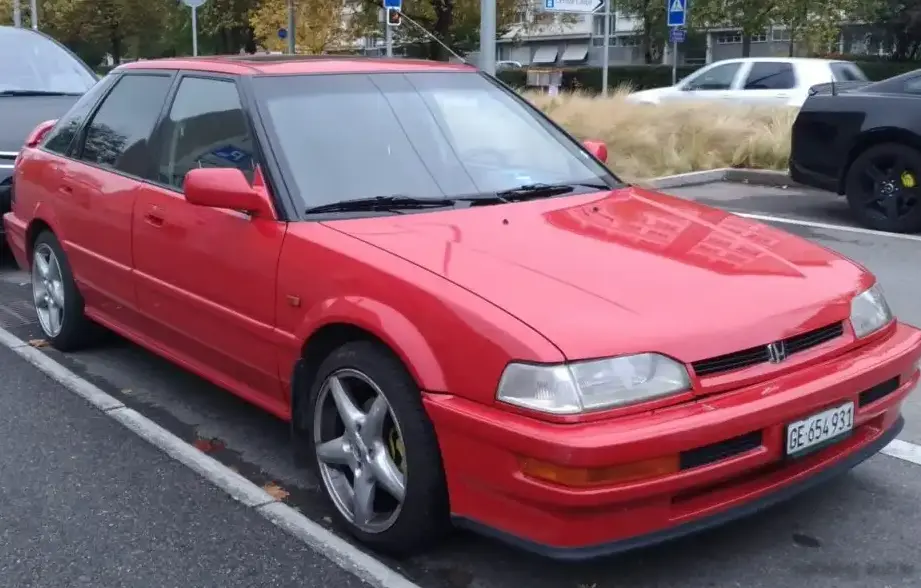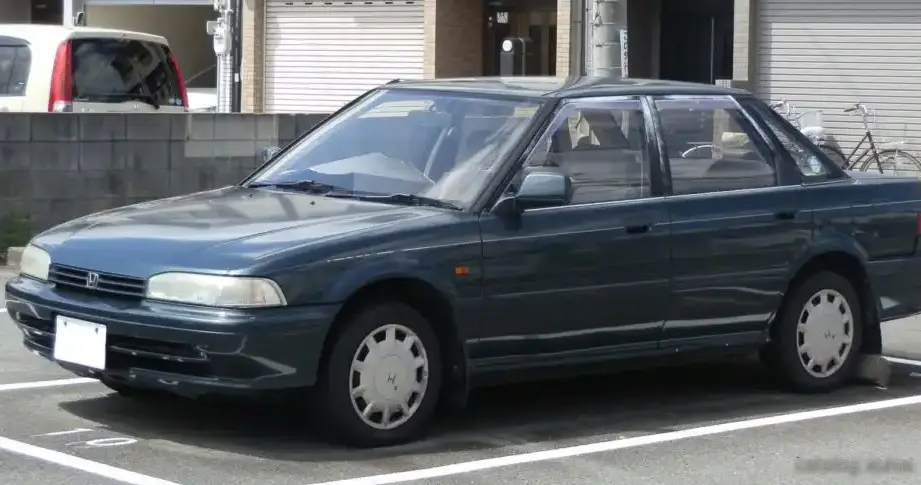
The Honda Concerto 1.5i 16V, produced between 1989 and 1995, represented Honda’s entry into the compact sedan market, primarily aimed at European consumers. Positioned as a practical and reliable family car, the Concerto shared its platform (the Honda EC platform) with the Rover 200 and 400 series, a result of Honda’s British Leyland partnership. The 1.5i 16V variant, generating 90 horsepower, served as a mid-range offering within the Concerto lineup, slotting between the base 1.3L engine and the more powerful 1.6L versions. It was designed to balance affordability with a reasonable level of performance and equipment.
Technical Specifications
| Brand | Honda |
| Model | Concerto |
| Generation | Concerto (HW) |
| Type (Engine) | 1.5i 16V (90 Hp) |
| Start of production | 1989 |
| End of production | 1995 |
| Powertrain Architecture | Internal Combustion engine |
| Body type | Sedan |
| Seats | 5 |
| Doors | 4 |
| Fuel consumption (urban) | 8.7 l/100 km (27 US mpg, 32.5 UK mpg, 11.5 km/l) |
| Fuel consumption (extra urban) | 6.8 l/100 km (34.6 US mpg, 41.5 UK mpg, 14.7 km/l) |
| Fuel consumption (combined) | 8.3 l/100 km (28.3 US mpg, 34 UK mpg, 12 km/l) |
| Fuel Type | Petrol (Gasoline) |
| Maximum speed | 170 km/h (105.63 mph) |
| Weight-to-power ratio | 10.6 kg/Hp, 94.7 Hp/tonne |
| Weight-to-torque ratio | 8 kg/Nm, 125.3 Nm/tonne |
| Power | 90 Hp @ 6000 rpm |
| Power per litre | 60.3 Hp/l |
| Torque | 119 Nm @ 4700 rpm (87.77 lb.-ft. @ 4700 rpm) |
| Engine layout | Front, Transverse |
| Engine Model/Code | D15B2 |
| Engine displacement | 1493 cm3 (91.11 cu. in.) |
| Number of cylinders | 4 |
| Engine configuration | Inline |
| Cylinder Bore | 75 mm (2.95 in.) |
| Piston Stroke | 84.5 mm (3.33 in.) |
| Compression ratio | 9.2:1 |
| Number of valves per cylinder | 4 |
| Fuel injection system | Single-point injection |
| Engine aspiration | Naturally aspirated engine |
| Valvetrain | OHC |
| Engine oil capacity | 3.3 l (3.49 US qt, 2.9 UK qt) |
| Kerb Weight | 950 kg (2094.39 lbs.) |
| Trunk (boot) space (minimum) | 420 l (14.83 cu. ft.) |
| Fuel tank capacity | 55 l (14.53 US gal, 12.1 UK gal) |
| Length | 4415 mm (173.82 in.) |
| Width | 1690 mm (66.54 in.) |
| Height | 1395 mm (54.92 in.) |
| Wheelbase | 2550 mm (100.39 in.) |
| Front track | 1450 mm (57.09 in.) |
| Rear track | 1455 mm (57.28 in.) |
| Drivetrain Architecture | Front wheel drive |
| Number of gears and type of gearbox | 5 gears, manual transmission |
| Front suspension | Coil spring |
| Rear suspension | Coil spring |
| Front brakes | Ventilated discs |
| Rear brakes | Drum |
| Assisting systems | ABS (Anti-lock braking system) |
| Steering type | Steering rack and pinion |
| Power steering | Hydraulic Steering |
| Tires size | 175/70 R13 |
Powertrain & Engine Architecture
The heart of the Concerto 1.5i 16V was the D15B2 engine, a 1.5-liter inline-four cylinder gasoline engine. This engine featured a single overhead camshaft (SOHC) valvetrain operating four valves per cylinder. The D15B2 utilized a single-point fuel injection system, a common technology for the time, which delivered fuel into the intake manifold rather than directly into the combustion chamber. This system, while less efficient than multi-point injection, contributed to the engine’s affordability and relative simplicity. The engine’s 90 horsepower output at 6000 rpm and 119 Nm (87.77 lb-ft) of torque at 4700 rpm were considered adequate for everyday driving. The engine was transversely mounted in the front of the vehicle, driving the front wheels. The standard transmission was a five-speed manual, although a four-speed automatic transmission was also available, albeit less common.
Driving Characteristics
The 1.5i 16V Concerto offered a comfortable, if not particularly sporty, driving experience. The 90 horsepower engine provided sufficient power for typical commuting and highway cruising, but acceleration was modest. Compared to the 1.6L versions, the 1.5L felt noticeably less responsive, especially when fully loaded. The five-speed manual transmission allowed drivers to keep the engine in its optimal power band, while the optional automatic transmission prioritized ease of use over performance. The automatic, while convenient, resulted in slower acceleration and increased fuel consumption. Steering was light and precise, making the Concerto easy to maneuver in urban environments. The suspension, tuned for comfort, absorbed bumps and imperfections in the road reasonably well.
Equipment & Trim Levels
The 1.5i 16V Concerto typically came equipped with features considered standard for its class in the early 1990s. These included power steering, central locking, and an AM/FM radio. Higher trim levels offered options such as electric windows, a sunroof, and upgraded interior upholstery. Interior materials were generally durable but not luxurious. The dashboard layout was functional and straightforward, with clearly labeled controls. The base trim level featured cloth upholstery, while higher trims offered options for velour or leather. Air conditioning was often an optional extra.
Chassis & Braking
The Concerto utilized a relatively simple chassis design, featuring coil springs and independent suspension at the front and a coil spring rear suspension. Front brakes were ventilated discs, providing adequate stopping power, while rear brakes were drums. Anti-lock braking system (ABS) was available as an option, enhancing safety in emergency braking situations. The car’s weight of approximately 950 kg (2094 lbs) contributed to its manageable handling characteristics. Stabilizer bars were fitted to both the front and rear axles to reduce body roll during cornering.
Market Reception & Comparison
The Honda Concerto 1.5i 16V was generally well-received by automotive critics as a practical and reliable family car. It was praised for its fuel efficiency, comfortable ride, and Honda’s reputation for build quality. However, it was often criticized for its somewhat bland styling and lack of driving excitement compared to rivals like the Ford Escort or Volkswagen Golf. The 1.5L engine was considered adequate but not particularly powerful, and the automatic transmission was often criticized for its sluggish performance. Fuel economy figures of around 28.3 US mpg combined were competitive for the time. Compared to the higher-output 1.6L Concerto models, the 1.5i 16V offered a more affordable entry point into the range, appealing to budget-conscious buyers.
Legacy
The Honda Concerto, while not a groundbreaking vehicle, established Honda as a serious contender in the European compact car market. The D15B2 engine proved to be remarkably durable and reliable, and many examples are still on the road today. The Concerto’s simple design and readily available parts make it relatively easy to maintain. In the used car market, the 1.5i 16V Concerto is often sought after by enthusiasts looking for an affordable and dependable classic car. While not a performance icon, it represents a solid and well-engineered product from a respected manufacturer.