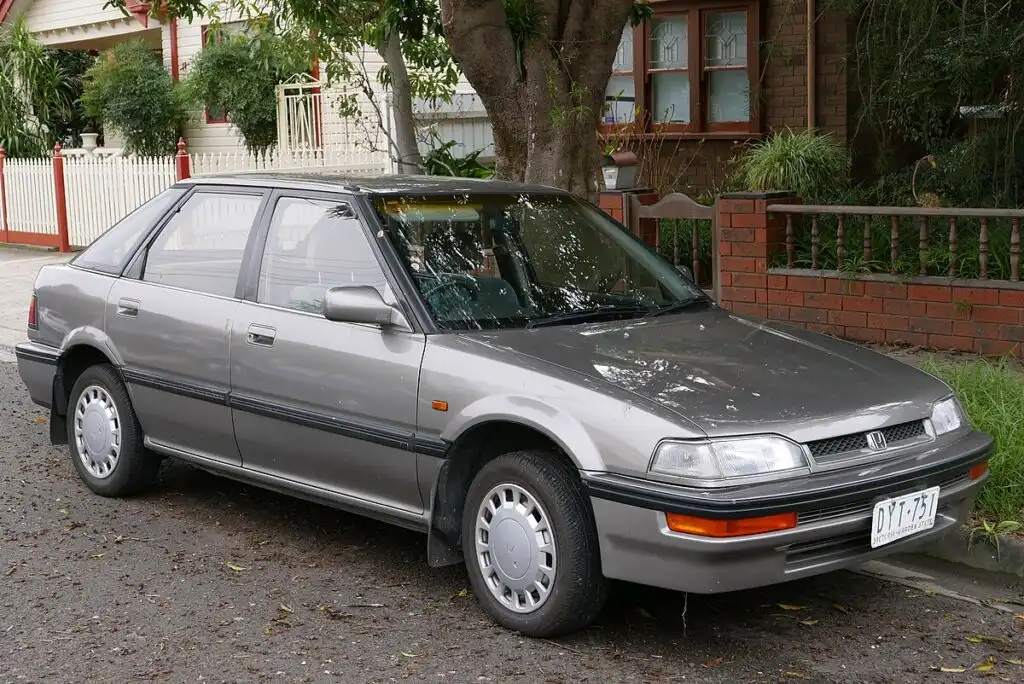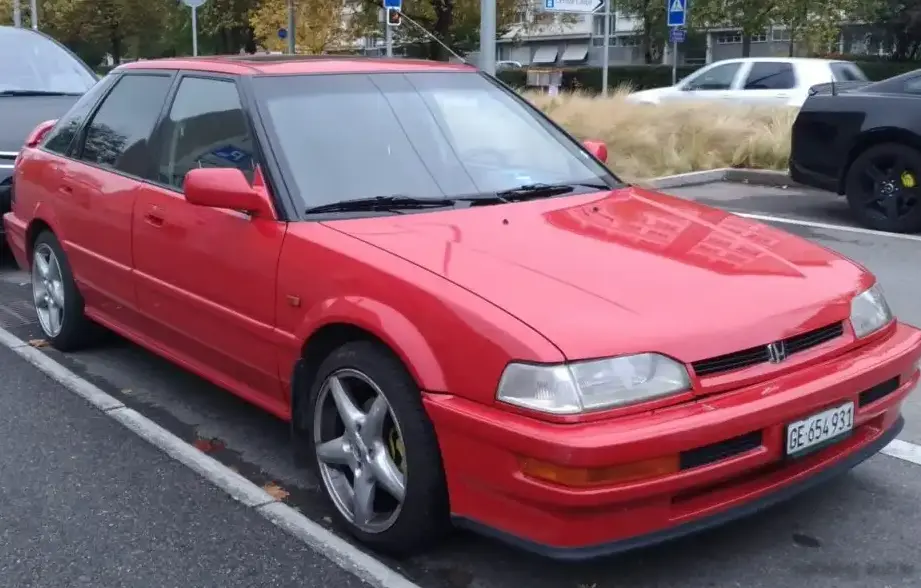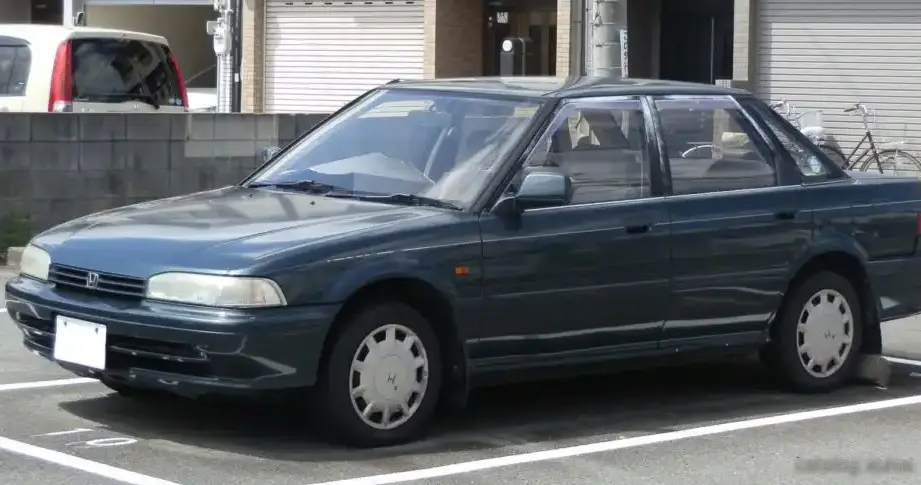
The Honda Concerto 1.6i 16V Automatic, produced between 1989 and 1995, represented a mid-range offering within the HW generation of Honda’s Concerto line. Positioned above the base 1.5L models and below the more performance-oriented variants, this trim aimed to provide a balance of fuel efficiency, comfortable driving, and reasonable performance for the average commuter. The Concerto, in general, was Honda’s attempt to offer a more conventionally styled and priced competitor to European and Japanese rivals in the compact sedan segment, primarily targeting the European market. It was never officially sold in the United States.
Technical Specifications
| Brand | Honda |
| Model | Concerto |
| Generation | Concerto (HW) |
| Type (Engine) | 1.6i 16V (122 Hp) Automatic |
| Start of production | 1989 |
| End of production | 1995 |
| Powertrain Architecture | Internal Combustion engine |
| Body type | Sedan |
| Seats | 5 |
| Doors | 4 |
| Fuel consumption (urban) | 10.6 l/100 km (22.2 US mpg, 26.6 UK mpg, 9.4 km/l) |
| Fuel consumption (extra urban) | 7.3 l/100 km (32.2 US mpg, 38.7 UK mpg, 13.7 km/l) |
| Fuel consumption (combined) | 9.2 l/100 km (25.6 US mpg, 30.7 UK mpg, 10.9 km/l) |
| Fuel Type | Petrol (Gasoline) |
| Acceleration 0 – 100 km/h | 11.5 sec |
| Acceleration 0 – 62 mph | 11.5 sec |
| Acceleration 0 – 60 mph | 10.9 sec |
| Maximum speed | 185 km/h (114.95 mph) |
| Weight-to-power ratio | 8.9 kg/Hp, 113 Hp/tonne |
| Weight-to-torque ratio | 7.7 kg/Nm, 129.6 Nm/tonne |
| Power | 122 Hp @ 6800 rpm |
| Power per litre | 76.7 Hp/l |
| Torque | 140 Nm @ 5700 rpm (103.26 lb.-ft. @ 5700 rpm) |
| Engine layout | Front, Transverse |
| Engine displacement | 1590 cm3 (97.03 cu. in.) |
| Number of cylinders | 4 |
| Engine configuration | Inline |
| Cylinder Bore | 75 mm (2.95 in.) |
| Piston Stroke | 90 mm (3.54 in.) |
| Compression ratio | 9.5:1 |
| Number of valves per cylinder | 4 |
| Fuel injection system | Multi-port manifold injection |
| Engine aspiration | Naturally aspirated engine |
| Valvetrain | DOHC |
| Kerb Weight | 1080 kg (2380.99 lbs.) |
| Max. weight | 1580 kg (3483.3 lbs.) |
| Max load | 500 kg (1102.31 lbs.) |
| Trunk (boot) space – minimum | 420 l (14.83 cu. ft.) |
| Fuel tank capacity | 55 l (14.53 US gal | 12.1 UK gal) |
| Length | 4415 mm (173.82 in.) |
| Width | 1690 mm (66.54 in.) |
| Height | 1395 mm (54.92 in.) |
| Wheelbase | 2550 mm (100.39 in.) |
| Front track | 1450 mm (57.09 in.) |
| Rear (Back) track | 1455 mm (57.28 in.) |
| Drivetrain Architecture | The Internal combustion engine (ICE) drives the front wheels of the vehicle. |
| Drive wheel | Front wheel drive |
| Number of gears and type of gearbox | 4 gears, automatic transmission |
| Front suspension | Coil spring |
| Rear suspension | Coil spring |
| Front brakes | Ventilated discs |
| Rear brakes | Drum |
| Assisting systems | ABS (Anti-lock braking system) |
| Steering type | Steering rack and pinion |
| Power steering | Hydraulic Steering |
| Tires size | 175/70 R13 |
| Wheel rims size | 13 |
Powertrain & Engine Architecture
The heart of the Concerto 1.6i 16V Automatic is Honda’s S16A engine, a 1.6-liter inline-four cylinder powerplant. This engine featured a double overhead camshaft (DOHC) valvetrain operating four valves per cylinder, contributing to its relatively high output for its displacement. The S16A utilized multi-port fuel injection, a common feature for engines of this era, providing precise fuel delivery for improved efficiency and performance. The engine’s 9.5:1 compression ratio was a typical value for naturally aspirated gasoline engines of the late 1980s and early 1990s. Paired with this engine was a four-speed automatic transmission, designed for smooth and convenient operation. This transmission wasn’t known for being particularly sporty, prioritizing comfort and ease of use over rapid gear changes. The transmission employed a traditional torque converter design, offering smooth take-offs and a comfortable driving experience, but at the expense of some efficiency.
Driving Characteristics
The 122 horsepower and 103 lb-ft of torque produced by the 1.6L engine, when channeled through the four-speed automatic, resulted in adequate, but not exhilarating, performance. Acceleration from 0-60 mph took approximately 10.9 seconds, and top speed was around 115 mph. The automatic transmission’s gear ratios were geared towards fuel economy and smooth cruising, rather than aggressive acceleration. Compared to the five-speed manual versions of the Concerto 1.6i 16V, the automatic suffered a noticeable performance deficit. The manual transmission allowed the engine to rev more freely and provided more driver control. However, the automatic offered a more relaxed driving experience, particularly in urban environments. The automatic’s shift points were programmed for smooth transitions, minimizing harshness but also reducing responsiveness. The overall driving experience was characterized by refinement and ease of use, making it a suitable choice for daily commuting.
Equipment & Trim Levels
The 1.6i 16V Automatic trim generally included features such as power steering, central locking, and electric windows. Interior upholstery was typically cloth, with a relatively simple dashboard layout. Optional extras could include a sunroof, upgraded audio systems, and alloy wheels. The level of standard equipment was competitive with other compact sedans in the European market at the time. The trim level aimed for a balance between affordability and comfort, making it appealing to families and commuters. Higher trim levels often added features like a more sophisticated audio system, upgraded interior trim materials, and additional exterior chrome accents. The automatic transmission itself was often considered an upgrade over the base manual transmission, appealing to drivers who prioritized convenience.
Chassis & Braking
The Concerto utilized a relatively conventional chassis design, with coil springs and a stabilizer bar at both the front and rear. Front brakes were ventilated discs, providing adequate stopping power, while the rear brakes were drums. This combination was typical for vehicles in this price range during the early 1990s. The suspension was tuned for comfort, providing a reasonably smooth ride over most road surfaces. The steering was rack and pinion, offering precise control, aided by the hydraulic power steering system. The suspension geometry was designed to minimize body roll during cornering, providing a stable and predictable handling experience. The rear drum brakes, while cost-effective, offered less stopping power and fade resistance compared to rear disc brakes.
Market Reception & Comparison
The Honda Concerto 1.6i 16V Automatic received generally positive reviews, praised for its reliability, comfortable ride, and fuel efficiency. However, critics often noted that the automatic transmission dulled the engine’s performance compared to the manual versions. Compared to other trims in the Concerto lineup, the 1.6i 16V Automatic offered a good compromise between performance and economy. The base 1.5L models were more affordable but lacked the power of the 1.6L, while higher-spec variants with manual transmissions offered more engaging driving dynamics. Fuel economy was respectable for the time, averaging around 25.6 US mpg in combined driving. Competitors like the Ford Escort and Vauxhall Astra offered similar levels of equipment and performance, but the Concerto was often praised for its superior build quality and reliability.
Legacy
The Honda Concerto, while not a groundbreaking vehicle, established Honda’s reputation for building reliable and well-engineered cars in the European market. The S16A engine proved to be durable and relatively maintenance-free. Today, the Concerto 1.6i 16V Automatic is a relatively rare sight on the roads, but well-maintained examples are sought after by enthusiasts. The powertrain is known for its longevity, and parts availability, while not extensive, is still reasonable. The car represents a snapshot of 1990s Japanese automotive engineering, offering a blend of practicality, reliability, and understated style. Its enduring reputation for reliability has contributed to a small but dedicated following among classic Honda enthusiasts, who appreciate its simplicity and robust construction.