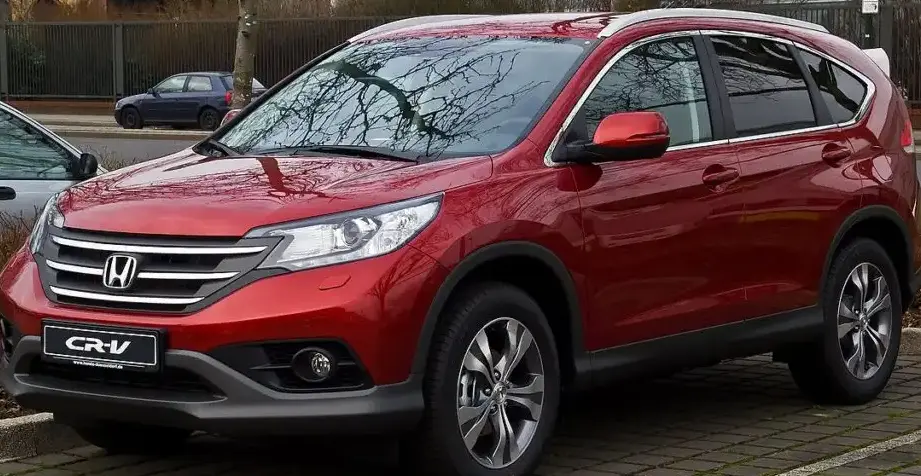
The Honda CR-V first generation (RD series), launched in 1995, represented Honda’s entry into the burgeoning compact SUV market. Specifically, the RD1 variant, equipped with the 2.0-liter 16-valve engine producing 128 horsepower, was a key model in establishing the CR-V’s reputation for practicality and reliability. Produced from 1995 through 1999, the RD1 was primarily aimed at buyers seeking a versatile, all-wheel-drive vehicle for family use and light-duty activities. It was a significant departure for Honda, which was traditionally known for its smaller, more fuel-efficient cars.
Technical Specifications
| Brand | Honda |
| Model | CR-V |
| Generation | CR-V I (RD) |
| Type (Engine) | 2.0 16V (RD1) (128 Hp) |
| Start of production | 1995 |
| End of production | 1999 |
| Powertrain Architecture | Internal Combustion engine |
| Body type | SUV |
| Seats | 5 |
| Doors | 5 |
| Fuel consumption (urban) | 12.6 l/100 km (18.7 US mpg) |
| Fuel consumption (extra urban) | 8.6 l/100 km (27.4 US mpg) |
| Fuel Type | Petrol (Gasoline) |
| Acceleration 0 – 100 km/h | 10.5 sec |
| Acceleration 0 – 62 mph | 10.5 sec |
| Acceleration 0 – 60 mph | 10 sec |
| Maximum speed | 174 km/h (108.12 mph) |
| Weight-to-power ratio | 11.2 kg/Hp |
| Weight-to-torque ratio | 7.9 kg/Nm |
| Power | 128 Hp @ 5200 rpm |
| Torque | 182 Nm @ 4200 rpm (134.24 lb.-ft. @ 4200 rpm) |
| Engine layout | Front, Transverse |
| Engine Model/Code | B20B |
| Engine displacement | 1973 cm3 (120.4 cu. in.) |
| Number of cylinders | 4 |
| Engine configuration | Inline |
| Cylinder Bore | 84 mm (3.31 in.) |
| Piston Stroke | 89 mm (3.5 in.) |
| Compression ratio | 9.2:1 |
| Number of valves per cylinder | 4 |
| Fuel injection system | Multi-port manifold injection |
| Engine aspiration | Naturally aspirated |
| Engine oil capacity | 3.8 l (4.02 US qt | 3.34 UK qt) |
| Coolant capacity | 3.9 l (4.12 US qt | 3.43 UK qt) |
| Kerb Weight | 1430 kg (3152.61 lbs.) |
| Max. weight | 1900 kg (4188.78 lbs.) |
| Max load | 470 kg (1036.17 lbs.) |
| Trunk (boot) space – minimum | 375 l (13.24 cu. ft.) |
| Trunk (boot) space – maximum | 670 l (23.66 cu. ft.) |
| Fuel tank capacity | 58 l (15.32 US gal | 12.76 UK gal) |
| Length | 4520 mm (177.95 in.) |
| Width | 1750 mm (68.9 in.) |
| Height | 1710 mm (67.32 in.) |
| Wheelbase | 2620 mm (103.15 in.) |
| Front track | 1535 mm (60.43 in.) |
| Rear track | 1535 mm (60.43 in.) |
| Drive wheel | All wheel drive (4×4) |
| Number of gears | 5 gears, manual transmission |
| Front suspension | Double wishbone |
| Rear suspension | Coil spring |
| Front brakes | Ventilated discs |
| Rear brakes | Drum |
| Assisting systems | ABS (Anti-lock braking system) |
| Steering type | Steering rack and pinion |
| Power steering | Hydraulic |
| Tires size | 205/70 R15 |
| Wheel rims size | 6J x 15 |
Powertrain & Engine Architecture
The RD1 CR-V was powered by Honda’s B20B engine, a 1.973-liter inline-four cylinder engine. This engine featured a single overhead camshaft (SOHC) design with four valves per cylinder, contributing to its relatively smooth operation. The B20B utilized multi-point fuel injection, a common technology at the time, to deliver fuel efficiently and optimize combustion. The engine’s 9.2:1 compression ratio was a compromise between performance and fuel economy. The five-speed manual transmission was the standard offering, providing drivers with direct control over the engine’s power. The engine was transversely mounted, a layout common in front-wheel-drive and all-wheel-drive vehicles, maximizing interior space.
Driving Characteristics
The 128-horsepower output of the B20B engine in the RD1 CR-V provided adequate, but not exhilarating, performance. Acceleration from 0 to 60 mph took around 10 seconds, making it competitive with other compact SUVs of the era. The five-speed manual transmission allowed drivers to keep the engine in its optimal power band, but the engine lacked the low-end torque found in some of its competitors. The all-wheel-drive system provided enhanced traction in slippery conditions, making the CR-V a capable vehicle for inclement weather. Compared to later, more powerful CR-V variants, the RD1 offered a more economical driving experience, but at the expense of outright speed.
Equipment & Trim Levels
The RD1 CR-V was generally well-equipped for its time, offering features such as air conditioning, power windows and locks, and an AM/FM radio. Higher trim levels added features like a sunroof, upgraded audio systems, and alloy wheels. Interior upholstery was typically cloth, with options for upgraded materials. The dashboard layout was functional and straightforward, prioritizing ease of use. Safety features included standard ABS brakes, a relatively advanced feature for the mid-1990s.
Chassis & Braking
The CR-V’s chassis featured an independent double wishbone suspension in the front, providing a comfortable ride and good handling characteristics. The rear suspension utilized a coil spring setup. The braking system consisted of ventilated discs in the front and drum brakes in the rear. While adequate for everyday driving, the rear drum brakes were a cost-saving measure and didn’t offer the same stopping power as disc brakes. The hydraulic power steering provided light and responsive steering feel.
Market Reception & Comparison
The Honda CR-V was well-received by critics and consumers alike. It was praised for its practicality, reliability, and spacious interior. The 2.0-liter engine, while not particularly powerful, was considered fuel-efficient and durable. Compared to other compact SUVs of the time, such as the Toyota RAV4 and the Nissan Pathfinder, the CR-V offered a compelling combination of features and value. The manual transmission version was favored by enthusiasts for its more engaging driving experience, while the automatic transmission appealed to a broader audience seeking convenience.
Legacy
The first-generation Honda CR-V established the CR-V as a major player in the compact SUV segment. The B20B engine proved to be remarkably reliable, with many examples still on the road today. While not known for its high performance, the RD1 CR-V’s durability and practicality have made it a popular choice among used car buyers. The CR-V’s success paved the way for subsequent generations, which have continued to build on its reputation for quality and versatility. The RD1 remains a fondly remembered vehicle for those who appreciate its simple, honest design and dependable performance.