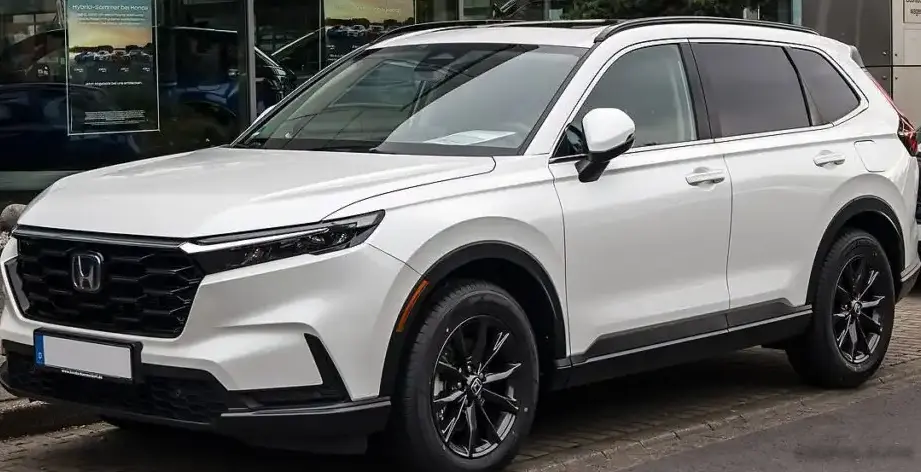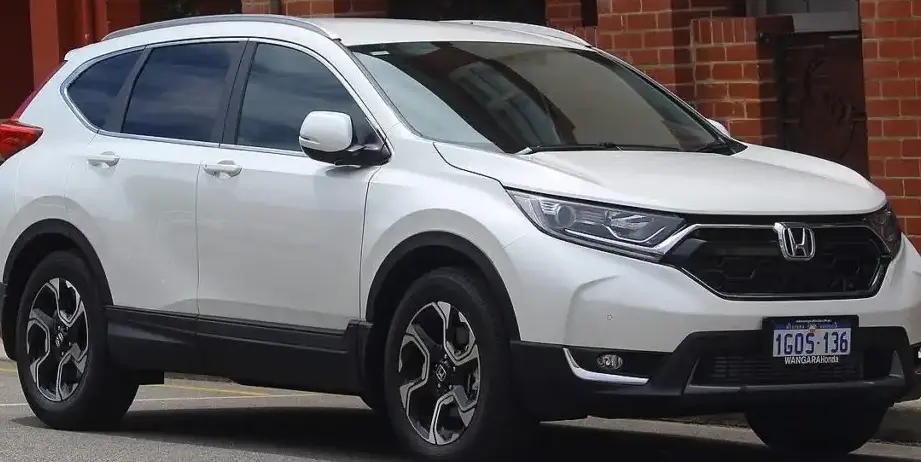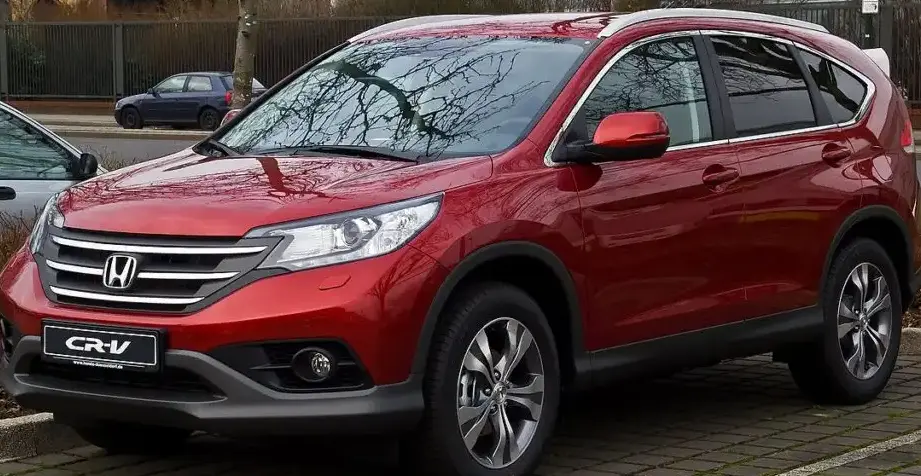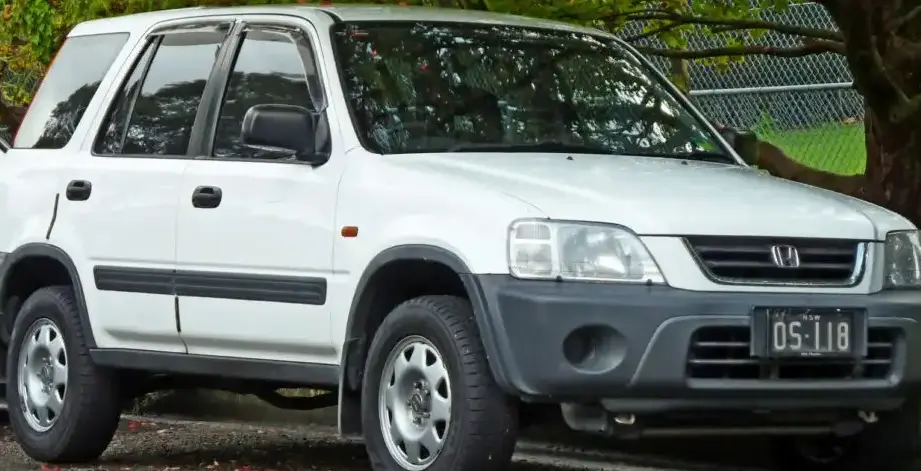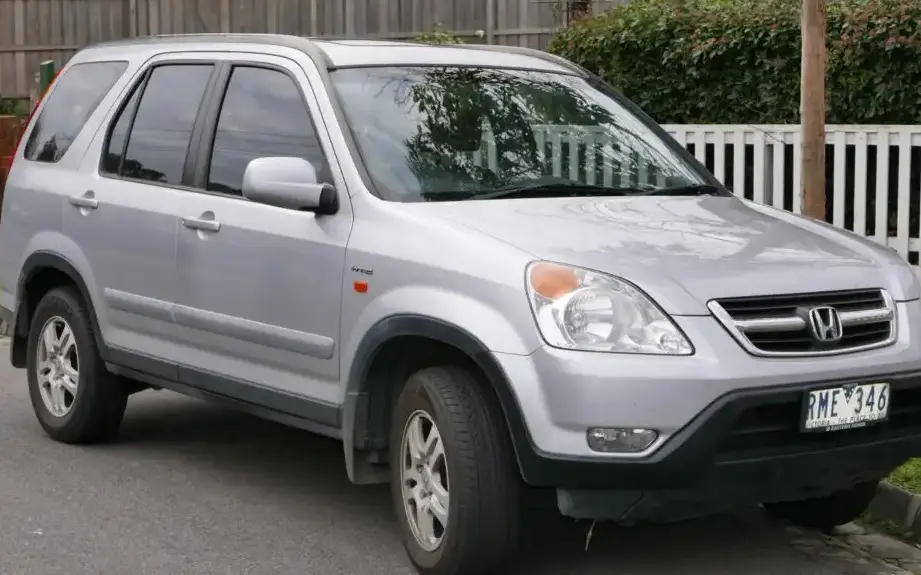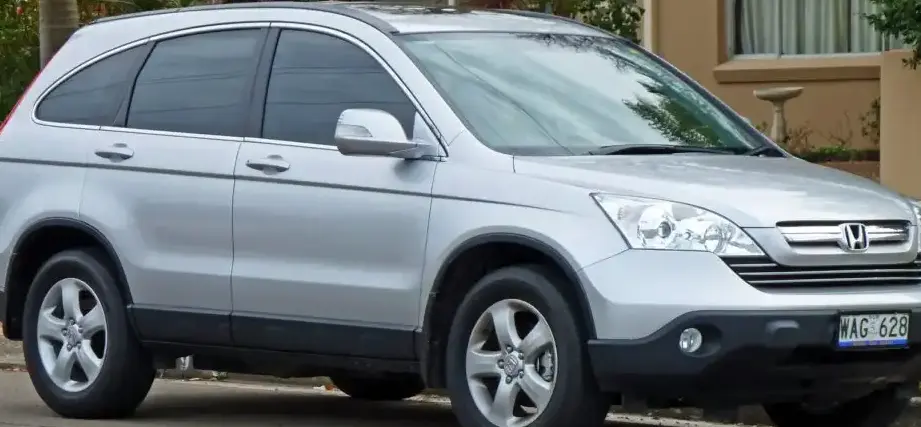
The Honda CR-V III, produced between 2006 and 2010, represented a significant evolution in Honda’s popular compact SUV lineup. The 2.0 i-VTEC variant, equipped with a 150 horsepower engine and an automatic transmission, along with all-wheel drive (AWD), occupied a middle ground within the CR-V III range. It aimed to balance fuel efficiency with adequate performance for everyday driving, appealing to a broad customer base seeking a practical and reliable family vehicle. This model was primarily marketed in Europe, Asia, and other international markets, with the US market receiving different engine options.
Technical Specifications
| Brand | Honda |
| Model | CR-V |
| Generation | CR-V III |
| Type (Engine) | 2.0 i-VTEC (150 Hp) AWD Automatic |
| Start of production | 2006 |
| End of production | 2010 |
| Powertrain Architecture | Internal Combustion engine |
| Body type | SUV |
| Seats | 5 |
| Doors | 5 |
| Fuel consumption (urban) | 10.9 l/100 km (21.6 US mpg) |
| Fuel consumption (extra urban) | 6.7 l/100 km (35.1 US mpg) |
| Fuel consumption (combined) | 8.2 l/100 km (28.7 US mpg) |
| CO2 emissions | 195 g/km |
| Fuel Type | Petrol (Gasoline) |
| Acceleration 0 – 100 km/h | 12.2 sec |
| Acceleration 0 – 62 mph | 12.2 sec |
| Acceleration 0 – 60 mph | 11.6 sec |
| Maximum speed | 177 km/h (109.98 mph) |
| Emission standard | Euro 4 |
| Weight-to-power ratio | 10.2 kg/Hp |
| Weight-to-torque ratio | 8 kg/Nm |
| Power | 150 Hp @ 6200 rpm |
| Torque | 192 Nm @ 4200 rpm (141.61 lb.-ft. @ 4200 rpm) |
| Engine layout | Front, Transverse |
| Engine Model/Code | R20A2 |
| Engine displacement | 1997 cm3 (121.86 cu. in.) |
| Number of cylinders | 4 |
| Engine configuration | Inline |
| Cylinder Bore | 81 mm (3.19 in.) |
| Piston Stroke | 96.9 mm (3.81 in.) |
| Compression ratio | 10.5:1 |
| Number of valves per cylinder | 4 |
| Fuel injection system | Multi-port manifold injection |
| Engine aspiration | Naturally aspirated |
| Valvetrain | SOHC, i-VTEC |
| Engine oil capacity | 3.7 l (3.91 US qt | 3.26 UK qt) |
| Coolant capacity | 6.1 l (6.45 US qt | 5.37 UK qt) |
| Kerb Weight | 1529-1620 kg (3370.87 – 3571.49 lbs.) |
| Max. weight | 2080 kg (4585.62 lbs.) |
| Max load | 460-551 kg (1014.13 – 1214.75 lbs.) |
| Trunk (boot) space – minimum | 524 l (18.5 cu. ft.) |
| Trunk (boot) space – maximum | 1532 l (54.1 cu. ft.) |
| Fuel tank capacity | 58 l (15.32 US gal | 12.76 UK gal) |
| Max. roof load | 80 kg (176.37 lbs.) |
| Permitted trailer load (braked) | 1500 kg (3306.93 lbs.) |
| Permitted trailer load (unbraked) | 600 kg (1322.77 lbs.) |
| Permitted towbar download | 100 kg (220.46 lbs.) |
| Length | 4530 mm (178.35 in.) |
| Width | 1820 mm (71.65 in.) |
| Width including mirrors | 2091 mm (82.32 in.) |
| Height | 1675 mm (65.94 in.) |
| Wheelbase | 2630 mm (103.54 in.) |
| Front track | 1565-1570 mm (61.61 – 61.81 in.) |
| Rear track | 1565-1575 mm (61.61 – 62.01 in.) |
| Ride height (ground clearance) | 175 mm (6.89 in.) |
| Minimum turning circle | 11.8 m (38.71 ft.) |
| Drivetrain | All wheel drive (4×4) |
| Number of gears | 5 |
| Gearbox type | Automatic transmission |
| Front suspension | Independent, McPherson with coil spring and anti-roll bar |
| Rear suspension | Independent multi-link with stabilizer |
| Front brakes | Ventilated discs, 293 mm |
| Rear brakes | Disc, 302 mm |
| Assisting systems | ABS (Anti-lock braking system) |
| Steering type | Steering rack and pinion |
| Power steering | Electric |
| Tires size | 225/65 R17; 225/60 R18 |
| Wheel rims size | 6.5J x 17; 7J x 18 |
INTRODUCTION
The CR-V III, launched in 2006, marked a shift towards a more car-like driving experience compared to its predecessors. Built on the Honda Civic’s platform (specifically the 2006-2011 Civic, known internally as the 8th generation, and sharing the 1HX0/A3 platform), it offered improved refinement and interior space. The 2.0 i-VTEC AWD Automatic variant was a popular choice for buyers prioritizing ease of use and all-weather capability. It sat in the middle of the CR-V III lineup, offering a step up in performance from the base 1.8-liter engine but remaining more affordable and fuel-efficient than the higher-spec 2.4-liter options.
Powertrain & Engine Architecture
The heart of the 2.0 i-VTEC CR-V is the R20A2 engine, a 1997cc inline-four cylinder gasoline engine. This engine utilizes Honda’s Intelligent Variable Valve Timing and Lift Electronic Control (i-VTEC) system, which optimizes valve timing and lift based on engine speed and load, improving both fuel efficiency and power output. The R20A2 employs multi-point fuel injection and a naturally aspirated design. The engine’s architecture is relatively simple, contributing to its reliability. The automatic transmission paired with this engine is a conventional 5-speed unit. While not known for being particularly sporty, it provides smooth and predictable shifts, prioritizing comfort over performance. The transmission is electronically controlled, adapting shift points based on throttle input and driving conditions.
Driving Characteristics
The 2.0 i-VTEC Automatic CR-V delivers adequate performance for everyday driving. Acceleration from 0-60 mph takes around 11.6-12.2 seconds, which is not particularly quick by modern standards, but sufficient for merging onto highways and navigating city streets. The automatic transmission’s gear ratios are tuned for fuel efficiency, resulting in a somewhat relaxed driving experience. Compared to the manual transmission version of the same engine, the automatic sacrifices some responsiveness. The AWD system provides enhanced traction in slippery conditions, making it a suitable choice for regions with inclement weather. However, it doesn’t transform the CR-V into a dedicated off-roader; its primary function is to improve stability and grip on paved roads.
Equipment & Trim Levels
The 2.0 i-VTEC AWD Automatic CR-V typically came equipped with a reasonable level of standard features. These included air conditioning, power windows and locks, a CD player with AM/FM radio, and basic safety equipment like ABS brakes and airbags. Higher trim levels offered upgrades such as alloy wheels, a sunroof, leather upholstery, and a more advanced audio system. Optional extras often included navigation systems and rear parking sensors. Interior upholstery was typically cloth, although leather was available on higher-spec models. The dashboard layout was functional and straightforward, prioritizing usability over stylistic flair.
Chassis & Braking
The CR-V III utilizes an independent suspension system on all four wheels. The front suspension employs McPherson struts with coil springs and an anti-roll bar, while the rear features a multi-link setup, also with a stabilizer bar. This suspension configuration provides a comfortable ride quality, absorbing bumps and imperfections in the road surface effectively. Braking duties are handled by ventilated discs at the front and solid discs at the rear. The ABS system helps to prevent wheel lockup during hard braking, enhancing safety. The steering is rack and pinion, providing precise and responsive control.
Market Reception & Comparison
The 2.0 i-VTEC Automatic CR-V was generally well-received by automotive critics. It was praised for its practicality, reliability, and comfortable ride. However, some reviewers noted its lack of outright performance and the somewhat dated design of the interior. Compared to the 2.4-liter CR-V variants, the 2.0-liter model offered better fuel economy but less power. The 2.4-liter models were favored by drivers seeking a more engaging driving experience. In terms of reliability, the 2.0 i-VTEC engine proved to be very durable, with few reported issues. Fuel economy was competitive for its class, averaging around 28.7 US mpg in combined driving.
Legacy
The Honda CR-V III 2.0 i-VTEC Automatic has proven to be a reliable and long-lasting vehicle. On the used car market, these models are still sought after for their practicality and affordability. The R20A2 engine is known for its durability and relatively low maintenance costs. While not a performance standout, the 2.0 i-VTEC Automatic CR-V remains a sensible and dependable choice for buyers seeking a compact SUV with all-wheel drive. Regular maintenance, including oil changes and timing belt replacements (if applicable), is crucial to ensuring its continued reliability.