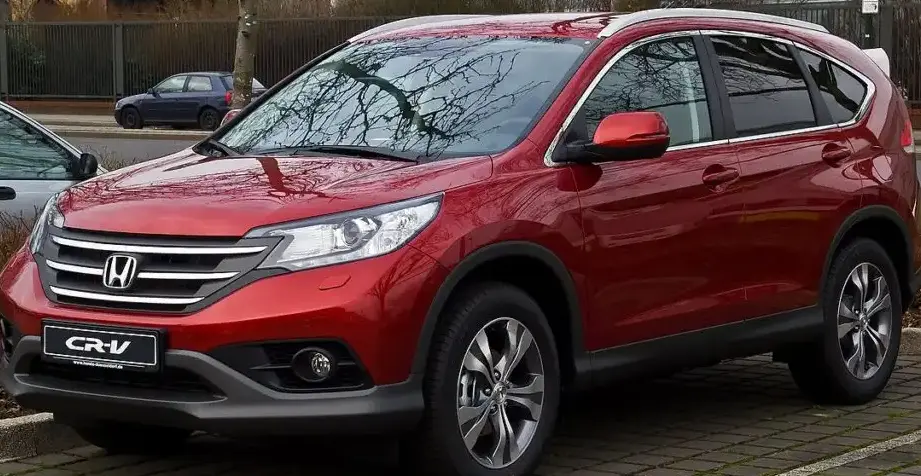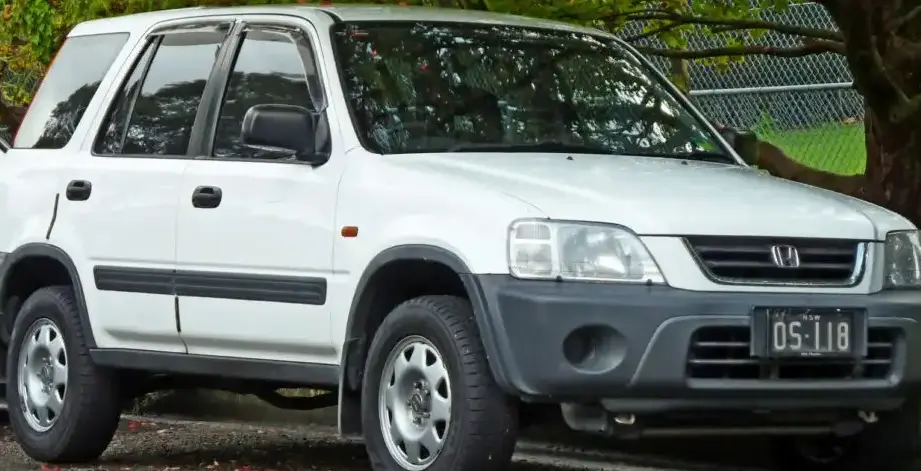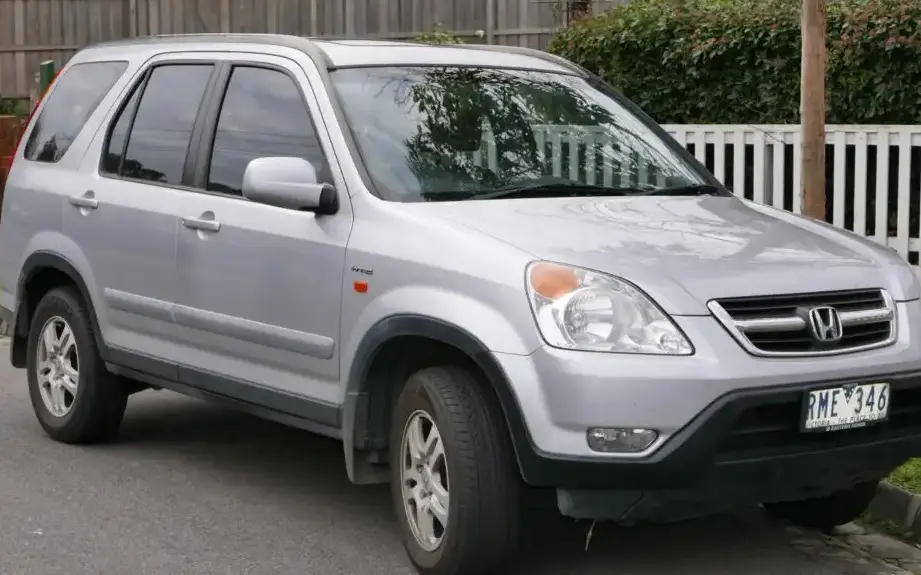
The Honda CR-V III (facelift, 2009) 2.0 i-VTEC (150 hp) AWD Automatic represents a mid-cycle refresh of the third-generation CR-V, produced from 2010 to 2012. This variant occupied a key position in the CR-V lineup, offering a balance between affordability, practicality, and all-weather capability. It was primarily marketed towards families and individuals seeking a reliable and versatile compact SUV with the convenience of an automatic transmission and the added security of all-wheel drive. The facelift brought styling updates, improved interior materials, and refinements to the engine and transmission for enhanced efficiency and drivability. This model continued the CR-V’s reputation as a strong contender in the increasingly popular compact SUV segment.
Technical Specifications
| Brand | Honda |
| Model | CR-V |
| Generation | CR-V III (facelift 2009) |
| Type (Engine) | 2.0 i-VTEC (150 Hp) AWD Automatic |
| Start of production | 2010 |
| End of production | 2012 |
| Powertrain Architecture | Internal Combustion engine |
| Body type | SUV |
| Seats | 5 |
| Doors | 5 |
| Fuel consumption (economy) – urban (NEDC) | 11.1 l/100 km (21.2 US mpg, 25.4 UK mpg, 9 km/l) |
| Fuel consumption (economy) – extra urban (NEDC) | 6.8 l/100 km (34.6 US mpg, 41.5 UK mpg, 14.7 km/l) |
| Fuel consumption (economy) – combined (NEDC) | 8.4 l/100 km (28 US mpg, 33.6 UK mpg, 11.9 km/l) |
| CO2 emissions (NEDC) | 193 g/km |
| Fuel Type | Petrol (Gasoline) |
| Acceleration 0 – 100 km/h | 12.2 sec |
| Acceleration 0 – 62 mph | 12.2 sec |
| Acceleration 0 – 60 mph | 11.6 sec |
| Maximum speed | 177 km/h (109.98 mph) |
| Emission standard | Euro 5 |
| Weight-to-power ratio | 10.2 kg/Hp, 98 Hp/tonne |
| Weight-to-torque ratio | 8 kg/Nm, 125.5 Nm/tonne |
| Power | 150 Hp @ 6200 rpm |
| Power per litre | 75.1 Hp/l |
| Torque | 192 Nm @ 4200 rpm (141.61 lb.-ft. @ 4200 rpm) |
| Engine layout | Front, Transverse |
| Engine Model/Code | R20A2 |
| Engine displacement | 1997 cm3 (121.86 cu. in.) |
| Number of cylinders | 4 |
| Engine configuration | Inline |
| Cylinder Bore | 81 mm (3.19 in.) |
| Piston Stroke | 96.9 mm (3.81 in.) |
| Compression ratio | 10.5:1 |
| Number of valves per cylinder | 4 |
| Fuel injection system | Multi-port manifold injection |
| Engine aspiration | Naturally aspirated engine |
| Valvetrain | SOHC, i-VTEC |
| Engine oil capacity | 3.7 l (3.91 US qt | 3.26 UK qt) |
| Coolant | 6.1 l (6.45 US qt | 5.37 UK qt) |
| Kerb Weight | 1530-1643 kg (3373.07 – 3622.19 lbs.) |
| Max. weight | 2080 kg (4585.62 lbs.) |
| Max load | 437-550 kg (963.42 – 1212.54 lbs.) |
| Trunk (boot) space – minimum | 524 l (18.5 cu. ft.) |
| Trunk (boot) space – maximum | 1532 l (54.1 cu. ft.) |
| Fuel tank capacity | 58 l (15.32 US gal | 12.76 UK gal) |
| Max. roof load | 80 kg (176.37 lbs.) |
| Permitted trailer load with brakes (12%) | 1500 kg (3306.93 lbs.) |
| Permitted trailer load without brakes | 600 kg (1322.77 lbs.) |
| Permitted towbar download | 100 kg (220.46 lbs.) |
| Length | 4574 mm (180.08 in.) |
| Width | 1820 mm (71.65 in.) |
| Width including mirrors | 2091 mm (82.32 in.) |
| Height | 1675 mm (65.94 in.) |
| Wheelbase | 2620 mm (103.15 in.) |
| Front track | 1565-1570 mm (61.61 – 61.81 in.) |
| Rear (Back) track | 1565-1585 mm (61.61 – 62.4 in.) |
| Ride height (ground clearance) | 185 mm (7.28 in.) |
| Minimum turning circle (turning diameter) | 11.8 m (38.71 ft.) |
| Drivetrain Architecture | The Internal combustion engine (ICE) drives the front wheels permanently, and the rear wheels are driven through an electrically or mechanically operated clutch if necessary. |
| Drive wheel | All wheel drive (4×4) |
| Number of gears and type of gearbox | 5 gears, automatic transmission |
| Front suspension | Independent, type McPherson with coil spring and anti-roll bar |
| Rear suspension | Independent multi-link spring suspension with stabilizer |
| Front brakes | Ventilated discs, 293 mm |
| Rear brakes | Disc, 302 mm |
| Assisting systems | ABS (Anti-lock braking system) |
| Steering type | Steering rack and pinion |
| Power steering | Electric Steering |
| Tires size | 225/65 R17; 225/60 R18; 245/45 R19 |
| Wheel rims size | 6.5J x 17; 7J x 18; 7.5J x 19 |
INTRODUCTION
The 2010-2012 Honda CR-V III facelift, equipped with the 2.0-liter i-VTEC engine and a five-speed automatic transmission coupled with all-wheel drive, was a popular choice for buyers seeking a practical and reliable SUV. Built on the Honda Civic’s platform (the FA5/FB chassis code), this CR-V offered a comfortable ride, ample cargo space, and Honda’s renowned build quality. The facelift brought subtle but noticeable improvements to the exterior styling, including a revised front grille, headlights, and bumper. Inside, the cabin received upgraded materials and a more refined appearance. This particular configuration aimed to provide a balance between fuel efficiency and adequate performance for everyday driving.
Powertrain & Engine Architecture
The heart of this CR-V variant is the R20A2 2.0-liter inline-four cylinder engine. This engine utilizes Honda’s i-VTEC (Intelligent Variable Valve Timing and Lift Electronic Control) technology, which optimizes valve timing and lift based on engine speed and load, improving both fuel efficiency and power output. The R20A2 features multi-point fuel injection and a compression ratio of 10.5:1. The five-speed automatic transmission was chosen for its smooth operation and ease of use, catering to a broader range of drivers. While not a performance-oriented transmission, it was well-matched to the engine’s torque curve. The all-wheel-drive system is a Real Time 4WD system, meaning it primarily operates in front-wheel drive, engaging the rear wheels automatically when wheel slippage is detected, providing enhanced traction in adverse conditions.
Driving Characteristics
The 150 hp and 192 Nm of torque delivered by the 2.0-liter i-VTEC engine, combined with the five-speed automatic, resulted in adequate, but not exhilarating, performance. Acceleration from 0-60 mph took around 11.6 seconds, making it competitive within its class but slower than CR-V models equipped with the 2.4-liter engine. The automatic transmission, while smooth, sometimes felt hesitant during quick acceleration or overtaking maneuvers. The Real Time 4WD system provided confident handling in slippery conditions, but added some weight, slightly impacting fuel economy. The CR-V’s suspension provided a comfortable ride, absorbing bumps and imperfections in the road well, making it a pleasant vehicle for long journeys.
Equipment & Trim Levels
The 2.0 i-VTEC AWD Automatic CR-V typically came standard with features such as air conditioning, power windows and locks, a CD player with auxiliary input, and basic safety equipment like ABS and airbags. Higher trim levels, such as the EX and EX-L, added features like a sunroof, alloy wheels, a premium audio system, leather upholstery, and heated front seats. Optional extras included navigation systems and rear-seat entertainment systems. The interior generally featured durable, if somewhat basic, materials, with a focus on practicality and ease of cleaning.
Chassis & Braking
The CR-V III utilized an independent McPherson strut suspension in the front and an independent multi-link suspension in the rear, providing a comfortable and controlled ride. Brakes consisted of ventilated discs in the front and solid discs in the rear. ABS (Anti-lock Braking System) was standard, enhancing braking performance and stability. The steering was a rack-and-pinion system with electric power steering, offering light and precise control. The chassis was designed to prioritize safety and stability, with a relatively high center of gravity typical of SUVs.
Market Reception & Comparison
The 2.0 i-VTEC AWD Automatic CR-V was generally well-received by critics as a practical and reliable family SUV. However, some reviewers noted that the engine felt underpowered, especially when fully loaded or driving uphill. Compared to the 2.4-liter CR-V, the 2.0-liter model offered better fuel economy but sacrificed some performance. Against competitors like the Toyota RAV4 and Nissan Rogue, the CR-V stood out for its spacious interior, comfortable ride, and strong resale value. Its fuel economy was competitive, but not class-leading.
Legacy
The R20A2 engine, when properly maintained, has proven to be a durable and reliable powerplant. The five-speed automatic transmission is also generally considered reliable, although regular fluid changes are crucial for longevity. Today, used examples of the 2010-2012 CR-V III 2.0 i-VTEC AWD Automatic are readily available and often represent a good value for buyers seeking a dependable and affordable SUV. Common issues are relatively minor, often related to wear and tear on suspension components or routine maintenance items. The CR-V’s reputation for reliability and practicality continues to make it a popular choice in the used car market.