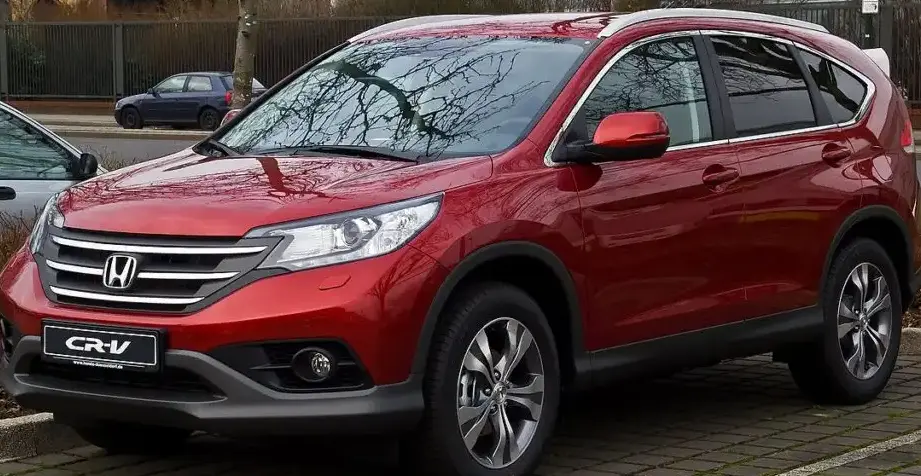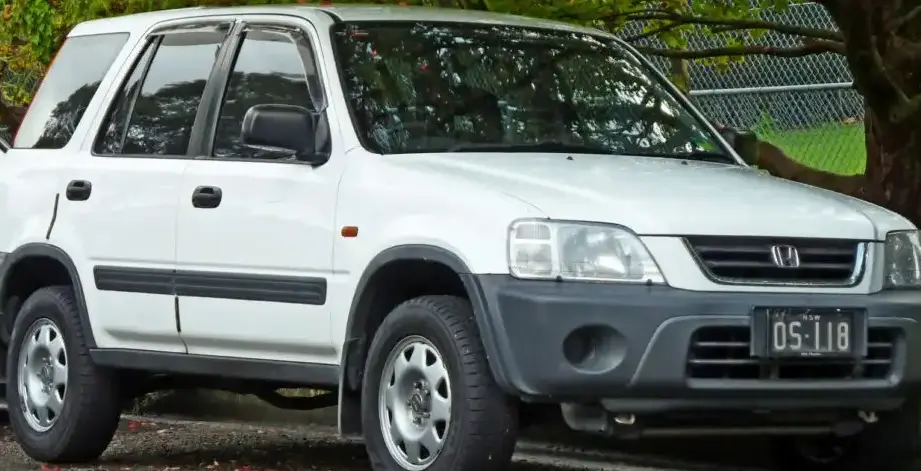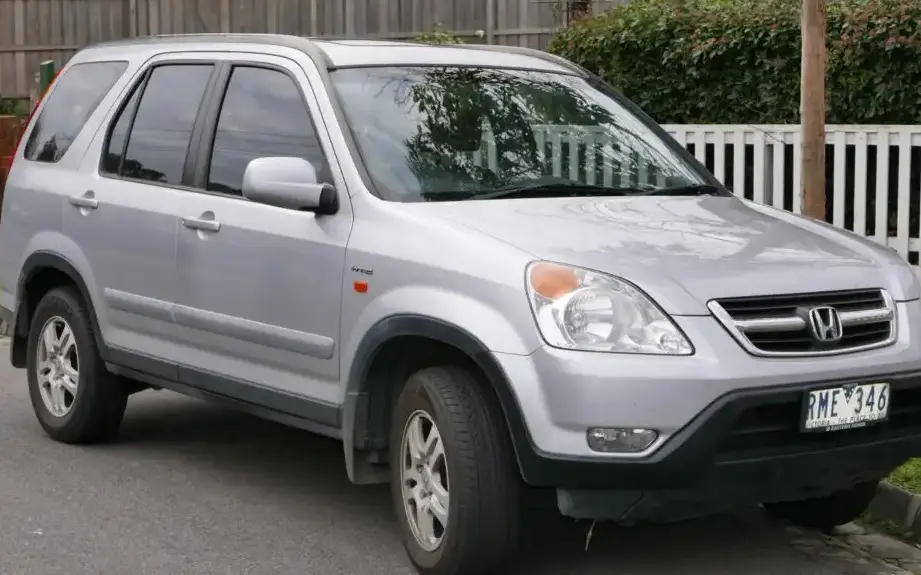
The Honda CR-V IV 2.0 i-VTEC (155 hp) represents a significant iteration in Honda’s popular compact SUV lineup. Produced from 2012 to 2015, this variant occupied a central position within the fourth-generation CR-V (RE series), offering a balance between fuel efficiency, practicality, and affordability. It was primarily aimed at family buyers in North America, Europe, and Asia, where the CR-V had established itself as a reliable and spacious option in the burgeoning crossover segment. This particular engine and transmission combination was a mainstay, providing a comfortable and capable driving experience for everyday use.
Technical Specifications
| Brand | Honda |
| Model | CR-V |
| Generation | CR-V IV |
| Type (Engine) | 2.0 i-VTEC (155 Hp) |
| Start of production | 2012 |
| End of production | 2015 |
| Powertrain Architecture | Internal Combustion engine |
| Body type | SUV |
| Seats | 5 |
| Doors | 5 |
| Fuel consumption (urban) | 8.9 l/100 km (26.4 US mpg) |
| Fuel consumption (extra urban) | 6.2 l/100 km (37.9 US mpg) |
| Fuel consumption (combined) | 7.2 l/100 km (32.7 US mpg) |
| Fuel Type | Petrol (Gasoline) |
| Acceleration 0 – 100 km/h | 10 sec |
| Acceleration 0 – 62 mph | 10 sec |
| Acceleration 0 – 60 mph | 9.5 sec |
| Maximum speed | 190 km/h (118.06 mph) |
| Emission standard | Euro 5 |
| Weight-to-power ratio | 9.4 kg/Hp |
| Weight-to-torque ratio | 7.6 kg/Nm |
| Power | 155 Hp @ 6500 rpm |
| Torque | 192 Nm @ 4300 rpm (141.61 lb.-ft. @ 4300 rpm) |
| Engine layout | Front, Transverse |
| Engine Model/Code | R20A5, R20A6, R20A8 |
| Engine displacement | 1997 cm3 (121.86 cu. in.) |
| Number of cylinders | 4 |
| Engine configuration | Inline |
| Compression ratio | 10.6:1 |
| Number of valves per cylinder | 4 |
| Fuel injection system | Multi-port manifold injection |
| Engine aspiration | Naturally aspirated engine |
| Engine oil capacity | 3.7 l (3.91 US qt | 3.26 UK qt) |
| Coolant capacity | 5.94 l (6.28 US qt | 5.23 UK qt) |
| Kerb Weight | 1456 kg (3209.93 lbs.) |
| Trunk (boot) space – minimum | 589 l (20.8 cu. ft.) |
| Trunk (boot) space – maximum | 955 l (33.73 cu. ft.) |
| Fuel tank capacity | 58 l (15.32 US gal | 12.76 UK gal) |
| Length | 4570 mm (179.92 in.) |
| Width | 1820 mm (71.65 in.) |
| Height | 1685 mm (66.34 in.) |
| Wheelbase | 2630 mm (103.54 in.) |
| Minimum turning circle | 11.8 m (38.71 ft.) |
| Drivetrain Architecture | Front wheel drive |
| Number of gears | 6 gears, manual transmission |
| Front suspension | Independent, type McPherson with coil spring and anti-roll bar |
| Rear suspension | Independent multi-link suspension |
| Front brakes | Ventilated discs |
| Rear brakes | Disc |
| Tires size | 225/65 R17; 225/60 R17 |
| Wheel rims size | 17 |
Powertrain & Engine Architecture
The heart of the CR-V IV 2.0 i-VTEC is the R20A series engine, specifically the R20A5, R20A6, or R20A8 depending on the market. This 2.0-liter inline-four cylinder engine utilizes Honda’s i-VTEC (intelligent Variable valve Timing and lift Electronic Control) technology. This system allows for variable control of both valve timing and lift, optimizing engine performance across a wider RPM range. The engine employs multi-point fuel injection, delivering fuel directly into the intake ports. The engine’s design prioritizes reliability and fuel efficiency over outright power. The 6-speed manual transmission was standard, offering precise shifts and a direct connection to the engine. The engine’s relatively simple design contributes to its longevity and ease of maintenance.
Driving Characteristics
The 155 hp and 141.61 lb-ft of torque delivered by the 2.0-liter i-VTEC engine provided adequate, though not exhilarating, performance. Acceleration from 0-60 mph took around 9.5 seconds, making it competitive within its class. The manual transmission allowed drivers to maximize the engine’s potential, while the gear ratios were tuned for fuel economy and everyday drivability. Compared to the available turbocharged options in some markets, or even the later CR-V generations, this variant felt less powerful, particularly when fully loaded or tackling steep inclines. However, the engine was smooth and refined, offering a pleasant driving experience for daily commutes and long journeys. The front-wheel-drive configuration provided predictable handling, although it lacked the all-weather capability of the available all-wheel-drive system.
Equipment & Trim Levels
The 2.0 i-VTEC typically served as the entry-level or mid-range trim in the CR-V IV lineup. Standard features generally included air conditioning, power windows and locks, a basic audio system with USB connectivity, and alloy wheels. Higher trim levels added features such as a sunroof, leather upholstery, a more advanced infotainment system with navigation, and automatic climate control. Safety features like ABS, stability control, and multiple airbags were standard across all trims. The interior was characterized by its practicality and durability, with ample storage space and comfortable seating for five passengers.
Chassis & Braking
The CR-V IV utilized a MacPherson strut front suspension and a multi-link rear suspension, providing a comfortable and controlled ride. The suspension was tuned to prioritize comfort over sporty handling. Front disc brakes and rear disc brakes provided adequate stopping power for the vehicle’s weight. ABS (Anti-lock Braking System) was standard, enhancing safety during emergency braking situations. The steering was light and precise, making it easy to maneuver in urban environments. The chassis was designed to provide a stable and secure platform for both passengers and cargo.
Market Reception & Comparison
The CR-V IV 2.0 i-VTEC was generally well-received by automotive critics. It was praised for its spacious interior, fuel efficiency, and reliability. However, some reviewers noted that the engine lacked the power of competing models, particularly when compared to turbocharged alternatives. Fuel economy figures of around 32.7 US mpg combined were competitive for its class. Compared to higher-trim CR-Vs with more powerful engines, the 2.0 i-VTEC offered a more affordable entry point into the CR-V lineup, appealing to budget-conscious buyers. Its simplicity also translated to lower maintenance costs over the long term.
Legacy
The R20A engine family, including the variants used in the CR-V IV, has a reputation for long-term reliability. With proper maintenance, these engines can easily exceed 200,000 miles. The CR-V IV 2.0 i-VTEC remains a popular choice in the used car market, particularly for buyers seeking a dependable and practical SUV. While it may not offer the latest technology or the highest performance, its proven reliability and affordability make it a compelling option for those seeking a well-rounded and long-lasting vehicle. The combination of a simple, robust engine and a practical, spacious body style has ensured its continued relevance in the used car landscape.