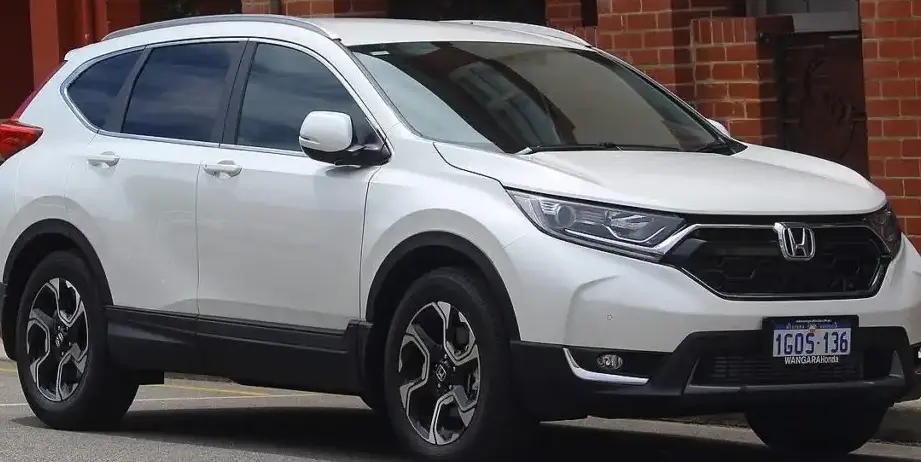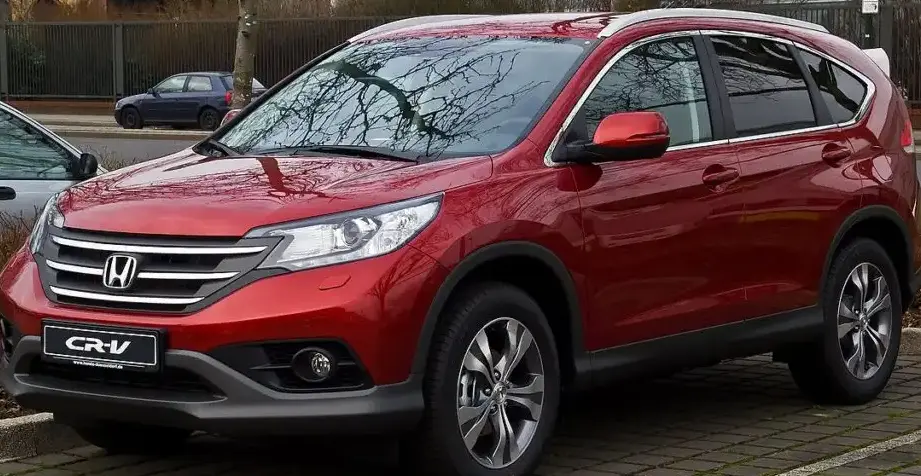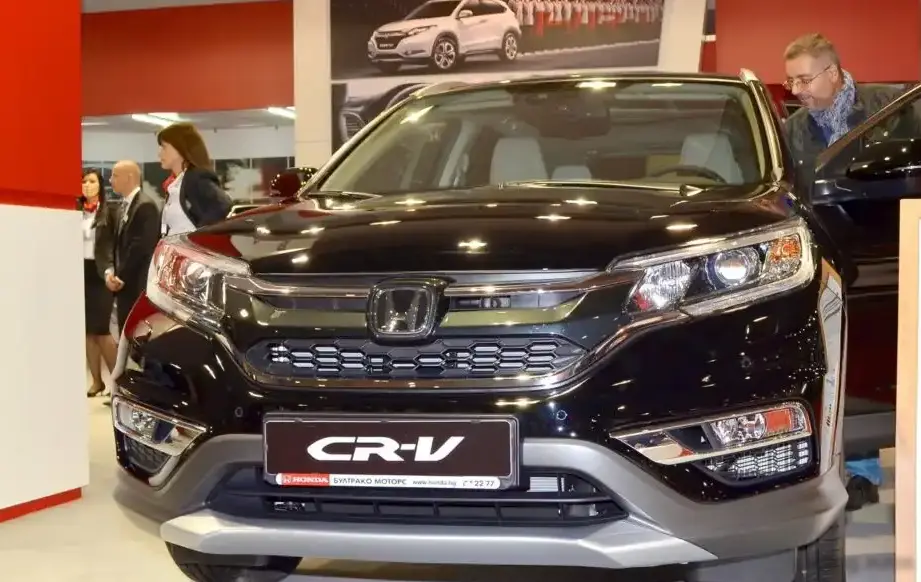
The Honda CR-V IV (facelift 2014) 1.6 i-DTEC, produced from 2015 to 2016, represented a significant step in offering a fuel-efficient diesel option within the popular CR-V lineup. This variant was primarily aimed at the European market, where diesel engines held a substantial share of the SUV segment. Positioned as a mid-range offering, it slotted between the petrol-powered CR-V models and potentially higher-trim diesel variants depending on the specific country. The facelifted CR-V, introduced in 2014, brought styling updates and revised mechanical components, with the 1.6 i-DTEC being a key addition to the engine portfolio.
Technical Specifications
| Brand | Honda |
| Model | CR-V |
| Generation | CR-V IV (facelift 2014) |
| Type (Engine) | 1.6 i-DTEC (120 Hp) |
| Start of production | 2015 |
| End of production | 2016 |
| Powertrain Architecture | Internal Combustion engine |
| Body type | SUV |
| Seats | 5 |
| Doors | 5 |
| Fuel consumption (urban) | 4.6 – 4.8 l/100 km (51.1 – 49 US mpg, 61.4 – 58.9 UK mpg, 21.7 – 20.8 km/l) |
| Fuel consumption (extra urban) | 4.2 – 4.4 l/100 km (56 – 53.5 US mpg, 67.3 – 64.2 UK mpg, 23.8 – 22.7 km/l) |
| Fuel consumption (combined) | 4.4 – 4.5 l/100 km (53.5 – 52.3 US mpg, 64.2 – 62.8 UK mpg, 22.7 – 22.2 km/l) |
| CO2 emissions | 115 – 119 g/km |
| Fuel Type | Diesel |
| Acceleration 0 – 100 km/h | 11.2 sec |
| Acceleration 0 – 62 mph | 11.2 sec |
| Acceleration 0 – 60 mph | 10.6 sec |
| Maximum speed | 182 km/h (113.09 mph) |
| Emission standard | Euro 6b |
| Weight-to-power ratio | 12.9 kg/Hp, 77.7 Hp/tonne |
| Weight-to-torque ratio | 5.2 kg/Nm, 194.2 Nm/tonne |
| Power | 120 Hp @ 4000 rpm |
| Power per litre | 75.1 Hp/l |
| Torque | 300 Nm @ 2000 rpm (221.27 lb.-ft. @ 2000 rpm) |
| Engine layout | Front, Transverse |
| Engine Model/Code | N16A2 |
| Engine displacement | 1597 cm3 (97.45 cu. in.) |
| Number of cylinders | 4 |
| Engine configuration | Inline |
| Compression ratio | 16:1 |
| Number of valves per cylinder | 4 |
| Fuel injection system | Diesel Commonrail |
| Engine aspiration | Turbocharger, Intercooler |
| Engine oil capacity | 4.7 l (4.97 US qt | 4.14 UK qt) |
| Coolant capacity | 5.7 l (6.02 US qt | 5.02 UK qt) |
| Kerb Weight | 1545 kg (3406.14 lbs.) |
| Trunk (boot) space – minimum | 589 l (20.8 cu. ft.) |
| Trunk (boot) space – maximum | 1146 l (40.47 cu. ft.) |
| Fuel tank capacity | 58 l (15.32 US gal | 12.76 UK gal) |
| Length | 4605 mm (181.3 in.) |
| Width | 2096 mm (82.52 in.) |
| Height | 1685 mm (66.34 in.) |
| Wheelbase | 2630 mm (103.54 in.) |
| Ride height (ground clearance) | 165 mm (6.5 in.) |
| Minimum turning circle | 11.9 m (39.04 ft.) |
| Drivetrain Architecture | Front wheel drive |
| Number of gears | 6 |
| Gearbox type | Manual transmission |
| Front suspension | Independent, type McPherson with coil spring and anti-roll bar |
| Rear suspension | Independent multi-link suspension |
| Front brakes | Ventilated discs |
| Rear brakes | Disc |
| Assisting systems | ABS (Anti-lock braking system) |
| Steering type | Steering rack and pinion |
| Tires size | 225/65 R17; 225/60 R18 |
| Wheel rims size | 17; 18 |
Powertrain & Engine Architecture
The heart of the CR-V 1.6 i-DTEC is the N16A2 engine, a 1.6-liter inline-four cylinder diesel. This engine is part of Honda’s Earth Dreams Technology series, designed for improved efficiency and reduced emissions. It utilizes a common-rail direct injection system, delivering fuel at extremely high pressure for optimized combustion. A single turbocharger with an intercooler provides forced induction, boosting power and torque. The engine features a 16:1 compression ratio, contributing to its thermal efficiency. The 1.6L engine was known for being relatively quiet for a diesel, a key selling point in the European market. Paired with this engine was a six-speed manual transmission, chosen for its balance of fuel economy and driver engagement. While an automatic transmission was available on other CR-V trims, it wasn’t offered with the 1.6 i-DTEC in most markets.
Driving Characteristics
The 120 horsepower and 300 Nm (221 lb-ft) of torque offered by the 1.6 i-DTEC provided adequate, though not exhilarating, performance for the CR-V. Acceleration from 0-60 mph took around 10.6 seconds, making it slower than the petrol-powered CR-V variants or those equipped with more powerful diesel engines. However, the engine’s torque delivery was strong from low RPMs, making it well-suited for everyday driving and overtaking maneuvers. The six-speed manual transmission allowed drivers to keep the engine in its optimal power band. Compared to higher-output diesel CR-Vs, the 1.6 i-DTEC prioritized fuel economy over outright speed. The gear ratios were tuned for efficiency, resulting in a comfortable cruising experience on the highway.
Equipment & Trim Levels
The 1.6 i-DTEC trim typically included standard features such as air conditioning, power windows, a basic audio system, and alloy wheels. Safety features like ABS, electronic stability control, and multiple airbags were also standard. Higher trim levels offered options like a touchscreen infotainment system, navigation, leather upholstery, and a sunroof. The specific equipment levels varied depending on the country and optional packages selected by the buyer. The interior generally featured a practical and durable design, prioritizing functionality over luxury.
Chassis & Braking
The CR-V IV utilized a MacPherson strut front suspension and a multi-link rear suspension, providing a comfortable ride and predictable handling. The front brakes were ventilated discs, while the rear brakes were solid discs. ABS (Anti-lock Braking System) was standard, enhancing braking performance and stability. The suspension was tuned to balance ride comfort with handling, making it suitable for both urban driving and longer journeys. Stabilizer bars were fitted to both the front and rear axles to reduce body roll during cornering.
Market Reception & Comparison
The 1.6 i-DTEC CR-V was generally well-received by automotive critics for its fuel efficiency and refinement. It offered a compelling alternative to petrol-powered SUVs, particularly for drivers who covered long distances. Compared to the 2.0-liter petrol engine, the 1.6 i-DTEC delivered significantly better fuel economy. However, it lacked the outright performance of the 2.2-liter i-DTEC engine available in some markets. Reliability was generally good, although some owners reported issues with the diesel particulate filter (DPF) if the vehicle was primarily used for short trips. The manual transmission was praised for its smooth operation and precise shift quality.
Legacy
The 1.6 i-DTEC engine proved to be a reliable and efficient powerplant, and the CR-V IV 1.6 i-DTEC remains a popular choice in the used car market. Its fuel economy and relatively low running costs make it an attractive option for budget-conscious buyers. While the DPF can be a potential maintenance concern, regular servicing and proper driving habits can mitigate this risk. The CR-V IV, in general, has a reputation for durability and practicality, contributing to its continued popularity. The 1.6 i-DTEC variant represents a key step in Honda’s efforts to offer more fuel-efficient diesel options in the European SUV market.