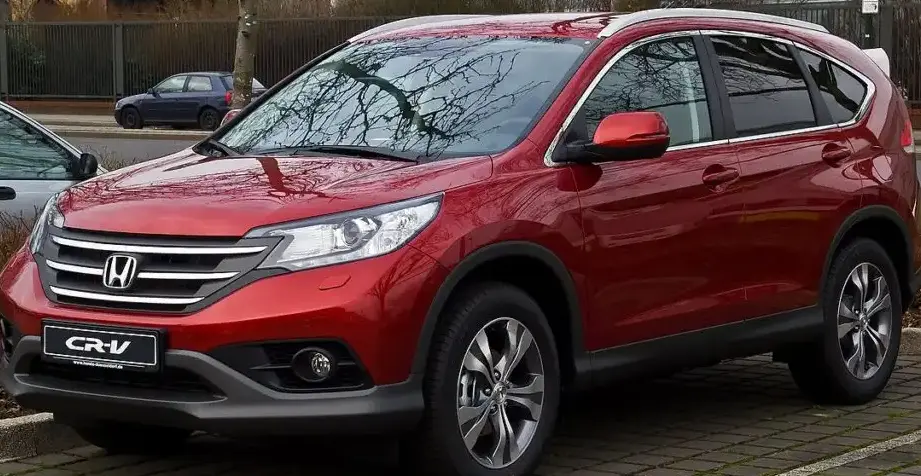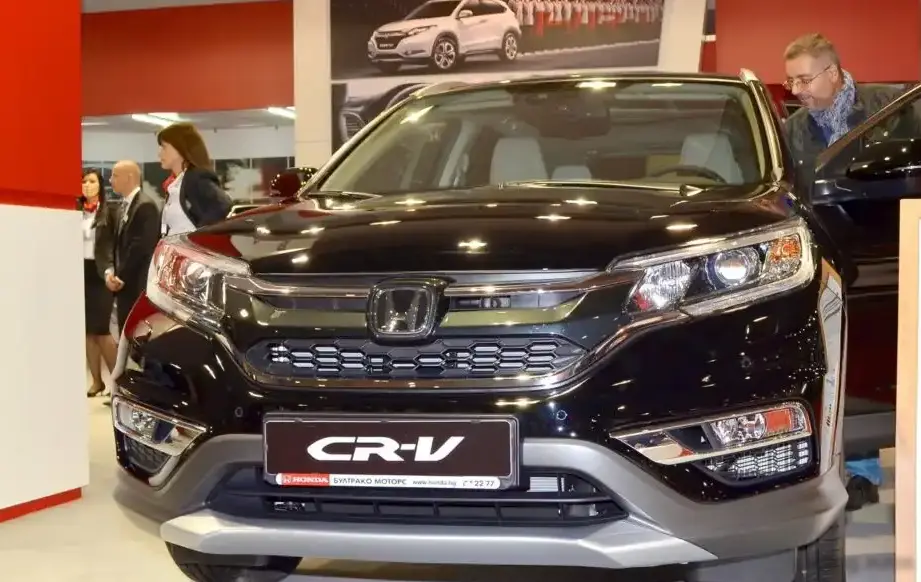
The Honda CR-V IV (facelift 2014) 1.6 i-DTEC Automatic AWD represents a significant iteration of Honda’s popular compact SUV, produced from 2015 to 2016. This variant was primarily aimed at the European market, where demand for fuel-efficient diesel SUVs with all-wheel drive was high. It slotted into the CR-V lineup as a mid-range offering, balancing performance, economy, and practicality. The facelift brought styling updates and, crucially, the introduction of the new 1.6-liter diesel engine paired with a nine-speed automatic transmission, a first for the CR-V in many markets.
Technical Specifications
| Brand | Honda |
| Model | CR-V |
| Generation | CR-V IV (facelift 2014) |
| Type (Engine) | 1.6 i-DTEC (160 Hp) Automatic AWD |
| Start of production | 2015 |
| End of production | 2016 |
| Powertrain Architecture | Internal Combustion engine |
| Body type | SUV |
| Seats | 5 |
| Doors | 5 |
| Fuel consumption (urban) | 5.6 – 6.0 l/100 km (42 – 39.2 US mpg) |
| Fuel consumption (extra urban) | 4.8 – 4.9 l/100 km (49 – 48 US mpg) |
| Fuel consumption (combined) | 5.1 – 5.3 l/100 km (46.1 – 44.4 US mpg) |
| CO2 emissions | 134 – 139 g/km |
| Fuel Type | Diesel |
| Acceleration 0 – 100 km/h | 10 sec |
| Acceleration 0 – 62 mph | 10 sec |
| Acceleration 0 – 60 mph | 9.5 sec |
| Maximum speed | 197 km/h (122.41 mph) |
| Emission standard | Euro 6b |
| Weight-to-power ratio | 10.4 kg/Hp |
| Weight-to-torque ratio | 4.7 kg/Nm |
| Power | 160 Hp @ 4000 rpm |
| Torque | 350 Nm @ 2000 rpm (258.15 lb.-ft. @ 2000 rpm) |
| Engine layout | Front, Transverse |
| Engine Model/Code | N16A4 |
| Engine displacement | 1597 cm3 (97.45 cu. in.) |
| Number of cylinders | 4 |
| Engine configuration | Inline |
| Compression ratio | 16:1 |
| Number of valves per cylinder | 4 |
| Fuel injection system | Diesel Commonrail |
| Engine aspiration | Turbocharger, Intercooler |
| Engine oil capacity | 4.7 l (4.97 US qt | 4.14 UK qt) |
| Coolant capacity | 5.7 l (6.02 US qt | 5.02 UK qt) |
| Kerb Weight | 1658 kg (3655.26 lbs.) |
| Trunk (boot) space – minimum | 589 l (20.8 cu. ft.) |
| Trunk (boot) space – maximum | 1669 l (58.94 cu. ft.) |
| Fuel tank capacity | 58 l (15.32 US gal | 12.76 UK gal) |
| Length | 4605 mm (181.3 in.) |
| Width | 2096 mm (82.52 in.) |
| Height | 1685 mm (66.34 in.) |
| Wheelbase | 2630 mm (103.54 in.) |
| Ride height (ground clearance) | 165 mm (6.5 in.) |
| Minimum turning circle | 11.7 m (38.39 ft.) |
| Drive wheel | All wheel drive (4×4) |
| Number of gears | 9 |
| Gearbox type | Automatic transmission |
| Front suspension | Independent, type McPherson with coil spring and anti-roll bar |
| Rear suspension | Independent multi-link suspension |
| Front brakes | Ventilated discs |
| Rear brakes | Disc |
| Tires size | 225/65 R17; 225/60 R18 |
| Wheel rims size | 17; 18 |
Powertrain & Engine Architecture
The heart of this CR-V variant is the N16A4 1.6-liter inline-four diesel engine. This engine is part of Honda’s Earth Dreams Technology series, designed for improved efficiency and reduced emissions. It features a single turbocharger with an intercooler, boosting power output to 160 horsepower at 4000 rpm and 350 Nm (258 lb-ft) of torque at 2000 rpm. The engine utilizes a common-rail direct injection system, delivering fuel directly into the cylinders at extremely high pressure for optimized combustion. The engine also incorporates a particulate filter to meet stringent Euro 6b emission standards. Paired with this engine is a ZF-sourced nine-speed automatic transmission. This transmission was a relatively new technology at the time, offering a wider range of gear ratios for improved fuel economy and smoother acceleration compared to traditional automatic gearboxes. The all-wheel-drive system is a reactive system, engaging the rear wheels when front wheel slip is detected.
Driving Characteristics
The 1.6 i-DTEC Automatic AWD CR-V offers a comfortable and refined driving experience. While not a performance-oriented vehicle, the engine provides adequate power for everyday driving and highway cruising. The nine-speed automatic transmission generally shifts smoothly, although some drivers have noted occasional hesitation at lower speeds. The all-wheel-drive system provides enhanced traction in slippery conditions, making it a capable vehicle for inclement weather. Compared to the 2.0-liter petrol versions, the 1.6 i-DTEC offers significantly better fuel economy, but with slightly less outright acceleration. The gear ratios are tuned for efficiency, prioritizing fuel savings over rapid acceleration. Compared to a manual transmission version of the same engine, the automatic sacrifices some driver control and responsiveness, but gains convenience.
Equipment & Trim Levels
The 1.6 i-DTEC Automatic AWD CR-V typically came equipped with a good level of standard features. These included air conditioning, power windows and mirrors, a touchscreen infotainment system with Bluetooth connectivity, and a rearview camera. Higher trim levels added features such as leather upholstery, heated front seats, a sunroof, and advanced safety systems like lane departure warning and collision mitigation braking. Interior upholstery was typically cloth on the base trims, with leather options available on higher-spec models. Dashboard configuration was consistent across the range, featuring a straightforward layout with easy-to-use controls.
Chassis & Braking
The CR-V IV utilizes a MacPherson strut front suspension and a multi-link rear suspension, providing a comfortable ride and good handling characteristics. The suspension is tuned for comfort rather than sporty handling. Braking duties are handled by ventilated discs at the front and solid discs at the rear. Anti-lock braking system (ABS) is standard, along with electronic brakeforce distribution (EBD). Stabilizer bars are fitted to both the front and rear axles to reduce body roll during cornering.
Market Reception & Comparison
The 1.6 i-DTEC Automatic AWD CR-V was generally well-received by automotive critics. It was praised for its fuel efficiency, comfortable ride, and spacious interior. However, some reviewers noted that the engine could feel strained when fully loaded or climbing steep hills. Compared to competitors like the Nissan Qashqai and Kia Sportage, the CR-V offered a more refined driving experience and a reputation for reliability. Fuel economy was a key selling point, consistently outperforming many of its rivals in real-world testing. Reliability reports generally indicated good long-term dependability, although some owners have reported issues with the diesel particulate filter (DPF).
Legacy
The 1.6 i-DTEC engine and nine-speed automatic transmission combination proved to be a relatively reliable powertrain. While the DPF can be a potential point of failure if not properly maintained (requiring regular long journeys to regenerate), the engine itself is generally robust. In the used car market, these CR-Vs are often sought after for their fuel efficiency and practicality. They represent a good value proposition for buyers looking for a reliable and economical compact SUV. The introduction of the nine-speed automatic transmission was a significant step forward for Honda, paving the way for its adoption in other models.