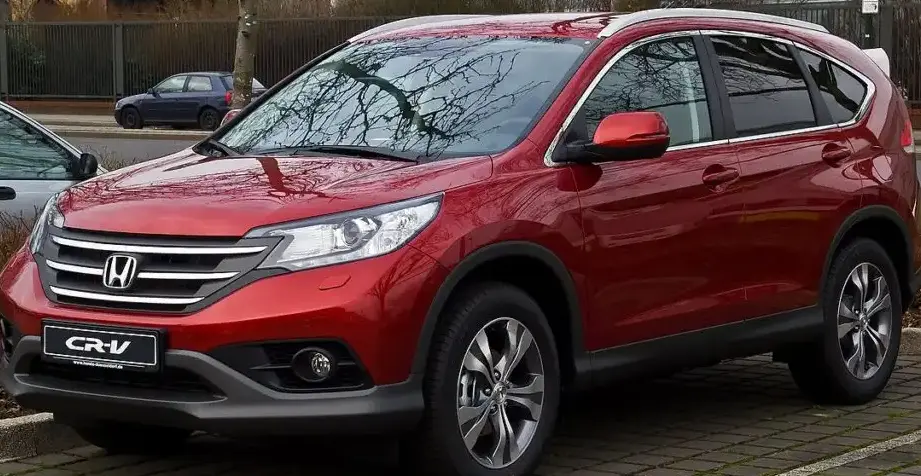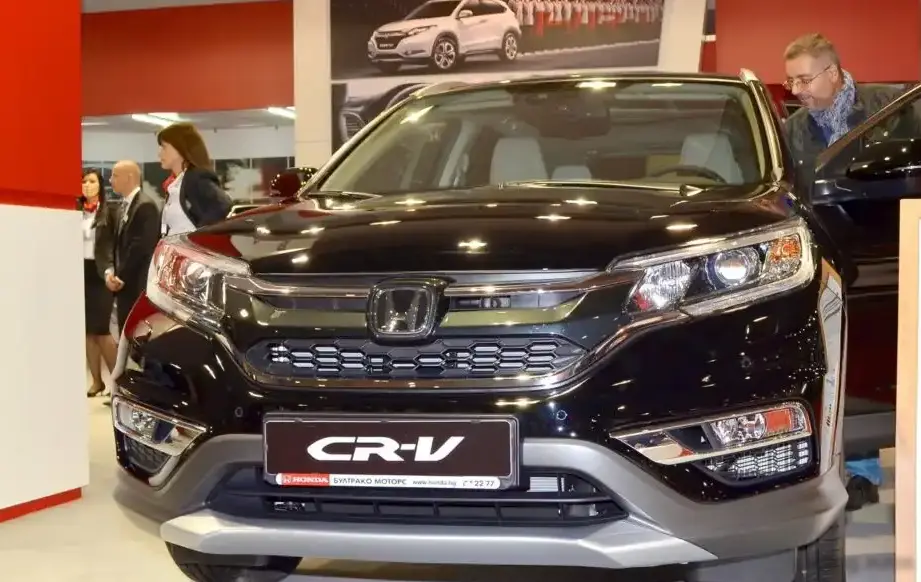
The Honda CR-V IV (facelift, introduced in 2014) 2.0 i-VTEC (155 hp) represents a significant iteration of Honda’s popular compact SUV. Production of this specific variant ran from 2015 to 2016, primarily aimed at markets seeking a balance between fuel efficiency, practicality, and affordability within the CR-V lineup. This facelift brought styling updates and refinements to the already successful fourth-generation CR-V, which itself was based on the global Honda Civic platform. In the United States, the CR-V consistently ranked as a top seller in its class, and this 2.0-liter engine option provided an accessible entry point for buyers.
Technical Specifications
| Brand | Honda |
| Model | CR-V |
| Generation | CR-V IV (facelift 2014) |
| Type (Engine) | 2.0 i-VTEC (155 Hp) |
| Start of production | 2015 |
| End of production | 2016 |
| Powertrain Architecture | Internal Combustion engine |
| Body type | SUV |
| Seats | 5 |
| Doors | 5 |
| Fuel consumption (urban) | 8.9 – 9.3 l/100 km (26.4 – 25.3 US mpg) |
| Fuel consumption (extra urban) | 6.2 – 6.3 l/100 km (37.9 – 37.3 US mpg) |
| Fuel consumption (combined) | 7.2 – 7.4 l/100 km (32.7 – 31.8 US mpg) |
| CO2 emissions | 168 – 173 g/km |
| Fuel Type | Petrol (Gasoline) |
| Acceleration 0 – 100 km/h | 10.2 sec |
| Acceleration 0 – 62 mph | 10.2 sec |
| Acceleration 0 – 60 mph | 9.7 sec |
| Maximum speed | 190 km/h (118.06 mph) |
| Emission standard | Euro 5 |
| Weight-to-power ratio | 9.4 kg/Hp |
| Weight-to-torque ratio | 7.6 kg/Nm |
| Power | 155 Hp @ 6500 rpm |
| Torque | 192 Nm @ 4300 rpm (141.61 lb.-ft. @ 4300 rpm) |
| Engine layout | Front, Transverse |
| Engine Model/Code | R20A5, R20A9 |
| Engine displacement | 1997 cm3 (121.86 cu. in.) |
| Number of cylinders | 4 |
| Engine configuration | Inline |
| Compression ratio | 10.6:1 |
| Number of valves per cylinder | 4 |
| Fuel injection system | Multi-port manifold injection |
| Engine aspiration | Naturally aspirated |
| Engine oil capacity | 3.7 l (3.91 US qt | 3.26 UK qt) |
| Coolant capacity | 5.94 l (6.28 US qt | 5.23 UK qt) |
| Kerb Weight | 1460 kg (3218.75 lbs.) |
| Trunk (boot) space – minimum | 589 l (20.8 cu. ft.) |
| Trunk (boot) space – maximum | 1669 l (58.94 cu. ft.) |
| Fuel tank capacity | 58 l (15.32 US gal | 12.76 UK gal) |
| Length | 4605 mm (181.3 in.) |
| Width | 2096 mm (82.52 in.) |
| Height | 1685 mm (66.34 in.) |
| Wheelbase | 2630 mm (103.54 in.) |
| Ride height (ground clearance) | 165 mm (6.5 in.) |
| Minimum turning circle | 11.9 m (39.04 ft.) |
| Drivetrain Architecture | Front wheel drive |
| Number of gears | 6 |
| Gearbox type | Manual transmission |
| Front suspension | Independent, McPherson with coil spring and anti-roll bar |
| Rear suspension | Independent multi-link |
| Front brakes | Ventilated discs |
| Rear brakes | Disc |
| Assisting systems | ABS (Anti-lock braking system) |
| Steering type | Steering rack and pinion |
| Tires size | 225/65 R17; 225/60 R18 |
| Wheel rims size | 17; 18 |
INTRODUCTION
The 2015-2016 Honda CR-V IV facelift with the 2.0-liter i-VTEC engine and manual transmission was positioned as the entry-level offering in many markets. It provided a more affordable alternative to the more powerful and technologically advanced options, such as those equipped with the 2.4-liter engine or all-wheel drive. This variant was particularly popular with buyers prioritizing fuel economy and a comfortable driving experience over outright performance. The CR-V IV, in general, represented a significant step forward for Honda in terms of interior space, refinement, and overall practicality, solidifying its position as a leading contender in the compact SUV segment.
Powertrain & Engine Architecture
At the heart of this CR-V variant lies the R20A5 or R20A9 2.0-liter inline-four cylinder engine. This engine is a naturally aspirated powerplant utilizing Honda’s i-VTEC (Intelligent Variable Valve Timing and Lift Electronic Control) technology. This system optimizes valve timing and lift based on engine speed and load, improving both fuel efficiency and power output. The engine employs multi-point fuel injection, delivering fuel directly to the intake ports. The 6-speed manual transmission was a key component, offering drivers a more engaging driving experience compared to the available continuously variable transmission (CVT). The engine’s design prioritized reliability and longevity, typical of Honda engineering.
Driving Characteristics
The 155 hp and 192 Nm (141.61 lb-ft) of torque delivered by the 2.0-liter engine, coupled with the 6-speed manual, provided adequate performance for everyday driving. Acceleration from 0-60 mph took approximately 9.7 seconds, which was slower than the 2.4-liter variants. However, the manual transmission allowed drivers to maximize the available power and maintain control in various driving conditions. The gear ratios were tuned for fuel efficiency, with taller gearing in higher gears for highway cruising. While not a sporty vehicle, the CR-V offered a comfortable and predictable driving experience, with light steering and a well-damped suspension.
Equipment & Trim Levels
The base 2.0 i-VTEC manual CR-V typically came standard with features such as air conditioning, power windows and locks, a basic audio system with USB connectivity, and standard safety equipment like ABS, airbags, and stability control. Higher trim levels added features like alloy wheels, a sunroof, a more advanced infotainment system with a touchscreen display, and heated front seats. Interior upholstery was typically cloth, with options for leather in higher trims. The dashboard layout was functional and user-friendly, with clearly labeled controls.
Chassis & Braking
The CR-V IV utilized a MacPherson strut front suspension and an independent multi-link rear suspension, providing a comfortable ride and good handling characteristics. The front brakes were ventilated discs, while the rear brakes were solid discs. The suspension was tuned for comfort, prioritizing ride quality over sporty handling. The steering was a rack-and-pinion system, providing precise and responsive steering feel. Standard tire sizes were 225/65 R17 or 225/60 R18, depending on the trim level.
Market Reception & Comparison
Critics generally praised the CR-V IV for its spacious interior, comfortable ride, and good fuel economy. The 2.0-liter engine was considered adequate for most drivers, but some reviewers noted its lack of power compared to the 2.4-liter option. Fuel economy was a strong point, with combined figures around 32.7-31.8 US mpg. Compared to competitors like the Toyota RAV4 and Nissan Rogue, the CR-V offered a more refined interior and a more engaging driving experience, particularly with the manual transmission. The 2.4-liter CR-V offered significantly more power, but at a higher price point and with slightly lower fuel economy. The diesel variants (available in Europe) provided even better fuel economy but came with a higher initial cost and potential maintenance concerns.
Legacy
The Honda CR-V IV, including the 2.0 i-VTEC manual variant, has proven to be a reliable and durable vehicle. The R20A5/R20A9 engine is known for its longevity and relatively low maintenance costs. On the used car market, these CR-Vs are often sought after for their practicality, fuel efficiency, and Honda’s reputation for reliability. While not the most exciting vehicle to drive, the 2.0-liter CR-V offers a compelling combination of value, practicality, and dependability, making it a popular choice for families and individuals alike.