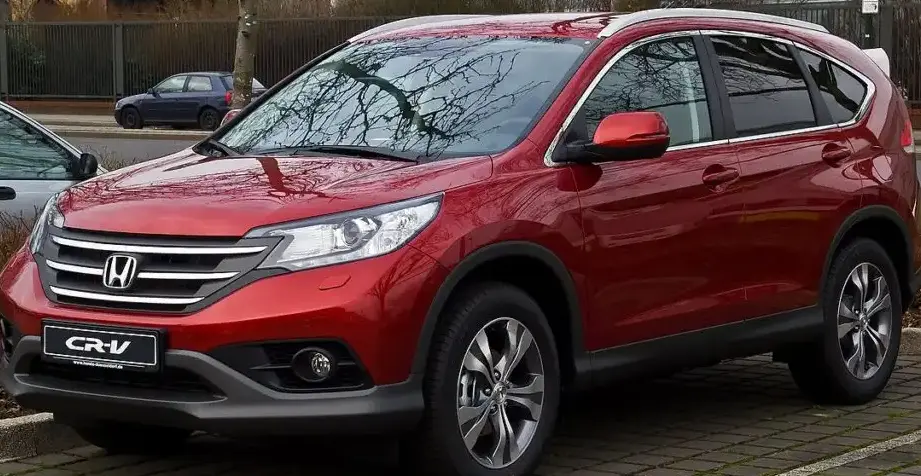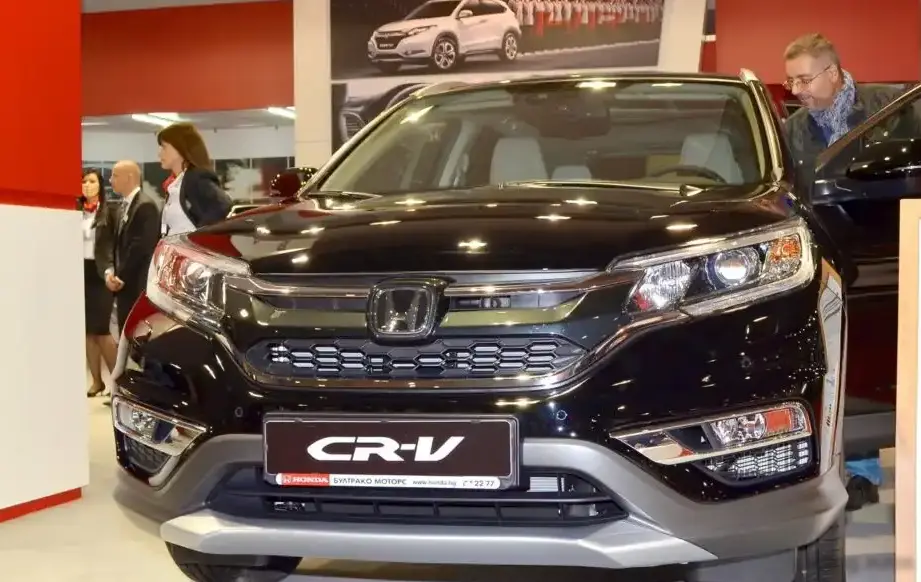
The Honda CR-V IV (facelift, introduced in 2014) 2.0 i-VTEC (155 hp) AWD represents a mid-cycle refresh of the fourth-generation CR-V, a compact SUV that played a significant role in Honda’s North American sales success. Production of this specific configuration ran from 2015 to 2016. Positioned as a mainstream offering within the CR-V lineup, it aimed to provide a balance of fuel efficiency, practicality, and all-weather capability for families and individuals seeking a versatile vehicle. This variant served as a bridge between the base 2WD models and the more premium trims, offering all-wheel drive as a key feature.
| Brand | Honda |
| Model | CR-V |
| Generation | CR-V IV (facelift 2014) |
| Type (Engine) | 2.0 i-VTEC (155 Hp) AWD |
| Start of production | 2015 |
| End of production | 2016 |
| Powertrain Architecture | Internal Combustion engine |
| Body type | SUV |
| Seats | 5 |
| Doors | 5 |
| Fuel consumption (urban) | 9.3 – 9.4 l/100 km (25.3 – 25 US mpg) |
| Fuel consumption (extra urban) | 6.3 – 6.5 l/100 km (37.3 – 36.2 US mpg) |
| Fuel consumption (combined) | 7.4 – 7.6 l/100 km (31.8 – 30.9 US mpg) |
| CO2 emissions | 173 – 177 g/km |
| Fuel Type | Petrol (Gasoline) |
| Acceleration 0 – 100 km/h | 10.2 sec |
| Acceleration 0 – 62 mph | 10.2 sec |
| Acceleration 0 – 60 mph | 9.7 sec |
| Maximum speed | 190 km/h (118.06 mph) |
| Emission standard | Euro 5 |
| Weight-to-power ratio | 9.8 kg/Hp |
| Weight-to-torque ratio | 7.9 kg/Nm |
| Power | 155 Hp @ 6500 rpm |
| Torque | 192 Nm @ 4300 rpm (141.61 lb.-ft. @ 4300 rpm) |
| Engine layout | Front, Transverse |
| Engine Model/Code | R20A5, R20A9 |
| Engine displacement | 1997 cm3 (121.86 cu. in.) |
| Number of cylinders | 4 |
| Engine configuration | Inline |
| Compression ratio | 10.6:1 |
| Number of valves per cylinder | 4 |
| Fuel injection system | Multi-port manifold injection |
| Engine aspiration | Naturally aspirated |
| Engine oil capacity | 3.7 l (3.91 US qt | 3.26 UK qt) |
| Coolant capacity | 5.94 l (6.28 US qt | 5.23 UK qt) |
| Kerb Weight | 1521 kg (3353.23 lbs.) |
| Trunk (boot) space – minimum | 589 l (20.8 cu. ft.) |
| Trunk (boot) space – maximum | 1669 l (58.94 cu. ft.) |
| Fuel tank capacity | 58 l (15.32 US gal | 12.76 UK gal) |
| Length | 4605 mm (181.3 in.) |
| Width | 2096 mm (82.52 in.) |
| Height | 1685 mm (66.34 in.) |
| Wheelbase | 2630 mm (103.54 in.) |
| Ride height (ground clearance) | 165 mm (6.5 in.) |
| Minimum turning circle | 11.7 m (38.39 ft.) |
| Drive wheel | All wheel drive (4×4) |
| Number of gears | 6 |
| Gearbox type | Manual transmission |
| Front suspension | Independent, McPherson with coil spring and anti-roll bar |
| Rear suspension | Independent multi-link |
| Front brakes | Ventilated discs |
| Rear brakes | Disc |
| Assisting systems | ABS (Anti-lock braking system) |
| Steering type | Steering rack and pinion |
| Tires size | 225/65 R17; 225/60 R18 |
| Wheel rims size | 17; 18 |
Powertrain & Engine Architecture
At the heart of the 2015-2016 CR-V 2.0 i-VTEC AWD lies the Honda R20A5 or R20A9 engine, a 2.0-liter inline-four cylinder gasoline engine. This engine is part of Honda’s K20 family, though it differs significantly from the higher-performance K20Z found in models like the Civic Si. The R20A5/A9 utilizes a single overhead camshaft (SOHC) design with four valves per cylinder, operated by a timing chain. Fuel delivery is managed by a multi-point fuel injection system. The engine’s 155 horsepower peak is achieved at 6,500 rpm, while its 192 Nm (141.61 lb-ft) of torque is delivered at 4,300 rpm. The engine is known for its reliability and relatively simple design. The 6-speed manual transmission paired with this engine features fairly standard gear ratios for a compact SUV, prioritizing fuel economy and smooth cruising over outright acceleration.
Driving Characteristics
The 2.0-liter i-VTEC engine, when coupled with the manual transmission and all-wheel drive, provides adequate, but not exhilarating, performance. Acceleration from 0-60 mph takes approximately 9.7 seconds. The engine feels most comfortable in the mid-range, offering sufficient power for everyday driving situations like merging onto highways and passing slower vehicles. Compared to the available turbocharged 1.5L engine in later CR-V models, this 2.0L feels less responsive at lower RPMs. The manual transmission offers drivers more control, but the gear ratios are tuned for efficiency rather than sporty driving. The all-wheel-drive system provides enhanced traction in inclement weather, making it a practical choice for regions with snow or rain. However, it doesn’t offer the sophisticated torque vectoring capabilities found in some competing AWD systems.
Equipment & Trim Levels
The 2.0 i-VTEC AWD trim typically included standard features such as air conditioning, power windows and locks, a basic audio system with USB connectivity, and a rearview camera. Interior upholstery was typically cloth, with a straightforward dashboard layout. Optional extras included a sunroof, upgraded audio systems, and Honda’s LaneWatch blind spot display. This trim level generally sat in the middle of the CR-V lineup, offering a step up from the base LX model in terms of features and capability, but falling short of the luxury offered by the EX or Touring trims.
Chassis & Braking
The CR-V IV utilizes a MacPherson strut front suspension and a multi-link rear suspension, providing a comfortable ride quality. Stabilizer bars are included at both ends to reduce body roll during cornering. The braking system consists of ventilated discs at the front and solid discs at the rear. ABS (Anti-lock Braking System) is standard. The suspension tuning is geared towards comfort and practicality, rather than sporty handling. The all-wheel-drive system is a reactive system, meaning it engages the rear wheels when front wheel slip is detected.
Market Reception & Comparison
Critics generally praised the CR-V IV for its spacious interior, practicality, and fuel efficiency. However, the 2.0-liter engine was often criticized for feeling underpowered, especially when compared to turbocharged competitors. Fuel economy figures of around 31.8-30.9 US mpg combined were respectable for its class. Compared to the higher-trim CR-Vs with the 1.5L turbo engine, the 2.0L AWD model offered a more affordable entry point, but at the cost of performance. The 2.0L engine also tended to require less frequent and less expensive maintenance than the more complex turbocharged engine.
Legacy
The Honda CR-V IV 2.0 i-VTEC AWD has proven to be a reliable and durable vehicle. The R20A5/A9 engine is known for its longevity, and with proper maintenance, can easily exceed 200,000 miles. In the used car market, these CR-Vs are often sought after for their practicality, fuel efficiency, and reputation for reliability. While not the fastest or most technologically advanced SUV in its class, it remains a popular choice for buyers seeking a dependable and affordable compact SUV. The simplicity of the 2.0L engine and manual transmission combination also appeals to those who prefer a more traditional driving experience and lower maintenance costs.