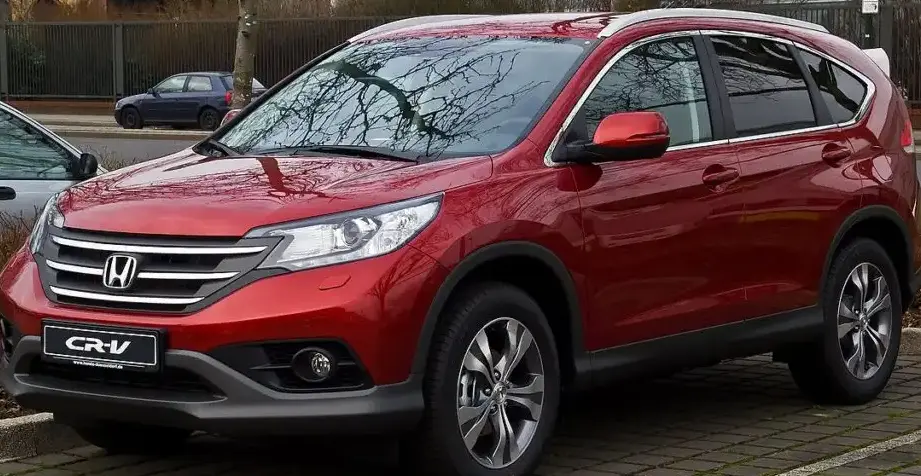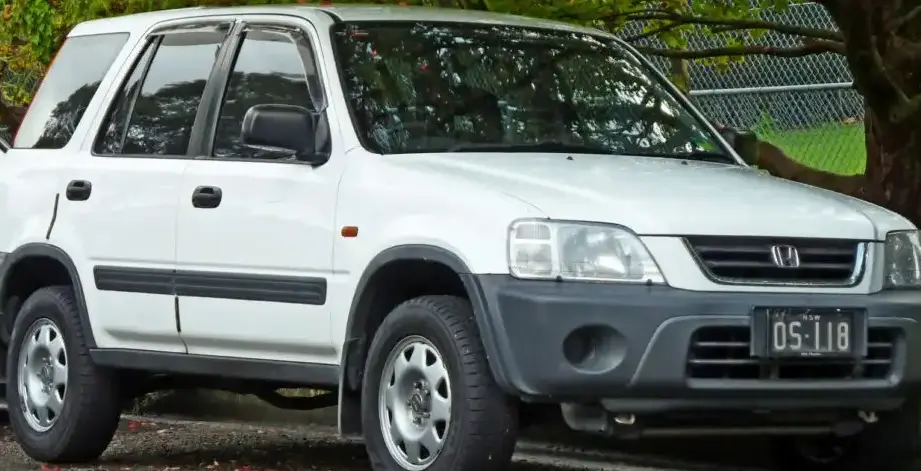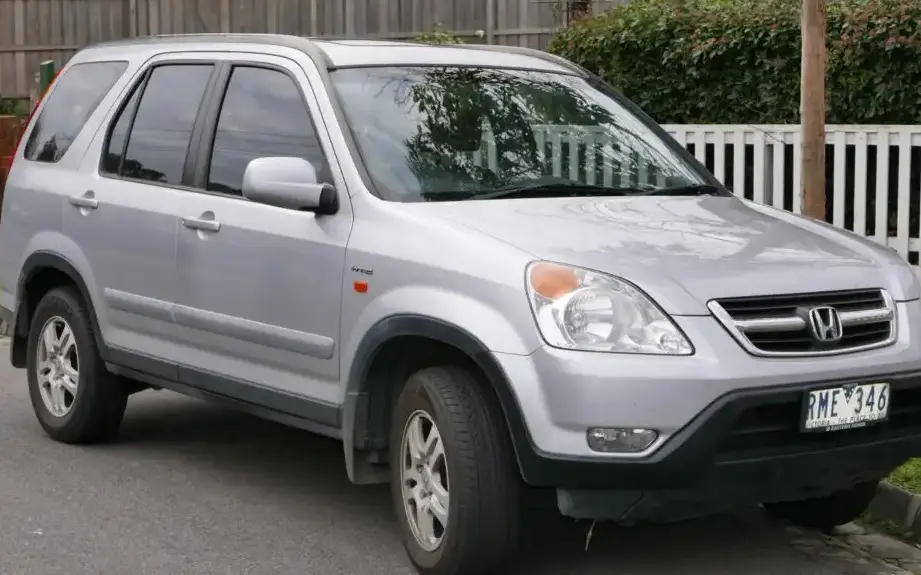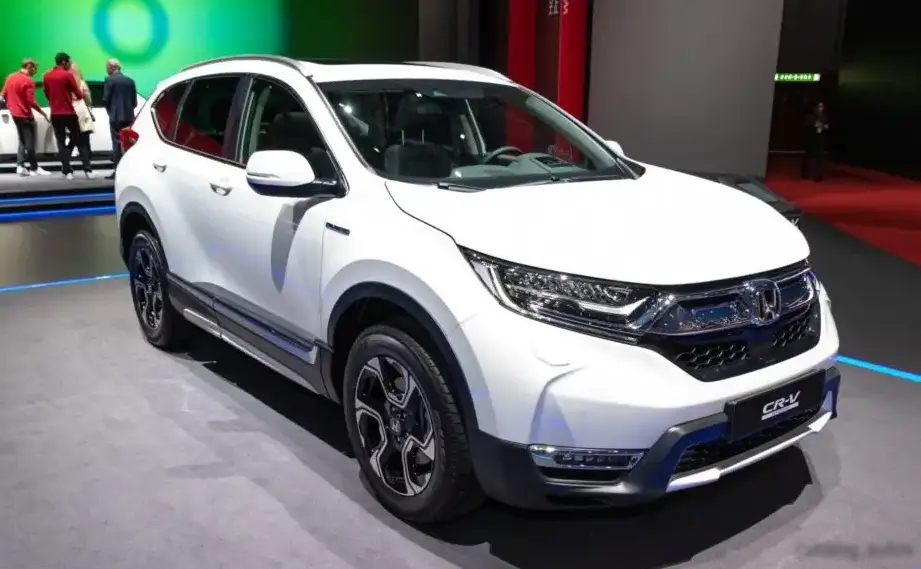
The Honda CR-V 1.6 i-DTEC (120 hp) AWD Automatic, produced between 2017 and 2019, represents a significant iteration of Honda’s popular compact SUV. Part of the fifth-generation CR-V (internally designated as the RW/RT platform globally, and the V generation in Europe), this variant was primarily aimed at the European market, offering a blend of fuel efficiency, practicality, and all-weather capability. It occupied a mid-range position within the CR-V V lineup, slotting below the more powerful petrol options and above the base-level diesel trims.
Technical Specifications
| Brand | Honda |
| Model | CR-V |
| Generation | CR-V V |
| Type (Engine) | 1.6 i-DTEC (120 Hp) AWD Automatic |
| Start of production | 2017 |
| End of production | 2019 |
| Powertrain Architecture | Internal Combustion engine |
| Body type | SUV |
| Seats | 5-7 |
| Doors | 5 |
| Fuel consumption (combined) | 5.5 l/100 km (42.8 US mpg, 51.4 UK mpg, 18.2 km/l) |
| Fuel Type | Diesel |
| Emission standard | Euro 6 |
| Weight-to-power ratio | 14.4 kg/Hp, 69.6 Hp/tonne |
| Weight-to-torque ratio | 5.8 kg/Nm, 173.9 Nm/tonne |
| Power | 120 Hp @ 4000 rpm |
| Power per litre | 75.1 Hp/l |
| Torque | 300 Nm @ 2000 rpm (221.27 lb.-ft. @ 2000 rpm) |
| Engine layout | Front, Transverse |
| Engine Model/Code | N16A2 |
| Engine displacement | 1597 cm3 (97.45 cu. in.) |
| Number of cylinders | 4 |
| Engine configuration | Inline |
| Cylinder Bore | 76 mm (2.99 in.) |
| Piston Stroke | 88 mm (3.46 in.) |
| Compression ratio | 16:1 |
| Number of valves per cylinder | 4 |
| Fuel injection system | Diesel Commonrail |
| Engine aspiration | Turbocharger, Intercooler |
| Valvetrain | i-DTEC |
| Engine oil capacity | 4.9 l (5.18 US qt | 4.31 UK qt) |
| Coolant | 5.65 l (5.97 US qt | 4.97 UK qt) |
| Kerb Weight | 1725 kg (3802.97 lbs.) |
| Trunk (boot) space – minimum | 150 l (5.3 cu. ft.) |
| Trunk (boot) space – maximum | 936 l (33.05 cu. ft.) |
| Fuel tank capacity | 53 l (14 US gal | 11.66 UK gal) |
| Length | 4592 mm (180.79 in.) |
| Width | 1855 mm (73.03 in.) |
| Height | 1679 mm (66.1 in.) |
| Wheelbase | 2660 mm (104.72 in.) |
| Front track | 1600 mm (62.99 in.) |
| Rear (Back) track | 1618 mm (63.7 in.) |
| Ride height (ground clearance) | 155 mm (6.1 in.) |
| Minimum turning circle | 11.4 m (37.4 ft.) |
| Drive wheel | All wheel drive (4×4) |
| Number of gears and type of gearbox | 9 gears, automatic transmission |
| Front suspension | Independent, type McPherson with coil spring and anti-roll bar |
| Rear suspension | Independent multi-link suspension |
| Front brakes | Ventilated discs |
| Rear brakes | Disc |
| Tires size | 235/60 R18 |
| Wheel rims size | 18 |
Powertrain & Engine Architecture
The heart of this CR-V variant is the 1.6-liter N16A2 i-DTEC diesel engine. This engine is a four-cylinder, inline configuration, utilizing a turbocharger and intercooler to enhance power and efficiency. The engine employs a common-rail direct injection system, delivering fuel directly into the cylinders at extremely high pressure for optimized combustion. The i-DTEC technology, Honda’s proprietary diesel engine design, focuses on reducing emissions and improving fuel economy. The engine produces 120 horsepower at 4,000 rpm and 300 Nm (221 lb-ft) of torque at 2,000 rpm. This torque figure is particularly noteworthy, providing ample pulling power for everyday driving and towing. Paired with the engine is a sophisticated 9-speed automatic transmission. This transmission was designed to maximize fuel efficiency while providing smooth and responsive gear changes. The automatic transmission contributes to the ease of driving, especially in urban environments.
Driving Characteristics
The 1.6 i-DTEC with the 9-speed automatic delivers a comfortable and refined driving experience. While not a performance-oriented setup, the 300 Nm of torque provides sufficient acceleration for most driving situations. The automatic transmission is well-tuned, offering smooth shifts and preventing the engine from feeling strained. Compared to the higher-output petrol versions of the CR-V V, this variant prioritizes fuel economy over outright speed. The gear ratios are optimized for efficiency, meaning the engine operates at lower revolutions per minute (RPM) during cruising, further contributing to fuel savings. Compared to the manual transmission versions of the same engine, the automatic offers greater convenience, particularly in stop-and-go traffic. However, some drivers may find the automatic slightly less engaging than the manual option.
Equipment & Trim Levels
The 1.6 i-DTEC AWD Automatic typically came equipped with a respectable level of standard features. These generally included automatic climate control, a touchscreen infotainment system with Bluetooth connectivity, alloy wheels, and a suite of safety features such as ABS, stability control, and multiple airbags. Higher trim levels offered additional features like leather upholstery, a sunroof, and advanced driver-assistance systems (ADAS) such as adaptive cruise control and lane departure warning. Interior upholstery was typically cloth on the base trims, with leather options available on higher-spec models. The dashboard layout was functional and modern, with a focus on ergonomics and ease of use.
Chassis & Braking
The CR-V V utilizes a MacPherson strut suspension setup at the front and an independent multi-link suspension at the rear. This configuration provides a good balance between ride comfort and handling. The all-wheel-drive system is primarily front-wheel drive, with power automatically sent to the rear wheels when traction is lost. Braking duties are handled by ventilated discs at the front and solid discs at the rear. The braking system is assisted by ABS (Anti-lock Braking System) and EBD (Electronic Brakeforce Distribution) for enhanced safety. Stabilizer bars are fitted to both the front and rear axles to reduce body roll during cornering.
Market Reception & Comparison
The 1.6 i-DTEC AWD Automatic CR-V V was generally well-received by automotive critics in Europe. It was praised for its fuel efficiency, comfortable ride, and practical interior. However, some reviewers noted that the engine could feel slightly underpowered when fully loaded or tackling steep inclines. Compared to the petrol versions, the diesel offered significantly better fuel economy, making it an attractive option for drivers who cover long distances. Compared to other diesel SUVs in its class, the CR-V V offered a competitive combination of features, performance, and price. Reliability reports suggest that the N16A2 engine is generally robust, although regular maintenance is crucial to prevent issues with the diesel particulate filter (DPF).
Legacy
The Honda CR-V V 1.6 i-DTEC (120 hp) AWD Automatic has established itself as a reliable and practical used car option. The N16A2 engine, while requiring diligent maintenance (particularly regarding the DPF), is known for its longevity. In the used car market, this variant represents a good value proposition for buyers seeking a fuel-efficient and spacious SUV with all-wheel drive. Its reputation for reliability and practicality ensures continued demand, making it a popular choice among families and individuals alike. The 9-speed automatic transmission, while complex, has proven to be generally dependable when properly maintained.