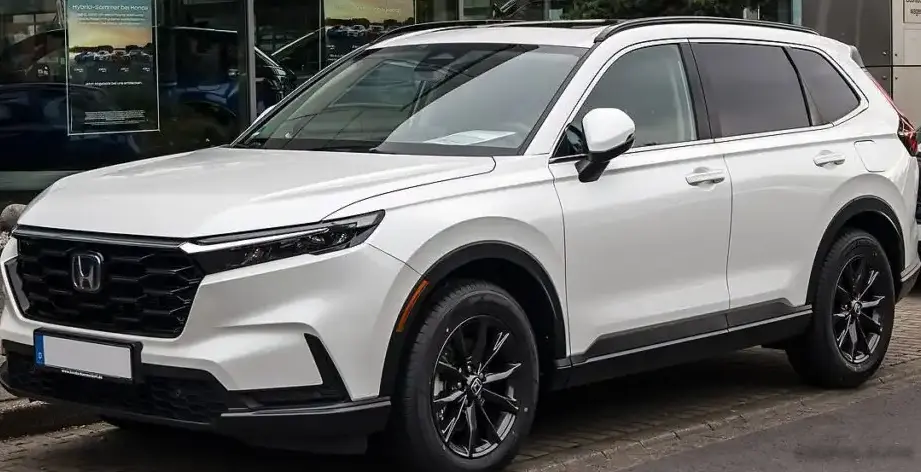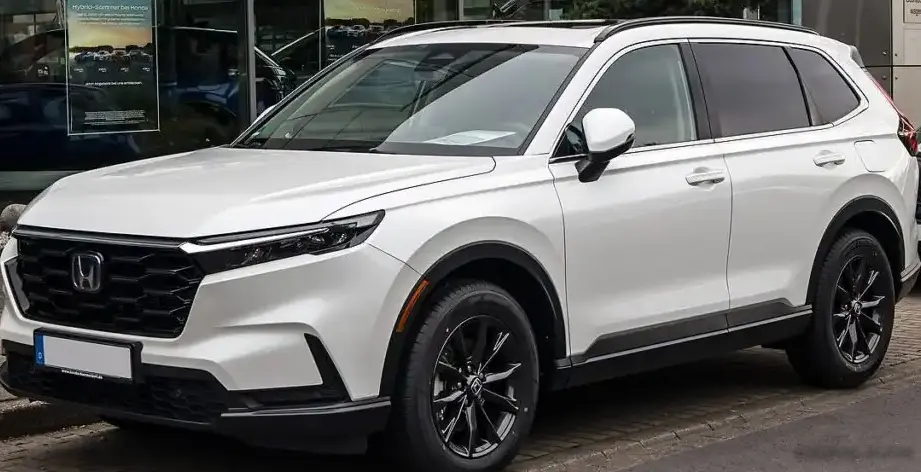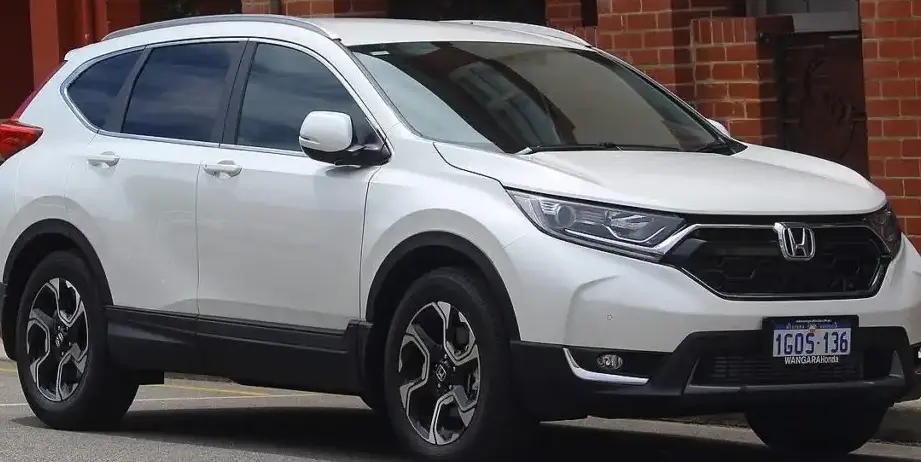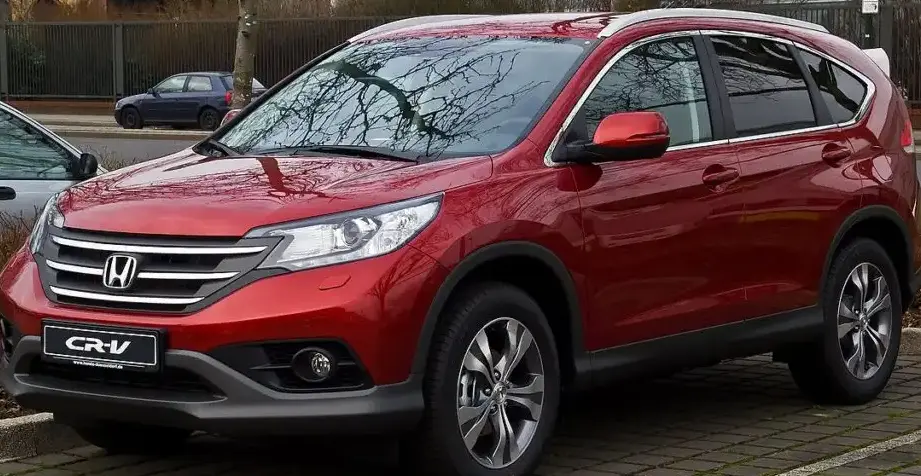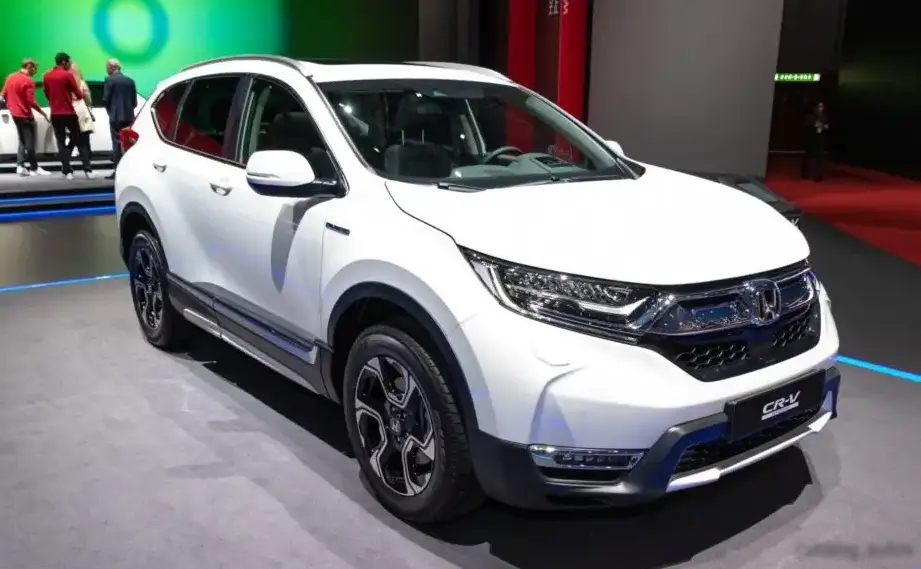
The Honda CR-V V 2.0 (215 Hp) Hybrid e-CVT, produced from 2018 to 2019, represents a significant step in Honda’s hybridization strategy for the popular CR-V compact SUV. This variant was positioned as a mid-to-upper trim level within the fifth-generation CR-V (internally designated as the RW/RT/RE series globally, and the V series in many markets), offering a balance of fuel efficiency and performance. It was primarily aimed at buyers seeking a practical, family-oriented vehicle with reduced emissions and improved gas mileage compared to the traditionally powered CR-V models. The CR-V, since its introduction in 1995, has been a mainstay in the North American SUV market, known for its reliability and spacious interior, and the introduction of the hybrid powertrain further solidified its appeal.
Technical Specifications
| Brand | Honda |
| Model | CR-V |
| Generation | CR-V V |
| Type (Engine) | 2.0 (215 Hp) Hybrid e-CVT |
| Start of production | 2018 |
| End of production | 2019 |
| Powertrain Architecture | FHEV (Full Hybrid Electric Vehicle) |
| Body type | SUV |
| Seats | 5 |
| Doors | 5 |
| Fuel consumption (urban) | 4.2 l/100 km (56 US mpg, 67.3 UK mpg, 23.8 km/l) |
| Fuel consumption (extra urban) | 4.5 l/100 km (52.3 US mpg, 62.8 UK mpg, 22.2 km/l) |
| Fuel consumption (combined) | 4.4 l/100 km (53.5 US mpg, 64.2 UK mpg, 22.7 km/l) |
| CO2 emissions | 120 g/km |
| Fuel Type | Petrol (Gasoline) |
| Acceleration 0 – 100 km/h | 8.8 sec |
| Acceleration 0 – 62 mph | 8.8 sec |
| Acceleration 0 – 60 mph | 8.4 sec |
| Maximum speed | 180 km/h (111.85 mph) |
| Emission standard | Euro 6 |
| Weight-to-power ratio | 7.5 kg/Hp, 133.2 Hp/tonne |
| Weight-to-torque ratio | 9.2 kg/Nm, 108.4 Nm/tonne |
| Electric motor power | 184 Hp |
| Electric motor Torque | 315 Nm (232.33 lb.-ft.) |
| System power | 215 Hp |
| Engine Power | 146 Hp @ 6200 rpm |
| Engine Torque | 175 Nm @ 4000 rpm (129.07 lb.-ft. @ 4000 rpm) |
| Engine layout | Front, Transverse |
| Engine Model/Code | LFA1 |
| Engine displacement | 1993 cm3 (121.62 cu. in.) |
| Number of cylinders | 4 |
| Engine configuration | Inline |
| Cylinder Bore | 81 mm (3.19 in.) |
| Piston Stroke | 96.7 mm (3.81 in.) |
| Compression ratio | 13:1 |
| Number of valves per cylinder | 4 |
| Fuel injection system | Multi-port manifold injection |
| Valvetrain | DOHC, i-VTEC |
| Engine oil capacity | 4.1 l (4.33 US qt | 3.61 UK qt) |
| Coolant capacity | 5.53 l (5.84 US qt | 4.87 UK qt) |
| Kerb Weight | 1614-1657 kg (3558.26 – 3653.06 lbs.) |
| Max. weight | 2240 kg (4938.35 lbs.) |
| Max load | 583-626 kg (1285.29 – 1380.09 lbs.) |
| Trunk (boot) space – minimum | 497 l (17.55 cu. ft.) |
| Trunk (boot) space – maximum | 1697 l (59.93 cu. ft.) |
| Fuel tank capacity | 57 l (15.06 US gal | 12.54 UK gal) |
| Max. roof load | 75 kg (165.35 lbs.) |
| Permitted trailer load with brakes (12%) | 750 kg (1653.47 lbs.) |
| Permitted trailer load without brakes | 600 kg (1322.77 lbs.) |
| Permitted towbar download | 100 kg (220.46 lbs.) |
| Length | 4603 mm (181.22 in.) |
| Width | 1855 mm (73.03 in.) |
| Width with mirrors folded | 1932 mm (76.06 in.) |
| Width including mirrors | 2117 mm (83.35 in.) |
| Height | 1679 mm (66.1 in.) |
| Wheelbase | 2663 mm (104.84 in.) |
| Front track | 1601 mm (63.03 in.) |
| Rear (Back) track | 1630 mm (64.17 in.) |
| Ride height (ground clearance) | 190 mm (7.48 in.) |
| Minimum turning circle | 11.4 m (37.4 ft.) |
| Drive wheel | Front wheel drive |
| Number of gears and type of gearbox | automatic transmission e-CVT |
| Front brakes | Ventilated discs |
| Rear brakes | Disc |
| Assisting systems | ABS (Anti-lock braking system) |
| Tires size | 235/60 R18 |
| Wheel rims size | 18 |
Powertrain & Engine Architecture
The CR-V Hybrid utilizes Honda’s Intelligent Multi-Mode Drive (i-MMD) system, a sophisticated full hybrid powertrain. At its core is a 2.0-liter inline-four cylinder gasoline engine (code LFA1) producing 146 horsepower and 175 Nm (129 lb-ft) of torque. This engine operates on the Atkinson cycle, prioritizing fuel efficiency over outright power. The engine is paired with two electric motors – a propulsion motor and a generator motor. The e-CVT (electronic continuously variable transmission) doesn’t use traditional gears; instead, it intelligently blends power from the engine and electric motors. The system can operate in EV mode (electric only) for short distances at low speeds, hybrid mode (combining engine and electric motor power), or engine mode (engine driving the wheels, with the electric motor acting as a generator to recharge the battery). The combined system output is 215 horsepower.
Driving Characteristics
The 2.0L Hybrid e-CVT CR-V offers a noticeably different driving experience compared to the standard 1.5L turbocharged gasoline engine. While the 1.5L provides more immediate response, the hybrid prioritizes smoothness and efficiency. The e-CVT provides seamless acceleration, lacking the stepped shifts of a conventional automatic. The 8.8-second 0-60 mph acceleration is respectable for the class, but not particularly sporty. The hybrid system excels in city driving, where the electric motor can handle much of the propulsion, resulting in excellent fuel economy. On the highway, the engine takes over more frequently, but the e-CVT keeps engine speeds low for optimal efficiency. Compared to the non-hybrid CR-V, the hybrid model feels slightly heavier due to the battery pack, but the weight is well-managed by the suspension.
Equipment & Trim Levels
The 2.0 Hybrid e-CVT trim typically included features such as Honda Sensing suite of safety technologies (including adaptive cruise control, lane keeping assist, and collision mitigation braking system), a 7-inch touchscreen infotainment system with Apple CarPlay and Android Auto compatibility, automatic climate control, and heated front seats. Higher trim levels added features like leather upholstery, a power liftgate, and a premium audio system. Interior upholstery was typically cloth on the base hybrid trim, with leather available as an upgrade. Dashboard configuration was consistent across the CR-V V range, featuring a modern and functional design.
Chassis & Braking
The CR-V V utilizes a MacPherson strut front suspension and a multi-link rear suspension. The hybrid model’s suspension was tuned to accommodate the added weight of the battery pack without compromising ride comfort. Brakes consisted of ventilated discs at the front and solid discs at the rear. ABS (Anti-lock Braking System) was standard. The steering was an electric power-assisted system, providing light and precise control. Stabilizer bars were fitted to both the front and rear axles to reduce body roll during cornering.
Market Reception & Comparison
The CR-V Hybrid was generally well-received by automotive critics, who praised its fuel efficiency, smooth ride, and spacious interior. However, some reviewers noted that the hybrid powertrain didn’t offer a significant performance advantage over the 1.5L turbocharged engine. Compared to other hybrid SUVs in its class, the CR-V Hybrid offered a competitive fuel economy figure of 53.5 mpg combined. Reliability reports have been generally positive, with the hybrid system proving to be durable and dependable. The hybrid model commanded a premium price over the standard CR-V, but the fuel savings and environmental benefits were often seen as justifying the cost.
Legacy
The Honda CR-V V 2.0 Hybrid e-CVT played a crucial role in establishing Honda as a leader in the hybrid SUV segment. The i-MMD powertrain proved to be a reliable and efficient solution, and it has been refined and implemented in other Honda models. On the used car market, these CR-Vs hold their value well due to their reputation for reliability and fuel economy. The hybrid system’s longevity is a key selling point, and well-maintained examples continue to provide years of dependable service. The CR-V Hybrid demonstrated Honda’s commitment to electrification and paved the way for future hybrid and electric vehicles.