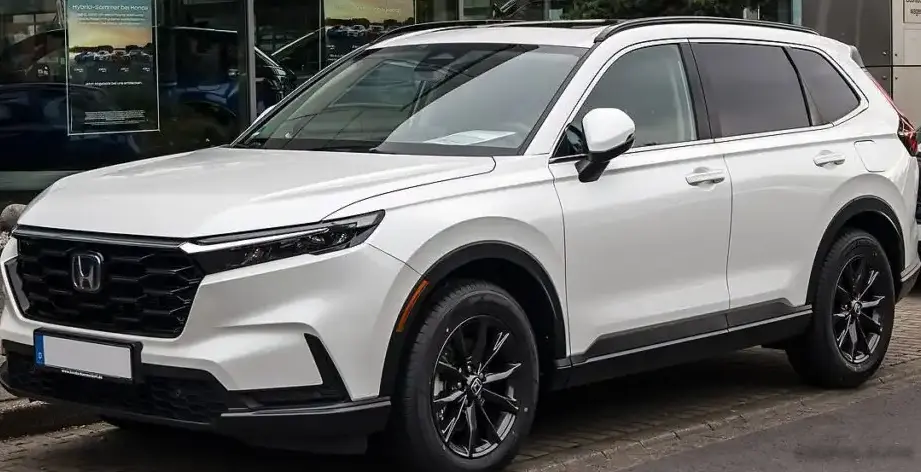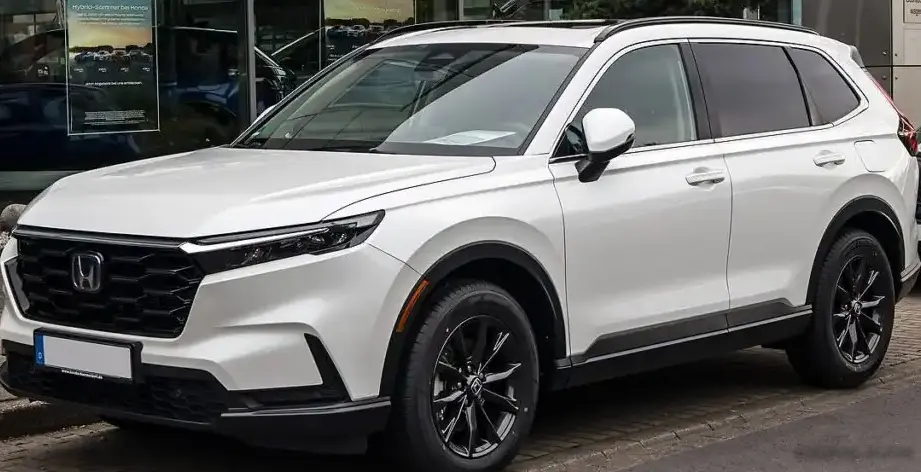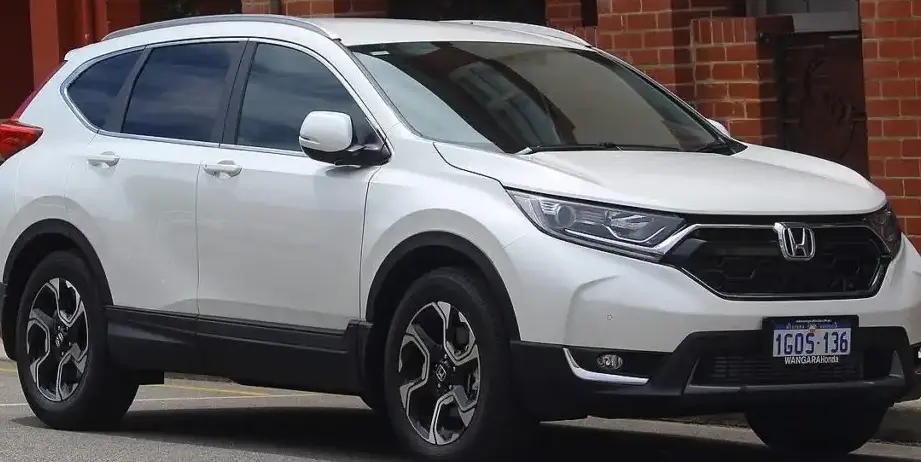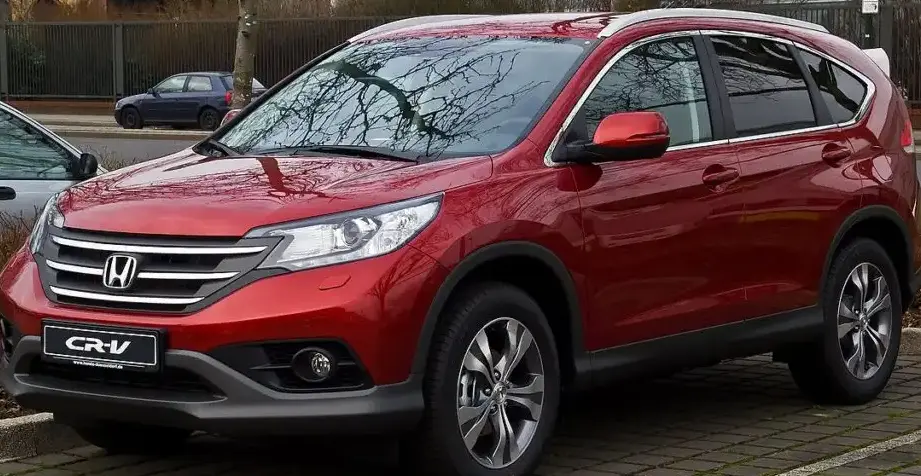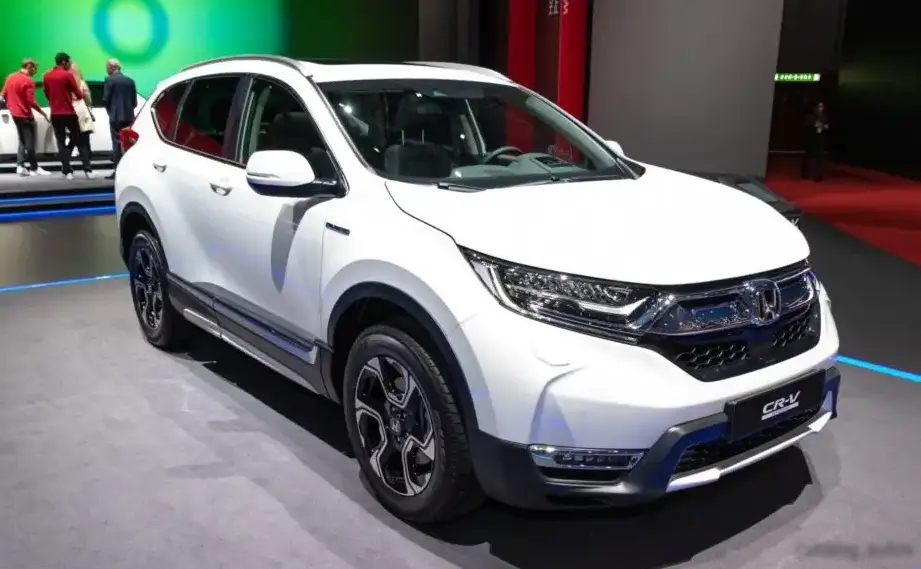
The Honda CR-V V 2.0 i-MMD (215 Hp) Hybrid AWD-i e-CVT represents a significant step in Honda’s hybrid technology, launched in February 2019 and continuing through September of the same year. This variant is part of the fifth-generation CR-V (internally designated as the RW/RT/RE series globally, and CR-V V in many markets), a generation known for its increased interior space, refined driving dynamics, and the introduction of hybrid powertrains to the CR-V lineup. Positioned as a mid-to-upper trim level, the 2.0 i-MMD offered a blend of fuel efficiency, all-wheel drive capability, and respectable performance, targeting buyers seeking a practical and technologically advanced compact SUV.
Technical Specifications
| Brand | Honda |
| Model | CR-V |
| Generation | CR-V V |
| Type (Engine) | 2.0 i-MMD (215 Hp) Hybrid AWD-i e-CVT |
| Start of production | February, 2019 |
| End of production | September, 2019 |
| Powertrain Architecture | FHEV (Full Hybrid Electric Vehicle) |
| Body type | SUV |
| Seats | 5 |
| Doors | 5 |
| Combined fuel consumption (WLTP) | 7.3-7.4 l/100 km (32.2 – 31.8 US mpg) |
| CO2 emissions (WLTP) | 166-168 g/km |
| Fuel consumption (economy) – urban (NEDC) | 5.1 l/100 km (46.1 US mpg) |
| Fuel consumption (economy) – extra urban (NEDC) | 5.7 l/100 km (41.3 US mpg) |
| Fuel consumption (economy) – combined (NEDC) | 5.5 l/100 km (42.8 US mpg) |
| CO2 emissions (NEDC) | 126 g/km |
| Fuel Type | Petrol (Gasoline) |
| Acceleration 0 – 100 km/h | 9.2 sec |
| Acceleration 0 – 62 mph | 9.2 sec |
| Acceleration 0 – 60 mph | 8.7 sec |
| Maximum speed | 180 km/h (111.85 mph) |
| Emission standard | Euro 6d |
| Weight-to-power ratio | 7.8 kg/Hp, 128.9 Hp/tonne |
| Weight-to-torque ratio | 9.5 kg/Nm, 104.9 Nm/tonne |
| Battery technology | Lithium-ion (Li-Ion) |
| Electric motor power | 184 Hp |
| Electric motor Torque | 315 Nm (232.33 lb.-ft.) |
| System power | 215 Hp |
| Power | 145 Hp @ 6200 rpm |
| Torque | 175 Nm @ 4000 rpm (129.07 lb.-ft. @ 4000 rpm) |
| Engine layout | Front, Transverse |
| Engine Model/Code | LFA1 |
| Engine displacement | 1993 cm3 (121.62 cu. in.) |
| Number of cylinders | 4 |
| Engine configuration | Inline |
| Cylinder Bore | 81 mm (3.19 in.) |
| Piston Stroke | 96.7 mm (3.81 in.) |
| Compression ratio | 13:1 |
| Number of valves per cylinder | 4 |
| Fuel injection system | Direct injection |
| Engine aspiration | Naturally aspirated engine |
| Valvetrain | DOHC, i-VTEC |
| Engine oil capacity | 4.1 l (4.33 US qt | 3.61 UK qt) |
| Coolant | 5.53 l (5.84 US qt | 4.87 UK qt) |
| Kerb Weight | 1668 kg (3677.31 lbs.) |
| Max. weight | 2275 kg (5015.52 lbs.) |
| Max load | 607 kg (1338.21 lbs.) |
| Trunk (boot) space – minimum | 497 l (17.55 cu. ft.) |
| Trunk (boot) space – maximum | 1694 l (59.82 cu. ft.) |
| Fuel tank capacity | 57 l (15.06 US gal | 12.54 UK gal) |
| Max. roof load | 75 kg (165.35 lbs.) |
| Permitted trailer load with brakes (12%) | 750 kg (1653.47 lbs.) |
| Permitted trailer load without brakes | 600 kg (1322.77 lbs.) |
| Permitted towbar download | 100 kg (220.46 lbs.) |
| Length | 4600 mm (181.1 in.) |
| Width | 1855 mm (73.03 in.) |
| Width including mirrors | 2117 mm (83.35 in.) |
| Height | 1689 mm (66.5 in.) |
| Wheelbase | 2662 mm (104.8 in.) |
| Front track | 1601 mm (63.03 in.) |
| Rear (Back) track | 1629 mm (64.13 in.) |
| Ride height (ground clearance) | 200 mm (7.87 in.) |
| Minimum turning circle (turning diameter) | 11.4 m (37.4 ft.) |
| Drivetrain Architecture | The Internal combustion engine (ICE) and the electric motor permanently drive the front wheels of the vehicle, capable of running in full electric or mixed mode, and if necessary through the electrically or mechanically controlled clutch, the rear wheels are driven. |
| Drive wheel | All wheel drive (4×4) |
| Number of gears and type of gearbox | automatic transmission e-CVT |
| Front suspension | Independent type McPherson |
| Rear suspension | Independent multi-link suspension |
| Front brakes | Ventilated discs, 320 mm |
| Rear brakes | Disc, 310 mm |
| Assisting systems | ABS (Anti-lock braking system) |
| Steering type | Steering rack and pinion |
| Power steering | Electric Steering |
| Tires size | 235/60 R18 |
| Wheel rims size | 7.5J x 18 |
Powertrain & Engine Architecture
The CR-V V 2.0 i-MMD utilizes Honda’s Intelligent Multi-Mode Drive (i-MMD) hybrid system. This isn’t a traditional parallel hybrid; instead, it’s a series-parallel hybrid. The 1993cc inline-four cylinder engine (code LFA1) produces 145 horsepower at 6200 rpm and 175 Nm (129.07 lb-ft) of torque at 4000 rpm. However, the system’s total output is 215 horsepower, thanks to the addition of a powerful electric motor producing 184 hp and 315 Nm (232.33 lb-ft) of torque. The engine employs direct injection and Honda’s i-VTEC variable valve timing system for improved efficiency and performance. The e-CVT (electronic Continuously Variable Transmission) doesn’t have traditional gears. It intelligently blends power from the engine and electric motor, acting as a generator in some modes and directly driving the wheels in others. The rear axle can be engaged via an electric motor for all-wheel drive capability, providing additional traction when needed.
Driving Characteristics
The 2.0 i-MMD offers a distinctly different driving experience compared to CR-V models with conventional gasoline engines or even the 1.5L turbocharged variant. The e-CVT provides smooth, seamless acceleration, lacking the stepped gear changes of a traditional automatic. In many driving situations, the vehicle operates in EV mode, offering near-silent operation and instant torque. The combined output of the engine and electric motor delivers adequate acceleration, with a 0-60 mph time of around 8.7 seconds. While not a sports car, the i-MMD provides sufficient power for everyday driving and highway merging. The all-wheel drive system enhances stability and traction, particularly in inclement weather. Compared to the 1.5L turbo, the i-MMD prioritizes fuel efficiency and refinement over outright performance.
Equipment & Trim Levels
The CR-V V 2.0 i-MMD typically came well-equipped, reflecting its position as a mid-to-upper trim level. Standard features often included automatic climate control, a touchscreen infotainment system with Apple CarPlay and Android Auto compatibility, Honda Sensing suite of safety features (including adaptive cruise control, lane keeping assist, and automatic emergency braking), and alloy wheels. Interior upholstery was typically cloth or leather, depending on optional packages. Available options included a sunroof, heated front seats, a premium audio system, and navigation.
Chassis & Braking
The CR-V V utilizes an independent McPherson strut front suspension and an independent multi-link rear suspension, providing a comfortable and controlled ride. The front brakes are ventilated discs measuring 320mm, while the rear brakes are solid discs measuring 310mm. Anti-lock braking system (ABS) is standard. The suspension tuning is geared towards comfort and stability, rather than sporty handling. Stabilizer bars are present at both the front and rear to reduce body roll during cornering.
Market Reception & Comparison
The CR-V V 2.0 i-MMD was generally well-received by automotive critics. Reviewers praised its fuel efficiency, smooth and quiet operation, and comfortable ride. The i-MMD system was lauded for its seamless integration and ability to provide both electric-only driving and strong overall performance. Compared to the gasoline-only CR-V models, the i-MMD offered significantly better fuel economy, although it came at a higher price point. The 1.5L turbocharged engine offered slightly more spirited performance, but the i-MMD provided a more refined and fuel-efficient driving experience.
Legacy
The Honda CR-V V 2.0 i-MMD represents a pivotal moment in Honda’s hybrid strategy. The i-MMD system proved to be reliable and efficient, establishing Honda as a leader in hybrid technology. On the used car market, these models hold their value relatively well, due to their fuel efficiency, reputation for reliability, and the increasing demand for hybrid vehicles. While long-term maintenance costs for the hybrid components should be considered, the CR-V V 2.0 i-MMD remains a compelling option for buyers seeking a practical, fuel-efficient, and technologically advanced compact SUV.