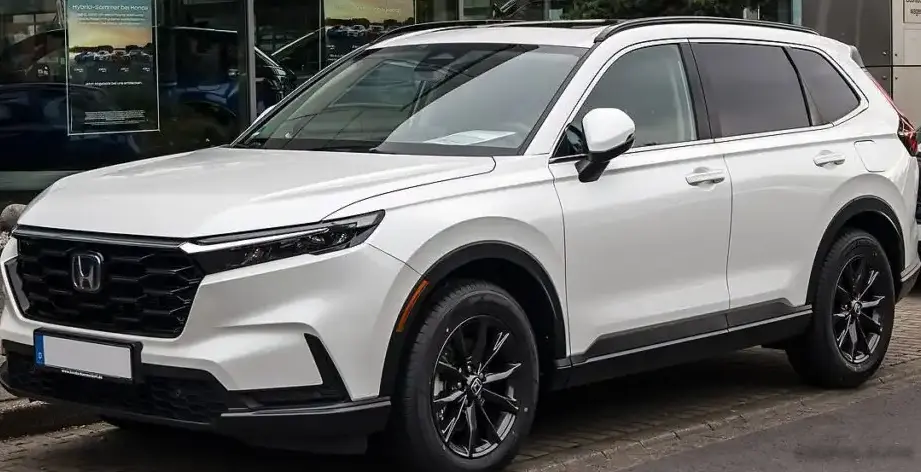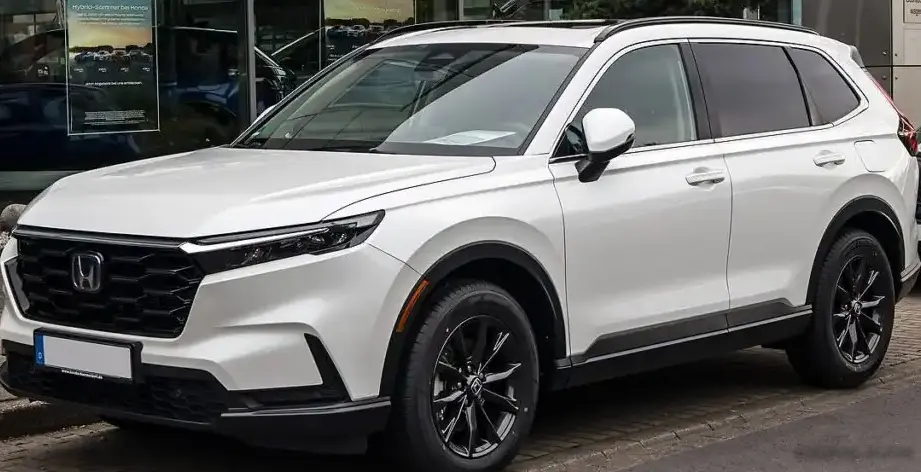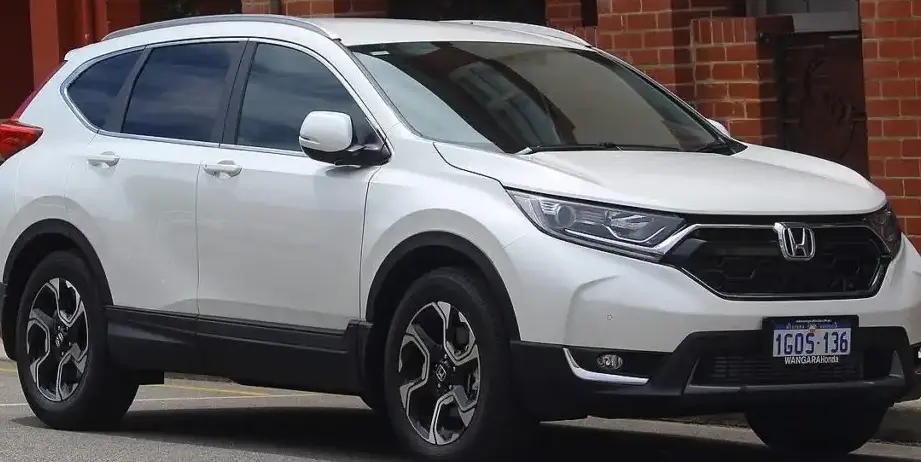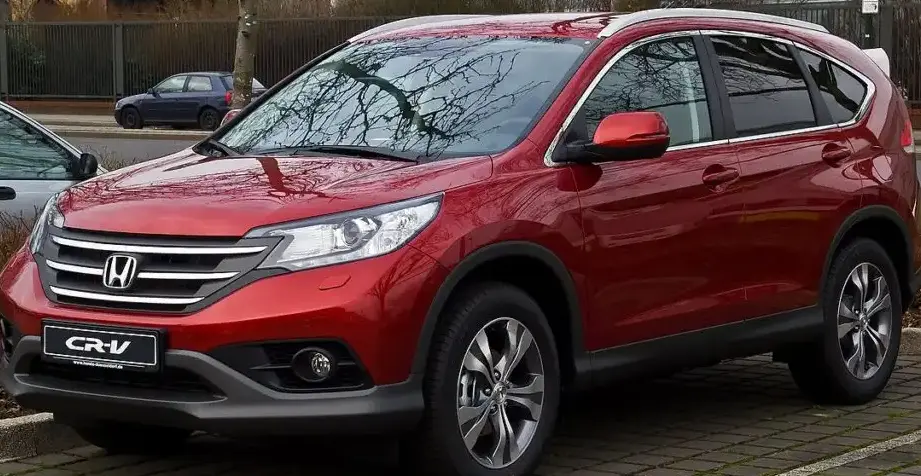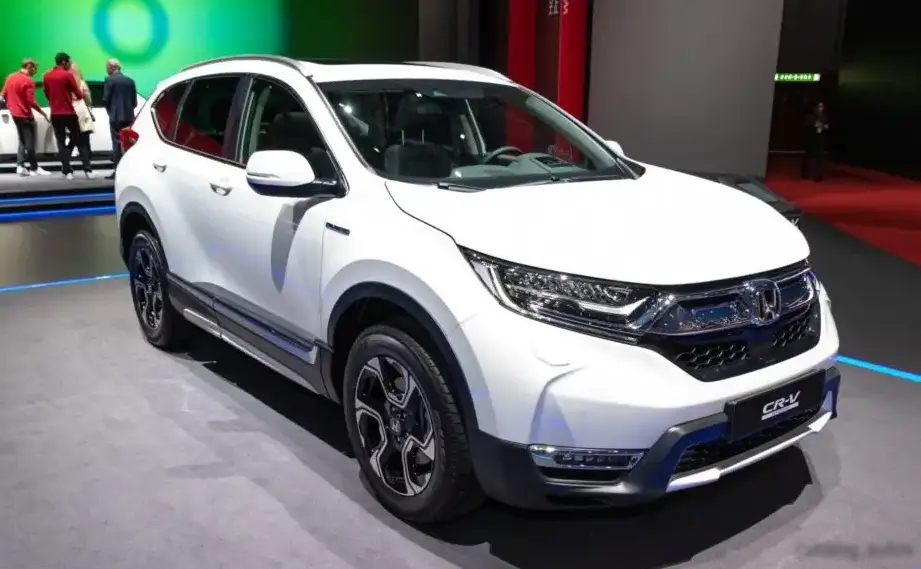
The Honda CR-V V 2.0 i-MMD (215 Hp) Hybrid e-CVT, produced from February to September 2019, represents a significant step in Honda’s hybrid technology within the globally popular CR-V lineup. This variant, part of the fifth-generation CR-V (internally designated as the RW/RT/RE series, with the ‘V’ denoting a facelift), was primarily aimed at the European and Asian markets, offering a blend of fuel efficiency and practicality. It positioned itself as a mid-to-upper trim level, bridging the gap between the more affordable petrol-only models and potential future, more performance-oriented trims. The i-MMD system, Honda’s Intelligent Multi-Mode Drive, is central to this model’s appeal, offering a unique driving experience focused on maximizing electric drive time.
Technical Specifications
| Brand | Honda |
| Model | CR-V |
| Generation | CR-V V |
| Type (Engine) | 2.0 i-MMD (215 Hp) Hybrid e-CVT |
| Start of production | February, 2019 |
| End of production | September, 2019 |
| Powertrain Architecture | FHEV (Full Hybrid Electric Vehicle) |
| Body type | SUV |
| Seats | 5 |
| Doors | 5 |
| Combined fuel consumption (WLTP) | 6.9 l/100 km (34.1 US mpg, 40.9 UK mpg, 14.5 km/l) |
| CO2 emissions (WLTP) | 156 g/km |
| Fuel consumption (economy) – urban (NEDC) | 5 l/100 km (47 US mpg, 56.5 UK mpg, 20 km/l) |
| Fuel consumption (economy) – extra urban (NEDC) | 5.4 l/100 km (43.6 US mpg, 52.3 UK mpg, 18.5 km/l) |
| Fuel consumption (economy) – combined (NEDC) | 5.3 l/100 km (44.4 US mpg, 53.3 UK mpg, 18.9 km/l) |
| CO2 emissions (NEDC) | 120 g/km |
| Fuel Type | Petrol (Gasoline) |
| Acceleration 0 – 100 km/h | 8.8 sec |
| Acceleration 0 – 62 mph | 8.8 sec |
| Acceleration 0 – 60 mph | 8.4 sec |
| Maximum speed | 180 km/h (111.85 mph) |
| Emission standard | Euro 6d |
| Weight-to-power ratio | 7.5 kg/Hp, 133.5 Hp/tonne |
| Weight-to-torque ratio | 9.2 kg/Nm, 108.7 Nm/tonne |
| Battery technology | Lithium-ion (Li-Ion) |
| Battery location | Under the trunk |
| Electric motor power | 184 Hp |
| Electric motor Torque | 315 Nm (232.33 lb.-ft.) |
| Electric motor location | Integrated into the transmission |
| System power | 215 Hp |
| Engine Power | 145 Hp @ 6200 rpm |
| Engine Torque | 175 Nm @ 4000 rpm (129.07 lb.-ft. @ 4000 rpm) |
| Engine layout | Front, Transverse |
| Engine Model/Code | LFA1 |
| Engine displacement | 1993 cm3 (121.62 cu. in.) |
| Number of cylinders | 4 |
| Engine configuration | Inline |
| Cylinder Bore | 81 mm (3.19 in.) |
| Piston Stroke | 96.7 mm (3.81 in.) |
| Compression ratio | 13:1 |
| Number of valves per cylinder | 4 |
| Fuel injection system | Direct injection |
| Engine aspiration | Naturally aspirated engine |
| Valvetrain | DOHC, i-VTEC |
| Engine oil capacity | 4.1 l (4.33 US qt | 3.61 UK qt) |
| Coolant | 5.53 l (5.84 US qt | 4.87 UK qt) |
| Kerb Weight | 1610 kg (3549.44 lbs.) |
| Max. weight | 2240 kg (4938.35 lbs.) |
| Max load | 630 kg (1388.91 lbs.) |
| Trunk (boot) space – minimum | 497 l (17.55 cu. ft.) |
| Trunk (boot) space – maximum | 1694 l (59.82 cu. ft.) |
| Fuel tank capacity | 57 l (15.06 US gal | 12.54 UK gal) |
| Max. roof load | 75 kg (165.35 lbs.) |
| Permitted trailer load with brakes (12%) | 750 kg (1653.47 lbs.) |
| Permitted trailer load without brakes | 600 kg (1322.77 lbs.) |
| Permitted towbar download | 100 kg (220.46 lbs.) |
| Length | 4600 mm (181.1 in.) |
| Width | 1855 mm (73.03 in.) |
| Width including mirrors | 2117 mm (83.35 in.) |
| Height | 1679 mm (66.1 in.) |
| Wheelbase | 2663 mm (104.84 in.) |
| Front track | 1602 mm (63.07 in.) |
| Rear (Back) track | 1630 mm (64.17 in.) |
| Ride height (ground clearance) | 190 mm (7.48 in.) |
| Minimum turning circle (turning diameter) | 11.4 m (37.4 ft.) |
| Drivetrain Architecture | The Internal combustion engine (ICE) and electric motor drive the front wheels of the car with the ability to work in full electric or mixed mode. |
| Drive wheel | Front wheel drive |
| Number of gears and type of gearbox | automatic transmission e-CVT |
| Front suspension | Independent type McPherson |
| Rear suspension | Independent multi-link suspension |
| Front brakes | Ventilated discs, 320 mm |
| Rear brakes | Disc, 310 mm |
| Assisting systems | ABS (Anti-lock braking system) |
| Steering type | Steering rack and pinion |
| Power steering | Electric Steering |
| Tires size | 235/60 R18 |
| Wheel rims size | 7.5J x 18 |
Powertrain & Engine Architecture
The heart of the CR-V i-MMD is its 2.0-liter, naturally aspirated inline-four cylinder engine (code LFA1). This engine produces 145 horsepower at 6200 rpm and 175 Nm (129 lb-ft) of torque at 4000 rpm. It utilizes Honda’s direct injection technology and i-VTEC variable valve timing system for improved efficiency and responsiveness. However, the engine’s output is only part of the story. The i-MMD system is a series-parallel hybrid system, meaning it can operate in three distinct modes: Electric Vehicle (EV) mode, Hybrid Drive mode, and Engine Drive mode. In EV mode, the vehicle is powered solely by the 184 hp electric motor. Hybrid Drive mode uses the engine as a generator to power the electric motor, which then drives the wheels. Engine Drive mode directly connects the engine to the wheels at higher speeds for optimal efficiency. The e-CVT (electronic Continuously Variable Transmission) plays a crucial role in seamlessly transitioning between these modes, offering a smooth and linear driving experience. Unlike traditional CVTs with belts and pulleys, the e-CVT uses a planetary gearset to provide a more direct feel.
Driving Characteristics
The 2.0 i-MMD Hybrid offers a noticeably different driving experience compared to the standard petrol CR-V models. The instant torque from the electric motor provides brisk acceleration, with a 0-60 mph time of around 8.4 seconds. While not a sports car, the hybrid powertrain delivers ample power for everyday driving and highway merging. The e-CVT, while smooth, can feel somewhat disconnected from the engine, especially during hard acceleration. The system prioritizes efficiency, so the engine can sometimes drone during prolonged acceleration. Compared to the 1.5L turbocharged petrol engine available in other CR-V trims, the i-MMD offers a more refined and quieter driving experience, particularly in urban environments where it can frequently operate in EV mode. The hybrid system adds weight, which is noticeable in handling, but the CR-V remains a comfortable and predictable vehicle to drive.
Equipment & Trim Levels
The CR-V V 2.0 i-MMD typically came well-equipped, reflecting its position as a mid-to-upper trim level. Standard features generally included automatic climate control, a touchscreen infotainment system with Apple CarPlay and Android Auto compatibility, Honda Sensing suite of safety features (including adaptive cruise control, lane keeping assist, and collision mitigation braking system), and alloy wheels. Interior upholstery was typically cloth or a combination of cloth and leather. Optional extras could include a panoramic sunroof, leather seats, a premium audio system, and navigation. Specific trim levels and available options varied slightly depending on the market.
Chassis & Braking
The CR-V V utilizes a MacPherson strut front suspension and a multi-link rear suspension, providing a comfortable ride and decent handling. The hybrid variant’s added weight necessitated slightly stiffer spring rates compared to the standard CR-V. Braking duties are handled by ventilated discs at the front and solid discs at the rear. The hybrid system incorporates regenerative braking, which helps to recharge the battery and improve fuel efficiency. ABS (Anti-lock Braking System) is standard, along with electronic brake-force distribution and brake assist.
Market Reception & Comparison
The CR-V i-MMD Hybrid was generally well-received by critics, who praised its fuel efficiency, smooth ride, and quiet operation. However, some reviewers noted the e-CVT’s lack of engagement and the engine’s tendency to drone under hard acceleration. Compared to the petrol-only CR-V models, the hybrid offered significantly better fuel economy, particularly in urban driving. The hybrid also provided a more refined driving experience. However, it came at a higher price point. Compared to other hybrid SUVs in the same class, the CR-V i-MMD offered a competitive combination of fuel efficiency, practicality, and reliability.
Legacy
The Honda CR-V V 2.0 i-MMD Hybrid represents an important step in Honda’s electrification strategy. The i-MMD system proved to be a reliable and efficient powertrain, and it laid the groundwork for future Honda hybrid models. On the used car market, these models tend to hold their value well due to their fuel efficiency and Honda’s reputation for reliability. While the battery’s long-term durability is a consideration for potential buyers, Honda’s hybrid technology has generally proven to be robust. The CR-V i-MMD remains a popular choice for buyers seeking a practical, fuel-efficient, and reliable SUV.