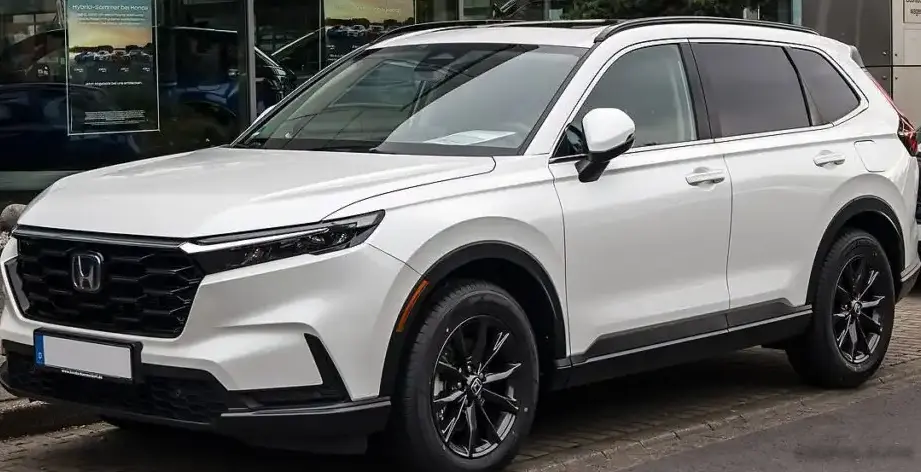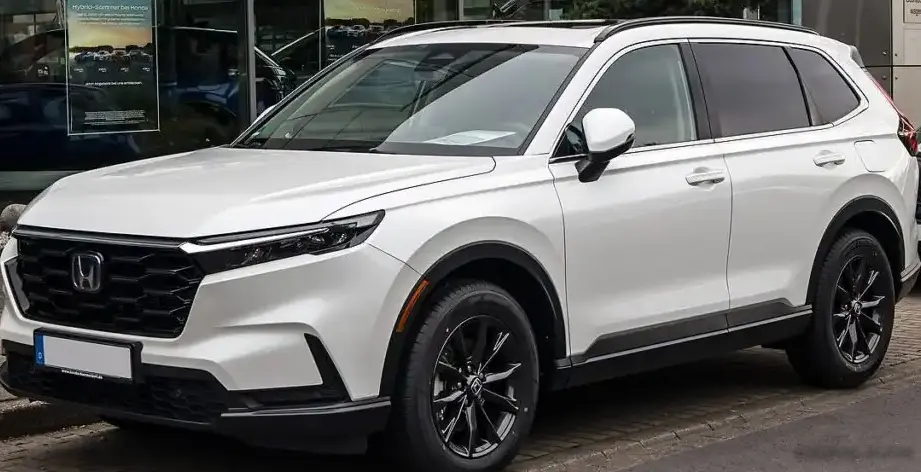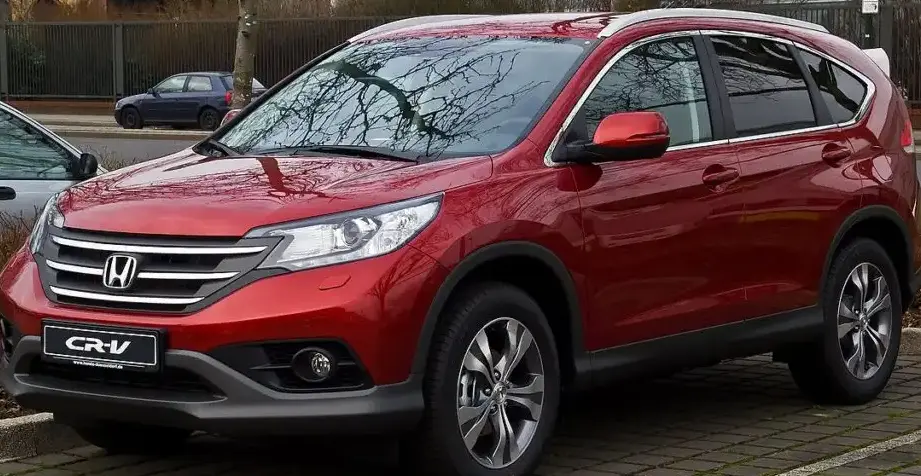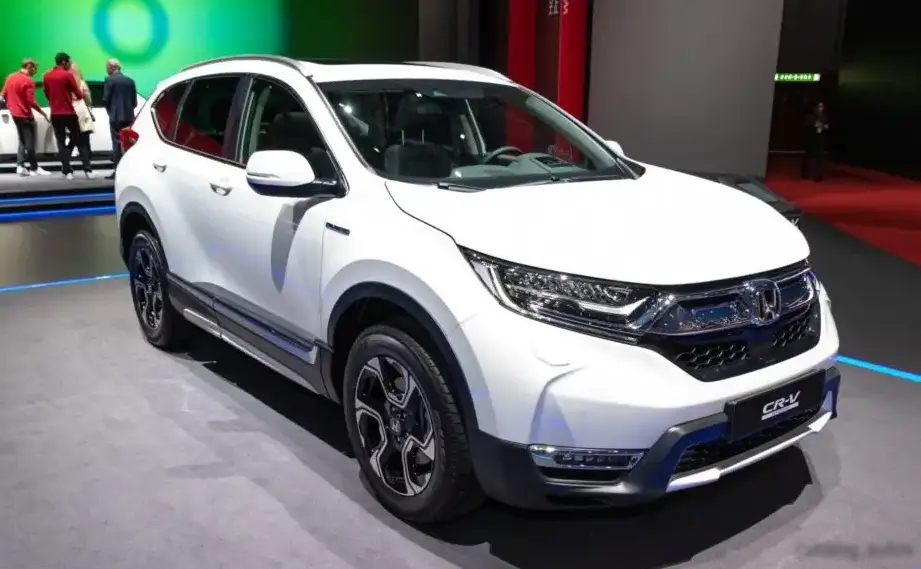
The Honda CR-V V 2.0 VTEC (150 Hp) CVT, produced from 2017 to 2019, represents a significant iteration of Honda’s popular compact SUV. Falling within the fifth generation of the CR-V (internally designated as the RW/RT platform in some markets, though the ‘V’ designation is common in Europe and elsewhere), this variant occupied a key position in the lineup, offering a balance between fuel efficiency, practicality, and affordability. It served as a mainstream offering, positioned below the more powerful turbocharged options and often appealing to buyers prioritizing a smooth, comfortable driving experience over outright performance. This model was primarily aimed at family buyers and commuters seeking a reliable and spacious vehicle.
Technical Specifications
| Brand | Honda |
| Model | CR-V |
| Generation | CR-V V |
| Type (Engine) | 2.0 VTEC (150 Hp) CVT |
| Start of production | 2017 |
| End of production | 2019 |
| Powertrain Architecture | Internal Combustion engine |
| Body type | SUV |
| Seats | 5 |
| Doors | 5 |
| Fuel consumption (urban) | 9.8 l/100 km (24 US mpg) |
| Fuel consumption (extra urban) | 6.2 l/100 km (37.9 US mpg) |
| Fuel consumption (combined) | 7.5 l/100 km (31.4 US mpg) |
| Fuel Type | Petrol (Gasoline) |
| Weight-to-power ratio | 10.4 kg/Hp |
| Weight-to-torque ratio | 8.2 kg/Nm |
| Power | 150 Hp @ 6500 rpm |
| Power per litre | 75.1 Hp/l |
| Torque | 189 Nm @ 4300 rpm (139.4 lb.-ft. @ 4300 rpm) |
| Engine Model/Code | R20A |
| Engine displacement | 1997 cm3 (121.86 cu. in.) |
| Number of cylinders | 4 |
| Engine configuration | Inline |
| Cylinder Bore | 81 mm (3.19 in.) |
| Piston Stroke | 96.9 mm (3.81 in.) |
| Compression ratio | 10.6:1 |
| Number of valves per cylinder | 4 |
| Engine aspiration | Naturally aspirated engine |
| Valvetrain | i-VTEC |
| Engine oil capacity | 3.7 l (3.91 US qt | 3.26 UK qt) |
| Coolant capacity | 6 l (6.34 US qt | 5.28 UK qt) |
| Kerb Weight | 1557-1577 kg (3432.6 – 3476.69 lbs.) |
| Max. weight | 2130 kg (4695.85 lbs.) |
| Max load | 553-573 kg (1219.16 – 1263.25 lbs.) |
| Trunk (boot) space (minimum) | 522 l (18.43 cu. ft.) |
| Fuel tank capacity | 57 l (15.06 US gal | 12.54 UK gal) |
| Length | 4586 mm (180.55 in.) |
| Width | 1855 mm (73.03 in.) |
| Height | 1689 mm (66.5 in.) |
| Wheelbase | 2660 mm (104.72 in.) |
| Front track | 1598 mm (62.91 in.) |
| Rear track | 1613 mm (63.5 in.) |
| Ride height (ground clearance) | 208 mm (8.19 in.) |
| Minimum turning circle | 11 m (36.09 ft.) |
| Drive wheel | All wheel drive (4×4) |
| Number of gears and type of gearbox | automatic transmission CVT |
| Front suspension | Independent type McPherson |
| Rear suspension | Independent multi-link suspension |
| Front brakes | Disc, 312 mm |
| Rear brakes | Disc, 310 mm |
| Assisting systems | ABS (Anti-lock braking system) |
| Steering type | Steering rack and pinion |
| Power steering | Electric Steering |
| Tires size | 235/60 R18 |
| Wheel rims size | 7.5J x 18 |
INTRODUCTION
The Honda CR-V V 2.0 VTEC CVT, launched in 2017, was a crucial model for Honda, building upon the CR-V’s established reputation for reliability and practicality. This fifth-generation CR-V represented a significant redesign, offering increased interior space, improved fuel economy, and a more refined driving experience compared to its predecessor. The 2.0-liter VTEC engine paired with a Continuously Variable Transmission (CVT) was a popular choice, particularly in markets where fuel efficiency and ease of driving were prioritized. It was sold across North America, Europe, and Asia, with slight variations in standard equipment depending on the region.
Powertrain & Engine Architecture
At the heart of this CR-V variant lies the R20A 2.0-liter inline-four cylinder engine. This engine is a naturally aspirated powerplant utilizing Honda’s Intelligent Variable Valve Timing and Lift Electronic Control (i-VTEC) system. The i-VTEC system allows for variable valve timing and lift, optimizing engine performance across a wide range of engine speeds. Fuel delivery is managed by Honda’s direct injection system, contributing to improved fuel efficiency and reduced emissions. The engine produces 150 horsepower at 6500 rpm and 189 Nm (139.4 lb-ft) of torque at 4300 rpm. The engine’s architecture is relatively simple and robust, contributing to its long-term reliability. The CVT transmission is designed to provide smooth, seamless acceleration and maximize fuel economy. Unlike traditional automatic transmissions with fixed gear ratios, a CVT utilizes a belt and pulley system to provide an infinite number of gear ratios within its operating range. This allows the engine to operate at its most efficient speed regardless of vehicle speed.
Driving Characteristics
The 2.0 VTEC CVT combination delivers a comfortable and predictable driving experience. Acceleration is adequate for everyday driving, but it’s not particularly sporty. The CVT transmission tends to hold the engine at a consistent rpm during acceleration, which can result in a somewhat droning engine note. Compared to the available turbocharged engine options, the 2.0L VTEC feels less powerful, especially when fully loaded or tackling steep inclines. However, the CVT’s smooth operation and the engine’s linear power delivery make it well-suited for commuting and long-distance driving. The CVT is programmed to simulate gear changes under hard acceleration, providing a more familiar feel for drivers accustomed to traditional automatic transmissions. The all-wheel-drive system provides enhanced traction in inclement weather conditions.
Equipment & Trim Levels
The CR-V V 2.0 VTEC CVT typically came standard with a respectable array of features. These generally included automatic climate control, a touchscreen infotainment system with Bluetooth connectivity, a rearview camera, and Honda’s suite of safety features, including Vehicle Stability Assist (VSA) and anti-lock brakes (ABS). Higher trim levels, such as the EX or Touring (depending on the market), added features like leather upholstery, a sunroof, a navigation system, and advanced driver-assistance systems like adaptive cruise control and lane departure warning. Interior upholstery was typically cloth on the base models, with leather options available on higher trims. Dashboard configuration was consistent across the range, featuring a user-friendly layout with intuitive controls.
Chassis & Braking
The CR-V V utilizes an independent McPherson strut suspension in the front and an independent multi-link suspension in the rear. This suspension setup provides a comfortable ride and good handling characteristics. The suspension is tuned for comfort rather than outright sportiness. Braking duties are handled by disc brakes on all four wheels, providing adequate stopping power. The front brakes measure 312mm in diameter, while the rear brakes are slightly smaller at 310mm. ABS is standard, preventing wheel lockup during hard braking. Stabilizer bars are fitted to both the front and rear axles to reduce body roll during cornering.
Market Reception & Comparison
The CR-V V 2.0 VTEC CVT was generally well-received by automotive critics. It was praised for its spacious interior, comfortable ride, and good fuel economy. However, some critics noted that the engine felt underpowered compared to the turbocharged options. Compared to the 1.5L Turbo CR-V, the 2.0L offered a simpler, potentially more reliable powertrain, but at the cost of performance. Against competitors like the Toyota RAV4 and Nissan Rogue, the CR-V V 2.0 VTEC CVT held its own, offering a compelling combination of features and value. Fuel economy figures were competitive within its class, averaging around 31.4 US mpg in combined driving.
Legacy
The R20A engine and the CVT transmission used in the CR-V V 2.0 VTEC have proven to be relatively reliable. While CVTs have historically been associated with reliability concerns, Honda’s CVT design has generally been more durable than those found in some other vehicles. The 2.0L VTEC engine is known for its longevity and relatively low maintenance costs. On the used car market, these CR-Vs are often sought after by buyers looking for a dependable and fuel-efficient SUV. Regular maintenance, including timely fluid changes for the CVT, is crucial to ensure long-term reliability. The CR-V V 2.0 VTEC CVT remains a popular choice for those seeking a practical and affordable compact SUV.