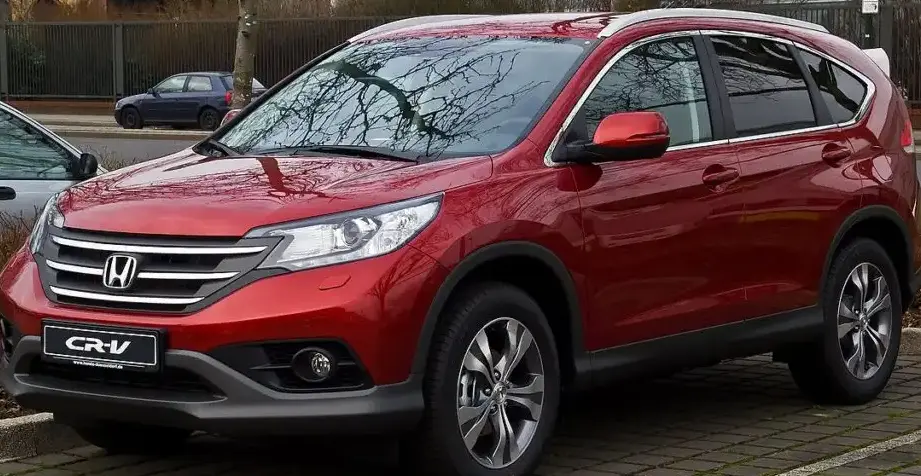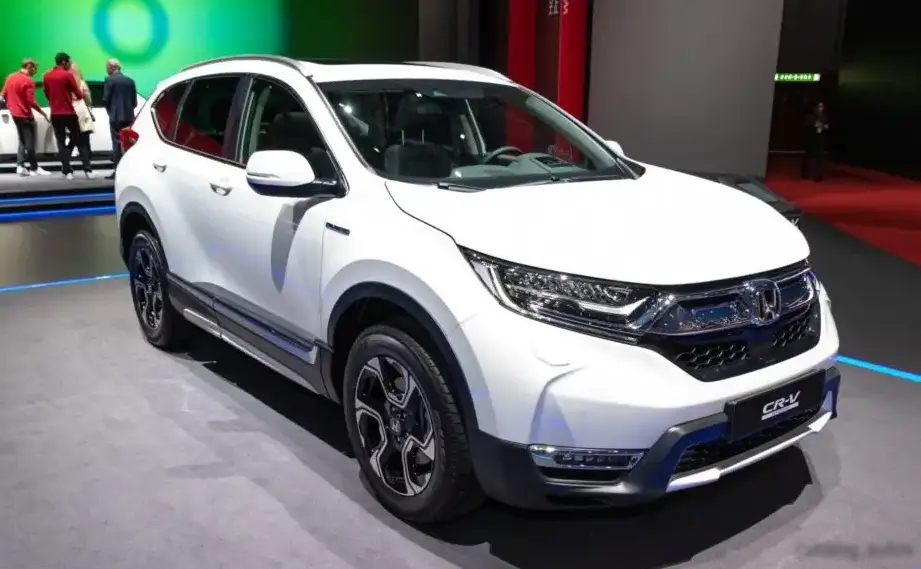
The Honda CR-V V 2.4 (184 hp) Automatic, produced from 2017 to 2019, represents a significant iteration of Honda’s popular compact SUV. Part of the fifth-generation CR-V (internally designated as the RW platform), this variant occupied a key position in the North American market, offering a balance of fuel efficiency, practicality, and available technology. It served as a mainstream offering within the CR-V lineup, positioned above the base LX model and below the more premium EX and Touring trims. This version aimed to appeal to families and individuals seeking a reliable and spacious SUV for daily commuting and weekend adventures.
Technical Specifications
| Brand | Honda |
| Model | CR-V |
| Generation | CR-V V |
| Type (Engine) | 2.4 (184 Hp) Automatic |
| Start of production | 2017 year |
| End of production | 2019 year |
| Powertrain Architecture | Internal Combustion engine |
| Body type | SUV |
| Seats | 5 |
| Doors | 5 |
| Fuel consumption (economy) – urban | 9 l/100 km (26.1 US mpg) |
| Fuel consumption (economy) – extra urban | 7.3 l/100 km (32.2 US mpg) |
| Fuel consumption (economy) – combined | 8.4 l/100 km (28 US mpg) |
| Fuel Type | Petrol (Gasoline) |
| Weight-to-power ratio | 8.2 kg/Hp |
| Weight-to-torque ratio | 6.1 kg/Nm |
| Power | 184 Hp @ 6400 rpm |
| Power per litre | 78.1 Hp/l |
| Torque | 244 Nm @ 3900 rpm (179.97 lb.-ft. @ 3900 rpm) |
| Engine layout | Front, Transverse |
| Engine Model/Code | K24W |
| Engine displacement | 2356 cm3 (143.77 cu. in.) |
| Number of cylinders | 4 |
| Engine configuration | Inline |
| Cylinder Bore | 87 mm (3.43 in.) |
| Piston Stroke | 99.1 mm (3.9 in.) |
| Compression ratio | 11.1:1 |
| Number of valves per cylinder | 4 |
| Fuel injection system | Direct injection |
| Engine aspiration | Naturally aspirated engine |
| Valvetrain | DOHC, i-VTEC |
| Engine oil capacity | 4.2 l (4.44 US qt | 3.7 UK qt) |
| Coolant | 6.24 l (6.59 US qt | 5.49 UK qt) |
| Kerb Weight | 1500 kg (3306.93 lbs.) |
| Trunk (boot) space – minimum | 1110 l (39.2 cu. ft.) |
| Trunk (boot) space – maximum | 2146 l (75.79 cu. ft.) |
| Fuel tank capacity | 53 l (14 US gal | 11.66 UK gal) |
| Permitted trailer load with brakes (12%) | 680 kg (1499.14 lbs.) |
| Length | 4587 mm (180.59 in.) |
| Width | 1854 mm (72.99 in.) |
| Height | 1679 mm (66.1 in.) |
| Wheelbase | 2659 mm (104.69 in.) |
| Front track | 1600 mm (62.99 in.) |
| Rear (Back) track | 1618 mm (63.7 in.) |
| Ride height (ground clearance) | 198 mm (7.8 in.) |
| Minimum turning circle (turning diameter) | 11.4 m (37.4 ft.) |
| Approach angle | 19.3° |
| Departure angle | 23.5° |
| Drivetrain Architecture | The Internal combustion engine (ICE) drives the front wheels of the vehicle. |
| Drive wheel | Front wheel drive |
| Number of gears and type of gearbox | automatic transmission CVT |
| Front suspension | Independent, type McPherson with coil spring and anti-roll bar |
| Rear suspension | Independent multi-link suspension |
| Front brakes | Ventilated discs |
| Rear brakes | Disc |
| Assisting systems | ABS (Anti-lock braking system) |
| Steering type | Steering rack and pinion |
| Power steering | Electric Steering |
| Tires size | 235/65 R17 |
| Wheel rims size | 17 |
Powertrain & Engine Architecture
The heart of the CR-V V 2.4 Automatic is Honda’s K24W 2.4-liter inline-four cylinder engine. This engine is a naturally aspirated powerplant featuring Honda’s direct injection technology and i-VTEC (intelligent Variable valve Timing and lift Electronic Control) valvetrain. The i-VTEC system allows for variable valve timing and lift, optimizing engine performance and fuel efficiency across a wide range of engine speeds. The K24W engine produces 184 horsepower at 6,400 rpm and 244 Nm (179.97 lb-ft) of torque at 3,900 rpm. This engine is known for its reliability and relatively smooth operation. Paired with the engine is a Continuously Variable Transmission (CVT). Unlike traditional automatic transmissions with fixed gear ratios, a CVT provides a seamless and continuously changing gear ratio, optimizing engine efficiency and providing smooth acceleration. While CVTs sometimes receive criticism for their driving feel, Honda’s implementation in the CR-V was generally well-received.
Driving Characteristics
The 2.4-liter engine and CVT combination in the CR-V V delivers adequate, though not particularly sporty, performance. Acceleration is linear and predictable, suitable for everyday driving situations. The CVT effectively keeps the engine in its optimal power band, providing a responsive feel during normal acceleration. Compared to the available turbocharged 1.5-liter engine option in the CR-V lineup, the 2.4-liter offers less peak horsepower and torque, resulting in slightly slower acceleration times. However, the 2.4-liter engine provides a more traditional engine sound and feel, which some drivers prefer. The CVT’s programming is tuned for fuel efficiency, and while it can simulate stepped gears under hard acceleration, it lacks the immediate responsiveness of a traditional automatic transmission. The front-wheel-drive configuration contributes to reasonable fuel economy, but it doesn’t offer the enhanced traction of the available all-wheel-drive system.
Equipment & Trim Levels
The CR-V V 2.4 Automatic typically came standard with a respectable array of features. These included automatic climate control, a multi-angle rearview camera, a 5-inch color LCD screen, Bluetooth connectivity, and a USB audio interface. Higher trim levels offered upgrades such as a larger touchscreen display with Apple CarPlay and Android Auto integration, a power moonroof, heated front seats, and a premium audio system. Interior upholstery was typically cloth, with leather options available on higher trims. Optional extras included navigation, blind spot monitoring, and lane departure warning systems.
Chassis & Braking
The CR-V V utilizes a MacPherson strut front suspension and a multi-link rear suspension, providing a comfortable and controlled ride. The suspension is tuned for everyday driving, prioritizing comfort over sporty handling. Front brakes are ventilated discs, while rear brakes are solid discs. All CR-V V models are equipped with an Anti-lock Braking System (ABS) and Electronic Brake-force Distribution (EBD) for enhanced safety. The vehicle’s relatively lightweight construction (around 3307 lbs) contributes to its manageable handling characteristics. The standard tire size is 235/65R17, providing a good balance of ride comfort and grip.
Market Reception & Comparison
The CR-V V 2.4 Automatic was generally well-received by automotive critics. It was praised for its spacious interior, comfortable ride, and good fuel economy. However, some reviewers noted that the engine could feel underpowered when fully loaded or when climbing steep hills. Compared to the turbocharged 1.5-liter CR-V, the 2.4-liter model offered a simpler and potentially more reliable powertrain. The 2.4-liter also tended to be slightly less expensive than the turbocharged variant. Fuel economy figures of around 28 mpg combined were competitive within the compact SUV segment.
Legacy
The Honda K24W engine has a reputation for being a durable and reliable powerplant. With proper maintenance, these engines can easily exceed 200,000 miles. The CVT transmission, while generally reliable, requires regular fluid changes to ensure optimal performance and longevity. On the used car market, the CR-V V 2.4 Automatic remains a popular choice due to its reputation for reliability, practicality, and affordability. It represents a solid value proposition for buyers seeking a well-rounded and dependable compact SUV.