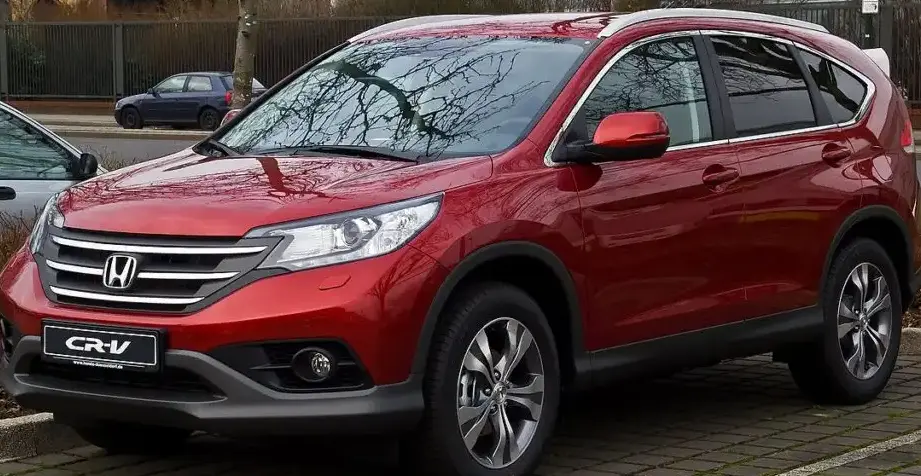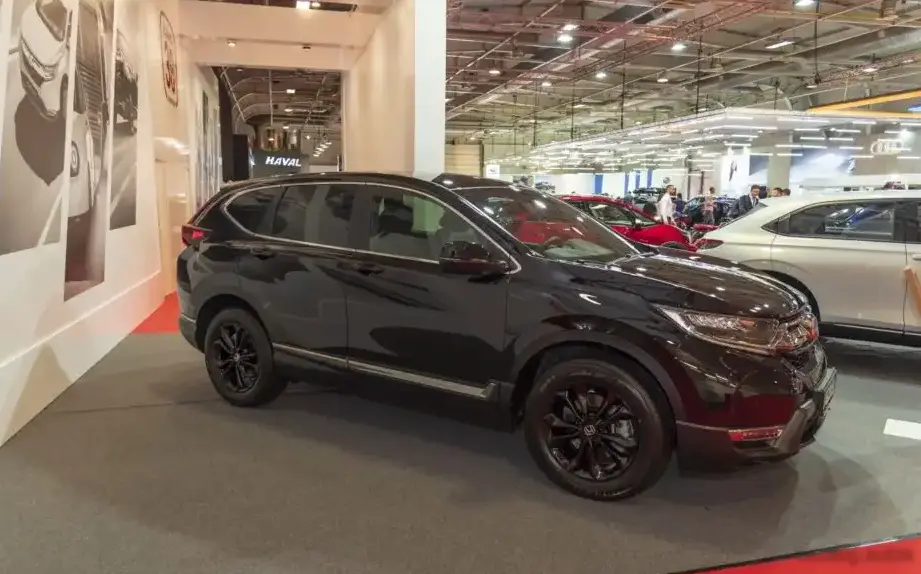
The Honda CR-V V (facelift, introduced in 2019) 2.0 i-VTEC i-MMD (184 Hp) e:HEV AWD-i e-CVT represents a significant step in Honda’s hybrid technology within the popular CR-V lineup. Production of this specific configuration ran from February 2021 to July 2022. This variant, positioned as a mid-to-upper trim level, combined a naturally aspirated 2.0-liter gasoline engine with Honda’s Intelligent Multi-Mode Drive (i-MMD) hybrid system and all-wheel drive. It was primarily aimed at buyers seeking fuel efficiency and all-weather capability without sacrificing the practicality and space the CR-V is known for, and was a key offering in European and Asian markets where fuel costs and environmental concerns are high.
Technical Specifications
| Brand | Honda |
| Model | CR-V |
| Generation | CR-V V (facelift 2019) |
| Type (Engine) | 2.0 i-VTEC i-MMD (184 Hp) e:HEV AWD-i e-CVT |
| Start of production | February, 2021 |
| End of production | July, 2022 |
| Powertrain Architecture | FHEV (Full Hybrid Electric Vehicle) |
| Body type | SUV |
| Seats | 5 |
| Doors | 5 |
| Fuel consumption at Low speed (WLTP) | 8-8.1 l/100 km (29.4 – 29 US mpg) |
| Fuel consumption at Medium speed (WLTP) | 5.6-5.8 l/100 km (42 – 40.6 US mpg) |
| Fuel consumption at high speed (WLTP) | 6 l/100 km (39.2 US mpg) |
| Fuel consumption at very high speed (WLTP) | 8.5-8.6 l/100 km (27.7 – 27.4 US mpg) |
| Combined fuel consumption (WLTP) | 7.1-7.2 l/100 km (33.1 – 32.7 US mpg) |
| CO2 emissions (WLTP) | 161-163 g/km |
| Fuel consumption (economy) – urban (NEDC, WLTP equivalent) | 5.5 l/100 km (42.8 US mpg) |
| Fuel consumption (economy) – extra urban (NEDC, WLTP equivalent) | 5.5 l/100 km (42.8 US mpg) |
| Fuel consumption (economy) – combined (NEDC, WLTP equivalent) | 5.5 l/100 km (42.8 US mpg) |
| CO2 emissions (NEDC, WLTP equivalent) | 126 g/km |
| Fuel Type | Petrol (Gasoline) |
| Acceleration 0 – 100 km/h | 8.9-9.2 sec |
| Acceleration 0 – 62 mph | 8.9-9.2 sec |
| Acceleration 0 – 60 mph | 8.5 sec |
| Maximum speed | 180 km/h (111.85 mph) |
| Emission standard | Euro 6d-ISC-FCM |
| Weight-to-power ratio | 9.5 kg/Hp, 105.6 Hp/tonne |
| Weight-to-torque ratio | 5.5 kg/Nm, 180.7 Nm/tonne |
| Battery technology | Lithium-ion (Li-Ion) |
| Battery location | Below the floor, under the rear seats |
| Electric motor power | 184 Hp |
| Electric motor Torque | 315 Nm (232.33 lb.-ft.) |
| Electric motor location | Integrated into the transmission |
| System power | 184 Hp |
| System torque | 315 Nm (232.33 lb.-ft.) |
| Power | 145 Hp @ 6200 rpm |
| Torque | 175 Nm @ 4000 rpm (129.07 lb.-ft. @ 4000 rpm) |
| Engine layout | Front, Transverse |
| Engine Model/Code | LFA1 |
| Engine displacement | 1993 cm3 (121.62 cu. in.) |
| Number of cylinders | 4 |
| Engine configuration | Inline |
| Cylinder Bore | 81 mm (3.19 in.) |
| Piston Stroke | 96.7 mm (3.81 in.) |
| Compression ratio | 13:1 |
| Number of valves per cylinder | 4 |
| Fuel injection system | Direct injection |
| Engine aspiration | Naturally aspirated engine |
| Valvetrain | i-VTEC |
| Engine oil capacity | 4.1 l (4.33 US qt | 3.61 UK qt) |
| Coolant | 5.53 l (5.84 US qt | 4.87 UK qt) |
| Kerb Weight | 1743-1797 kg (3842.66 – 3961.71 lbs.) |
| Max. weight | 2275 kg (5015.52 lbs.) |
| Max load | 478-532 kg (1053.81 – 1172.86 lbs.) |
| Trunk (boot) space – minimum | 497 l (17.55 cu. ft.) |
| Trunk (boot) space – maximum | 1692 l (59.75 cu. ft.) |
| Fuel tank capacity | 57 l (15.06 US gal | 12.54 UK gal) |
| Permitted trailer load with brakes (12%) | 750 kg (1653.47 lbs.) |
| Permitted trailer load without brakes | 600 kg (1322.77 lbs.) |
| Length | 4600 mm (181.1 in.) |
| Width | 1855 mm (73.03 in.) |
| Width including mirrors | 2117 mm (83.35 in.) |
| Height | 1689 mm (66.5 in.) |
| Wheelbase | 2662 mm (104.8 in.) |
| Front track | 1601 mm (63.03 in.) |
| Rear (Back) track | 1629 mm (64.13 in.) |
| Ride height (ground clearance) | 200 mm (7.87 in.) |
| Minimum turning circle (turning diameter) | 11.8 m (38.71 ft.) |
| Front brakes | Ventilated discs, 320 mm |
| Rear brakes | Disc, 310 mm |
| Front suspension | Independent type McPherson |
| Rear suspension | Independent multi-link suspension |
| Tires size | 235/60 R18 |
| Wheel rims size | 18 |
Powertrain & Engine Architecture
At the heart of this CR-V variant lies Honda’s LFA1 2.0-liter inline-four cylinder gasoline engine. This engine produces 145 horsepower at 6200 rpm and 175 Nm (129 lb-ft) of torque at 4000 rpm. It features direct injection and Honda’s i-VTEC (Intelligent Variable Valve Timing and Lift Electronic Control) system, optimizing valve timing for improved efficiency and power delivery. The engine is coupled with Honda’s i-MMD (Intelligent Multi-Mode Drive) hybrid system. This isn’t a traditional parallel hybrid; instead, it’s a series-parallel system. The gasoline engine primarily acts as a generator, powering an electric motor that drives the wheels. At higher speeds or under heavier load, the engine can directly drive the wheels via a lock-up clutch, improving efficiency. The e-CVT (electronic Continuously Variable Transmission) manages power flow seamlessly between the engine, generator, and electric motor. The battery pack, a lithium-ion unit located under the rear seats, provides supplemental power and allows for short periods of all-electric driving.
Driving Characteristics
The 184 hp combined output of the i-MMD system delivers adequate, though not exhilarating, performance. Acceleration from 0-60 mph takes around 8.5 seconds, and 0-100 km/h (0-62 mph) is achieved in 8.9-9.2 seconds. The e-CVT provides smooth, stepless acceleration, eliminating the rubber-band feel often associated with traditional CVTs. However, it can sometimes feel less responsive than a conventional automatic transmission, particularly during quick overtaking maneuvers. Compared to the 1.5L turbocharged engine offered in other CR-V trims, this 2.0L hybrid prioritizes fuel economy and refinement over outright performance. The all-wheel-drive system provides enhanced traction in inclement weather, making it a capable all-season vehicle. The i-MMD system’s ability to operate in electric mode at lower speeds contributes to a quiet and refined driving experience in urban environments.
Equipment & Trim Levels
The 2.0 i-VTEC i-MMD e:HEV AWD-i typically came well-equipped, often representing a mid-to-high trim level. Standard features generally included automatic climate control, a touchscreen infotainment system with Apple CarPlay and Android Auto compatibility, Honda Sensing suite of safety features (including adaptive cruise control, lane keeping assist, and automatic emergency braking), and alloy wheels. Interior upholstery was typically cloth or a combination of cloth and leather. Optional extras could include a sunroof, heated front seats, a premium audio system, and navigation.
Chassis & Braking
The CR-V V utilizes an independent McPherson strut suspension in the front and an independent multi-link suspension in the rear, providing a comfortable and controlled ride. The suspension tuning is geared towards comfort rather than sporty handling. Braking duties are handled by ventilated discs at the front and solid discs at the rear. The anti-lock braking system (ABS) and electronic brakeforce distribution (EBD) are standard features. The all-wheel-drive system is primarily front-wheel drive, with the rear wheels engaging automatically when slip is detected.
Market Reception & Comparison
The 2.0 i-VTEC i-MMD e:HEV AWD-i CR-V was generally well-received by automotive critics. Its fuel efficiency, smooth ride, and spacious interior were frequently praised. However, some reviewers noted the lack of outright performance compared to turbocharged rivals. Compared to the 1.5L turbocharged CR-V, the hybrid offered superior fuel economy, particularly in urban driving, but at the expense of some acceleration. The hybrid also commanded a higher price tag. Compared to diesel-powered CR-V models (available in some markets), the hybrid offered a more refined driving experience and lower emissions.
Legacy
The Honda i-MMD hybrid system has proven to be relatively reliable, with few widespread issues reported. The 2.0L engine itself is known for its durability. In the used car market, this CR-V variant holds its value well due to its fuel efficiency, practicality, and Honda’s reputation for reliability. However, potential buyers should be aware of the complexity of the hybrid system and ensure that the battery pack is in good condition. Regular maintenance, including oil changes and coolant flushes, is crucial for ensuring the long-term health of the powertrain.