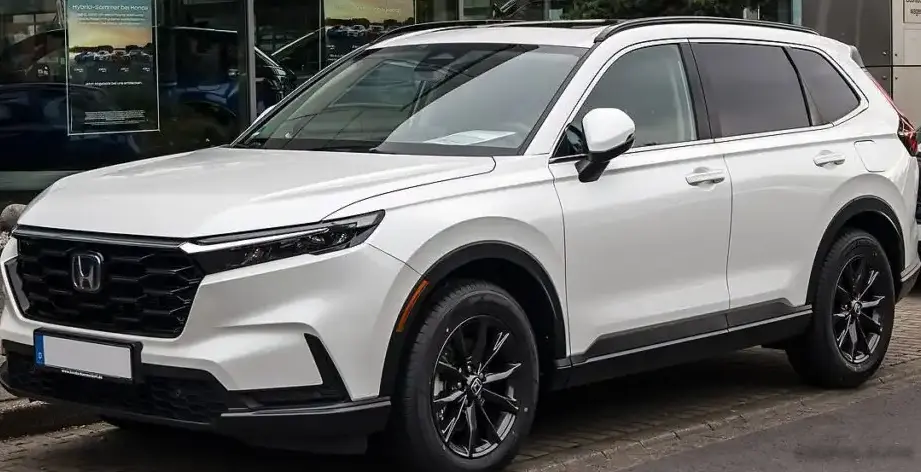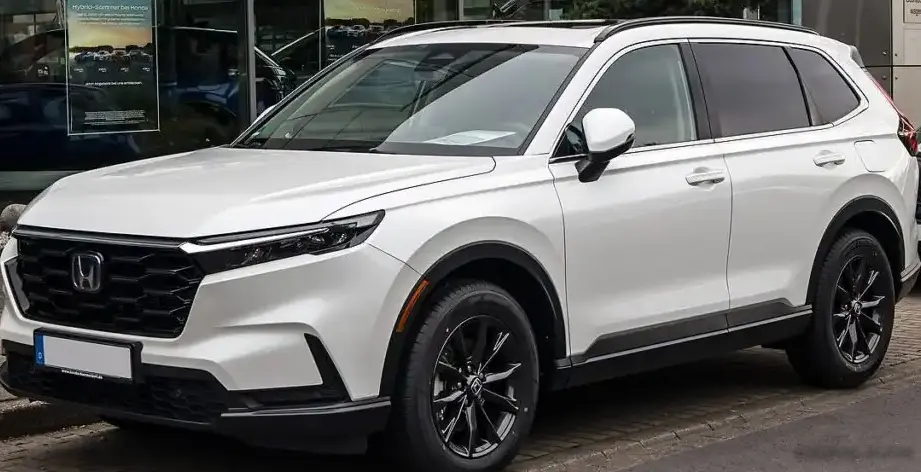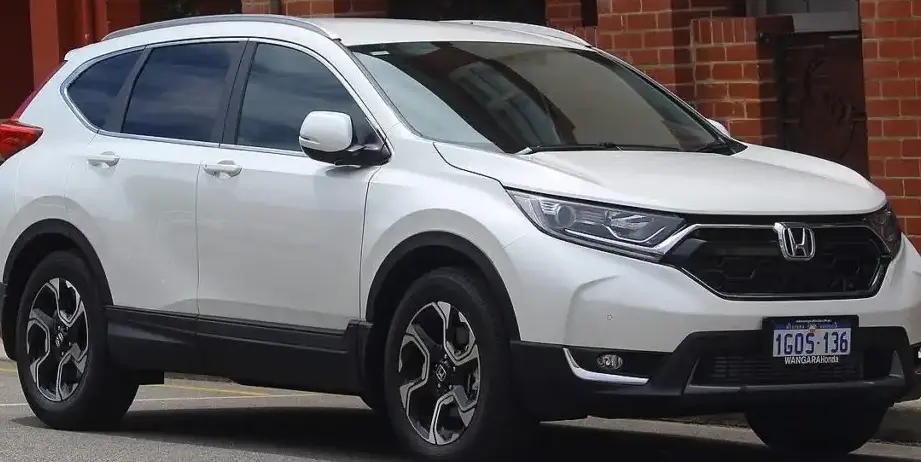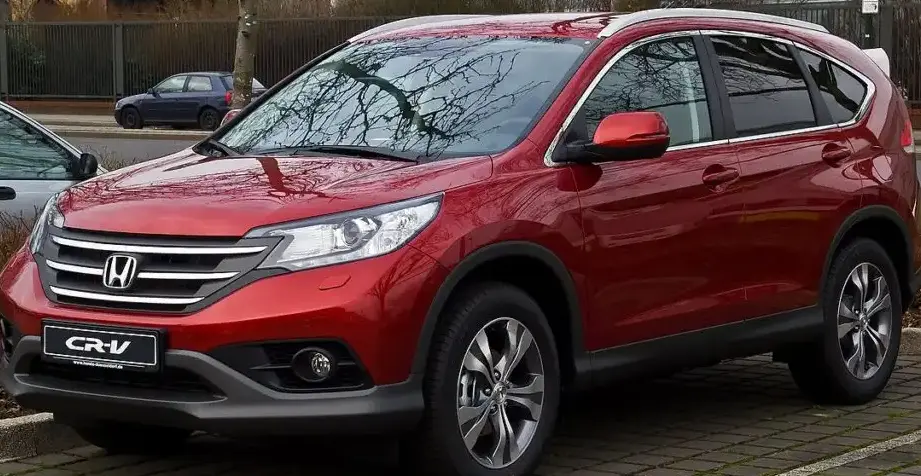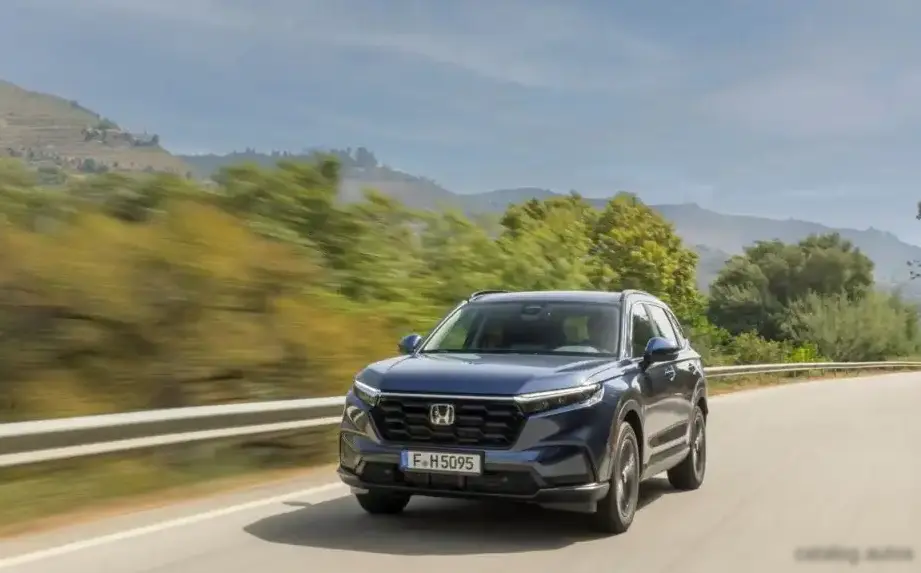
The Honda CR-V VI 2.0 i-MMD (184 Hp) e:HEV e-CVT, launched in September 2023, represents the latest iteration of Honda’s popular compact SUV. This variant is a key component of the sixth-generation CR-V (RW/RT), positioned as a technologically advanced and fuel-efficient option within the lineup. It utilizes Honda’s innovative e:HEV full hybrid system, aiming to deliver a balance of performance and economy. The CR-V continues to be a globally significant model for Honda, particularly strong in North American and Asian markets, where family-oriented SUVs are in high demand. This specific trim level targets buyers seeking a refined driving experience with reduced emissions.
Technical Specifications
| Brand | Honda |
| Model | CR-V |
| Generation | CR-V VI |
| Type (Engine) | 2.0 i-MMD (184 Hp) e:HEV e-CVT |
| Start of production | September, 2023 |
| Powertrain Architecture | FHEV (Full Hybrid Electric Vehicle) |
| Body type | SUV |
| Seats | 5 |
| Doors | 5 |
| Fuel consumption (combined) | 5.9 l/100 km (39.9 US mpg, 47.9 UK mpg, 16.9 km/l) |
| CO2 emissions | 134 g/km |
| Fuel Type | Petrol (Gasoline) |
| Acceleration 0 – 100 km/h | 9 sec |
| Acceleration 0 – 62 mph | 9 sec |
| Acceleration 0 – 60 mph | 8.6 sec |
| Maximum speed | 194 km/h (120.55 mph) |
| Emission standard | Euro 6d |
| Weight-to-power ratio | 9.5 kg/Hp, 105.1 Hp/tonne |
| Weight-to-torque ratio | 9.3 kg/Nm, 108 Nm/tonne |
| Battery technology | Lithium-ion (Li-Ion) |
| Battery location | Under the rear seats |
| Electric motor power | 184 Hp |
| Electric motor Torque | 335 Nm (247.08 lb.-ft.) |
| Electric motor location | Integrated into the transmission |
| System power | 184 Hp |
| Engine Power | 148 Hp @ 6100 rpm |
| Engine Torque | 189 Nm @ 4500 rpm (139.4 lb.-ft. @ 4500 rpm) |
| Engine layout | Front, Transverse |
| Engine Model/Code | LFB51 |
| Engine displacement | 1993 cm3 (121.62 cu. in.) |
| Number of cylinders | 4 |
| Engine configuration | Inline |
| Cylinder Bore | 81 mm (3.19 in.) |
| Piston Stroke | 96.7 mm (3.81 in.) |
| Compression ratio | 13.9:1 |
| Number of valves per cylinder | 4 |
| Fuel injection system | Direct injection |
| Engine aspiration | Naturally aspirated engine |
| Valvetrain | DOHC, Dual-VTC |
| Kerb Weight | 1750 kg (3858.09 lbs.) |
| Max. weight | 2260 kg (4982.45 lbs.) |
| Max load | 510 kg (1124.36 lbs.) |
| Trunk (boot) space – minimum | 587 l (20.73 cu. ft.) |
| Trunk (boot) space – maximum | 1642 l (57.99 cu. ft.) |
| Fuel tank capacity | 57 l (15.06 US gal | 12.54 UK gal) |
| Max. roof load | 83 kg (182.98 lbs.) |
| Permitted trailer load with brakes (12%) | 750 kg (1653.47 lbs.) |
| Permitted trailer load without brakes | 600 kg (1322.77 lbs.) |
| Permitted towbar download | 75 kg (165.35 lbs.) |
| Length | 4706 mm (185.28 in.) |
| Width | 1866 mm (73.46 in.) |
| Width with mirrors folded | 1942 mm (76.46 in.) |
| Width including mirrors | 2152 mm (84.72 in.) |
| Height | 1674 mm (65.91 in.) |
| Wheelbase | 2701 mm (106.34 in.) |
| Front track | 1613 mm (63.5 in.) |
| Rear (Back) track | 1640 mm (64.57 in.) |
| Ride height (ground clearance) | 184 mm (7.24 in.) |
| Minimum turning circle | 11.4 m (37.4 ft.) |
| Drivetrain Architecture | Front wheel drive. FHEV. ICE and electric motor drive front wheels. |
| Number of gears and type of gearbox | automatic transmission e-CVT |
| Front suspension | Independent type McPherson |
| Rear suspension | Independent multi-link suspension |
| Front brakes | Ventilated discs |
| Rear brakes | Disc |
| Assisting systems | ABS (Anti-lock braking system) |
| Steering type | Steering rack and pinion |
| Power steering | Electric Steering |
| Tires size | 235/60 R18 |
| Wheel rims size | 18 |
INTRODUCTION
The Honda CR-V VI 2.0 i-MMD e:HEV e-CVT, introduced in 2023, is a significant evolution of Honda’s best-selling SUV. Built on the global Honda CR-V platform (RW/RT), this variant focuses on hybrid efficiency and a smooth driving experience. The “i-MMD” designation stands for Intelligent Multi-Mode Drive, referring to Honda’s sophisticated hybrid system. This model is positioned as a mainstream offering, appealing to families and individuals seeking a practical, reliable, and fuel-conscious vehicle. It represents Honda’s commitment to electrification and reducing its environmental impact. The CR-V has long been a competitor to vehicles like the Toyota RAV4, Nissan Rogue, and Mazda CX-5, and this hybrid version aims to further solidify its position in the market.
Powertrain & Engine Architecture
At the heart of the CR-V 2.0 i-MMD e:HEV is Honda’s LFB51 2.0-liter inline-four cylinder engine. This naturally aspirated engine produces 148 horsepower at 6100 rpm and 189 lb-ft of torque at 4500 rpm. It features direct injection and Honda’s Dual-VTC (Variable Timing Control) system for both intake and exhaust valves, optimizing efficiency and performance. The engine is paired with Honda’s e-CVT (electronic Continuously Variable Transmission), which is not a traditional CVT but rather a power-split device. This system utilizes two electric motors – a generator motor and a propulsion motor – working in conjunction with the engine. The system intelligently switches between electric, hybrid, and engine power modes, optimizing for efficiency or performance as needed. The lithium-ion battery, located under the rear seats, provides the electrical energy for the motors. The e-CVT allows for seamless transitions between power sources, contributing to a smooth and refined driving experience.
Driving Characteristics
The 2.0 i-MMD e:HEV delivers a surprisingly refined driving experience. The e-CVT provides smooth, linear acceleration, and the hybrid system effectively masks the engine’s operation, minimizing noise and vibration. While not a performance-oriented trim, the combined system output of 184 horsepower provides adequate power for everyday driving and highway merging. The 0-60 mph time of around 8.6 seconds is respectable for this class of vehicle. Compared to a CR-V with a traditional gasoline engine, the hybrid model offers quicker initial acceleration due to the instant torque from the electric motor. Compared to higher-output turbocharged CR-V variants, this model prioritizes fuel efficiency over outright speed. The e-CVT’s programming emphasizes economy, resulting in a slightly less responsive feel than a conventional automatic transmission, particularly when demanding quick bursts of acceleration.
Equipment & Trim Levels
The CR-V 2.0 i-MMD e:HEV typically comes well-equipped as standard. Common features include Honda Sensing suite of safety and driver-assistance technologies (including adaptive cruise control, lane keeping assist, and automatic emergency braking), a touchscreen infotainment system with Apple CarPlay and Android Auto compatibility, automatic climate control, and LED headlights. Interior upholstery is typically cloth, with available upgrades to leather. Higher trim levels may add features such as a power liftgate, a panoramic sunroof, heated and ventilated front seats, and a premium audio system. The specific standard and optional equipment can vary depending on the market and package selections.
Chassis & Braking
The CR-V VI utilizes an independent McPherson strut suspension in the front and an independent multi-link suspension in the rear, providing a comfortable and controlled ride. The suspension is tuned to balance ride comfort with handling stability. Braking duties are handled by ventilated discs at the front and solid discs at the rear. The vehicle is equipped with ABS (Anti-lock Braking System), Electronic Brake-force Distribution (EBD), and Brake Assist. The hybrid system incorporates regenerative braking, which helps to recapture energy during deceleration and improve fuel efficiency. The CR-V’s chassis is designed to accommodate the added weight of the hybrid components without compromising handling or stability.
Market Reception & Comparison
The CR-V 2.0 i-MMD e:HEV has been generally well-received by automotive critics. Reviewers praise its fuel efficiency, smooth ride, and refined driving experience. The hybrid system’s seamless operation and quiet cabin are frequently highlighted as strengths. Compared to the gasoline-only CR-V models, the hybrid version offers significantly improved fuel economy, making it an attractive option for environmentally conscious buyers. Compared to other hybrid SUVs in its class, the CR-V offers a competitive combination of price, features, and reliability. Some critics note that the e-CVT can feel less engaging than a traditional automatic transmission, and the overall performance is not as sporty as some competitors.
Legacy
Honda’s hybrid technology has a proven track record of reliability, and the 2.0 i-MMD e:HEV powertrain is expected to be durable and long-lasting. The e-CVT, while complex, has demonstrated good reliability in other Honda hybrid models. The CR-V’s reputation for reliability and resale value should ensure that this hybrid variant remains a desirable option in the used car market for years to come. As fuel prices continue to rise and environmental concerns grow, the demand for fuel-efficient hybrid SUVs like the CR-V 2.0 i-MMD e:HEV is likely to increase, solidifying its position as a key model in Honda’s lineup.