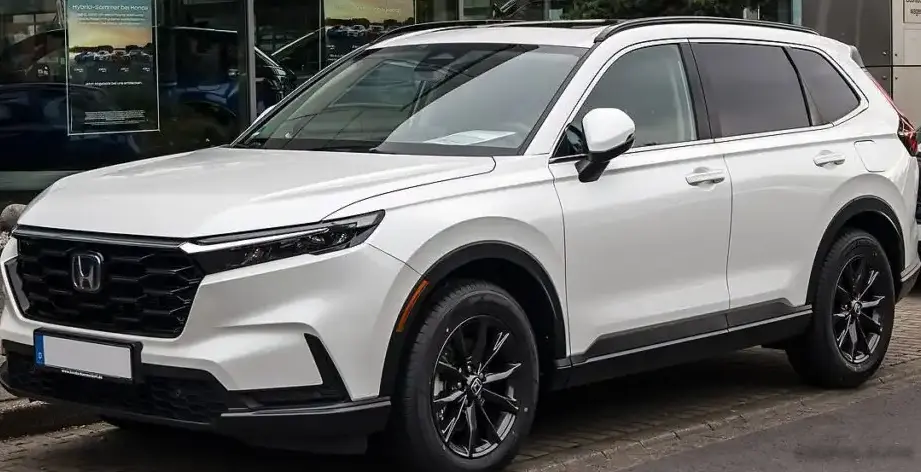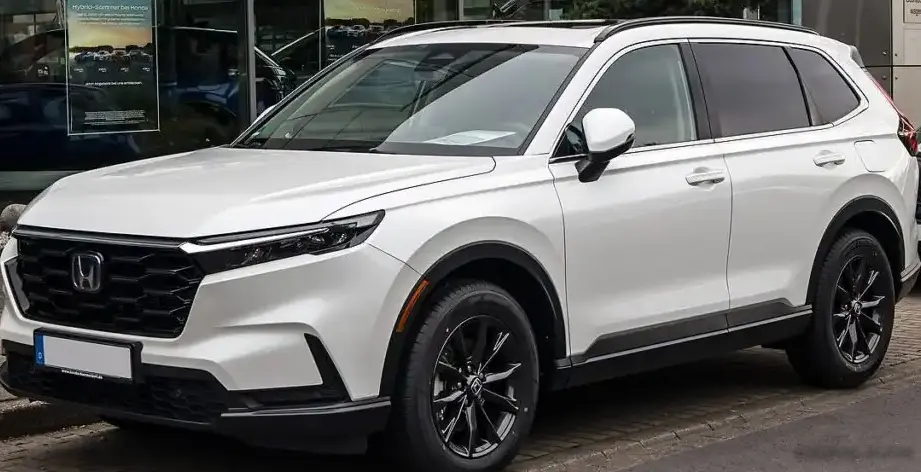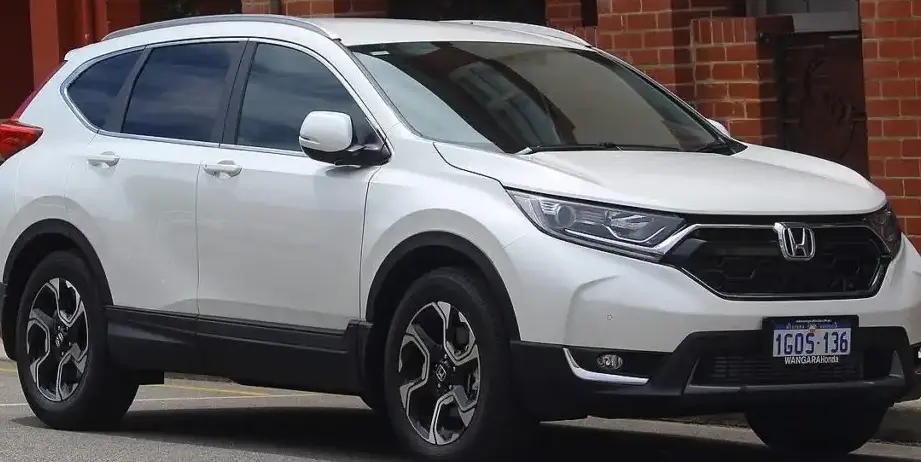
The Honda CR-V VI 2.0i Hybrid e-CVT, introduced in 2022, represents the sixth generation of Honda’s popular compact SUV. This variant is a key component of Honda’s strategy to offer a more fuel-efficient and technologically advanced CR-V to the North American and global markets. Positioned as a mid-range offering within the CR-V VI lineup, it balances performance with economy, appealing to buyers seeking a practical and modern family vehicle. The CR-V VI utilizes an updated version of Honda’s global platform, offering improved space, safety features, and driving dynamics compared to its predecessor.
Technical Specifications
| Brand | Honda |
| Model | CR-V |
| Generation | CR-V VI |
| Type (Engine) | 2.0i (204 Hp) Hybrid e-CVT |
| Start of production | 2022 |
| Powertrain Architecture | FHEV (Full Hybrid Electric Vehicle) |
| Body type | SUV |
| Seats | 5 |
| Doors | 5 |
| Fuel consumption (urban) | 5.5 l/100 km (42.8 US mpg, 51.4 UK mpg, 18.2 km/l) |
| Fuel consumption (extra urban) | 6.5 l/100 km (36.2 US mpg, 43.5 UK mpg, 15.4 km/l) |
| Fuel consumption (combined) | 5.9 l/100 km (39.9 US mpg, 47.9 UK mpg, 16.9 km/l) |
| Fuel Type | Petrol (Gasoline) |
| Emission standard | LEV3-SULEV30 |
| Weight-to-power ratio | 8.3 kg/Hp, 119.9 Hp/tonne |
| Weight-to-torque ratio | 9.1 kg/Nm, 109.9 Nm/tonne |
| Battery technology | Lithium-ion (Li-Ion) |
| Battery location | Under the rear seats |
| Electric motor power | 181 Hp @ 5000-8000 rpm (335 Nm @ 0-2000 rpm / 247.08 lb.-ft. @ 0-2000 rpm) |
| Electric motor location | Integrated into the transmission |
| System power | 204 Hp |
| Internal combustion engine power | 145 Hp @ 6100 rpm (187 Nm @ 4500 rpm / 137.92 lb.-ft. @ 4500 rpm) |
| Power per litre | 72.8 Hp/l |
| Maximum engine speed | 6100 rpm |
| Engine layout | Front, Transverse |
| Engine displacement | 1993 cm3 (121.62 cu. in.) |
| Number of cylinders | 4 |
| Engine configuration | Inline |
| Cylinder Bore | 81 mm (3.19 in.) |
| Piston Stroke | 96.7 mm (3.81 in.) |
| Compression ratio | 13.9:1 |
| Number of valves per cylinder | 4 |
| Fuel injection system | Direct injection |
| Engine aspiration | Naturally aspirated engine |
| Valvetrain | DOHC |
| Engine oil capacity | 4 l (4.23 US qt | 3.52 UK qt) |
| Coolant capacity | 5.75 l (6.08 US qt | 5.06 UK qt) |
| Kerb Weight | 1702 kg (3752.27 lbs.) |
| Trunk (boot) space – minimum | 1113 l (39.31 cu. ft.) |
| Trunk (boot) space – maximum | 2166 l (76.49 cu. ft.) |
| Fuel tank capacity | 53 l (14 US gal | 11.66 UK gal) |
| Permitted trailer load with brakes (12%) | 454 kg (1000.9 lbs.) |
| Length | 4694 mm (184.8 in.) |
| Width | 1867 mm (73.5 in.) |
| Height | 1681 mm (66.18 in.) |
| Wheelbase | 2700 mm (106.3 in.) |
| Front track | 1610 mm (63.39 in.) |
| Rear track | 1628 mm (64.09 in.) |
| Ride height (ground clearance) | 198 mm (7.8 in.) |
| Minimum turning circle | 11.4 m (37.4 ft.) |
| Front suspension | Independent type McPherson |
| Rear suspension | Independent multi-link suspension |
| Front brakes | Ventilated discs, 12.3 mm |
| Rear brakes | Disc, 12.2 mm |
| Tires size | 235/60 R18 103H; 235/55 R19 101H |
| Wheel rims size | 18; 19 |
Powertrain & Engine Architecture
The 2022 Honda CR-V VI 2.0i Hybrid utilizes Honda’s two-motor hybrid system. The core of the powertrain is a 1.993-liter (121.62 cubic inches) inline-four cylinder engine, producing 145 horsepower at 6100 rpm and 137.92 lb-ft of torque at 4500 rpm. This engine employs direct injection and a high 13.9:1 compression ratio for improved efficiency. The engine is paired with a powerful electric motor delivering 181 horsepower and 247.08 lb-ft of torque. The combined system output is 204 horsepower. Unlike traditional hybrids with a planetary gearset, Honda’s system uses an e-CVT (electronic continuously variable transmission) which is essentially a power-split device. This allows for seamless transitions between electric, gasoline, and combined power, optimizing fuel economy and driving experience. The lithium-ion battery pack is located under the rear seats, minimizing impact on cargo space.
Driving Characteristics
The 2.0i Hybrid e-CVT offers a refined and comfortable driving experience. The e-CVT provides smooth, stepless acceleration, and the electric motor provides instant torque, making for responsive performance in urban driving conditions. While not as overtly sporty as some competitors, the combined 204 horsepower provides adequate power for highway merging and passing. Compared to the non-hybrid CR-V variants, the hybrid model prioritizes fuel efficiency over outright acceleration. The e-CVT is programmed to prioritize efficiency, which can sometimes result in the engine droning under hard acceleration. The hybrid system allows for short periods of all-electric driving, particularly at lower speeds, further enhancing fuel economy.
Equipment & Trim Levels
The 2.0i Hybrid e-CVT trim typically includes standard features such as Honda Sensing suite of safety and driver-assistance technologies (including adaptive cruise control, lane keeping assist, and automatic emergency braking), a 7-inch touchscreen infotainment system with Apple CarPlay and Android Auto compatibility, LED headlights, and automatic climate control. Higher trim levels add features like a larger touchscreen, leather upholstery, a power liftgate, and a premium audio system. Interior upholstery is typically cloth on the base trims, with leather options available on higher grades. Dashboard configuration is modern and functional, with a focus on ease of use.
Chassis & Braking
The CR-V VI utilizes a MacPherson strut front suspension and a multi-link rear suspension, providing a comfortable ride and predictable handling. The hybrid model’s added weight due to the battery pack and electric motor necessitates slightly stiffer spring rates compared to the standard CR-V. Braking duties are handled by ventilated discs at the front and solid discs at the rear. The hybrid system incorporates regenerative braking, which helps to recapture energy during deceleration and further improve fuel efficiency. Anti-lock brakes (ABS) and electronic stability control are standard safety features.
Market Reception & Comparison
The CR-V VI 2.0i Hybrid e-CVT has been well-received by critics and consumers alike. It is praised for its fuel efficiency, comfortable ride, and spacious interior. Compared to the standard 1.5-liter turbocharged CR-V, the hybrid model offers superior fuel economy, particularly in city driving. However, the hybrid variant typically carries a higher price tag. Compared to competitors like the Toyota RAV4 Hybrid and the Hyundai Tucson Hybrid, the CR-V offers a balanced combination of features, performance, and value. Some reviewers have noted the e-CVT can feel less engaging than traditional automatic transmissions.
Legacy
Honda’s hybrid technology has a strong reputation for reliability, and the CR-V VI 2.0i Hybrid is expected to follow suit. The e-CVT transmission, while complex, has proven to be durable in other Honda hybrid models. The long-term reliability of the lithium-ion battery pack is a key consideration, but Honda offers a comprehensive warranty on the hybrid components. As the demand for fuel-efficient vehicles continues to grow, the CR-V VI 2.0i Hybrid is likely to remain a popular choice in the used car market, offering a compelling blend of practicality, efficiency, and Honda’s renowned build quality.