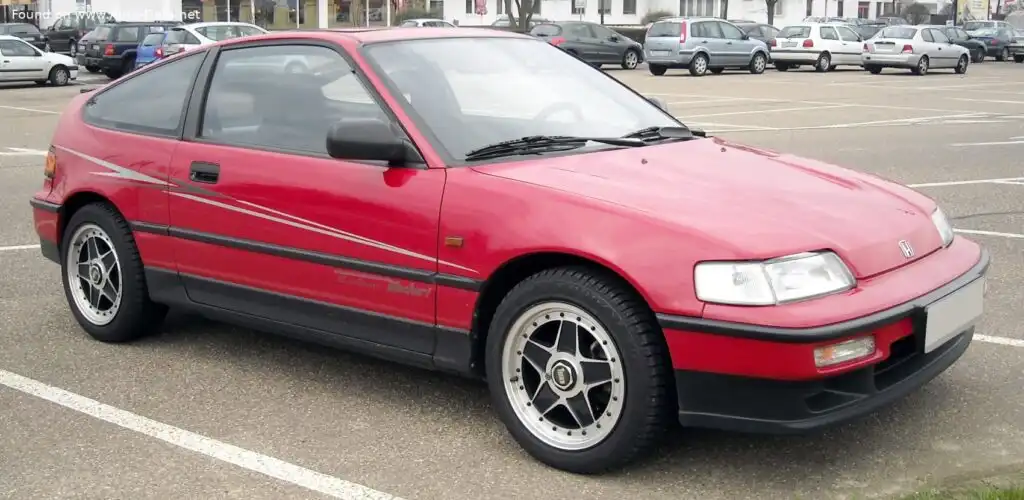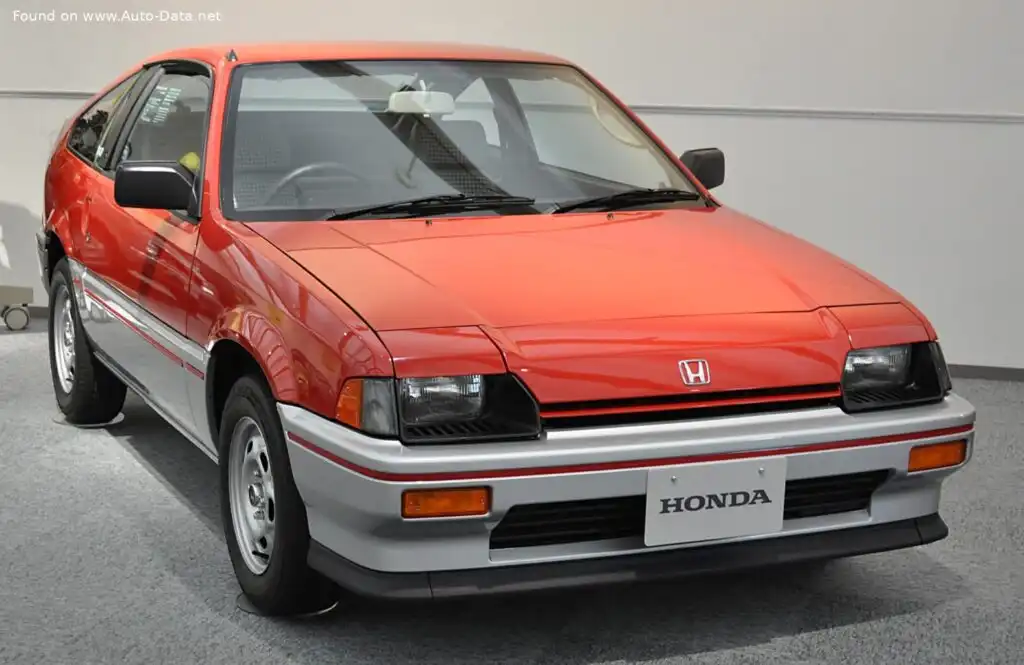
The Honda CRX first generation, internally designated as the AF and AS, represented Honda’s foray into the affordable, sporty compact car market. Produced from 1983 to 1987 (though model years often overlap), the CRX – standing for “Civic Renaissance X” – quickly gained popularity for its lightweight design, fuel efficiency, and nimble handling. The 1.5 i (AF) variant, producing 101 horsepower, was a key component of the CRX lineup, positioned as a step up from the base 1.3L model, offering a balance of performance and economy. This model played a significant role in establishing the CRX’s reputation as a fun-to-drive, reliable vehicle, particularly in the North American market where it found a dedicated following.
Technical Specifications
| Brand | Honda |
| Model | CRX |
| Generation | CRX I (AF, AS) |
| Type (Engine) | 1.5 i (AF) (101 Hp) |
| Start of Production | 1983 |
| End of Production | 1986 |
| Powertrain Architecture | Internal Combustion Engine |
| Body Type | Liftback |
| Fuel Type | Petrol (Gasoline) |
| Power | 101 Hp |
| Engine Aspiration | Naturally Aspirated |
Powertrain & Engine Architecture
The 1.5 i CRX utilized Honda’s 1.5-liter, four-cylinder engine, specifically the D15A engine code. This engine was a single overhead cam (SOHC) design with two valves per cylinder. It featured Honda’s Programmed Fuel Injection (PGM-FI) system, a relatively advanced electronic fuel injection system for its time, contributing to improved fuel efficiency and reduced emissions. The D15A engine produced 101 horsepower at 6000 rpm and 90 lb-ft of torque at 4500 rpm. The engine block was constructed from cast iron, while the cylinder head was aluminum, helping to reduce weight. The 1.5 i was typically paired with either a five-speed manual transmission or a four-speed automatic transmission. The automatic transmission, while offering convenience, was a simpler design compared to the manual, featuring traditional hydraulic control rather than electronic control found in later automatics. The transmission’s gear ratios were geared towards fuel economy, with a relatively tall final drive.
Driving Characteristics
The 1.5 i CRX, particularly with the automatic transmission, offered a comfortable and economical driving experience. While not a performance powerhouse, the engine provided adequate power for everyday driving. Acceleration from 0 to 60 mph took approximately 11-12 seconds, which was competitive for its class in the mid-1980s. The automatic transmission, while smooth, did detract somewhat from the CRX’s sporty character. Upshifts were relatively slow, and the transmission didn’t offer the driver the same level of control as the manual gearbox. The gear ratios were spaced to prioritize fuel efficiency, meaning the engine often felt strained during quick acceleration or when climbing hills. Compared to the five-speed manual version, the automatic CRX felt noticeably less responsive. The manual transmission allowed the driver to keep the engine in its optimal power band, resulting in quicker acceleration and a more engaging driving experience. However, the automatic was favored by drivers seeking a more relaxed and convenient driving experience.
Equipment & Trim Levels
The 1.5 i CRX typically came with a fairly basic level of standard equipment. Interior features included cloth upholstery, a basic instrument cluster, and a steering wheel. Air conditioning was often an optional extra, as were power windows and a stereo system. The interior design was functional and minimalist, reflecting the CRX’s focus on affordability and driving enjoyment. The dashboard layout was straightforward, with easy-to-read gauges. Higher trim levels, though not significantly different in terms of mechanical components, might have included upgraded upholstery, a more comprehensive instrument cluster, and additional convenience features. The CRX was available in a variety of exterior colors, and the liftback design provided a surprisingly spacious cargo area for a car of its size.
Chassis & Braking
The CRX’s chassis was a key element of its appeal. It featured a lightweight unibody construction, contributing to its nimble handling. The front suspension utilized MacPherson struts, while the rear suspension employed a torsion beam setup. This suspension configuration provided a good balance of ride comfort and handling precision. The 1.5 i CRX typically came equipped with drum brakes on the rear wheels and disc brakes on the front. The braking system was adequate for the car’s weight and performance, but it lacked the stopping power of more advanced braking systems found on higher-performance vehicles. Stabilizer bars were often included as standard equipment, helping to reduce body roll during cornering. The relatively light weight of the CRX meant that the braking system was generally sufficient for most driving situations.
Market Reception & Comparison
The 1.5 i CRX was generally well-received by automotive critics. It was praised for its fuel efficiency, handling, and affordability. However, some critics noted that the engine lacked significant power, particularly when paired with the automatic transmission. Compared to other cars in its class, such as the Toyota Corolla and Nissan Sentra, the CRX offered a more sporty driving experience. The 1.5 i CRX was positioned as a mid-range trim level, offering a step up in performance from the base 1.3L model but falling short of the more powerful 1.6L Si variant. The 1.6L Si, with its higher horsepower output and sport-tuned suspension, was aimed at enthusiasts seeking a more performance-oriented driving experience. The 1.5 i CRX, on the other hand, appealed to buyers who prioritized fuel economy and practicality. Fuel economy figures for the 1.5 i CRX were typically in the range of 35-40 mpg in combined driving, making it one of the most fuel-efficient cars of its time.
Legacy
The first-generation Honda CRX, including the 1.5 i variant, has become a popular classic car among enthusiasts. The D15A engine is known for its reliability and durability, and many CRXs are still on the road today. However, like any older vehicle, they are susceptible to age-related issues such as rust and wear and tear on rubber components. The automatic transmission, while reliable, may require servicing or rebuilding after many years of use. In the used car market, the 1.5 i CRX typically commands a lower price than the more desirable 1.6L Si model. However, well-maintained examples are becoming increasingly sought after by collectors and enthusiasts who appreciate the CRX’s unique blend of style, fuel efficiency, and driving enjoyment. The CRX’s success paved the way for future generations of sporty Honda compact cars, and it remains a beloved icon of the 1980s automotive landscape.