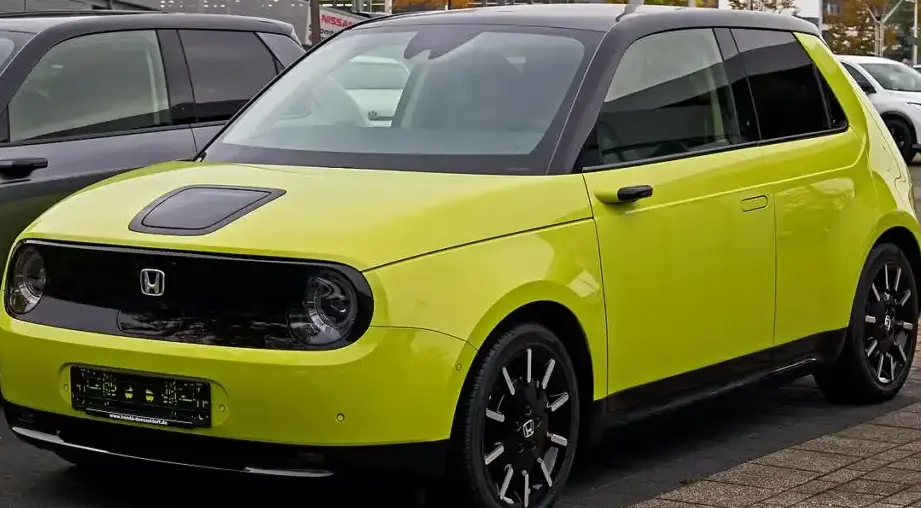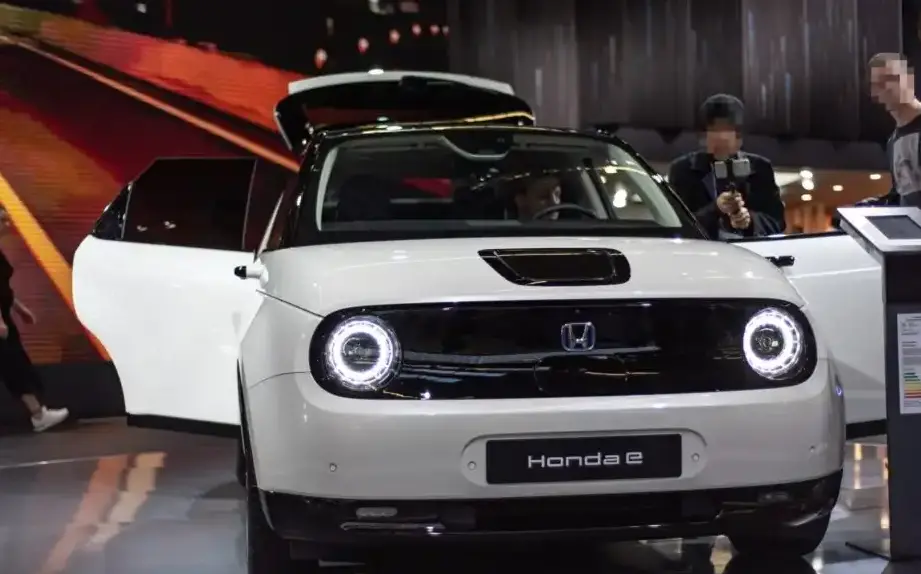
The Honda e, launched in 2019, represents Honda’s first all-electric production vehicle, initially targeted primarily at the European and Japanese markets. This compact, five-door hatchback aimed to blend retro-futuristic styling with modern electric vehicle technology. The 35.5 kWh variant, producing 154 horsepower, served as the standard powertrain option for the model, positioning it as a city-focused EV emphasizing efficiency and maneuverability over outright performance. It’s a significant departure from Honda’s traditional internal combustion engine lineup, signaling a commitment to electrification.
Technical Specifications
| Brand | Honda |
| Model | e |
| Generation | e |
| Type (Engine) | 35.5 kWh (154 Hp) |
| Start of production | 2019 |
| Powertrain Architecture | BEV (Electric Vehicle) |
| Body type | Hatchback |
| Seats | 4 |
| Doors | 5 |
| Fuel Type | Electricity |
| Acceleration 0 – 100 km/h | 8.3 sec |
| Acceleration 0 – 62 mph | 8.3 sec |
| Acceleration 0 – 60 mph | 7.9 sec |
| Maximum speed | 145 km/h (90.1 mph) |
| Weight-to-power ratio | 9.9 kg/Hp, 100.9 Hp/tonne |
| Weight-to-torque ratio | 4.8 kg/Nm, 206.4 Nm/tonne |
| Gross battery capacity | 35.5 kWh |
| Battery voltage | 355.2 V |
| Battery technology | Lithium-ion (Li-Ion) |
| Battery location | Below the floor |
| All-electric range (WLTP) | 210-222 km (130.49 – 137.94 mi) |
| Average Energy consumption (WLTP) | 17.2-17.8 kWh/100 km (27.68 – 28.65 kWh/100 mi) |
| Average Energy consumption (MPGe) | 122 – 118 |
| Average Energy consumption (km/kWh) | 5.8 – 5.6 |
| Average Energy consumption (mi/kWh) | 3.6 – 3.5 |
| Electric motor power | 154 Hp |
| Electric motor Torque | 315 Nm (232.33 lb.-ft.) |
| Electric motor model/code | MCF51 |
| Electric motor location | Rear axle, Transverse |
| System power | 154 Hp |
| System torque | 315 Nm (232.33 lb.-ft.) |
| Kerb Weight | 1526-1543 kg (3364.25 – 3401.73 lbs.) |
| Max. weight | 1870 kg (4122.64 lbs.) |
| Max load | 327-344 kg (720.91 – 758.39 lbs.) |
| Trunk (boot) space – minimum | 171 l (6.04 cu. ft.) |
| Trunk (boot) space – maximum | 861 l (30.41 cu. ft.) |
| Length | 3894 mm (153.31 in.) |
| Width | 1752 mm (68.98 in.) |
| Height | 1512 mm (59.53 in.) |
| Wheelbase | 2538 mm (99.92 in.) |
| Front track | 1513-1523 mm (59.57 – 59.96 in.) |
| Rear (Back) track | 1506-1516 mm (59.29 – 59.69 in.) |
| Ride height (ground clearance) | 145 mm (5.71 in.) |
| Minimum turning circle (turning diameter) | 9.2 m (30.18 ft.) |
| Drivetrain Architecture | One electric motor drives the rear wheels. |
| Drive wheel | Rear wheel drive |
| Number of gears and type of gearbox | 1 gears, automatic transmission |
| Front suspension | Independent type McPherson |
| Rear suspension | McPherson |
| Assisting systems | ABS (Anti-lock braking system) |
| Steering type | Steering rack and pinion |
| Power steering | Electric Steering |
| Front wheel tires | 185/60 R16; 205/45 R17 |
| Rear wheel tires | 205/55 R16; 225/45 R17 |
| Front wheel rims | 16; 17 |
| Rear wheel rims | 16; 17 |
Powertrain & Engine Architecture
The Honda e utilizes a single electric motor, designated MCF51, driving the rear wheels. This configuration contributes to a balanced driving experience, though it differs from the front-wheel-drive layout common in many other Honda models. The motor produces 154 horsepower and 315 Nm (232.33 lb.-ft.) of torque. Power is delivered through a single-speed automatic transmission, typical of electric vehicles, prioritizing smooth and seamless acceleration. The 35.5 kWh lithium-ion battery pack is positioned under the floor, contributing to a low center of gravity and maximizing interior space. The battery operates at 355.2V. The vehicle employs a sophisticated power control unit (PCU) to manage energy flow between the battery, motor, and other vehicle systems. The charging port location varies by market, but supports both AC and DC fast charging capabilities.
Driving Characteristics
The rear-wheel-drive configuration of the Honda e 35.5 kWh provides a surprisingly engaging driving experience. While not a performance car, the instant torque delivery of the electric motor results in brisk acceleration, achieving 0-60 mph in approximately 7.9 seconds. The single-speed transmission offers linear power delivery, and the low center of gravity enhances handling and stability. Compared to potential higher-performance variants (which were never officially offered in most markets), the 35.5 kWh model prioritizes efficiency and ease of driving. The steering is precise and well-weighted, making it nimble in urban environments. Regenerative braking is adjustable, allowing drivers to customize the level of deceleration when lifting off the accelerator, further enhancing efficiency.
Equipment & Trim Levels
The Honda e 35.5 kWh was generally well-equipped, even in its base trim. Standard features typically included a dual-screen infotainment system spanning the width of the dashboard, Honda Sensing suite of safety and driver-assistance technologies (including adaptive cruise control and lane keeping assist), automatic climate control, and keyless entry. Interior upholstery was typically a combination of fabric and synthetic leather. Optional extras included premium audio systems, upgraded interior trim materials, and a variety of exterior color options. The focus was on creating a minimalist and technologically advanced interior environment.
Chassis & Braking
The Honda e features an independent McPherson strut suspension at the front and a McPherson strut rear suspension. This setup provides a comfortable ride quality while maintaining good handling characteristics. The vehicle’s relatively low weight (1526-1543 kg / 3364.25 – 3401.73 lbs.) contributes to its agility. Braking duties are handled by disc brakes at the front and drum brakes at the rear, a cost-saving measure for the base model. Anti-lock Braking System (ABS) is standard. Stabilizer bars are included to reduce body roll during cornering.
Market Reception & Comparison
The Honda e received generally positive reviews from automotive critics, who praised its innovative design, engaging driving dynamics, and advanced technology. However, its limited range (210-222 km / 130.49 – 137.94 mi) was a common criticism, particularly compared to some of its competitors. Fuel economy, expressed as energy consumption, ranged from 17.2-17.8 kWh/100 km (27.68 – 28.65 kWh/100 mi). Compared to other EVs in its price range, the Honda e offered a unique blend of style and driving enjoyment, but its practicality was somewhat limited by its smaller battery capacity. It was often compared to the Fiat 500e and Mini Electric, both of which also prioritize city driving and style.
Legacy
The Honda e, while not a massive sales success, served as an important stepping stone for Honda in the electric vehicle market. It demonstrated Honda’s commitment to innovation and its willingness to explore new design and engineering approaches. The powertrain, while not without its limitations, has proven to be relatively reliable in early reports. On the used car market, the Honda e holds its value reasonably well, appealing to buyers seeking a stylish and technologically advanced city car. The lessons learned from the development of the Honda e are expected to influence Honda’s future EV offerings, paving the way for more mainstream electric vehicles.