
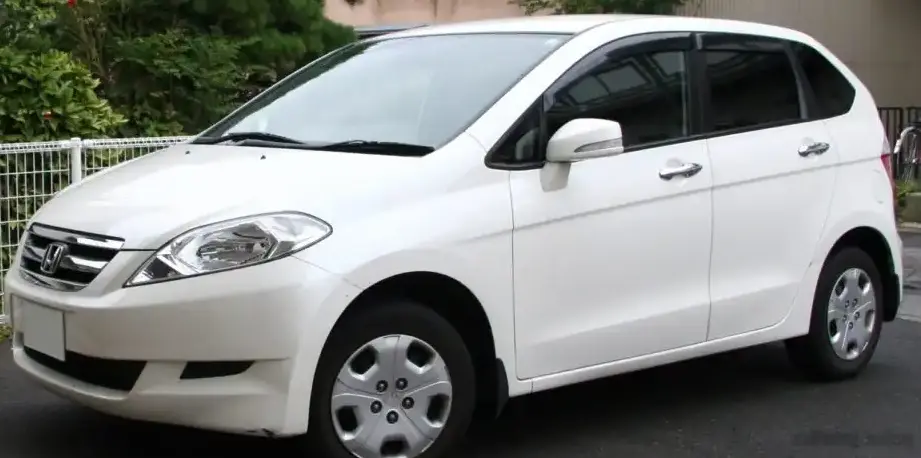
The Honda Edix 2.0, produced between 2004 and 2009, was a unique offering from Honda, primarily aimed at the Japanese domestic market (JDM) and select export regions. Positioned as a compact minivan, the Edix sought to blend the practicality of a multi-passenger vehicle with a somewhat sporty aesthetic. This particular variant, equipped with the 2.0-liter K20A engine producing 156 horsepower and paired with a five-speed automatic transmission, represented a mid-range option within the Edix lineup, offering a balance between performance and fuel efficiency. The Edix never saw official sales in the North American market, but was imported through grey market channels.
Technical Specifications
| Brand | Honda |
| Model | Edix |
| Generation | Edix |
| Type (Engine) | 2.0 (156 Hp) |
| Start of production | 2004 |
| End of production | 2009 |
| Powertrain Architecture | Internal Combustion engine |
| Body type | Minivan |
| Seats | 6 |
| Doors | 4 |
| Fuel Type | Petrol (Gasoline) |
| Weight-to-power ratio | 9.2 kg/Hp, 108.3 Hp/tonne |
| Weight-to-torque ratio | 7.5 kg/Nm, 133.3 Nm/tonne |
| Power | 156 Hp @ 6500 rpm |
| Power per litre | 78.1 Hp/l |
| Torque | 192 Nm @ 4000 rpm, 141.61 lb.-ft. @ 4000 rpm |
| Engine layout | Front, Transverse |
| Engine displacement | 1998 cm3, 121.93 cu. in. |
| Number of cylinders | 4 |
| Engine configuration | Inline |
| Cylinder Bore | 86 mm, 3.39 in. |
| Piston Stroke | 86 mm, 3.39 in. |
| Compression ratio | 9.8:1 |
| Number of valves per cylinder | 4 |
| Fuel injection system | Multi-port manifold injection |
| Engine aspiration | Naturally aspirated engine |
| Valvetrain | DOHC |
| Engine oil capacity | 4.2 l, 4.44 US qt | 3.7 UK qt |
| Coolant | 6.3 l, 6.66 US qt | 5.54 UK qt |
| Kerb Weight | 1440 kg, 3174.66 lbs |
| Fuel tank capacity | 58 l, 15.32 US gal | 12.76 UK gal |
| Length | 4285 mm, 168.7 in |
| Width | 1795 mm, 70.67 in |
| Height | 1610 mm, 63.39 in |
| Wheelbase | 2680 mm, 105.51 in |
| Front track | 1550 mm, 61.02 in |
| Rear (Back) track | 1550 mm, 61.02 in |
| Drivetrain Architecture | The Internal combustion engine (ICE) drives the front wheels of the vehicle. |
| Drive wheel | Front wheel drive |
| Number of gears and type of gearbox | 5 gears, automatic transmission |
| Front brakes | Ventilated discs |
| Rear brakes | Disc |
| Tires size | 205/55 R16 |
| Wheel rims size | 16 |
Powertrain & Engine Architecture
The heart of the Edix 2.0 is Honda’s K20A engine, a 1.998-liter inline-four cylinder powerplant. This engine is a member of the K-series family, known for its robust construction and relatively high output for its displacement. The K20A utilizes a double overhead camshaft (DOHC) valvetrain with four valves per cylinder, contributing to its efficient breathing and power delivery. Fuel is delivered via a multi-point fuel injection system, carefully metering fuel into the intake ports. The engine’s 9.8:1 compression ratio strikes a balance between performance and the ability to run on readily available gasoline grades. The five-speed automatic transmission, while not as sporty as a manual, provides smooth shifts and ease of use, catering to the target demographic who prioritized convenience over outright performance. This transmission featured Honda’s ‘Super Shift Control’ logic, aiming to optimize shift points for both fuel economy and responsiveness.
Driving Characteristics
The Edix 2.0 Automatic offered a comfortable and practical driving experience. With 156 horsepower, acceleration was adequate for everyday driving, though not particularly brisk. The automatic transmission, while smooth, did exhibit some of the typical characteristics of older automatic gearboxes – a slight delay in response and a tendency to hunt for gears on inclines. The gear ratios were tuned for fuel efficiency and relaxed cruising, rather than aggressive acceleration. Compared to the manual transmission versions of the Edix 2.0, the automatic sacrificed some responsiveness, but gained in ease of use. It also felt less energetic than the higher-spec Edix models equipped with the 2.4-liter K24A engine. The front-wheel-drive configuration provided predictable handling, but lacked the all-weather capability of an all-wheel-drive system.
Equipment & Trim Levels
The Edix 2.0 Automatic typically came equipped with a reasonable level of standard features. Interior appointments included cloth upholstery, power windows and locks, and air conditioning. Higher trim levels offered upgrades such as alloy wheels, a sunroof, and a more sophisticated audio system. The Edix’s interior was designed with practicality in mind, featuring a flexible seating arrangement with multiple configurations to accommodate passengers and cargo. The dashboard layout was functional, though somewhat dated by modern standards. Optional extras included navigation systems and upgraded sound systems.
Chassis & Braking
The Edix 2.0 utilized a MacPherson strut front suspension and a multi-link rear suspension, providing a comfortable ride quality. The suspension was tuned for everyday use, prioritizing comfort over sporty handling. The front brakes were ventilated discs, offering good stopping power, while the rear brakes were solid discs. The 205/55 R16 tires provided adequate grip in most conditions. The Edix’s chassis was designed to maximize interior space while maintaining a reasonable level of structural rigidity.
Market Reception & Comparison
The Honda Edix was generally well-received in the Japanese market for its unique styling and practical interior. However, it faced competition from other compact minivans, such as the Toyota Wish and the Nissan Serena. Critics noted the Edix’s somewhat unconventional exterior design, which appealed to some buyers but alienated others. The 2.0-liter automatic variant was praised for its fuel efficiency and ease of use, but some reviewers found it to be underpowered compared to its rivals. In terms of reliability, the K20A engine proved to be a durable and long-lasting unit, and the automatic transmission was generally reliable as well.
Legacy
The Honda Edix, while not a mainstream success in many markets, remains a distinctive and interesting vehicle. The K20A engine continues to be highly regarded by enthusiasts for its performance potential and reliability. Today, the Edix 2.0 Automatic can be found on the used car market, often at affordable prices. Its practicality, combined with Honda’s reputation for reliability, makes it a viable option for buyers seeking a unique and affordable family vehicle. While parts availability may be a concern in some regions, the K20A engine’s widespread use in other Honda models ensures that many components are readily available. The Edix represents a unique chapter in Honda’s history, showcasing the company’s willingness to experiment with new designs and concepts.
