
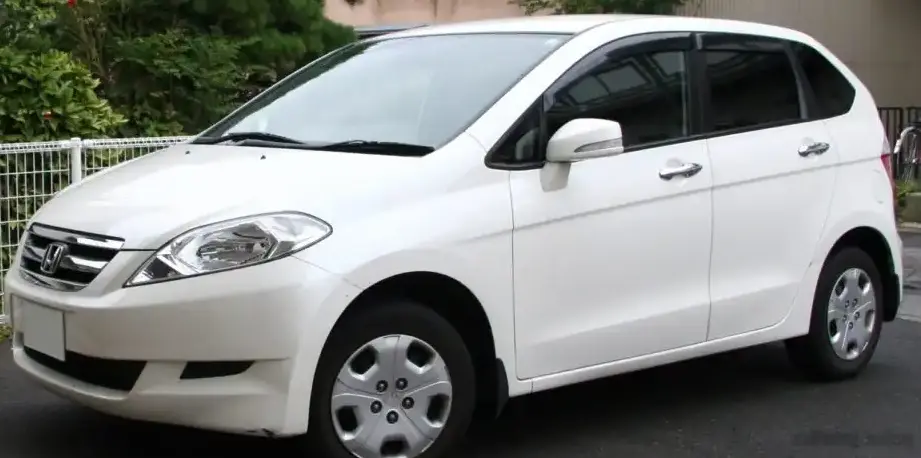
The Honda Edix 2.0 (156 Hp) 4WD, produced between 2004 and 2009, represents a unique offering in Honda’s lineup during that period. Positioned as a compact minivan, the Edix aimed to bridge the gap between traditional multi-purpose vehicles (MPVs) and smaller, more fuel-efficient family cars. Primarily sold in Japan and select export markets, including Australia and parts of Europe, the Edix distinguished itself with its distinctive styling and available all-wheel-drive system. It was built on the Honda Civic platform, sharing many components but offering a more spacious and versatile interior. This specific 2.0-liter, four-wheel-drive variant occupied a mid-range position within the Edix lineup, offering a balance of performance and practicality.
Technical Specifications
| Brand | Honda |
| Model | Edix |
| Generation | Edix |
| Type (Engine) | 2.0 (156 Hp) 4WD |
| Start of production | 2004 |
| End of production | 2009 |
| Powertrain Architecture | Internal Combustion engine |
| Body type | Minivan |
| Seats | 6 |
| Doors | 4 |
| Fuel Type | Petrol (Gasoline) |
| Weight-to-power ratio | 9.5 kg/Hp, 105.4 Hp/tonne |
| Weight-to-torque ratio | 7.7 kg/Nm, 129.7 Nm/tonne |
| Power | 156 Hp @ 6500 rpm |
| Power per litre | 78.1 Hp/l |
| Torque | 192 Nm @ 4000 rpm (141.61 lb.-ft. @ 4000 rpm) |
| Engine layout | Front, Transverse |
| Engine displacement | 1998 cm3 (121.93 cu. in.) |
| Number of cylinders | 4 |
| Engine configuration | Inline |
| Cylinder Bore | 86 mm (3.39 in.) |
| Piston Stroke | 86 mm (3.39 in.) |
| Compression ratio | 9.8:1 |
| Number of valves per cylinder | 4 |
| Fuel injection system | Multi-port manifold injection |
| Engine aspiration | Naturally aspirated engine |
| Valvetrain | DOHC |
| Engine oil capacity | 4.2 l (4.44 US qt | 3.7 UK qt) |
| Coolant | 6.3 l (6.66 US qt | 5.54 UK qt) |
| Kerb Weight | 1480 kg (3262.84 lbs) |
| Fuel tank capacity | 50 l (13.21 US gal | 11 UK gal) |
| Length | 4285 mm (168.7 in) |
| Width | 1795 mm (70.67 in) |
| Height | 1610 mm (63.39 in) |
| Wheelbase | 2680 mm (105.51 in) |
| Front track | 1550 mm (61.02 in) |
| Rear (Back) track | 1550 mm (61.02 in) |
| Drive wheel | All wheel drive (4×4) |
| Number of gears and type of gearbox | 5 gears, automatic transmission |
| Front brakes | Ventilated discs |
| Rear brakes | Disc |
| Tires size | 205/55 R16 |
| Wheel rims size | 16 |
Powertrain & Engine Architecture
The heart of the Edix 2.0 4WD is the K20A engine, a 1.998-liter inline-four cylinder powerplant. This engine is part of Honda’s renowned K-series family, known for its reliability and performance. The K20A utilizes a multi-port fuel injection system, delivering fuel directly into the intake ports, and features a double overhead camshaft (DOHC) valvetrain with four valves per cylinder. This configuration contributes to the engine’s relatively high output for its displacement. The 9.8:1 compression ratio strikes a balance between efficiency and power. Paired with this engine is a five-speed automatic transmission, designed to provide smooth and convenient shifting. This transmission was a common choice for Edix buyers prioritizing ease of use over outright performance. The automatic transmission features torque converter technology, enhancing low-speed drivability and providing a comfortable driving experience.
Driving Characteristics
The Edix 2.0 4WD offers a comfortable and capable driving experience, though it isn’t particularly sporty. The 156 horsepower and 192 Nm (141.61 lb-ft) of torque provide adequate acceleration for everyday driving situations. The automatic transmission, while smooth, does result in some power loss compared to the available manual transmission. The all-wheel-drive system enhances traction, particularly in inclement weather or on slippery surfaces, making it a practical choice for regions experiencing harsh winters or frequent rain. The gear ratios are tuned for fuel efficiency and comfortable cruising, rather than aggressive acceleration. Compared to the base 1.7-liter Edix, the 2.0-liter model offers a noticeable improvement in performance, especially when fully loaded with passengers and cargo. However, it doesn’t match the more spirited driving experience of the higher-performance Civic Si, which also utilizes a K20 engine but with significant modifications.
Equipment & Trim Levels
The Edix 2.0 4WD typically came equipped with a reasonable level of standard features. These included air conditioning, power windows and locks, and a basic audio system. Higher trim levels offered upgrades such as alloy wheels, a sunroof, and more advanced audio systems with CD changers. Interior upholstery was typically cloth, with optional leather available on some trims. The dashboard layout was functional and straightforward, prioritizing usability over aesthetic flair. Optional extras included navigation systems, rear parking sensors, and upgraded interior trim packages. The Edix was designed with family practicality in mind, offering a flexible seating arrangement with multiple configurations to accommodate varying passenger and cargo needs.
Chassis & Braking
The Edix utilizes a MacPherson strut suspension in the front and a multi-link suspension in the rear, providing a comfortable ride and decent handling characteristics. The all-wheel-drive system adds to the vehicle’s stability, particularly during cornering. Braking duties are handled by ventilated discs in the front and solid discs in the rear. Anti-lock brakes (ABS) were standard equipment, enhancing safety. The suspension tuning is geared towards comfort, rather than sporty handling, resulting in a slightly softer ride quality. Stabilizer bars are present on both the front and rear axles to reduce body roll during cornering.
Market Reception & Comparison
The Honda Edix received mixed reviews from automotive critics. While praised for its spacious interior, versatile seating, and available all-wheel-drive system, it was often criticized for its somewhat bland styling and unremarkable driving dynamics. Compared to other compact MPVs available at the time, such as the Toyota Wish or Nissan Serena, the Edix offered a more understated and practical approach. Fuel economy was generally considered average for its class. Reliability was a strong point, as expected from a Honda product, with few reported issues with the K20A engine or the automatic transmission. The 2.0-liter 4WD variant offered a good balance of performance and practicality, appealing to families seeking a versatile and reliable vehicle.
Legacy
The Honda Edix, while not a mainstream success in many markets, has developed a loyal following among owners who appreciate its practicality and reliability. The K20A engine is known for its durability and relatively low maintenance costs. In the used car market, the Edix 2.0 4WD remains a reasonably affordable option for those seeking a spacious and versatile vehicle. Parts availability is generally good, thanks to the engine’s widespread use in other Honda models. While it may not offer the latest technology or the most exciting driving experience, the Edix 2.0 4WD continues to provide a dependable and practical transportation solution for families.
