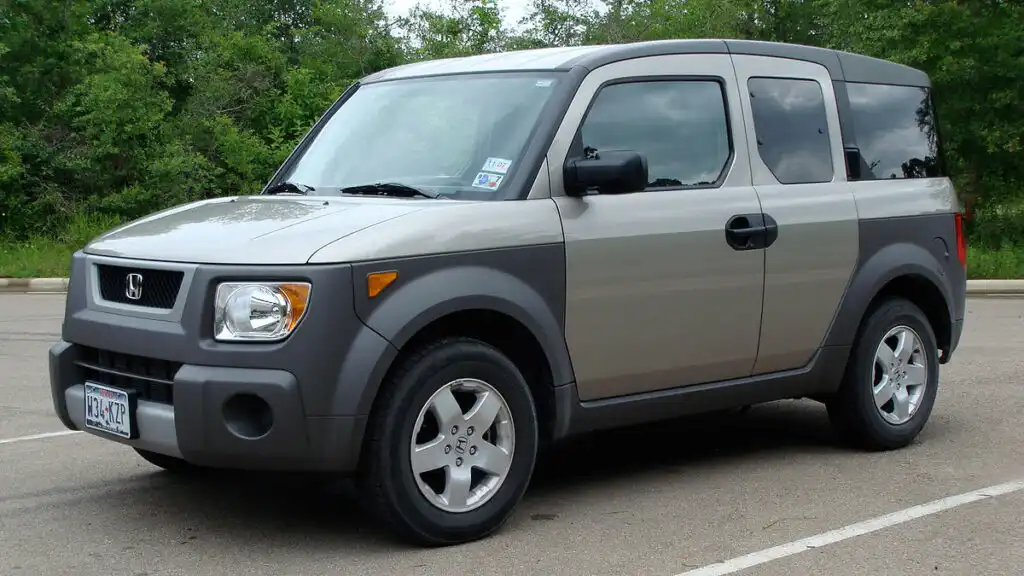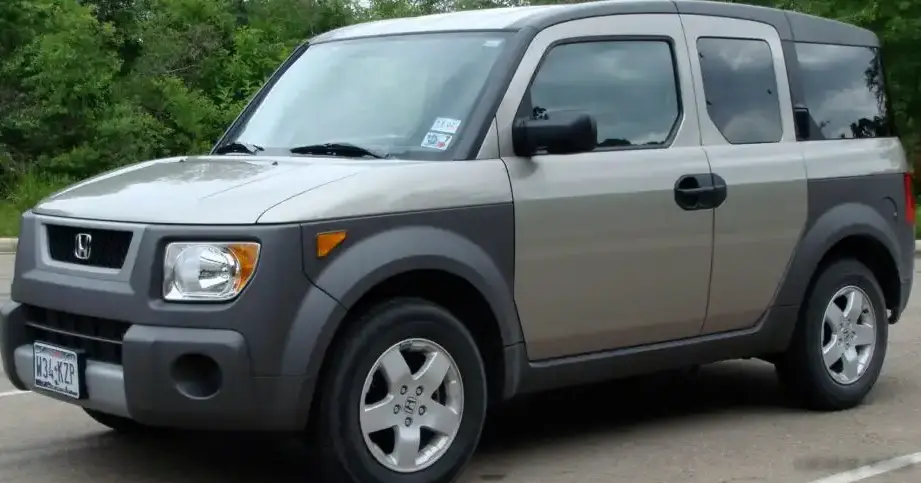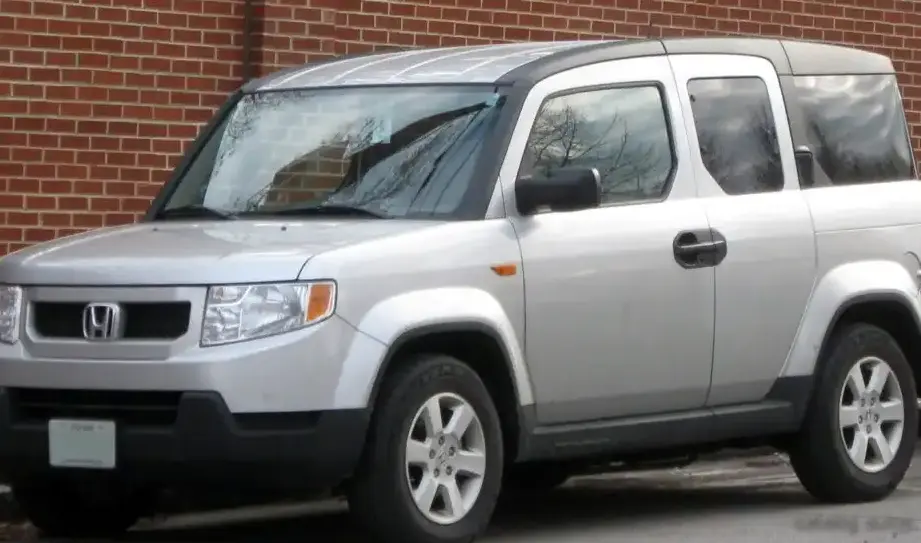
The Honda Element, particularly the facelifted version produced from 2008 to 2011, represented a unique offering in the compact SUV segment. Distinguished by its utilitarian design, spacious interior, and durable construction, the Element aimed to appeal to active lifestyle enthusiasts. The 2.4-liter (166 hp) SC trim, representing the sole engine and transmission option after the 2008 refresh, occupied the mainstream position within the Element lineup, offering a balance of practicality and affordability. It was positioned as the standard, all-around configuration, foregoing the more specialized features of potential future trims or performance upgrades. Production of the Element ceased in 2011, leaving behind a dedicated following and a reputation for longevity.
Technical Specifications
| Brand | Honda |
| Model | Element |
| Generation | Element I (facelift 2008) |
| Type (Engine) | 2.4 (166 Hp) SC |
| Start of production | 2008 |
| End of production | 2011 |
| Powertrain Architecture | Internal Combustion engine |
| Body type | SUV |
| Seats | 5 |
| Doors | 5 |
| Fuel Type | Petrol (Gasoline) |
| Power | 166 Hp @ 5800 rpm |
| Power per litre | 70.5 Hp/l |
| Torque | 218 Nm @ 4000 rpm / 160.79 lb.-ft. @ 4000 rpm |
| Engine layout | Front, Transverse |
| Engine Model/Code | K24A8 |
| Engine displacement | 2354 cm3 / 143.65 cu. in. |
| Number of cylinders | 4 |
| Engine configuration | Inline |
| Cylinder Bore | 87 mm / 3.43 in. |
| Piston Stroke | 99 mm / 3.9 in. |
| Compression ratio | 10.5:1 |
| Number of valves per cylinder | 4 |
| Fuel injection system | Multi-port manifold injection |
| Engine aspiration | Naturally aspirated engine |
| Engine oil capacity | 4.2 l / 4.44 US qt | 3.7 UK qt |
| Fuel tank capacity | 60 l / 15.85 US gal | 13.2 UK gal |
| Length | 4315 mm / 169.88 in. |
| Width | 1819 mm / 71.61 in. |
| Height | 1788 mm / 70.39 in. |
| Wheelbase | 2576 mm / 101.42 in. |
| Front track | 1577 mm / 62.09 in. |
| Rear (Back) track | 1582 mm / 62.28 in. |
| Drivetrain Architecture | The Internal combustion engine (ICE) drives the front wheels of the vehicle. |
| Drive wheel | Front wheel drive |
| Front suspension | Independent type McPherson |
| Rear suspension | Transverse stabilizer |
| Front brakes | Disc |
| Rear brakes | Disc |
| Tires size | 215/70 R16; 255/55 R18 |
| Wheel rims size | 16; 18 |
Powertrain & Engine Architecture
The heart of the 2008-2011 Honda Element was the K24A8 engine, a 2.4-liter inline-four cylinder powerplant. This engine belonged to Honda’s K-series family, known for its reliability and relatively simple design. The K24A8 featured a single overhead camshaft (SOHC) valvetrain with four valves per cylinder, and utilized multi-point fuel injection. The engine’s 166 horsepower and 218 Nm (160.79 lb-ft) of torque were delivered through a 5-speed automatic transmission. This transmission was a conventional torque-converter automatic, chosen for its smoothness and ease of use, rather than outright performance. The K24A8 was designed with a focus on durability and low-end torque, making it well-suited for the Element’s intended use as a versatile utility vehicle. The engine block was constructed from cast iron, contributing to its robustness.
Driving Characteristics
The 2.4-liter engine and 5-speed automatic transmission combination in the Element provided adequate, though not exhilarating, performance. Acceleration from 0 to 60 mph was typically in the 9-10 second range. The automatic transmission was tuned for fuel efficiency and smooth shifts, prioritizing comfort over sporty responsiveness. Compared to a hypothetical manual transmission version, the automatic resulted in a slight decrease in fuel economy and a less engaging driving experience. However, the automatic’s gear ratios were well-matched to the engine’s torque curve, providing sufficient power for everyday driving and light towing. The front-wheel-drive configuration contributed to predictable handling, but limited traction in adverse weather conditions. The Element wasn’t designed to be a performance vehicle; its strengths lay in its practicality and ease of use.
Equipment & Trim Levels
The 2008-2011 Honda Element SC (Standard Configuration) came reasonably well-equipped. Standard features included air conditioning, power windows and locks, a CD player with auxiliary input, and a rear-seat folding configuration that allowed for a variety of cargo arrangements. The interior typically featured durable, water-resistant cloth upholstery. Optional extras included an upgraded audio system, alloy wheels, and a sunroof. The Element’s interior was particularly notable for its flat-folding rear seats and removable rear floor panels, which created a large, easily cleanable cargo area. Safety features included anti-lock brakes (ABS) and front airbags.
Chassis & Braking
The Honda Element utilized a unibody construction, providing a good balance of strength and weight. The front suspension consisted of independent MacPherson struts, while the rear suspension employed a multi-link setup with a transverse stabilizer bar. This suspension configuration provided a comfortable ride, although it wasn’t particularly sporty. The Element featured disc brakes on all four wheels, providing adequate stopping power for its weight class. The braking system was not particularly sophisticated, lacking features like electronic brake-force distribution or brake assist. Tire sizes varied depending on the trim level, with 215/70 R16 tires being standard and 255/55 R18 tires available as an upgrade.
Market Reception & Comparison
The Honda Element received generally positive reviews from automotive critics, who praised its spacious interior, versatile cargo area, and durable construction. However, some critics noted its somewhat bland styling and lack of a rear-wheel-drive or all-wheel-drive option. Compared to other compact SUVs of the time, such as the Toyota RAV4 and Honda CR-V, the Element offered a more utilitarian and adventurous image. Fuel economy was average for the class, typically around 20-22 mpg in combined driving. Reliability was a strong point for the Element, with the K24A8 engine proving to be exceptionally durable. The automatic transmission, while not the most exciting, was generally reliable as well.
Legacy
The Honda Element has developed a devoted following among owners who appreciate its unique design and practicality. The K24A8 engine is known for its longevity and relatively low maintenance costs. Used Elements are generally considered to be a good value, offering a lot of space and utility for the price. While the Element is no longer in production, its influence can be seen in other Honda vehicles, such as the HR-V, which share some of its design philosophies. The Element remains a popular choice for outdoor enthusiasts, dog owners, and anyone who needs a versatile and reliable vehicle.