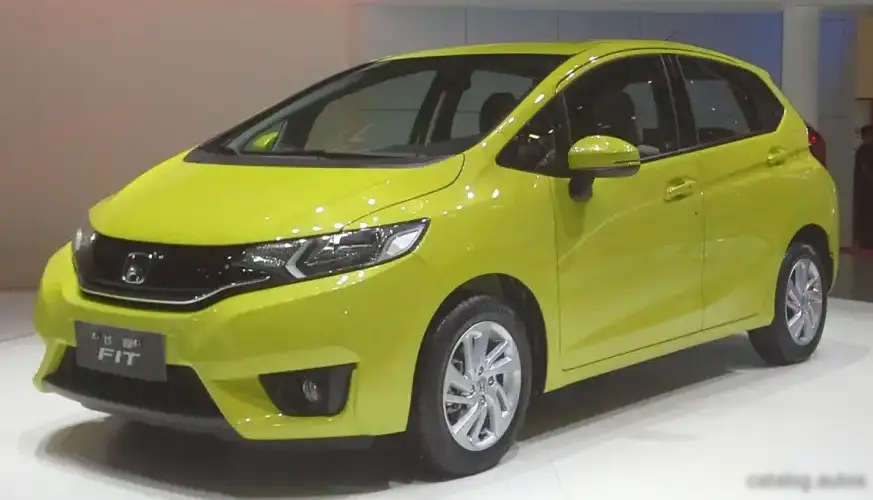
The Honda Fit, known as the Honda Jazz in many international markets, represented a significant departure for Honda when it debuted in 2001. The first generation, internally designated as the GD1/GD3 (and GD4/GD6 for the double-wishbone rear suspension variants), was a subcompact hatchback designed to maximize interior space through its innovative “Ultra Seat” system. Produced from 2001 through 2007, the Fit aimed to provide affordable, practical transportation with Honda’s reputation for reliability. The 1.3 i variant, producing 86 horsepower, served as the entry point to the Fit lineup in many European and Asian markets, offering a balance of fuel efficiency and affordability. In the United States, the Fit wasn’t initially offered, arriving in 2006 for the 2007 model year, but the 1.3L engine was not available there.
Technical Specifications
| Brand | Honda |
| Model | FIT |
| Generation | Fit I |
| Type (Engine) | 1.3 i (86 Hp) |
| Start of production | 2001 year |
| End of production | 2007 year |
| Powertrain Architecture | Internal Combustion engine |
| Body type | Hatchback |
| Seats | 5 |
| Doors | 5 |
| Fuel Type | Petrol (Gasoline) |
| Weight-to-power ratio | 11.4 kg/Hp, 87.8 Hp/tonne |
| Weight-to-torque ratio | 8.2 kg/Nm, 121.4 Nm/tonne |
| Power | 86 Hp @ 5700 rpm |
| Power per litre | 64.2 Hp/l |
| Torque | 119 Nm @ 2800 rpm (87.77 lb.-ft. @ 2800 rpm) |
| Engine layout | Front, Transverse |
| Engine Model/Code | L13A |
| Engine displacement | 1339 cm3 (81.71 cu. in.) |
| Number of cylinders | 4 |
| Engine configuration | Inline |
| Cylinder Bore | 73 mm (2.87 in.) |
| Piston Stroke | 80 mm (3.15 in.) |
| Compression ratio | 10.8:1 |
| Number of valves per cylinder | 2 |
| Fuel injection system | Multi-port manifold injection |
| Engine aspiration | Naturally aspirated engine |
| Valvetrain | OHC |
| Engine oil capacity | 3.6 l (3.8 US qt | 3.17 UK qt) |
| Coolant | 3.8 l (4.02 US qt | 3.34 UK qt) |
| Kerb Weight | 980 kg (2160.53 lbs.) |
| Max. weight | 1255 kg (2766.8 lbs.) |
| Max load | 275 kg (606.27 lbs.) |
| Fuel tank capacity | 42 l (11.1 US gal | 9.24 UK gal) |
| Length | 3830 mm (150.79 in.) |
| Width | 1675 mm (65.94 in.) |
| Height | 1525 mm (60.04 in.) |
| Wheelbase | 2450 mm (96.46 in.) |
| Front track | 1455 mm (57.28 in.) |
| Rear (Back) track | 1445 mm (56.89 in.) |
| Minimum turning circle | 9.4 m (30.84 ft.) |
| Drivetrain Architecture | The Internal combustion engine (ICE) drives the front wheels of the vehicle. |
| Drive wheel | Front wheel drive |
| Front suspension | Wishbone |
| Rear suspension | Coil spring |
| Front brakes | Ventilated discs |
| Rear brakes | Drum |
| Assisting systems | ABS (Anti-lock braking system) |
| Steering type | Steering rack and pinion |
| Power steering | Hydraulic Steering |
| Tires size | 175/65 R14 S |
Powertrain & Engine Architecture
The heart of the 1.3 i Fit is the L13A engine, a 1.3-liter inline-four cylinder gasoline engine. This engine utilizes a single overhead camshaft (SOHC) valvetrain with two valves per cylinder. Fuel delivery is managed by a multi-point fuel injection system, providing adequate, though not exceptional, fuel atomization. The L13A is a naturally aspirated engine, meaning it doesn’t employ a turbocharger or supercharger. The engine’s relatively simple design prioritized reliability and fuel economy over outright performance. The transmission paired with this engine was typically a four-speed automatic, although a five-speed manual was also available. The automatic transmission was chosen to appeal to buyers prioritizing ease of use over sporty driving dynamics.
Driving Characteristics
The 1.3 i automatic Fit offered modest performance. With 86 horsepower and 119 Nm (87.77 lb-ft) of torque, acceleration was adequate for city driving and highway merging required planning. The four-speed automatic transmission, while smooth, lacked the responsiveness of more modern transmissions. Gear ratios were optimized for fuel efficiency rather than quick acceleration. Compared to the later 1.5-liter engine options, or even the manual transmission versions of the 1.3, the automatic felt noticeably slower. However, the Fit’s lightweight construction helped mitigate the engine’s limitations, making it feel more nimble than its power figures might suggest. The steering was light and precise, contributing to a pleasant urban driving experience.
Equipment & Trim Levels
The 1.3 i variant typically represented the base trim level in many markets. Standard equipment generally included power steering, central locking, electric front windows, and an AM/FM radio. Air conditioning was often an optional extra. Interior upholstery was typically a basic cloth material. Higher trim levels, available with the larger 1.5-liter engine, added features like alloy wheels, a more sophisticated audio system, and upgraded interior trim. The focus of the 1.3 i trim was affordability and practicality, providing essential features without the added cost of luxury items.
Chassis & Braking
The first-generation Fit utilized a front-wheel-drive layout with a MacPherson strut front suspension and a torsion beam rear suspension. The base models, including the 1.3 i, typically featured drum brakes on the rear wheels, while ventilated disc brakes were used on the front. Anti-lock Braking System (ABS) was often standard, enhancing safety. The suspension tuning prioritized comfort and ride quality over sporty handling. The relatively lightweight chassis contributed to the Fit’s nimble handling characteristics, despite the basic suspension setup.
Market Reception & Comparison
The 1.3 i Fit was generally well-received as an affordable and practical city car. Critics praised its spacious interior, innovative “Ultra Seat” system, and fuel efficiency. However, the engine’s lack of power was a common criticism, particularly when paired with the automatic transmission. Compared to the 1.5-liter variants, the 1.3 i offered lower running costs but sacrificed performance. The 1.3 i appealed to buyers who prioritized fuel economy and affordability over driving excitement. Its reliability also contributed to its positive reputation.
Legacy
The first-generation Honda Fit, including the 1.3 i variant, established a strong reputation for reliability and practicality. The L13A engine, while not known for its performance, proved to be durable and relatively maintenance-free. Today, well-maintained examples of the 1.3 i Fit are still found on the used car market, often appealing to buyers seeking an affordable and economical runabout. The Fit’s innovative design and spacious interior continue to be appreciated, and it laid the foundation for the subsequent generations of the Fit/Jazz, which have become popular choices in the subcompact hatchback segment worldwide.