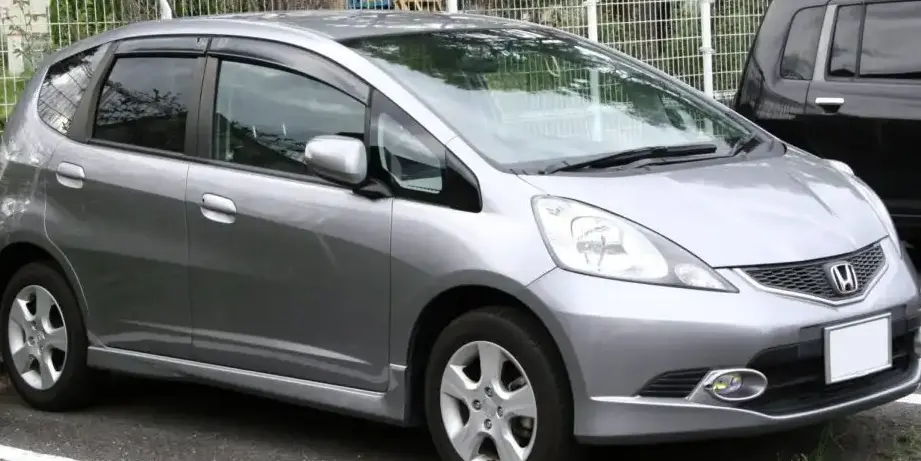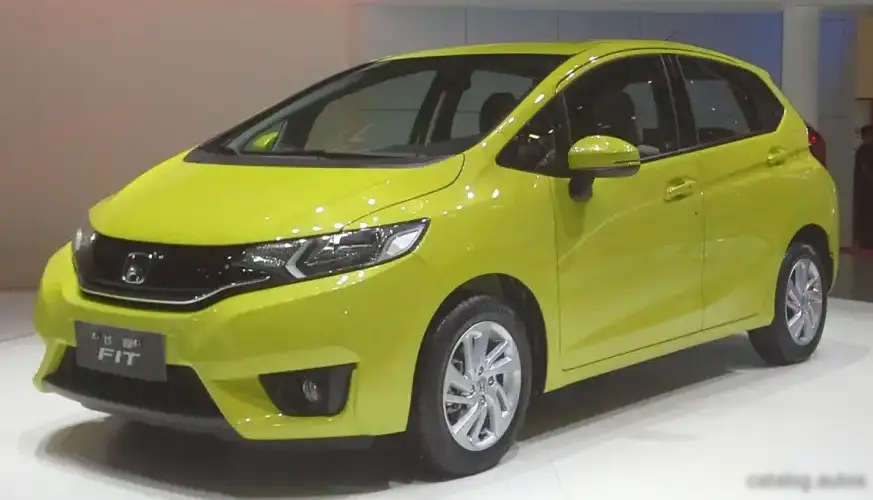
The Honda Fit, known as the Honda Jazz in many international markets, represented a significant departure for Honda when it debuted in 2001 (2003 in North America). The first generation, internally designated the GD1/GD3/GD4/GD5, was a subcompact hatchback lauded for its innovative “Ultra-Total Control” design philosophy, prioritizing interior space and versatility. Produced from 2003 to 2007 in the US market, the 1.5 i 16V variant, producing 110 horsepower, served as a core offering within the Fit lineup, positioned as a practical and fuel-efficient entry point to Honda ownership. This model played a crucial role in establishing the Fit’s reputation for maximizing space within a small footprint, appealing to a broad demographic seeking an affordable and adaptable vehicle.
Technical Specifications
| Brand | Honda |
| Model | FIT |
| Generation | Fit I |
| Type (Engine) | 1.5 i 16V (110 Hp) |
| Start of production | 2003 year |
| End of production | 2007 year |
| Powertrain Architecture | Internal Combustion engine |
| Body type | Hatchback |
| Seats | 5 |
| Doors | 5 |
| Fuel Type | Petrol (Gasoline) |
| Weight-to-power ratio | 9.2 kg/Hp, 108.9 Hp/tonne |
| Weight-to-torque ratio | 7.1 kg/Nm, 141.6 Nm/tonne |
| Power | 110 Hp @ 5800 rpm |
| Power per litre | 73.5 Hp/l |
| Torque | 143 Nm @ 4800 rpm, 105.47 lb.-ft. @ 4800 rpm |
| Engine layout | Front, Transverse |
| Engine Model/Code | L15A |
| Engine displacement | 1496 cm3, 91.29 cu. in. |
| Number of cylinders | 4 |
| Engine configuration | Inline |
| Cylinder Bore | 73 mm, 2.87 in. |
| Piston Stroke | 89.4 mm, 3.52 in. |
| Compression ratio | 10.4:1 |
| Number of valves per cylinder | 4 |
| Fuel injection system | Multi-port manifold injection |
| Engine aspiration | Naturally aspirated engine |
| Engine oil capacity | 3.6 l, 3.8 US qt | 3.17 UK qt |
| Coolant | 3.7 l, 3.91 US qt | 3.26 UK qt |
| Kerb Weight | 1010 kg, 2226.67 lbs |
| Max. weight | 1285 kg, 2832.94 lbs |
| Max load | 275 kg, 606.27 lbs |
| Trunk (boot) space – minimum | 380 l, 13.42 cu. ft. |
| Trunk (boot) space – maximum | 1323 l, 46.72 cu. ft. |
| Fuel tank capacity | 42 l, 11.1 US gal | 9.24 UK gal |
| Length | 3830 mm, 150.79 in. |
| Width | 1675 mm, 65.94 in. |
| Height | 1525 mm, 60.04 in. |
| Wheelbase | 2450 mm, 96.46 in. |
| Front track | 1455 mm, 57.28 in. |
| Rear (Back) track | 1445 mm, 56.89 in. |
| Minimum turning circle (turning diameter) | 9.4 m, 30.84 ft. |
| Drivetrain Architecture | The Internal combustion engine (ICE) drives the front wheels of the vehicle. |
| Drive wheel | Front wheel drive |
| Front suspension | Wishbone |
| Rear suspension | Coil spring |
| Front brakes | Ventilated discs |
| Rear brakes | Drum |
| Assisting systems | ABS (Anti-lock braking system) |
| Steering type | Steering rack and pinion |
| Power steering | Hydraulic Steering |
| Tires size | 175/65 R14 |
Powertrain & Engine Architecture
The heart of the 1.5 i 16V Fit is the L15A engine, a 1.5-liter inline-four cylinder gasoline engine. This engine utilizes a single overhead camshaft (SOHC) valvetrain with four valves per cylinder, contributing to its relatively efficient operation. Fuel delivery is managed by a multi-point fuel injection system, providing precise fuel metering for optimal combustion. The L15A engine is known for its durability and simplicity, making it a reliable powerplant. The engine’s 110 horsepower and 105 lb-ft of torque were delivered to the front wheels through a four-speed automatic transmission. This transmission, while providing ease of use, was a point of criticism for some reviewers who preferred the responsiveness of the available five-speed manual. The four-speed automatic was a carryover design, prioritizing cost-effectiveness over the more advanced transmissions found in some competitors.
Driving Characteristics
The 1.5L automatic Fit offered a comfortable, if not particularly sporty, driving experience. The automatic transmission, while smooth, resulted in slightly slower acceleration compared to the manual transmission equipped models. The gear ratios were tuned for fuel efficiency rather than outright performance. The Fit’s light weight (around 2227 lbs) helped mitigate the effects of the modest horsepower output, making it feel adequately powered for everyday driving situations. However, overtaking maneuvers required careful planning, and the engine could feel strained when climbing hills or carrying a full load. The steering was light and precise, contributing to easy maneuverability in urban environments. The automatic transmission’s shift points were programmed to prioritize fuel economy, often holding gears longer to maximize efficiency, which could sometimes feel sluggish during acceleration.
Equipment & Trim Levels
The 1.5 i 16V Fit typically came standard with features such as air conditioning, power windows and locks, and an AM/FM radio. Higher trim levels, such as the Fit Sport, added features like a sunroof, upgraded audio system, and sport seats. Interior upholstery was typically cloth, with a simple and functional dashboard layout. Optional extras included alloy wheels and a rear cargo cover. The interior design prioritized maximizing space, with the innovative “Magic Seat” system allowing for multiple configurations to accommodate various cargo needs. This included folding the rear seats completely flat, or flipping them up to create a tall cargo area. The base model was fairly spartan, but offered a good value proposition for budget-conscious buyers.
Chassis & Braking
The Fit’s chassis featured a front independent suspension with a wishbone design, providing a comfortable ride and decent handling. The rear suspension utilized a coil spring setup. Braking duties were handled by ventilated discs on the front wheels and drum brakes on the rear. Anti-lock Braking System (ABS) was standard, enhancing safety during emergency braking situations. The relatively lightweight construction of the Fit contributed to its nimble handling characteristics. The suspension was tuned for comfort, prioritizing ride quality over aggressive cornering. The drum brakes on the rear were a cost-saving measure, and while adequate for normal driving, they lacked the stopping power of disc brakes.
Market Reception & Comparison
The 1.5L automatic Fit was generally well-received by critics as a practical and affordable subcompact car. However, the automatic transmission was often criticized for its lack of responsiveness and its impact on fuel economy compared to the manual version. Compared to other subcompacts of the time, such as the Toyota Yaris and Nissan Versa, the Fit stood out for its exceptional interior space and versatility. The Fit’s fuel economy was competitive, averaging around 31 mpg city and 38 mpg highway. Reliability was generally good, with the L15A engine proving to be a durable and long-lasting powerplant. Some reviewers noted that the interior plastics felt somewhat cheap, but this was typical for vehicles in this price range.
Legacy
The first-generation Honda Fit, including the 1.5 i 16V variant, established a strong foundation for the Fit’s continued success. The L15A engine, in particular, gained a reputation for reliability and longevity. Today, well-maintained examples of the first-generation Fit are still found on the used car market, often prized for their affordability, fuel efficiency, and practicality. While the automatic transmission may not be the most desirable option for driving enthusiasts, it remains a popular choice for those seeking a convenient and easy-to-drive subcompact car. The Fit’s innovative design and space-efficient interior continue to influence the subcompact car segment. The GD generation Fit remains a popular choice for first-time car buyers and those seeking a reliable and economical commuter vehicle.