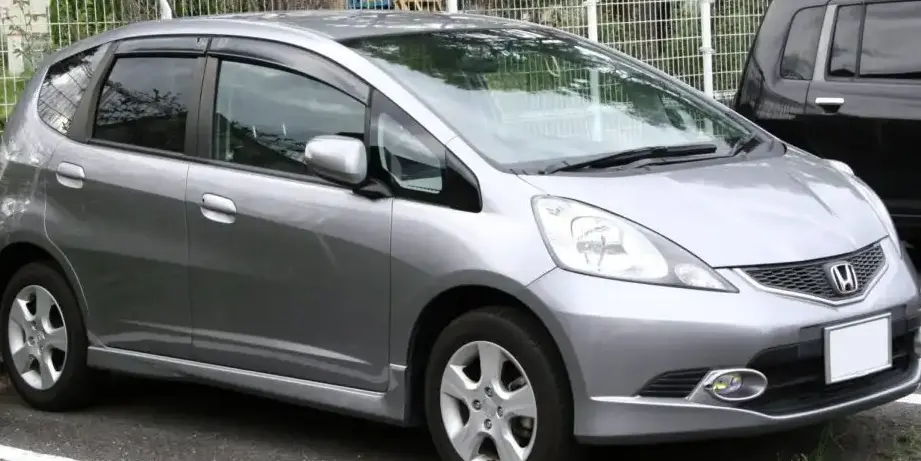
The Honda Fit II 1.5 (117 hp) Automatic, produced between 2009 and 2012, represents a significant iteration of Honda’s subcompact hatchback. Part of the second generation (GE6-GE9) Fit lineup, this variant was primarily aimed at buyers seeking a practical, fuel-efficient, and affordable vehicle with the convenience of an automatic transmission. It occupied a mid-range position within the Fit II family, slotting between the base 1.3L models and the slightly sportier manual transmission options. The Fit II, overall, was a crucial model for Honda, particularly in markets outside of North America where subcompacts held a larger share of the automotive landscape.
Technical Specifications
| Brand | Honda |
| Model | FIT |
| Generation | Fit II |
| Type (Engine) | 1.5 (117 Hp) Automatic |
| Start of production | 2009 |
| End of production | 2012 |
| Powertrain Architecture | Internal Combustion engine |
| Body type | Hatchback |
| Seats | 5 |
| Doors | 5 |
| Fuel consumption (urban) | 8.4 l/100 km (28 US mpg) |
| Fuel consumption (extra urban) | 6.7 l/100 km (35.1 US mpg) |
| Fuel consumption (combined) | 7.6 l/100 km (30.9 US mpg) |
| Fuel Type | Petrol (Gasoline) |
| Emission standard | ULEV-2 |
| Weight-to-power ratio | 10 kg/Hp |
| Weight-to-torque ratio | 8.1 kg/Nm |
| Power | 117 Hp @ 6600 rpm |
| Power per litre | 78.2 Hp/l |
| Torque | 144 Nm @ 4800 rpm (106.21 lb.-ft. @ 4800 rpm) |
| Maximum engine speed | 6800 rpm |
| Engine layout | Front, Transverse |
| Engine Model/Code | L15A7 |
| Engine displacement | 1497 cm3 (91.35 cu. in.) |
| Number of cylinders | 4 |
| Engine configuration | Inline |
| Cylinder Bore | 73 mm (2.87 in.) |
| Piston Stroke | 89.4 mm (3.52 in.) |
| Compression ratio | 10.4:1 |
| Number of valves per cylinder | 4 |
| Fuel injection system | Multi-port manifold injection |
| Engine aspiration | Naturally aspirated engine |
| Valvetrain | SOHC, i-VTEC |
| Engine oil capacity | 3.6 l (3.8 US qt | 3.17 UK qt) |
| Coolant capacity | 5 l (5.28 US qt | 4.4 UK qt) |
| Kerb Weight | 1168 kg (2575 lbs.) |
| Trunk (boot) space – minimum | 583 l (20.59 cu. ft.) |
| Trunk (boot) space – maximum | 1623 l (57.32 cu. ft.) |
| Fuel tank capacity | 40 l (10.57 US gal | 8.8 UK gal) |
| Length | 4105 mm (161.61 in.) |
| Width | 1695 mm (66.73 in.) |
| Height | 1525 mm (60.04 in.) |
| Wheelbase | 2500 mm (98.43 in.) |
| Front track | 1492 mm (58.74 in.) |
| Rear track | 1475 mm (58.07 in.) |
| Minimum turning circle | 10.5 m (34.45 ft.) |
| Drivetrain | Front wheel drive |
| Number of gears | 5 |
| Gearbox type | automatic transmission |
| Front suspension | Independent type McPherson |
| Rear suspension | Torsion |
| Front brakes | Ventilated discs, 261.62 mm |
| Rear brakes | Drum, 200.66 mm |
| Assisting systems | ABS (Anti-lock braking system) |
| Steering type | Steering rack and pinion |
| Power steering | Electric Steering |
| Tires size | 175/65 R15 |
Powertrain & Engine Architecture
The heart of the Fit II 1.5 Automatic is the L15A7 engine, a 1.5-liter inline-four cylinder gasoline engine. This engine is part of Honda’s L-series engine family, known for its reliability and fuel efficiency. The L15A7 utilizes a single overhead camshaft (SOHC) design coupled with Honda’s intelligent Variable Valve Timing and Lift Electronic Control (i-VTEC) system. This technology optimizes valve timing for improved performance and fuel economy across the engine’s operating range. Fuel delivery is managed by a multi-point fuel injection system. The engine produces 117 horsepower at 6,600 rpm and 144 Nm (106.21 lb-ft) of torque at 4,800 rpm. Paired with the engine is a 5-speed automatic transmission. This transmission was chosen for its smooth operation and ease of use, catering to drivers prioritizing convenience over outright performance. The transmission’s gear ratios are tuned for fuel efficiency and acceptable acceleration in typical urban driving conditions.
Driving Characteristics
The 1.5L Automatic Fit II delivers a comfortable and predictable driving experience. While not particularly sporty, the engine provides adequate power for everyday commuting and highway merging. Acceleration is modest, with 0-60 mph times estimated around 10-11 seconds. The automatic transmission shifts smoothly, but can sometimes feel hesitant during quick acceleration. Compared to the manual transmission versions of the Fit II, the automatic sacrifices some responsiveness and fuel economy. The manual transmission allows for more driver control and slightly better MPG figures. However, the automatic’s convenience makes it a popular choice for drivers in congested urban environments.
Equipment & Trim Levels
The Fit II 1.5 Automatic typically came equipped with a reasonable level of standard features. These included air conditioning, power windows and locks, a basic audio system with CD player, and ABS brakes. Higher trim levels, often denoted by suffixes like “Sport” or “EX,” added features such as alloy wheels, a sunroof, upgraded audio systems, and keyless entry. Interior upholstery was typically cloth, with options for upgraded materials on higher trims. The Fit II’s interior is renowned for its clever use of space and the “Magic Seat” system, which allows for a variety of seating configurations to maximize cargo capacity.
Chassis & Braking
The Fit II utilizes a front-wheel-drive layout with an independent McPherson strut suspension in the front and a torsion beam suspension in the rear. This suspension setup provides a comfortable ride quality, although it’s not particularly sporty. The front brakes are ventilated discs, while the rear brakes are drums. ABS (Anti-lock Braking System) is standard, enhancing safety during emergency braking situations. The steering is rack and pinion with electric power steering, providing light and easy steering feel.
Market Reception & Comparison
The Honda Fit II 1.5 Automatic was generally well-received by automotive critics. It was praised for its fuel efficiency, spacious interior, and versatile cargo area. However, some critics noted the engine’s lack of power and the automatic transmission’s sometimes sluggish performance. Compared to other subcompacts of the time, such as the Toyota Yaris and Nissan Versa, the Fit II offered a more refined driving experience and a more spacious interior. Its fuel economy was competitive, and its reliability reputation was a significant selling point.
Legacy
The Honda Fit II 1.5 Automatic has proven to be a reliable and durable vehicle. The L15A7 engine is known for its longevity, and the automatic transmission, while not without its quirks, has generally held up well over time. In the used car market, these Fits are often sought after for their affordability, fuel efficiency, and practicality. Maintenance costs are typically reasonable, and parts availability is good. While not a performance car, the Fit II 1.5 Automatic remains a sensible and economical choice for buyers seeking a dependable subcompact hatchback.