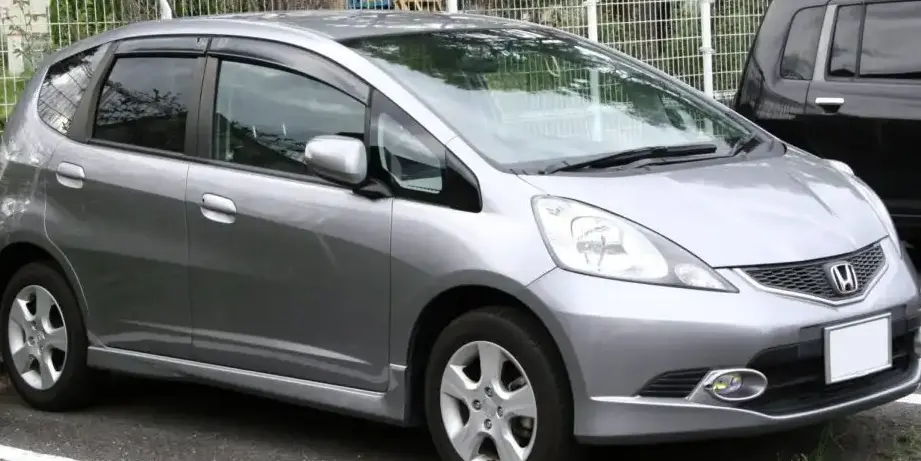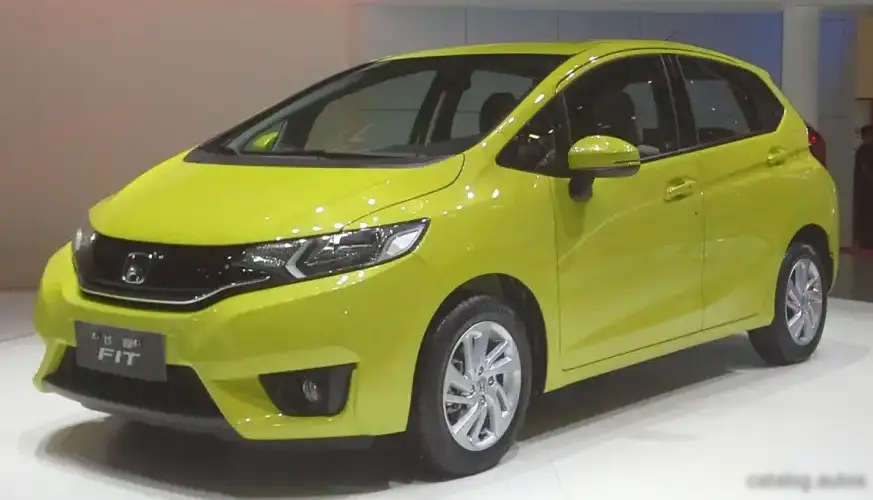
The Honda Fit III 1.3 (100 hp) 4WD Automatic, produced between 2013 and 2017, represents a unique configuration within the third generation (GE/GK series) of Honda’s popular subcompact hatchback. This variant was primarily aimed at the Japanese domestic market (JDM) and select other regions where all-wheel drive was highly valued in smaller vehicles, offering enhanced traction in inclement weather conditions. It occupied a mid-range position in the Fit III lineup, slotting below the more powerful 1.5-liter engine options but offering the convenience of an automatic transmission and the added security of all-wheel drive. The Fit III, known as the Honda Jazz in many international markets, continued Honda’s tradition of maximizing interior space within a small footprint.
Technical Specifications
| Brand | Honda |
| Model | FIT |
| Generation | Fit III |
| Type (Engine) | 1.3 (100 Hp) 4WD Automatic |
| Start of production | 2013 year |
| End of production | 2017 year |
| Powertrain Architecture | Internal Combustion engine |
| Body type | Hatchback |
| Seats | 5 |
| Doors | 5 |
| Fuel Type | Petrol (Gasoline) |
| Weight-to-power ratio | 10.7 kg/Hp, 93.5 Hp/tonne |
| Weight-to-torque ratio | 9 kg/Nm, 111.2 Nm/tonne |
| Power | 100 Hp @ 6000 rpm |
| Power per litre | 75.9 Hp/l |
| Torque | 119 Nm @ 5000 rpm, 87.77 lb.-ft. @ 5000 rpm |
| Engine layout | Front, Transverse |
| Engine Model/Code | L13B |
| Engine displacement | 1317 cm3, 80.37 cu. in. |
| Number of cylinders | 4 |
| Engine configuration | Inline |
| Cylinder Bore | 73 mm, 2.87 in. |
| Piston Stroke | 78.7 mm, 3.1 in. |
| Compression ratio | 13.5:1 |
| Number of valves per cylinder | 4 |
| Fuel injection system | Multi-port manifold injection |
| Engine aspiration | Naturally aspirated engine |
| Valvetrain | DOHC, i-VTEC |
| Engine oil capacity | 3.3 l, 3.49 US qt | 2.9 UK qt |
| Coolant | 3.48 l, 3.68 US qt | 3.06 UK qt |
| Kerb Weight | 1070 kg, 2358.95 lbs |
| Fuel tank capacity | 40 l, 10.57 US gal | 8.8 UK gal |
| Length | 3955 mm, 155.71 in |
| Width | 1695 mm, 66.73 in |
| Height | 1550 mm, 61.02 in |
| Wheelbase | 2530 mm, 99.61 in |
| Front track | 1480 mm, 58.27 in |
| Rear (Back) track | 1470 mm, 57.87 in |
| Ride height (ground clearance) | 150 mm, 5.91 in |
| Drag coefficient (Cd) | 0.30 |
| Minimum turning circle (turning diameter) | 9.8 m, 32.15 ft |
| Drive wheel | All wheel drive (4×4) |
| Number of gears and type of gearbox | automatic transmission CVT |
| Front brakes | Ventilated discs |
| Rear brakes | Disc |
| Assisting systems | ABS (Anti-lock braking system) |
| Tires size | 185/60 R15 |
| Wheel rims size | 15 |
Powertrain & Engine Architecture
The heart of the Fit III 1.3 4WD Automatic is the L13B engine, a 1.3-liter inline-four cylinder gasoline engine. This engine is part of Honda’s Earth Dreams Technology series, focusing on efficiency and reduced emissions. The L13B utilizes a multi-point fuel injection system and a double overhead camshaft (DOHC) valvetrain with Honda’s i-VTEC (Variable Valve Timing and Lift Electronic Control) system. i-VTEC allows for variable control of both valve timing and lift, optimizing engine performance across a wider range of engine speeds. The engine produces 100 horsepower at 6000 rpm and 119 Nm (87.77 lb-ft) of torque at 5000 rpm. The engine’s relatively high compression ratio of 13.5:1 contributes to its efficiency. The engine is paired with a Continuously Variable Transmission (CVT), which provides smooth, stepless gear changes. The all-wheel-drive system is a real-time system, automatically engaging the rear wheels when it detects a loss of traction at the front.
Driving Characteristics
The 1.3-liter engine and CVT combination in the Fit III 4WD Automatic delivers adequate, but not exhilarating, performance. Acceleration is modest, with a focus on fuel economy rather than outright speed. The CVT is tuned for efficiency, prioritizing smooth operation and minimizing engine revs during cruising. Compared to the 1.5-liter versions of the Fit III, the 1.3L feels noticeably less powerful, especially when fully loaded or climbing hills. The CVT, while smooth, can sometimes exhibit a “rubber band” effect, where engine revs rise quickly but acceleration feels delayed. The all-wheel-drive system provides enhanced grip and stability, particularly on slippery surfaces, making it a more confident vehicle in adverse weather conditions. The steering is light and precise, making it easy to maneuver in urban environments.
Equipment & Trim Levels
The Fit III 1.3 4WD Automatic typically came equipped with a reasonable level of standard features. These included air conditioning, power windows and locks, a basic audio system with USB connectivity, and ABS brakes. Interior upholstery was typically cloth, with a functional and durable design. Optional extras included alloy wheels, a more advanced audio system with touchscreen display, navigation system, and parking sensors. Trim levels varied depending on the market, but generally offered incremental upgrades in terms of features and aesthetics. The 4WD Automatic trim was often positioned as a mid-range offering, appealing to buyers who prioritized practicality and all-weather capability over outright performance.
Chassis & Braking
The Fit III utilizes a front MacPherson strut suspension and a rear torsion beam suspension. This setup provides a good balance between ride comfort and handling. The 4WD system adds some weight to the vehicle, which slightly impacts handling dynamics. Braking duties are handled by ventilated discs at the front and solid discs at the rear. ABS (Anti-lock Braking System) is standard, providing enhanced braking performance and stability. The suspension is tuned for comfort, absorbing bumps and irregularities in the road surface effectively. The relatively narrow tires (185/60 R15) contribute to fuel efficiency but offer limited grip compared to wider tires.
Market Reception & Comparison
The Honda Fit III 1.3 4WD Automatic was generally well-received by critics and consumers, particularly in markets where all-wheel drive was highly valued. It was praised for its spacious interior, fuel efficiency, and practicality. However, some critics noted that the 1.3-liter engine felt underpowered, especially when paired with the CVT and all-wheel-drive system. Compared to the 1.5-liter versions, the 1.3L offered lower running costs but sacrificed performance. The 1.3L 4WD Automatic was often seen as a sensible and practical choice for buyers who needed a reliable and fuel-efficient vehicle for daily commuting and occasional longer trips. Fuel economy was a strong point, typically achieving around 5.5-6.0 liters per 100 kilometers (43-47 mpg) in mixed driving conditions.
Legacy
The L13B engine and the CVT transmission used in the Fit III 1.3 4WD Automatic have proven to be relatively reliable. While some early CVT units experienced issues, Honda addressed these concerns with updated designs. The engine is known for its durability and longevity, provided it is properly maintained. In the used car market, the Fit III 1.3 4WD Automatic remains a popular choice for buyers seeking a small, fuel-efficient, and practical vehicle. Its all-wheel-drive system adds a layer of versatility, making it a suitable option for those living in areas with harsh winters or challenging road conditions. The Fit III’s reputation for reliability and spaciousness continues to make it a desirable option in the subcompact hatchback segment.