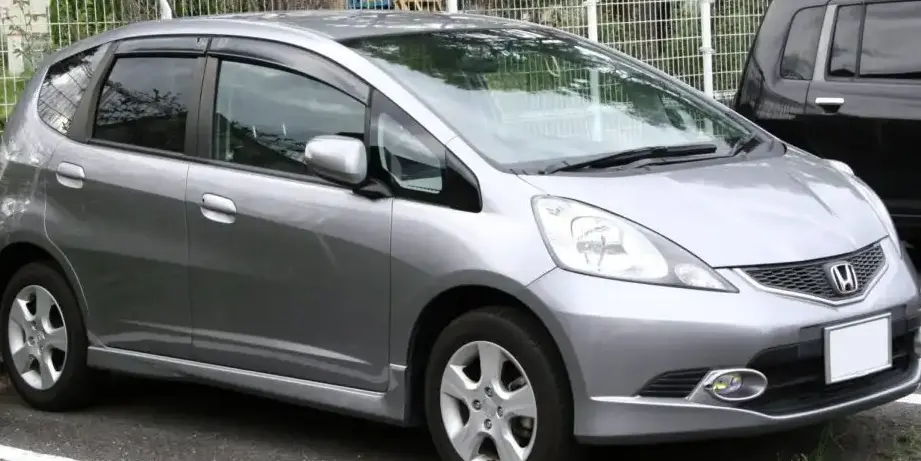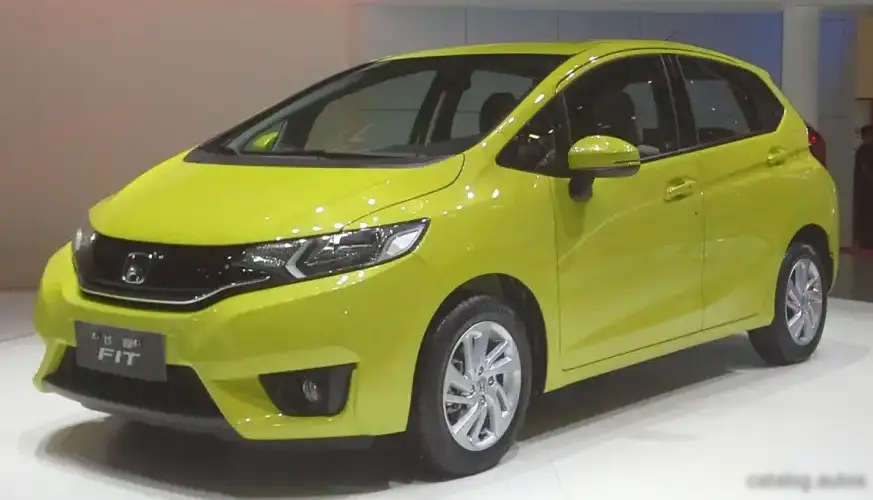
The Honda Fit III 1.5, producing 132 horsepower, represents a significant iteration in Honda’s subcompact hatchback lineage. Introduced in 2013 and continuing through 2017 model years (depending on the market), this version of the Fit (third generation, internally designated as the GK series) was a key offering in both the Japanese domestic market and international markets, including North America. It built upon the reputation of its predecessors for exceptional interior space utilization, fuel efficiency, and nimble handling. The 1.5L variant occupied a middle ground in the Fit III lineup, offering a balance between affordability and performance, positioned above the base 1.3L engine and below any potential sport-tuned or hybrid options available in certain regions.
Technical Specifications
| Brand | Honda |
| Model | FIT |
| Generation | Fit III |
| Type (Engine) | 1.5 (132 Hp) |
| Start of production | 2013 year |
| End of production | 2017 year |
| Powertrain Architecture | Internal Combustion engine |
| Body type | Hatchback |
| Seats | 5 |
| Doors | 5 |
| Fuel Type | Petrol (Gasoline) |
| Weight-to-power ratio | 8 kg/Hp, 125.7 Hp/tonne |
| Weight-to-torque ratio | 6.8 kg/Nm, 147.6 Nm/tonne |
| Power | 132 Hp @ 6600 rpm |
| Power per litre | 88.2 Hp/l |
| Torque | 155 Nm @ 4600 rpm |
| Torque (lb-ft) | 114.32 lb.-ft. @ 4600 rpm |
| Engine layout | Front, Transverse |
| Engine Model/Code | L15B1 |
| Engine displacement | 1497 cm3 |
| Engine displacement (cu. in.) | 91.35 cu. in. |
| Number of cylinders | 4 |
| Engine configuration | Inline |
| Cylinder Bore | 73 mm |
| Cylinder Bore (in.) | 2.87 in. |
| Piston Stroke | 89.4 mm |
| Piston Stroke (in.) | 3.52 in. |
| Compression ratio | 11.5:1 |
| Number of valves per cylinder | 4 |
| Fuel injection system | Multi-port manifold injection |
| Engine aspiration | Naturally aspirated engine |
| Valvetrain | DOHC, i-VTEC |
| Engine oil capacity | 3.3 l |
| Engine oil capacity (US qt) | 3.49 US qt |
| Engine oil capacity (UK qt) | 2.9 UK qt |
| Coolant capacity | 3.78 l |
| Coolant capacity (US qt) | 3.99 US qt |
| Coolant capacity (UK qt) | 3.33 UK qt |
| Kerb Weight | 1050 kg |
| Kerb Weight (lbs) | 2314.85 lbs |
| Fuel tank capacity | 40 l |
| Fuel tank capacity (US gal) | 10.57 US gal |
| Fuel tank capacity (UK gal) | 8.8 UK gal |
| Length | 3955 mm |
| Length (in.) | 155.71 in. |
| Width | 1695 mm |
| Width (in.) | 66.73 in. |
| Height | 1525 mm |
| Height (in.) | 60.04 in. |
| Wheelbase | 2530 mm |
| Wheelbase (in.) | 99.61 in. |
| Front track | 1475 mm |
| Front track (in.) | 58.07 in. |
| Rear track | 1465 mm |
| Rear track (in.) | 57.68 in. |
| Ride height (ground clearance) | 135 mm |
| Ride height (in.) | 5.31 in. |
| Drag coefficient (Cd) | 0.30 |
| Minimum turning circle | 10.4 m |
| Minimum turning circle (ft) | 34.12 ft |
| Drivetrain Architecture | The Internal combustion engine (ICE) drives the front wheels of the vehicle. |
| Drive wheel | Front wheel drive |
| Number of gears | 6 gears |
| Gearbox type | manual transmission |
| Front brakes | Ventilated discs |
| Rear brakes | Drum |
| Assisting systems | ABS (Anti-lock braking system) |
| Tires size | 185/55 R16 |
| Wheel rims size | 16 |
Powertrain & Engine Architecture
The heart of the Fit III 1.5 is the L15B1 engine, a 1.5-liter inline-four cylinder gasoline engine. This engine is part of Honda’s Earth Dreams Technology series, focusing on improved efficiency and reduced emissions. The L15B1 utilizes a multi-point fuel injection system and a double overhead camshaft (DOHC) valvetrain with Honda’s i-VTEC (Variable Valve Timing and Lift Electronic Control) system. i-VTEC allows for variable control of both valve timing and lift, optimizing engine performance across a wider range of engine speeds. The engine’s 11.5:1 compression ratio contributes to its relatively high power output for its displacement. The standard transmission for this variant was a 6-speed manual, providing drivers with direct control over the engine’s power. A Continuously Variable Transmission (CVT) was also offered as an option in many markets, prioritizing fuel economy over outright performance.
Driving Characteristics
The 132 hp 1.5L engine in the Fit III provided a noticeable step up in performance compared to the base 1.3L engine. While not a sports car, the 1.5L offered sufficient power for everyday driving, including highway merging and overtaking. The 6-speed manual transmission allowed for precise gear selection and maximized engine responsiveness. The gear ratios were tuned to provide a balance between acceleration and fuel efficiency. The CVT, while smoother, resulted in a more subdued driving experience, with the engine holding at specific RPMs during acceleration. The Fit’s relatively lightweight construction (around 2315 lbs) further enhanced its agility and handling. Compared to higher-output versions (if available in specific markets), the 1.5L prioritized fuel economy and affordability, making it an ideal choice for commuters and budget-conscious buyers.
Equipment & Trim Levels
The Fit III 1.5 typically came with a reasonable level of standard equipment. Base models included features such as air conditioning, power windows and locks, a basic audio system, and ABS brakes. Higher trim levels added features like alloy wheels, a touchscreen infotainment system, a rearview camera, and keyless entry. Interior upholstery was typically cloth, with higher trims offering upgraded fabric or leather options. The Fit’s unique “Magic Seat” system, allowing for multiple seating configurations and a surprisingly large cargo area for its size, was a standard feature across all trims. Optional extras included navigation systems, upgraded audio systems, and various cosmetic enhancements.
Chassis & Braking
The Fit III utilized a front-wheel-drive platform with a MacPherson strut front suspension and a torsion beam rear suspension. This suspension setup provided a comfortable ride while maintaining good handling characteristics. The front brakes were ventilated discs, providing adequate stopping power, while the rear brakes were typically drum brakes to reduce cost. The chassis was designed to be lightweight and rigid, contributing to the car’s agility. The steering was electrically assisted, providing a light and responsive feel. Stabilizer bars were included to reduce body roll during cornering.
Market Reception & Comparison
The Honda Fit III 1.5 was generally well-received by automotive critics. It was praised for its spacious interior, fuel efficiency, and nimble handling. The 1.5L engine was considered a good compromise between performance and economy. Compared to other subcompact hatchbacks, the Fit stood out for its innovative interior design and versatile seating configurations. The CVT option was sometimes criticized for its lack of engagement, but it was appreciated for its fuel-saving benefits. Reliability was also a strong point, with the L15B1 engine proving to be durable and long-lasting.
Legacy
The Honda Fit III 1.5 has proven to be a reliable and economical vehicle in the used car market. The L15B1 engine is known for its longevity, and maintenance costs are generally reasonable. The Fit’s spacious interior and versatile seating configurations continue to appeal to buyers looking for a practical and efficient subcompact hatchback. While not a performance car, the 1.5L variant offers a good balance of power and fuel economy, making it a popular choice for commuters and small families. The Fit III, and specifically the 1.5L version, has cemented Honda’s reputation for building well-engineered and dependable vehicles.