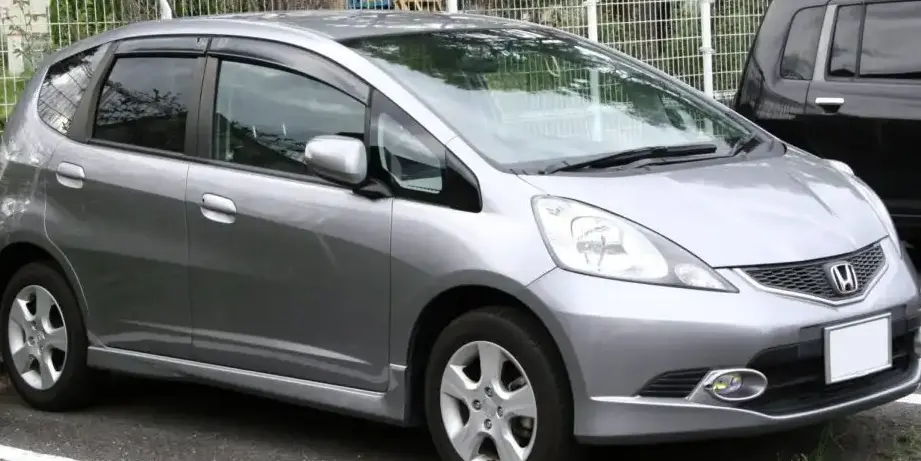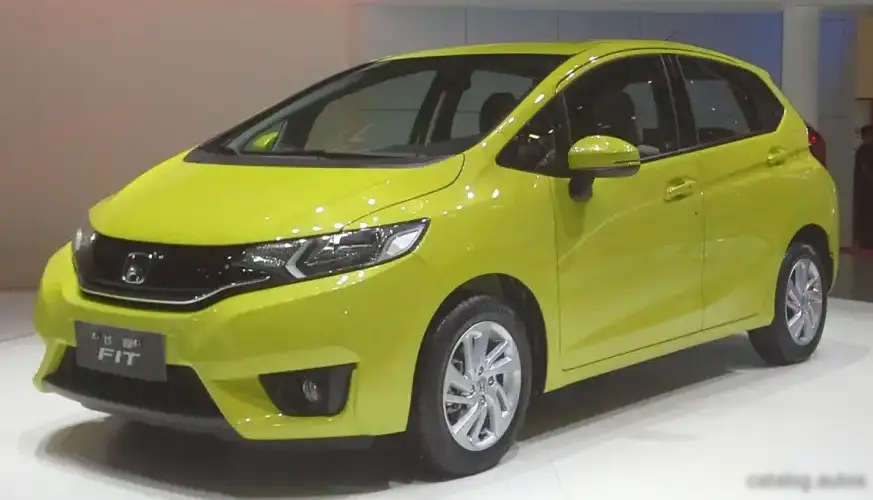
The Honda Fit III 1.5 (132 Hp) 4WD Automatic, produced between 2013 and 2017, represents a significant iteration of Honda’s subcompact hatchback, known as the Jazz in many international markets. This variant occupied a unique position within the Fit III lineup, offering all-wheel drive capability paired with a continuously variable transmission (CVT) and a 1.5-liter gasoline engine. It was primarily aimed at consumers in regions experiencing inclement weather or desiring enhanced traction, particularly in Japan and other markets where compact, versatile vehicles are highly valued. The Fit III, built on the GP5 platform, continued Honda’s tradition of maximizing interior space through its innovative “Magic Seat” system.
Technical Specifications
| Brand | Honda |
| Model | FIT |
| Generation | Fit III |
| Type (Engine) | 1.5 (132 Hp) 4WD Automatic |
| Start of production | 2013 year |
| End of production | 2017 year |
| Powertrain Architecture | Internal Combustion engine |
| Body type | Hatchback |
| Seats | 5 |
| Doors | 5 |
| Fuel Type | Petrol (Gasoline) |
| Weight-to-power ratio | 8.5 kg/Hp, 117.9 Hp/tonne |
| Weight-to-torque ratio | 7.2 kg/Nm, 138.4 Nm/tonne |
| Power | 132 Hp @ 6600 rpm |
| Power per litre | 88.2 Hp/l |
| Torque | 155 Nm @ 4600 rpm, 114.32 lb.-ft. @ 4600 rpm |
| Engine layout | Front, Transverse |
| Engine Model/Code | L15B1 |
| Engine displacement | 1497 cm3, 91.35 cu. in. |
| Number of cylinders | 4 |
| Engine configuration | Inline |
| Cylinder Bore | 73 mm, 2.87 in. |
| Piston Stroke | 89.4 mm, 3.52 in. |
| Compression ratio | 11.5:1 |
| Number of valves per cylinder | 4 |
| Fuel injection system | Multi-port manifold injection |
| Engine aspiration | Naturally aspirated engine |
| Valvetrain | DOHC, i-VTEC |
| Engine oil capacity | 3.3 l, 3.49 US qt | 2.9 UK qt |
| Coolant | 3.78 l, 3.99 US qt | 3.33 UK qt |
| Kerb Weight | 1120 kg, 2469.18 lbs |
| Fuel tank capacity | 40 l, 10.57 US gal | 8.8 UK gal |
| Length | 3955 mm, 155.71 in |
| Width | 1695 mm, 66.73 in |
| Height | 1550 mm, 61.02 in |
| Wheelbase | 2530 mm, 99.61 in |
| Front track | 1480 mm, 58.27 in |
| Rear (Back) track | 1470 mm, 57.87 in |
| Ride height (ground clearance) | 150 mm, 5.91 in |
| Drag coefficient (Cd) | 0.30 |
| Minimum turning circle (turning diameter) | 9.8 m, 32.15 ft |
| Drive wheel | All wheel drive (4×4) |
| Number of gears and type of gearbox | automatic transmission CVT |
| Front brakes | Ventilated discs |
| Rear brakes | Disc |
| Assisting systems | ABS (Anti-lock braking system) |
| Tires size | 185/60 R15 |
| Wheel rims size | 15 |
Powertrain & Engine Architecture
The heart of the Fit III 1.5 4WD Automatic is the L15B1 engine, a 1.5-liter inline-four cylinder gasoline engine. This engine utilizes Honda’s Intelligent Variable Valve Timing and Lift Electronic Control (i-VTEC) system, which optimizes valve timing and lift for improved performance and fuel efficiency across the rev range. The L15B1 employs multi-point fuel injection, delivering fuel directly to the intake ports. The engine’s design prioritizes efficiency and responsiveness, rather than outright power. The engine is transversely mounted at the front of the vehicle. The powertrain is paired with a Continuously Variable Transmission (CVT), which provides seamless gear changes and contributes to improved fuel economy. The CVT is designed to mimic traditional gear shifts, offering a more natural driving experience than some earlier CVT implementations.
Driving Characteristics
The 132 horsepower and 155 Nm (114 lb-ft) of torque produced by the L15B1 engine, when coupled with the CVT and all-wheel-drive system, results in a driving experience focused on practicality and ease of use. Acceleration is adequate for everyday driving, but not particularly sporty. The CVT effectively utilizes the engine’s powerband, providing smooth and linear acceleration. The all-wheel-drive system enhances traction, particularly in slippery conditions, providing increased confidence during inclement weather. Compared to the manual transmission versions of the Fit III 1.5, the CVT offers a more relaxed driving experience, but sacrifices some driver engagement. Higher-output versions of the Fit III, such as those with the 1.5L engine in RS trim, offer noticeably quicker acceleration, but at the expense of fuel economy.
Equipment & Trim Levels
The Fit III 1.5 4WD Automatic typically came equipped with a reasonable level of standard features. These included air conditioning, power windows and locks, a basic audio system with USB connectivity, and ABS brakes. Higher trim levels offered additional features such as alloy wheels, a touchscreen infotainment system, a rearview camera, and automatic climate control. Interior upholstery was typically cloth, with options for upgraded materials on higher trims. The dashboard layout was functional and user-friendly, with a focus on maximizing space and visibility. Optional extras included navigation systems, advanced safety features, and various cosmetic enhancements.
Chassis & Braking
The Fit III utilizes a front MacPherson strut suspension and a rear torsion beam suspension. This setup provides a comfortable ride quality and predictable handling. The all-wheel-drive system adds weight and complexity to the chassis, but also enhances stability and traction. The braking system consists of ventilated discs at the front and solid discs at the rear. ABS (Anti-lock Braking System) is standard, providing enhanced braking performance and control. The suspension tuning is geared towards comfort and practicality, rather than sporty handling. Stabilizer bars are present to reduce body roll during cornering.
Market Reception & Comparison
The Honda Fit III 1.5 4WD Automatic was generally well-received by critics for its practicality, fuel efficiency, and all-weather capability. However, some reviewers noted that the CVT could feel somewhat sluggish at times, and that the engine lacked the punch of some competitors. Compared to other trims in the Fit III lineup, the 4WD Automatic offered a compelling option for drivers in regions with challenging weather conditions. Fuel economy was slightly lower than the front-wheel-drive versions due to the added weight and drivetrain complexity. Reliability was generally considered to be excellent, consistent with Honda’s reputation for building durable vehicles.
Legacy
The Honda Fit III 1.5 4WD Automatic has proven to be a reliable and durable vehicle in the used car market. The L15B1 engine is known for its longevity, and the CVT transmission, while requiring proper maintenance, has generally held up well over time. These vehicles are often sought after by buyers looking for a practical, fuel-efficient, and all-weather capable subcompact hatchback. The Fit III’s innovative interior design and “Magic Seat” system continue to be highly valued by owners. As with any used vehicle, regular maintenance and a thorough inspection are essential to ensure long-term reliability.