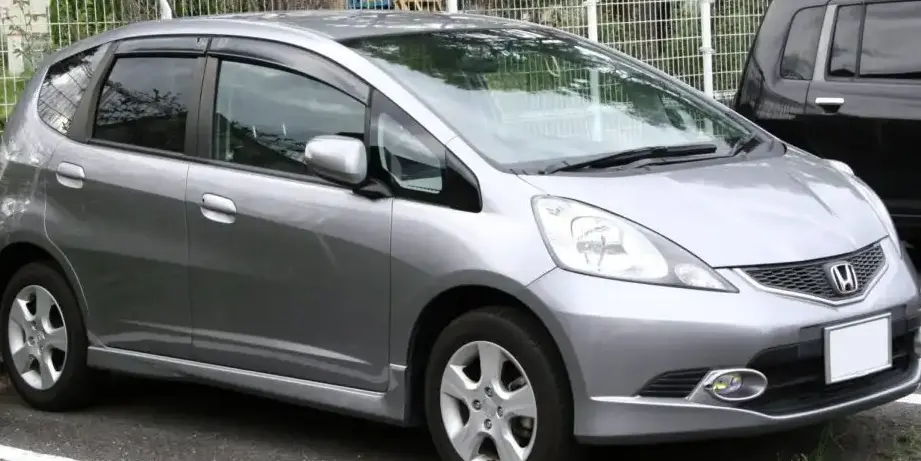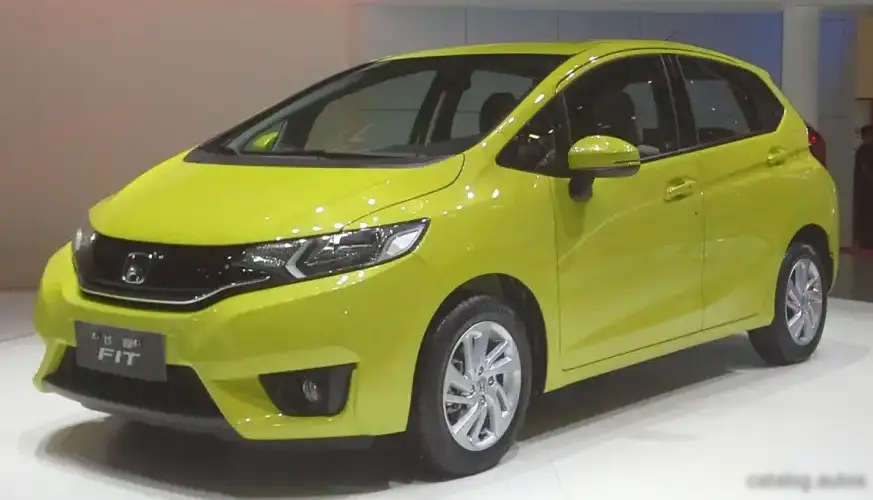
The Honda Fit III 1.5 Hybrid DCT, produced from 2013 to 2017, represents a significant evolution in Honda’s subcompact hatchback offerings. Positioned as a technologically advanced and fuel-efficient option within the Fit III generation (internally known as the GK series), this variant combined a 1.5-liter gasoline engine with Honda’s Intelligent Dual-Part Exhaust Gas Recirculation (iDECG) system and a lithium-ion assisted hybrid system. It was primarily marketed towards consumers seeking practicality, fuel economy, and a modern driving experience. The Fit III, in general, was a key model for Honda in markets worldwide, including North America, Europe, and Asia, offering a versatile and space-efficient package. This specific 1.5L Hybrid DCT trim aimed to appeal to buyers looking for a step up in technology and refinement compared to the base models.
Technical Specifications
| Brand | Honda |
| Model | FIT |
| Generation | Fit III |
| Type (Engine) | 1.5 (137 Hp) Hybrid DCT |
| Start of production | 2013 |
| End of production | 2017 |
| Powertrain Architecture | FHEV (Full Hybrid Electric Vehicle) |
| Body type | Hatchback |
| Seats | 5 |
| Doors | 5 |
| Fuel Type | Petrol (Gasoline) |
| Weight-to-power ratio | 7.9 kg/Hp, 126.9 Hp/tonne |
| Weight-to-torque ratio | 6.4 kg/Nm, 157.4 Nm/tonne |
| Battery technology | Lithium-ion (Li-Ion) |
| Electric motor power | 30 Hp @ 1313-2000 rpm |
| Electric motor Torque | 160 Nm @ 0-1313 rpm (118.01 lb.-ft. @ 0-1313 rpm) |
| Electric motor type | Synchronous |
| System power | 137 Hp @ 6000 rpm |
| System torque | 170 Nm @ 1000-4600 rpm (125.39 lb.-ft. @ 1000-4600 rpm) |
| Internal combustion engine power | 110 Hp @ 6000 rpm |
| Power per litre | 73.5 Hp/l |
| Engine torque | 134 Nm @ 5000 rpm (98.83 lb.-ft. @ 5000 rpm) |
| Engine layout | Front, Transverse |
| Engine Model/Code | LEB-H1 |
| Engine displacement | 1497 cm3 (91.35 cu. in.) |
| Number of cylinders | 4 |
| Engine configuration | Inline |
| Cylinder Bore | 73 mm (2.87 in.) |
| Piston Stroke | 89.4 mm (3.52 in.) |
| Compression ratio | 13.5:1 |
| Number of valves per cylinder | 4 |
| Fuel injection system | Direct injection |
| Engine aspiration | Naturally aspirated engine |
| Valvetrain | DOHC, i-VTEC |
| Engine oil capacity | 3.3 l (3.49 US qt | 2.9 UK qt) |
| Coolant | 3.8 l (4.02 US qt | 3.34 UK qt) |
| Kerb Weight | 1080 kg (2380.99 lbs.) |
| Fuel tank capacity | 32 l (8.45 US gal | 7.04 UK gal) |
| Length | 3955 mm (155.71 in.) |
| Width | 1695 mm (66.73 in.) |
| Height | 1525 mm (60.04 in.) |
| Wheelbase | 2530 mm (99.61 in.) |
| Front track | 1480 mm (58.27 in.) |
| Rear track | 1470 mm (57.87 in.) |
| Ride height (ground clearance) | 135 mm (5.31 in.) |
| Drag coefficient (Cd) | 0.30 |
| Minimum turning circle | 9.8 m (32.15 ft.) |
| Drivetrain Architecture | The Internal combustion engine (ICE) and electric motor drive the front wheels of the car with the ability to work in full electric or mixed mode. |
| Drive wheel | Front wheel drive |
| Number of gears and type of gearbox | 7 gears, automatic transmission DCT |
| Front suspension | Independent type McPherson |
| Rear suspension | Torsion |
| Front brakes | Ventilated discs |
| Rear brakes | Drum |
| Assisting systems | ABS (Anti-lock braking system) |
| Steering type | Steering rack and pinion |
| Power steering | Electric Steering |
| Tires size | 185/60 R15 |
| Wheel rims size | 6J x 15 |
Powertrain & Engine Architecture
At the heart of the Fit III 1.5 Hybrid DCT lies the LEB-H1 1.5-liter inline-four cylinder engine. This engine utilizes Honda’s i-VTEC (Variable Valve Timing and Lift Electronic Control) technology, optimizing valve timing for improved efficiency and power delivery. The engine employs direct fuel injection, contributing to cleaner combustion and enhanced fuel economy. The hybrid system incorporates a 30 horsepower electric motor powered by a lithium-ion battery pack. The system operates in three primary modes: EV mode (electric only), Hybrid mode (combining engine and motor power), and Engine mode (engine only). The transition between these modes is managed automatically by the vehicle’s control system. The Dual-Clutch Transmission (DCT) with seven forward gears provides quick and smooth shifts, enhancing both performance and fuel efficiency. The DCT was chosen for its ability to deliver a more engaging driving experience than a traditional continuously variable transmission (CVT), which was common in other hybrid vehicles at the time.
Driving Characteristics
The 137 horsepower combined output of the 1.5-liter engine and electric motor provides adequate performance for everyday driving. While not a particularly sporty vehicle, the Fit III 1.5 Hybrid DCT offers brisk acceleration and responsive handling. The DCT transmission contributes to a more direct feel compared to the base model’s continuously variable transmission. The hybrid system provides a noticeable boost in torque at lower speeds, making it easy to navigate city traffic. Fuel economy is a standout feature, with the vehicle achieving impressive MPG figures in both city and highway driving. Compared to the standard 1.5-liter non-hybrid Fit, the hybrid version offers a smoother and more refined driving experience, albeit with a slightly higher initial cost.
Equipment & Trim Levels
The Fit III 1.5 Hybrid DCT typically came well-equipped, even in base trim. Standard features often included automatic climate control, a touchscreen infotainment system with Bluetooth connectivity, a rearview camera, and Honda’s LaneWatch blind spot display. Higher trim levels added features such as heated front seats, a sunroof, and upgraded audio systems. Interior upholstery was typically cloth, with options for leather upgrades. The interior design prioritized practicality and space utilization, with Honda’s innovative “Magic Seat” system allowing for a variety of seating configurations to accommodate passengers and cargo.
Chassis & Braking
The Fit III utilizes a McPherson strut front suspension and a torsion beam rear suspension. This setup provides a comfortable ride and predictable handling. The front brakes are ventilated discs, while the rear brakes are drums. This configuration was chosen to balance cost and performance. Anti-lock Braking System (ABS) is standard, enhancing safety during emergency braking situations. The steering is electric power-assisted, providing light and responsive steering feel.
Market Reception & Comparison
The Honda Fit III 1.5 Hybrid DCT was generally well-received by automotive critics. Reviewers praised its fuel efficiency, spacious interior, and versatile seating configurations. The hybrid powertrain was lauded for its smooth operation and seamless transitions between electric and gasoline power. Compared to other subcompact hatchbacks, the Fit III Hybrid DCT stood out for its combination of practicality, technology, and fuel economy. However, some critics noted that the engine could feel underpowered when fully loaded or driving uphill. Compared to the non-hybrid Fit models, the hybrid version commanded a higher price, but the added fuel savings and refinement were often considered worthwhile by buyers.
Legacy
The Honda Fit III 1.5 Hybrid DCT has proven to be a reliable and durable vehicle. The hybrid powertrain, while complex, has demonstrated good long-term reliability. The Fit III, in general, has earned a reputation for being a practical and affordable vehicle with low running costs. On the used car market, the 1.5 Hybrid DCT models tend to hold their value well due to their fuel efficiency and desirable features. The Fit III’s innovative design and efficient powertrain continue to influence Honda’s approach to subcompact vehicle development.