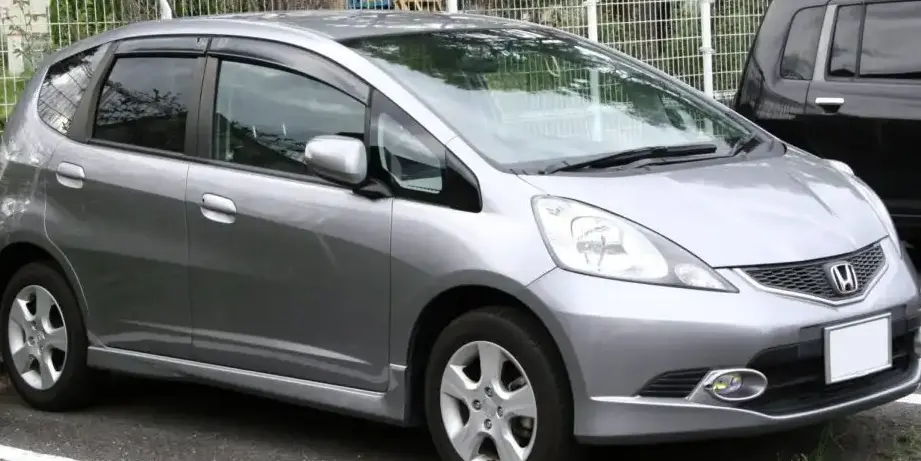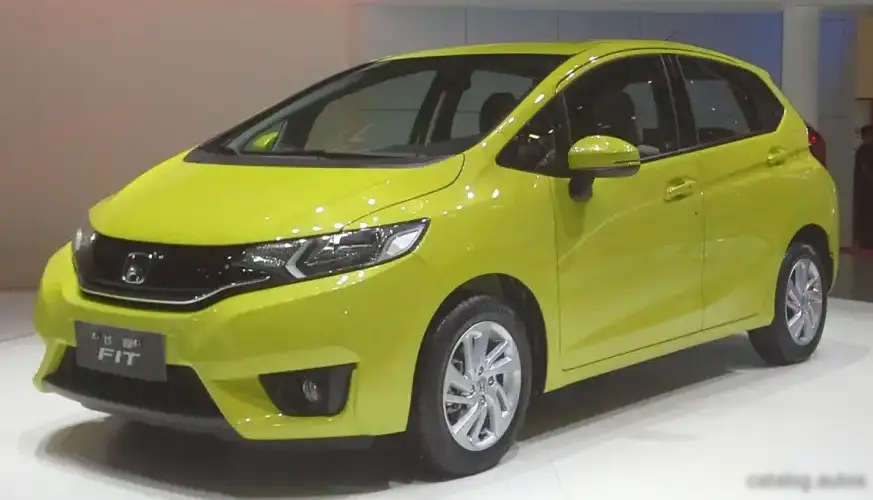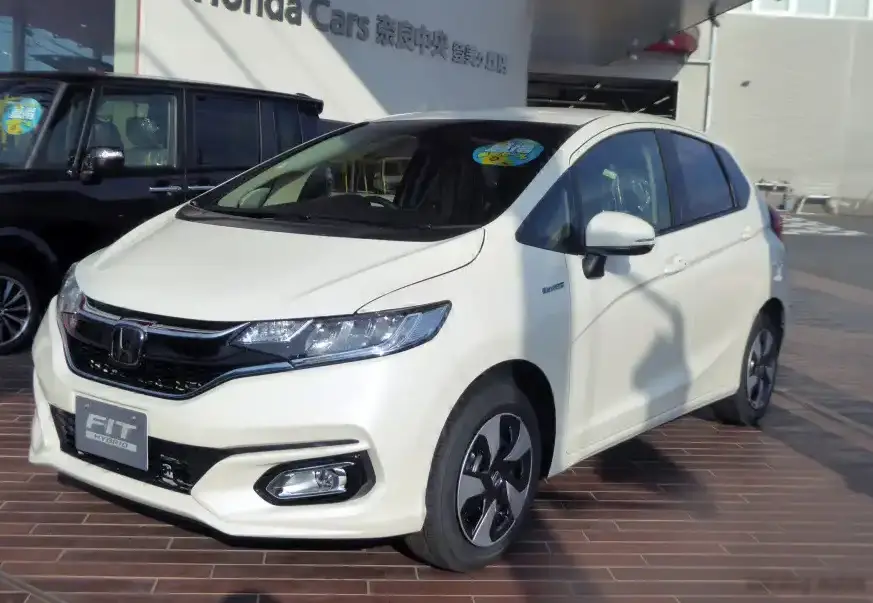
The Honda Fit III (facelift, introduced in 2017) 1.3-liter (99 horsepower) Automatic represents a key entry point into the third-generation Fit lineup, primarily marketed in regions outside of North America. Produced from 2017 to 2020, this variant aimed to provide an affordable and fuel-efficient option within the broader Fit range, which also included more powerful 1.5-liter engine options and manual transmission choices. The facelift brought subtle styling updates and refinements to the already practical and versatile Fit, building upon the success of the second-generation model (known as the Jazz in many markets). This specific configuration was particularly popular in Europe and Asia, where smaller displacement engines and automatic transmissions are highly sought after for urban driving.
Technical Specifications
| Brand | Honda |
| Model | FIT |
| Generation | Fit III (facelift 2017) |
| Type (Engine) | 1.3 (99 Hp) Automatic |
| Start of production | 2017 |
| End of production | 2020 |
| Powertrain Architecture | Internal Combustion engine |
| Body type | Hatchback |
| Seats | 5 |
| Doors | 5 |
| Fuel Type | Petrol (Gasoline) |
| Weight-to-power ratio | 10.4 kg/Hp, 96.1 Hp/tonne |
| Weight-to-torque ratio | 8.7 kg/Nm, 115.5 Nm/tonne |
| Power | 99 Hp @ 6000 rpm |
| Power per litre | 75.2 Hp/l |
| Torque | 119 Nm @ 5000 rpm (87.77 lb.-ft. @ 5000 rpm) |
| Engine layout | Front, Transverse |
| Engine Model/Code | L13B |
| Engine displacement | 1317 cm3 (80.37 cu. in.) |
| Number of cylinders | 4 |
| Engine configuration | Inline |
| Cylinder Bore | 73 mm (2.87 in.) |
| Piston Stroke | 78.7 mm (3.1 in.) |
| Compression ratio | 13.5:1 |
| Number of valves per cylinder | 4 |
| Fuel injection system | Multi-port manifold injection |
| Engine aspiration | Naturally aspirated engine |
| Valvetrain | DOHC, i-VTEC |
| Engine oil capacity | 3.3 l (3.49 US qt | 2.9 UK qt) |
| Coolant | 3.48 l (3.68 US qt | 3.06 UK qt) |
| Kerb Weight | 1030 kg (2270.76 lbs) |
| Fuel tank capacity | 40 l (10.57 US gal | 8.8 UK gal) |
| Length | 3990 mm (157.09 in) |
| Width | 1695 mm (66.73 in) |
| Height | 1525 mm (60.04 in) |
| Wheelbase | 2530 mm (99.61 in) |
| Front track | 1490 mm (58.66 in) |
| Rear (Back) track | 1480 mm (58.27 in) |
| Ride height (ground clearance) | 135 mm (5.31 in) |
| Drag coefficient (Cd) | 0.30 |
| Minimum turning circle (turning diameter) | 9.4 m (30.84 ft) |
| Drivetrain Architecture | The Internal combustion engine (ICE) drives the front wheels of the vehicle. |
| Drive wheel | Front wheel drive |
| Number of gears and type of gearbox | automatic transmission CVT |
| Front brakes | Ventilated discs |
| Rear brakes | Drum |
| Assisting systems | ABS (Anti-lock braking system) |
| Tires size | 175/70 R14 |
| Wheel rims size | 14 |
Powertrain & Engine Architecture
The heart of this Fit variant is the L13B 1.3-liter inline-four cylinder engine. This engine is a member of Honda’s ‘L-series’ family, known for its reliability and fuel efficiency. The L13B utilizes a multi-point fuel injection system and Honda’s intelligent Variable Valve Timing and Lift Electronic Control (i-VTEC) technology. i-VTEC allows for optimized valve timing and lift based on engine speed and load, improving both fuel economy and power output. The engine produces 99 horsepower at 6000 rpm and 119 Nm (87.77 lb-ft) of torque at 5000 rpm. Paired with this engine is a Continuously Variable Transmission (CVT). Honda’s CVT is designed to provide smooth, stepless gear changes, maximizing fuel efficiency. Unlike traditional automatic transmissions with fixed gear ratios, the CVT continuously adjusts the gear ratio to keep the engine operating at its most efficient point.
Driving Characteristics
The 1.3-liter engine and CVT combination in the Fit delivers a comfortable, if not particularly sporty, driving experience. Acceleration is adequate for city driving and highway merging, but it’s noticeably slower than the 1.5-liter variants. The CVT contributes to a smooth and linear power delivery, but can sometimes feel less responsive than a traditional automatic or manual transmission. The CVT’s programming prioritizes fuel economy, which means the engine often operates at lower RPMs, resulting in a quieter cabin. The relatively light weight of the Fit (1030 kg / 2270.76 lbs) helps to mitigate the lower horsepower output, making it feel nimble and easy to maneuver in urban environments. Compared to manual transmission versions, the automatic sacrifices some driver engagement and responsiveness, but offers greater convenience, especially in stop-and-go traffic.
Equipment & Trim Levels
The 1.3-liter Automatic Fit typically served as the entry-level trim in many markets. Standard equipment generally included air conditioning, power windows, power door locks, and a basic audio system with USB connectivity. Safety features such as ABS (Anti-lock Braking System) and multiple airbags were also standard. Higher trim levels offered additional features like alloy wheels, a touchscreen infotainment system, a rearview camera, and climate control. Interior upholstery was typically cloth, with a functional and durable design. Optional extras often included navigation systems, upgraded audio systems, and parking sensors.
Chassis & Braking
The Fit III utilizes a front-wheel-drive platform with a MacPherson strut suspension in the front and a torsion beam suspension in the rear. This suspension setup provides a good balance between ride comfort and handling. The front brakes are ventilated discs, providing adequate stopping power, while the rear brakes are drums, a cost-saving measure common in entry-level trims. The relatively small 14-inch wheels and 175/70 R14 tires contribute to a comfortable ride, but don’t offer the same level of grip as larger wheel and tire combinations.
Market Reception & Comparison
The 1.3-liter Automatic Fit was generally well-received as an affordable and practical city car. Critics praised its fuel efficiency, spacious interior, and versatile cargo area. However, the engine’s lack of power was a common criticism, particularly when compared to the 1.5-liter options. In terms of fuel economy, the 1.3-liter Automatic typically achieved around 5.5-6.0 liters per 100 kilometers (43-47 mpg) in combined driving, making it one of the most fuel-efficient vehicles in its class. Compared to the 1.5-liter manual transmission Fit, the 1.3-liter Automatic offered lower performance but greater convenience and slightly better fuel economy in real-world city driving.
Legacy
The L13B engine, when paired with the CVT transmission, has proven to be a reliable powertrain. While CVTs historically had a reputation for lower durability, Honda’s CVT design has demonstrated good long-term reliability. Common maintenance items include regular oil changes and CVT fluid replacements. On the used car market, the 1.3-liter Automatic Fit remains a popular choice for buyers seeking an affordable, fuel-efficient, and practical hatchback. Its reputation for reliability and low running costs makes it an attractive option, even as newer models become available. The Fit’s innovative interior packaging and versatile cargo space continue to be highly valued by owners.