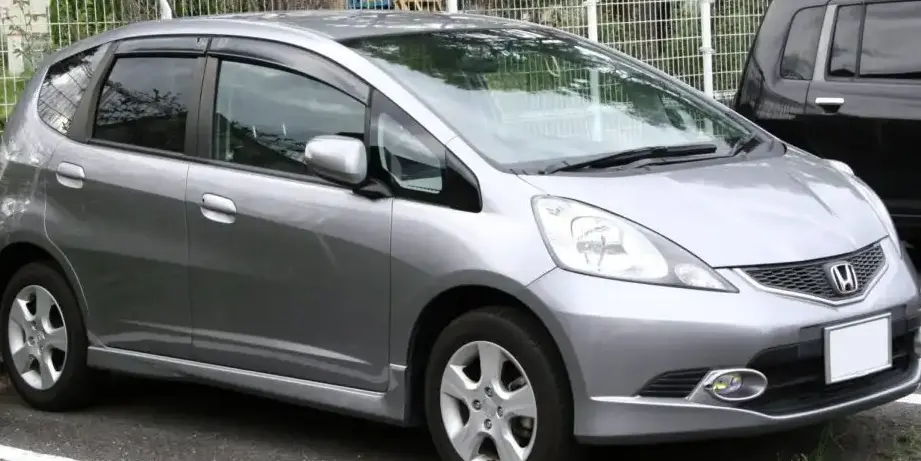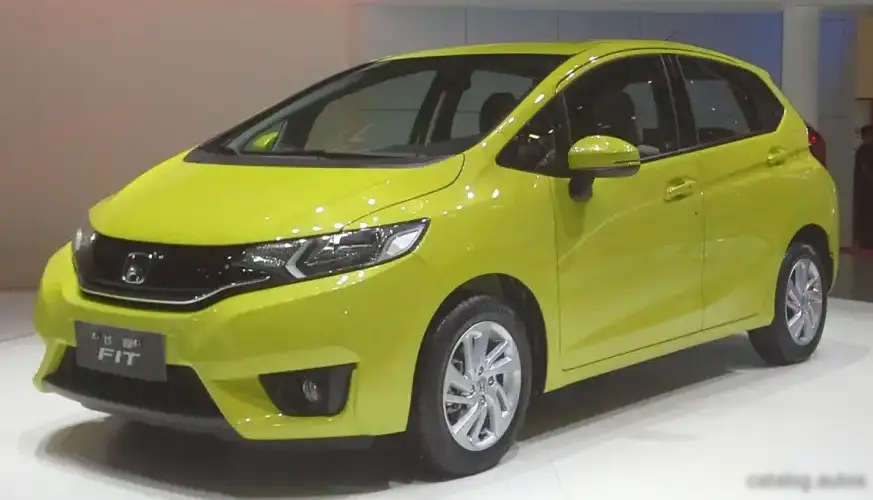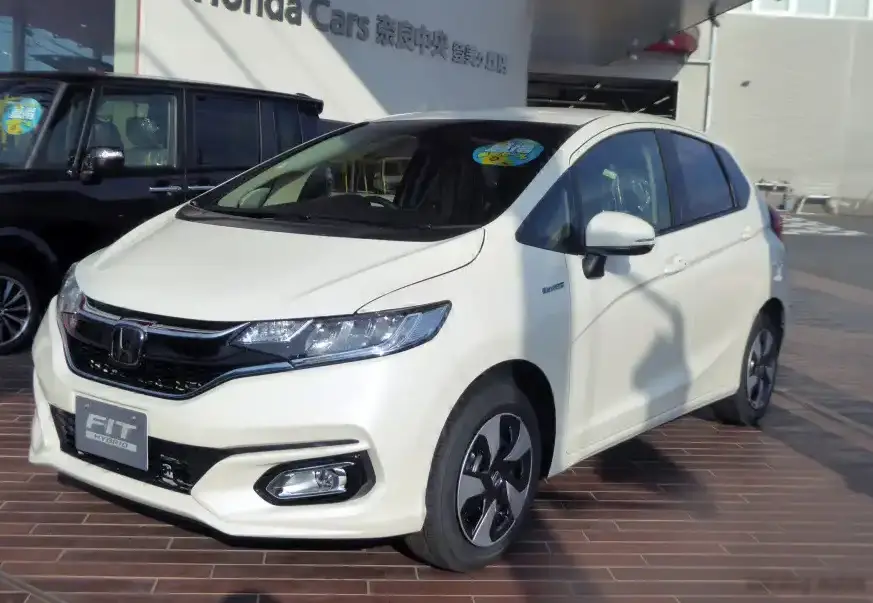
The Honda Fit III (facelift, 2017) 1.5 4WD Automatic represents a significant iteration of Honda’s subcompact hatchback, produced from 2017 to 2020. This variant, part of the third-generation Fit (GE/GK series), was primarily aimed at the Japanese domestic market (JDM) and other regions where all-wheel drive was highly valued for its enhanced traction and stability, particularly in inclement weather. It occupied a mid-range position within the Fit lineup, offering a balance between affordability, practicality, and all-weather capability. The facelift brought styling updates and refinements to the already popular third-generation model.
Technical Specifications
| Brand | Honda |
| Model | FIT |
| Generation | Fit III (facelift 2017) |
| Type (Engine) | 1.5 (132 Hp) 4WD Automatic |
| Start of production | 2017 |
| End of production | 2020 |
| Powertrain Architecture | Internal Combustion engine |
| Body type | Hatchback |
| Seats | 5 |
| Doors | 5 |
| Fuel Type | Petrol (Gasoline) |
| Weight-to-power ratio | 8.7 kg/Hp, 114.8 Hp/tonne |
| Weight-to-torque ratio | 7.4 kg/Nm, 134.8 Nm/tonne |
| Power | 132 Hp @ 6600 rpm |
| Power per litre | 88.2 Hp/l |
| Torque | 155 Nm @ 4600 rpm (114.32 lb.-ft. @ 4600 rpm) |
| Engine layout | Front, Transverse |
| Engine Model/Code | L15B1 |
| Engine displacement | 1497 cm3 (91.35 cu. in.) |
| Number of cylinders | 4 |
| Engine configuration | Inline |
| Cylinder Bore | 73 mm (2.87 in.) |
| Piston Stroke | 89.4 mm (3.52 in.) |
| Compression ratio | 11.5:1 |
| Number of valves per cylinder | 4 |
| Fuel injection system | Direct injection |
| Engine aspiration | Naturally aspirated engine |
| Valvetrain | DOHC, i-VTEC |
| Engine oil capacity | 3.3 l (3.49 US qt | 2.9 UK qt) |
| Coolant | 3.78 l (3.99 US qt | 3.33 UK qt) |
| Kerb Weight | 1150 kg (2535.32 lbs.) |
| Fuel tank capacity | 40 l (10.57 US gal | 8.8 UK gal) |
| Length | 3990 mm (157.09 in.) |
| Width | 1695 mm (66.73 in.) |
| Height | 1550 mm (61.02 in.) |
| Wheelbase | 2530 mm (99.61 in.) |
| Front track | 1480 mm (58.27 in.) |
| Rear (Back) track | 1470 mm (57.87 in.) |
| Ride height (ground clearance) | 150 mm (5.91 in.) |
| Drag coefficient (Cd) | 0.30 |
| Minimum turning circle (turning diameter) | 10.4 m (34.12 ft.) |
| Drive wheel | All wheel drive (4×4) |
| Number of gears and type of gearbox | automatic transmission CVT |
| Front brakes | Ventilated discs |
| Rear brakes | Drum |
| Assisting systems | ABS (Anti-lock braking system) |
| Tires size | 185/60 R15 |
| Wheel rims size | 15 |
Powertrain & Engine Architecture
The heart of the 2017-2020 Honda Fit 1.5 4WD Automatic is the L15B1 engine, a 1.5-liter inline-four cylinder gasoline engine. This engine is part of Honda’s Earth Dreams Technology series, focusing on efficiency and performance. The L15B1 utilizes direct injection, a key component in achieving improved fuel economy and reduced emissions. The engine also features Honda’s intelligent Variable Valve Timing and Lift Electronic Control (i-VTEC) system, which optimizes valve timing and lift based on engine speed and load, enhancing both power and efficiency. The engine produces 132 horsepower at 6,600 rpm and 155 Nm (114.32 lb-ft) of torque at 4,600 rpm. The engine is paired with a Continuously Variable Transmission (CVT), chosen for its smooth operation and fuel-saving capabilities. Unlike traditional automatic transmissions with fixed gear ratios, the CVT provides a virtually infinite number of ratios, allowing the engine to operate at its most efficient point.
Driving Characteristics
The 1.5L engine and CVT combination in the 4WD Fit delivers adequate, though not exhilarating, performance. Acceleration is linear and predictable, suitable for everyday commuting and city driving. The CVT, while efficient, can sometimes feel less responsive than a traditional automatic, exhibiting a slight “rubber band” effect during hard acceleration. The all-wheel-drive system provides enhanced grip and stability, particularly on slippery surfaces, making it a confident handler in adverse weather conditions. Compared to the manual transmission versions of the Fit, the CVT sacrifices some driver engagement for ease of use. The 4WD system adds weight, slightly impacting fuel economy and responsiveness compared to front-wheel-drive models. The CVT is programmed with simulated shift points to mimic a traditional automatic, providing a more familiar driving experience for some drivers.
Equipment & Trim Levels
The 1.5 4WD Automatic trim of the Fit typically included standard features such as air conditioning, power windows and locks, a multi-function steering wheel, and a basic audio system. Safety features included ABS, airbags, and stability control. Higher trim levels, often available as optional packages, added features like a touchscreen infotainment system with Apple CarPlay and Android Auto compatibility, a rearview camera, and automatic climate control. Interior upholstery was typically cloth, with options for upgraded materials on higher trims. The dashboard layout was functional and driver-focused, with clear instrumentation and intuitive controls. Optional extras included alloy wheels, fog lights, and a sunroof.
Chassis & Braking
The Fit III utilizes a front MacPherson strut suspension and a rear torsion beam suspension. This setup provides a good balance between ride comfort and handling. The 4WD system adds some complexity to the rear suspension, but the overall design remains relatively simple and lightweight. Braking duties are handled by ventilated discs on the front wheels and drum brakes on the rear. While the front discs provide adequate stopping power, the rear drums are a cost-saving measure that can limit braking performance under heavy loads. The steering is electrically assisted, providing light and precise control. Stabilizer bars are fitted to both the front and rear axles to reduce body roll during cornering.
Market Reception & Comparison
The Honda Fit III (facelift 2017) 1.5 4WD Automatic was generally well-received by automotive critics. It was praised for its spacious interior, fuel efficiency, and practicality. The all-wheel-drive system was seen as a valuable addition for drivers in regions with harsh winters or challenging road conditions. Compared to other trims in the Fit lineup, the 1.5 4WD Automatic offered a compromise between performance and fuel economy. The 1.3L engine was more fuel-efficient but lacked the power of the 1.5L, while the higher-output engines were typically paired with front-wheel drive. Fuel economy figures typically ranged around 6.0-6.5 liters per 100 kilometers (39-43 mpg) in mixed driving conditions. Reliability was generally excellent, consistent with Honda’s reputation for building durable and dependable vehicles.
Legacy
The Honda Fit III (facelift 2017) 1.5 4WD Automatic has proven to be a reliable and long-lasting vehicle. The L15B1 engine is known for its durability, and the CVT transmission, while sometimes criticized for its feel, has generally held up well over time. In the used car market, these Fits are sought after for their practicality, fuel efficiency, and all-weather capability. Maintenance costs are relatively low, and parts availability is good. The Fit’s clever interior packaging and versatile cargo space continue to make it a popular choice for urban dwellers and small families. The 4WD variant, in particular, holds its value well in regions where all-wheel drive is a necessity.