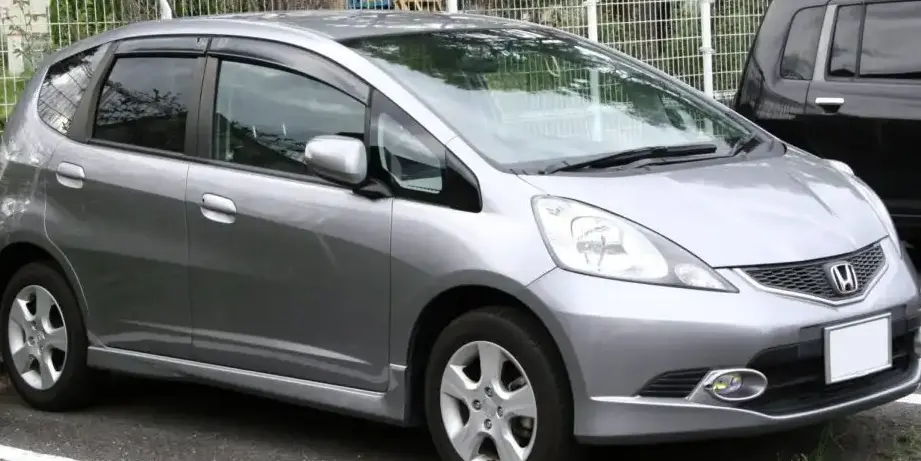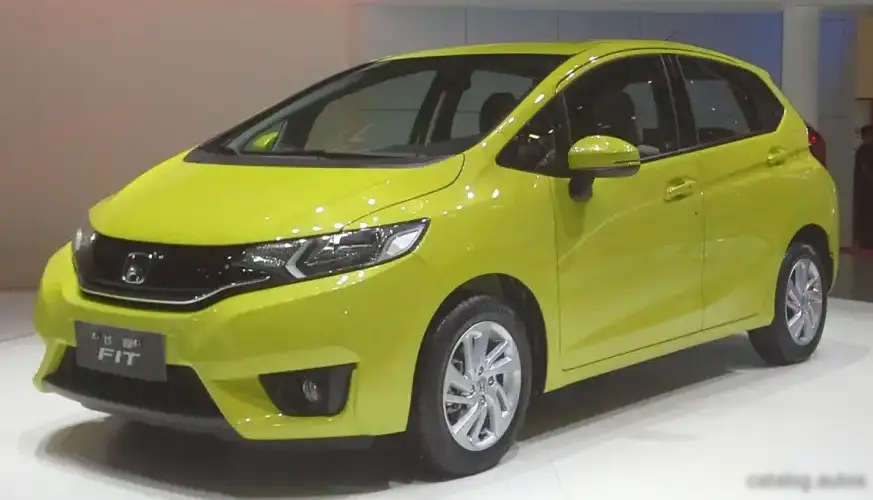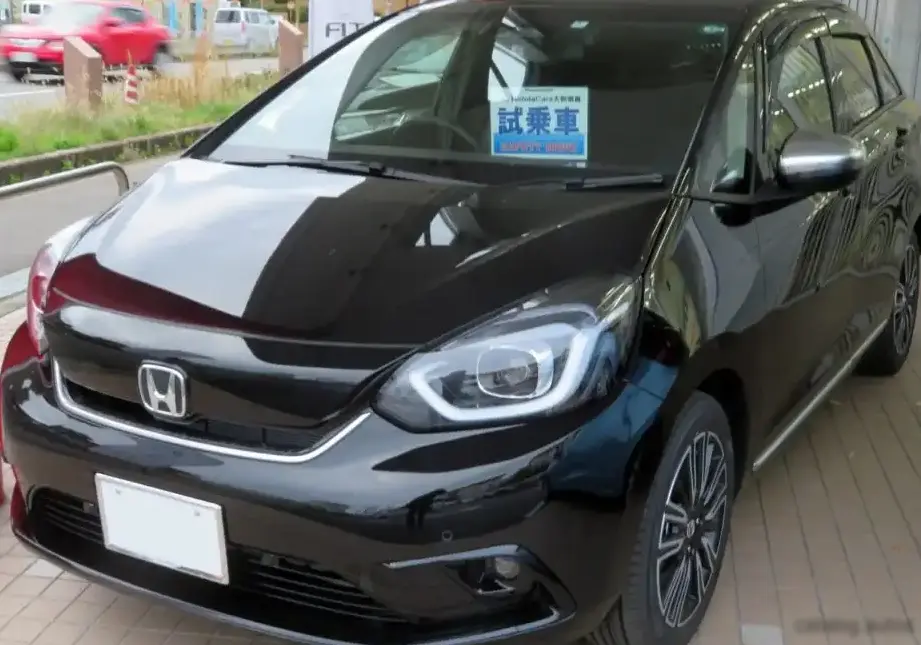
The Honda Fit IV (GR1) 1.5 e:HEV 4WD, produced from February 2020 onwards, represents a significant evolution in Honda’s supermini offerings. This variant, part of the fourth-generation Fit (known as the Jazz in many international markets), utilizes Honda’s e:HEV full hybrid system paired with an electronically controlled continuously variable transmission (e-CVT) and all-wheel drive. Positioned as a higher-trim level within the GR1 range, it aimed to provide enhanced fuel efficiency and all-weather capability without sacrificing the Fit’s renowned practicality and interior space. The GR1 chassis is based on Honda’s small car platform, offering a blend of lightweight construction and structural rigidity.
Technical Specifications
| Brand | Honda |
| Model | FIT |
| Generation | Fit IV (GR1) |
| Type (Engine) | 1.5 (109 Hp) e:HEV 4WD e-CVT |
| Start of production | February, 2020 |
| Powertrain Architecture | FHEV (Full Hybrid Electric Vehicle) |
| Body type | Hatchback |
| Seats | 5 |
| Doors | 5 |
| Fuel consumption at Low speed (WLTP) | 4.1-4.5 l/100 km (57.4 – 52.3 US mpg) |
| Fuel consumption at Medium speed (WLTP) | 3.5-3.9 l/100 km (67.2 – 60.3 US mpg) |
| Fuel consumption at high speed (WLTP) | 4.1-4.5 l/100 km (57.4 – 52.3 US mpg) |
| Combined fuel consumption (WLTP) | 3.9-4.3 l/100 km (60.3 – 54.7 US mpg) |
| Fuel consumption (economy) – combined | 3.2-3.5 l/100 km (73.5 – 67.2 US mpg) |
| Fuel Type | Petrol (Gasoline) |
| Weight-to-power ratio | 11.5 kg/Hp, 87.2 Hp/tonne |
| Weight-to-torque ratio | 9.8 kg/Nm, 101.6 Nm/tonne |
| Battery technology | Lithium-ion (Li-Ion) |
| Electric motor power | 109 Hp @ 3500-8000 rpm, 253 Nm @ 0-3000 rpm (186.6 lb.-ft. @ 0-3000 rpm) |
| Electric motor location | Integrated into the transmission |
| Electric motor type | Synchronous |
| System power | 109 Hp |
| Internal combustion engine power | 98 Hp @ 5600-6400 rpm |
| Internal combustion engine torque | 127 Nm @ 4500-5000 rpm (93.67 lb.-ft. @ 4500-5000 rpm) |
| Engine layout | Front, Transverse |
| Engine Model/Code | LEB-H5 |
| Engine displacement | 1496 cm3 (91.29 cu. in.) |
| Number of cylinders | 4 |
| Engine configuration | Inline |
| Cylinder Bore | 73 mm (2.87 in.) |
| Piston Stroke | 89.4 mm (3.52 in.) |
| Compression ratio | 13.5:1 |
| Number of valves per cylinder | 4 |
| Fuel injection system | Direct injection |
| Engine aspiration | Naturally aspirated engine |
| Valvetrain | DOHC |
| Engine oil capacity | 3.6 l (3.8 US qt | 3.17 UK qt) |
| Coolant capacity | 3.85 l (4.07 US qt | 3.39 UK qt) |
| Kerb Weight | 1250-1280 kg (2755.78 – 2821.92 lbs.) |
| Fuel tank capacity | 40 l (10.57 US gal | 8.8 UK gal) |
| Length | 3995 mm (157.28 in.) |
| Width | 1695 mm (66.73 in.) |
| Height | 1540-1565 mm (60.63 – 61.61 in.) |
| Wheelbase | 2530 mm (99.61 in.) |
| Front track | 1485 mm (58.46 in.) |
| Rear track | 1475 mm (58.07 in.) |
| Ride height (ground clearance) | 150 mm (5.91 in.) |
| Minimum turning circle | 9.8-10.4 m (32.15 – 34.12 ft.) |
| Drivetrain Architecture | FHEV, AWD |
| Drive wheel | All wheel drive (4×4) |
| Number of gears and type of gearbox | automatic transmission e-CVT |
| Front suspension | Independent type McPherson |
| Rear suspension | Suspension De-Dion |
| Front brakes | Ventilated discs |
| Rear brakes | Disc |
| Assisting systems | ABS (Anti-lock braking system) |
| Steering type | Steering rack and pinion |
| Power steering | Electric Steering |
| Tires size | 185/60 R15 84H; 185/55 R16 83V |
| Wheel rims size | 15; 16 |
Powertrain & Engine Architecture
The heart of the Fit e:HEV is Honda’s Intelligent Multi-Mode Drive (i-MMD) system. This isn’t a traditional parallel or series hybrid; instead, it’s a sophisticated system that seamlessly switches between three driving modes: EV Drive, Hybrid Drive, and Engine Drive. The 1.5-liter LEB-H5 inline-four engine serves primarily as a generator for the electric motor, though it can directly drive the wheels under certain conditions, such as highway cruising. The engine utilizes direct injection and a high 13.5:1 compression ratio for improved efficiency. The electric motor, a synchronous unit, delivers 109 horsepower and 253 Nm (186.6 lb-ft) of torque. The e-CVT, unlike conventional CVTs, doesn’t rely on a belt but uses a planetary gearset to provide smooth, stepless acceleration. The 4WD system is an electrically driven rear axle, engaging automatically when needed to enhance traction.
Driving Characteristics
The 1.5 e:HEV 4WD Fit offers a distinctly different driving experience compared to the standard 1.5-liter gasoline-only models or even the manual transmission variants. The e-CVT provides linear acceleration, prioritizing smoothness over outright speed. While the 0-60 mph time isn’t particularly quick, the readily available torque from the electric motor makes it feel responsive in city driving. The all-wheel-drive system provides enhanced grip, particularly on slippery surfaces, but adds some weight, slightly impacting fuel economy compared to the front-wheel-drive version. The gear ratios are optimized for efficiency, meaning the engine often operates at a constant, optimal RPM, contributing to the impressive fuel economy figures.
Equipment & Trim Levels
The 1.5 e:HEV 4WD trim typically included a generous level of standard equipment. Features commonly found in this variant include Honda Sensing suite of safety technologies (including adaptive cruise control, lane keeping assist, and collision mitigation braking system), a touchscreen infotainment system with Apple CarPlay and Android Auto compatibility, automatic climate control, and heated front seats. Higher sub-trims often added features like a sunroof, upgraded audio system, and leather upholstery. Interior materials were generally of good quality for the segment, with a focus on practicality and durability.
Chassis & Braking
The Fit IV utilizes a McPherson strut front suspension and a space-saving De-Dion rear suspension. This configuration balances ride comfort with handling agility. The 4WD system adds some weight, necessitating slightly stiffer spring rates to maintain stability. Braking duties are handled by ventilated discs at the front and solid discs at the rear. ABS (Anti-lock Braking System) is standard, providing enhanced stopping power and control. The electric power steering offers light and precise steering feel, making it easy to maneuver in urban environments.
Market Reception & Comparison
The Honda Fit e:HEV 4WD was generally well-received by automotive critics. Its exceptional fuel economy, spacious interior, and clever packaging were consistently praised. The e-CVT, while not to everyone’s taste, was noted for its smoothness and efficiency. Compared to other hybrid options in the subcompact segment, the Fit offered a compelling combination of practicality, affordability, and technology. The 4WD system set it apart from many competitors, appealing to buyers in regions with inclement weather. However, some reviewers noted that the engine could be noisy under hard acceleration, and the overall driving experience wasn’t as engaging as some more sporty rivals.
Legacy
The Honda Fit IV e:HEV 4WD has proven to be a reliable and durable vehicle. The hybrid powertrain, while complex, has demonstrated good long-term reliability, with few widespread issues reported. On the used car market, these models hold their value relatively well, due to their fuel efficiency and reputation for dependability. The Fit’s innovative design and efficient powertrain continue to influence Honda’s approach to small car development, and the e:HEV technology has been further refined and implemented in other Honda models.