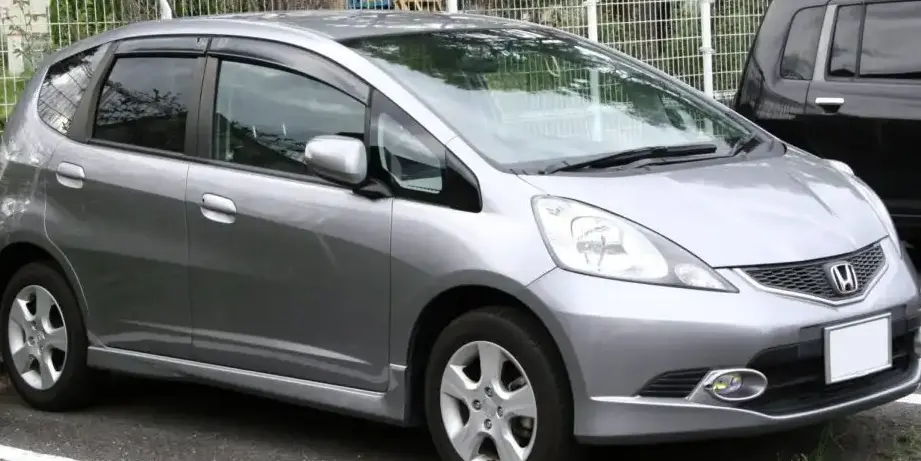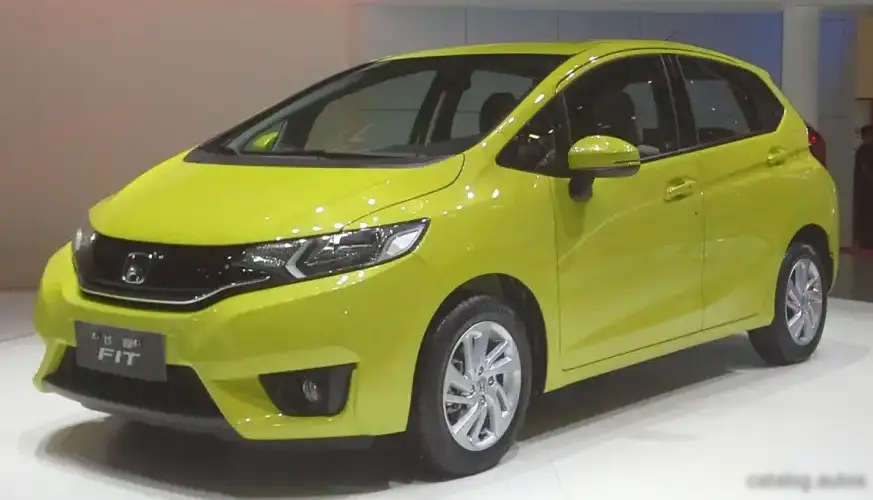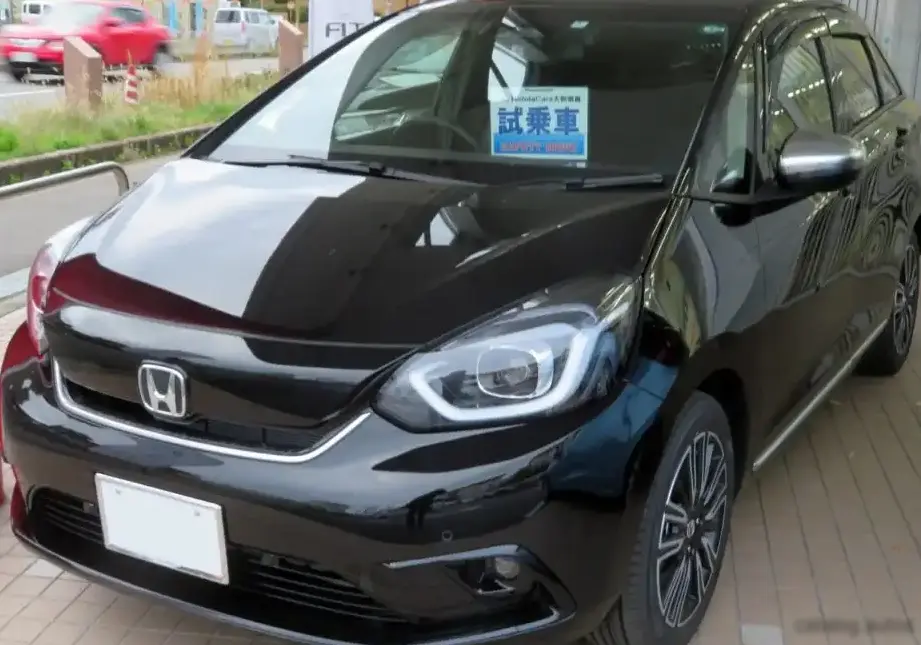
The Honda Fit IV (GR1) 1.5 e:HEV, introduced in February 2020, represents the fourth generation of Honda’s popular subcompact hatchback. This variant, equipped with a 1.5-liter engine and Honda’s e:HEV hybrid system paired with an e-CVT transmission, was primarily aimed at the European and Asian markets, with limited availability in North America. It occupies a mid-range position within the GR1 lineup, offering a balance between fuel efficiency, practicality, and affordability. The GR1 Fit is built on Honda’s Small-Medium Vehicle Platform, also known as the 1HX0 platform, shared with other Honda models like the Jazz and Vezel/HR-V.
Technical Specifications
| Brand | Honda |
| Model | FIT |
| Generation | Fit IV (GR1) |
| Type (Engine) | 1.5 (109 Hp) e:HEV e-CVT |
| Start of production | February, 2020 |
| Powertrain Architecture | FHEV (Full Hybrid Electric Vehicle) |
| Body type | Hatchback |
| Seats | 5 |
| Doors | 5 |
| Fuel consumption at Low speed (WLTP) | 3.3-3.7 l/100 km (71.3 – 63.6 US mpg) |
| Fuel consumption at Medium speed (WLTP) | 3.0-3.4 l/100 km (78.4 – 69.2 US mpg) |
| Fuel consumption at high speed (WLTP) | 3.6-3.8 l/100 km (65.3 – 61.9 US mpg) |
| Combined fuel consumption (WLTP) | 3.4-3.6 l/100 km (69.2 – 65.3 US mpg) |
| Fuel consumption (economy) – combined | 2.6-2.9 l/100 km (90.5 – 81.1 US mpg) |
| Fuel Type | Petrol (Gasoline) |
| Weight-to-power ratio | 10.8 kg/Hp, 92.4 Hp/tonne |
| Weight-to-torque ratio | 9.3 kg/Nm, 107.6 Nm/tonne |
| Battery technology | Lithium-ion (Li-Ion) |
| Electric motor power | 109 Hp @ 3500-8000 rpm, 253 Nm (186.6 lb.-ft.) @ 0-3000 rpm |
| Electric motor location | Integrated into the transmission |
| Electric motor type | Synchronous |
| System power | 109 Hp |
| Internal combustion engine power | 98 Hp @ 5600-6400 rpm |
| Engine torque | 127 Nm (93.67 lb.-ft.) @ 4500-5000 rpm |
| Engine layout | Front, Transverse |
| Engine Model/Code | LEB-H5 |
| Engine displacement | 1496 cm3 (91.29 cu. in.) |
| Number of cylinders | 4 |
| Engine configuration | Inline |
| Cylinder Bore | 73 mm (2.87 in.) |
| Piston Stroke | 89.4 mm (3.52 in.) |
| Compression ratio | 13.5:1 |
| Number of valves per cylinder | 4 |
| Fuel injection system | Direct injection |
| Engine aspiration | Naturally aspirated engine |
| Valvetrain | DOHC |
| Engine oil capacity | 3.6 l (3.8 US qt | 3.17 UK qt) |
| Coolant capacity | 3.85 l (4.07 US qt | 3.39 UK qt) |
| Kerb Weight | 1180-1200 kg (2601.45 – 2645.55 lbs.) |
| Fuel tank capacity | 40 l (10.57 US gal | 8.8 UK gal) |
| Length | 3995 mm (157.28 in.) |
| Width | 1695 mm (66.73 in.) |
| Height | 1515-1540 mm (59.65 – 60.63 in.) |
| Wheelbase | 2530 mm (99.61 in.) |
| Front track | 1485 mm (58.46 in.) |
| Rear track | 1475 mm (58.07 in.) |
| Ride height (ground clearance) | 135 mm (5.31 in.) |
| Minimum turning circle | 9.8-10.4 m (32.15 – 34.12 ft.) |
| Drivetrain Architecture | FHEV (Full Hybrid Electric Vehicle) |
| Drive wheel | Front wheel drive |
| Number of gears and type of gearbox | automatic transmission e-CVT |
| Front suspension | Independent type McPherson |
| Rear suspension | Torsion |
| Front brakes | Ventilated discs |
| Rear brakes | Disc |
| Assisting systems | ABS (Anti-lock braking system) |
| Steering type | Steering rack and pinion |
| Power steering | Electric Steering |
| Tires size | 185/60 R15 84H; 185/55 R16 83V |
| Wheel rims size | 15; 16 |
INTRODUCTION
The Honda Fit IV (GR1) 1.5 e:HEV is a significant evolution of Honda’s supermini, blending a compact footprint with advanced hybrid technology. Introduced in 2020, it represents the fourth generation of the Fit, known as the Jazz in many European markets. This particular variant utilizes Honda’s Intelligent Multi-Mode Drive (i-MMD) hybrid system, combining a 1.5-liter naturally aspirated gasoline engine with an electric motor and a continuously variable transmission (e-CVT). The e:HEV model was designed to appeal to buyers prioritizing fuel efficiency and low emissions, particularly in urban environments. It sits in the middle of the GR1 range, offering more features and refinement than the base models but remaining more accessible than the top-spec trims.
Powertrain & Engine Architecture
At the heart of the Fit IV 1.5 e:HEV lies the LEB-H5 1.5-liter inline-four cylinder engine. This engine, part of Honda’s Earth Dreams Technology series, produces 98 horsepower and 127 Nm (93.67 lb-ft) of torque. It features direct injection and a high compression ratio of 13.5:1, contributing to improved thermal efficiency. The engine operates on the Atkinson cycle, which prioritizes efficiency over outright power. The electric motor, integrated with the e-CVT, delivers 109 horsepower and 253 Nm (186.6 lb-ft) of torque. The e-CVT isn’t a traditional CVT; it’s a single-speed transmission with a planetary gearset that allows for seamless transitions between electric, gasoline, and hybrid power modes. The i-MMD system intelligently manages the power flow, prioritizing electric drive at low speeds and utilizing the gasoline engine for higher-speed cruising or when the battery needs recharging. The lithium-ion battery pack provides energy storage for the electric motor.
Driving Characteristics
The 1.5 e:HEV offers a refined and comfortable driving experience, particularly in urban settings. The electric motor provides instant torque, resulting in brisk acceleration from a standstill. The e-CVT operates smoothly and quietly, eliminating the rubber-band feel often associated with traditional CVTs. While the combined system output of 109 hp isn’t particularly high, the Fit IV feels adequately powered for everyday driving. Compared to the manual transmission versions of the 1.5-liter engine, the e-CVT prioritizes fuel economy over performance. The higher-output 1.3-liter turbocharged engine available in some markets offers more spirited acceleration, but at the expense of fuel efficiency. The e:HEV’s regenerative braking system helps to recapture energy during deceleration, further enhancing fuel economy. The steering is light and precise, making it easy to maneuver in tight spaces.
Equipment & Trim Levels
The Fit IV 1.5 e:HEV typically came equipped with a range of standard features, including automatic climate control, a touchscreen infotainment system with Apple CarPlay and Android Auto compatibility, Honda Sensing suite of safety features (including adaptive cruise control, lane keeping assist, and collision mitigation braking system), and power windows and locks. Interior upholstery was typically cloth, with options for upgraded materials in higher trims. Optional extras included a sunroof, heated seats, and a premium audio system. The dashboard layout is clean and modern, with a minimalist design. The “e:HEV” badging distinguishes this variant from other trims.
Chassis & Braking
The Fit IV utilizes a McPherson strut front suspension and a torsion beam rear suspension. This setup provides a good balance between ride comfort and handling. The front brakes are ventilated discs, while the rear brakes are discs. The electric power steering system provides light and responsive steering feel. The chassis is relatively lightweight, contributing to the car’s agility. Stabilizer bars are fitted to both the front and rear axles to reduce body roll during cornering. The suspension tuning is geared towards comfort, but the Fit IV still offers a reasonably engaging driving experience.
Market Reception & Comparison
The Honda Fit IV 1.5 e:HEV was generally well-received by automotive critics, who praised its fuel efficiency, comfortable ride, and spacious interior. The hybrid system was lauded for its seamless operation and ability to deliver impressive fuel economy in real-world conditions. Compared to other trims in the Fit lineup, the e:HEV offered a compelling alternative for buyers prioritizing fuel efficiency and low emissions. While the manual transmission versions were more engaging to drive, the e:HEV provided a more relaxed and convenient driving experience. Competitors in the subcompact hybrid segment included the Toyota Yaris Hybrid and the Renault Clio E-Tech.
Legacy
The Honda Fit IV 1.5 e:HEV has proven to be a reliable and durable vehicle, with the i-MMD hybrid system demonstrating long-term dependability. The powertrain is known for its relatively low maintenance requirements. On the used car market, these models hold their value well, reflecting their fuel efficiency and reputation for reliability. The Fit IV e:HEV represents a significant step forward in Honda’s hybrid technology, paving the way for future electrified models. Its combination of practicality, efficiency, and refinement has made it a popular choice among buyers seeking a versatile and eco-friendly subcompact hatchback.